
In This Article
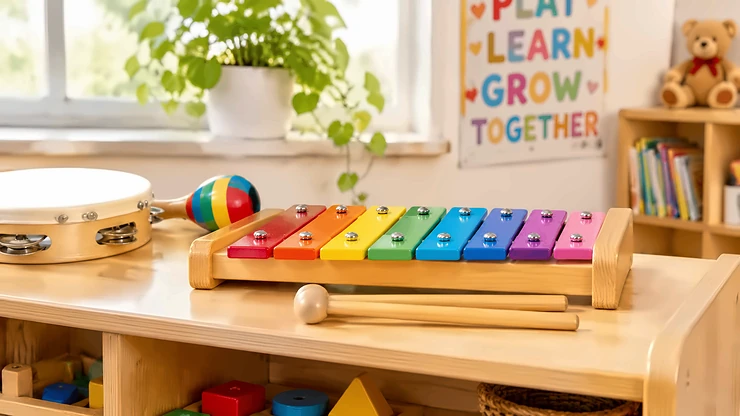
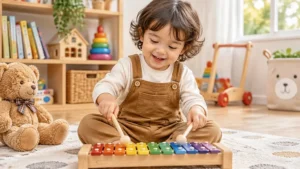
A xylophone for toddlers is a small, tuned percussion toy, usually eight bars spanning one octave, struck with a lightweight mallet to make clear musical pitches. Built for ages of roughly 12 months to five years, it teaches cause and effect, hand-eye coordination, and early pitch awareness without taking over your living room.
Here’s a small confession from the world of instruments. Most toddler “xylophones” are technically glockenspiels, because their bars are metal rather than wood. Nobody at the toy aisle cares, and neither will your two-year-old. The wider xylophone family has been delighting beginners for centuries, and the toddler edition is the friendliest entry point: bright, forgiving, and impossible to “play wrong” on day one.
But not every xylophone for toddlers is created equal. Some are gorgeously in tune. Others sound like a cat walking across a piano that lost an argument with a hammer. Some are quiet enough for a third-floor apartment; some ring like a fire alarm.
This guide ranks seven real, widely sold options, then goes further than a spec sheet ever could. You’ll get honest analysis of tuning, noise, rhythm development, what to buy for a baby who isn’t ready yet, and which quiet drum set for 5 year olds makes sense once your toddler outgrows the bars. Everything below is based on published specs and aggregated review sentiment, not invented testing. Prices are shown as ranges because they change constantly.
Xylophone for Toddlers at a Glance: Quick Comparison
Skim this first, then dive into the full analysis. Ages reflect listing information at the time of research, so always confirm the age grade on the product you’re buying.
| Product | Keys | Material | Age Grade (check label) | Best For |
|---|---|---|---|---|
| Melissa & Doug Caterpillar Xylophone | 8 | Wood | 3+ | Long-term first instrument |
| Fisher-Price Classic Xylophone | 8 | Metal bars, plastic body | 18+ months | Youngest walkers, pull-along fun |
| Hape Pound & Tap Bench | Slide-out xylophone plus ball-drop | Wood | 12+ months | Busy, hands-on one-year-olds |
| Halilit Baby Xylo Box | Tuned bars, secured design | Wood and metal | Small children (verify) | Pitch-focused parents |
| MUSICUBE Fish-Shaped Wooden Xylophone | 8 | Wood | 3+ | Tuned C major scale, cute design |
| Lehoo Castle Musical Instruments Set | 13 | Wood | Verify on listing | Growing kids, extra percussion |
| Upado Unlimited Glockenspiel | 8 | Metal bars, wood base | Check listing | Pitch purists |
Looking at the table, the Fisher-Price Classic Xylophone and Hape Pound & Tap Bench are built for the youngest hands, while the Melissa & Doug Caterpillar Xylophone and MUSICUBE Fish-Shaped Wooden Xylophone reward children who are ready to tap out a tune. The Upado Unlimited Glockenspiel sits at the premium, tuning-first end, and the Lehoo Castle Musical Instruments Set gives you the most room to grow. Pick by age first, then by how much tuning accuracy matters to your household.
💬 Just one click — help others make better buying decisions too!😊
Top 7 Xylophone for Toddlers: Expert Analysis
Each pick below gets the same treatment: what stands out, what the specs mean in practice, who it suits, what reviewers say, and where the price lands.
1. Melissa & Doug Caterpillar Xylophone — best all-round first xylophone
The standout here is balance: painted wooden bars arranged like a friendly caterpillar, so the whole thing reads as a toy and plays like an instrument.
Eight wooden keys span one full octave, C to C, and the set includes wooden mallets plus a song card (listing dimensions run about 15.25 by 6.5 by 1.5 inches). In practice, that means a child can graduate from random bonking to picking out a simple tune without hitting a missing note. The manufacturer’s age grade is 3 and up, so for a two-year-old, plan on close supervision and check the label first.
Based on the spec comparison, this is the model to weigh first if you want one xylophone for toddlers that still gets played at age five. Wood produces a rounder, softer tone than metal-bar rivals, which is kinder to tired parental ears. Roundups also note that the mallets store on the toy, which saves the nightly mallet hunt.
Reviewers consistently praise the cute design and sturdy build. A recurring complaint in retail reviews is that an occasional key sounds off, though one music-educator roundup judged it well in tune. Check yours against a keyboard or tuner app when it arrives.
Pros:
- ✅ Warm wooden tone that’s easy on adult ears
- ✅ Full C-to-C octave with song card included
- ✅ Sturdy build that survives daily abuse
Cons:
- ❌ Age grade starts at 3, so supervise younger toddlers
- ❌ Some buyers report a stray out-of-tune key
Typically in the $15-$25 range at the time of research, which is strong value for the durability. Check current price.
2. Fisher-Price Classic Xylophone — best for the youngest walkers
The pull-along design is the hook: a toddler who is just learning to walk gets a musical sidekick that rolls behind them.
This is a plastic pull toy with eight colorful metal keys and a tethered mallet, labeled for 18 months and up. The tether matters more than it sounds. A mallet that can’t be lost, thrown, or chewed into oblivion is a genuine design win at this age, and it’s why this toy keeps showing up in “best for toddlers” lists.
On paper, the metal bars give a brighter, more bell-like ring than wood, and the plastic body keeps the weight low for small hands. Here’s what to weigh: this is a cause-and-effect toy first and a tuned instrument second. Several roundups note that some keys can be slightly out of tune, and a few buyers dislike the short cord or the mallet location.
Reviewers keep coming back to the same themes. Kids love the bright colors, parents like the durability and the apartment-friendly volume, and the music-minded grumble about tuning. If your child is under two, those trade-offs are easy to live with.
Pros:
- ✅ Tethered mallet that can’t wander off
- ✅ Pull-along design encourages walking and play
- ✅ Affordable and built to take a beating
Cons:
- ❌ Some keys reported slightly out of tune
- ❌ Plastic body feels less premium than wood
Usually in the $10-$20 range. A low-risk, high-fun pick; check current price.
3. Hape Pound & Tap Bench — best all-in-one for restless one-year-olds
Think of this as a xylophone with a day job. A slide-out xylophone shares the bench with a ball-drop pounding toy, so a child who wants to hammer something gets to do it musically.
The wooden bench is labeled for roughly 12 to 36 months and uses non-toxic finishes, and listings put it at around 1.2 kg. That weight is the sneaky benefit: it stays put when a determined one-year-old attacks it. A lightweight pull toy skates away; this planted bench doesn’t.
The analysis here is simple. If your toddler’s main instrument is “a thing I can hit,” this channels that instinct into pitched notes, and one music-educator roundup found the xylophone well in tune. The trade-off is that the xylophone portion is simpler than a standalone instrument, so it’s a starter rather than a long-term melody maker.
Parenting roundups cite thousands of reviewers on Amazon with an average around 4.7 stars, praising durability and function. The recurring critique is that it’s pricier than plastic pull toys.
Pros:
- ✅ Heavy, stable wooden bench stays put
- ✅ Combines pounding play with an in-tune xylophone
- ✅ Non-toxic finishes and a durable build
Cons:
- ❌ Costs more than basic pull toys
- ❌ Smaller xylophone limits melody play later
Typically in the $25-$40 range. Check current price before buying.
4. Halilit Baby Xylo Box — best for tuning-conscious parents
The hook is in the design: the bars are secured so they can’t fall off or be pulled off, and the instrument is marketed as accurately tuned for small children.
That unusual combination solves two problems at once. Loose bars are a genuine concern with small hands, and many budget toys come with poor tuning. A color-coded song sheet is included, so a parent can play along from week one without reading music.
Here’s what to weigh: the product is positioned toward very young children, but listing details vary, so confirm the age grade before purchase. I could not verify a large pool of independent customer reviews for this specific model, so treat the “accurately tuned” claim as the manufacturer’s, and do the keyboard test yourself on arrival.
For parents who care about pitch-accurate toy instruments, this is the sort of instrument that deserves a close look. The secured-bar design suggests the maker was thinking about toddler behavior, not just parent appeal.
Pros:
- ✅ Bars designed not to fall off or detach
- ✅ Marketed as accurately tuned for small children
- ✅ Color-coded song sheet included
Cons:
- ❌ Fewer independent reviews to confirm tuning
- ❌ Smaller brand, so availability may vary
Often in the $15-$30 range. Reasonable value if the tuning holds up; check current price.
5. MUSICUBE Fish-Shaped Wooden Xylophone — best for a tuned scale with personality
A fish-shaped, bent-wood body gives this one shelf appeal, which matters if toys live in your living room.
Listings describe eight tuned bars on a C major scale, TUV certification, and included music cards, with an age grade of 3 and up. A C major scale is the friendliest teaching scale because it uses only the white keys on a piano, so what a child plays here transfers neatly to a keyboard later.
Based on the specs, this is a close competitor to the Melissa & Doug Caterpillar Xylophone for the three-and-up crowd, with a more playful shape. The extras to note are the cards, which turn aimless tapping into guided play, and the certification, which is a reassuring (if not foolproof) signal.
As with several smaller brands, I couldn’t verify a deep pool of independent reviews, so rely on the manufacturer’s claims with healthy skepticism. If it arrives out of tune, return it; that’s the whole point of buying one.
Pros:
- ✅ Eight tuned bars on a C major scale
- ✅ Music cards included for guided play
- ✅ Distinctive fish shape stands out on a shelf
Cons:
- ❌ Age grade starts at 3
- ❌ Limited independent review data
Usually in the $15-$25 range. A solid mid-range pick; check current price.
6. Lehoo Castle Musical Instruments Set — best for growing kids who want more than bars
Here the hook is breadth: a 13-key xylophone bundled with a percussion kit and a storage bag.
An Australian review roundup listed it as a best-value pick and shows a rating in the mid-4s across several hundred reviews. Thirteen keys (an octave plus a fifth) give a child more melodic range than the standard eight, and the extra percussion pieces turn the set into a miniature band.
What the listing won’t tell you is that bundles trade focus for variety. A single well-tuned xylophone for toddlers often beats a kit where quality is spread thin, so test the xylophone first and treat the shakers as a bonus. Because age grades vary across listings, verify that all small parts are suitable for your child.
This is the pick for a family that wants one box to cover music-class energy for the next two or three years, and for a toddler who is quickly moving toward preschool age.
Pros:
- ✅ Thirteen keys for more melody options
- ✅ Extra percussion pieces for band-style play
- ✅ Storage bag included for tidy cleanup
Cons:
- ❌ Bundle quality can be uneven across pieces
- ❌ Small parts need supervision for younger toddlers
Typically in the $25-$45 range. Good breadth for the money; check current price.
7. Upado Unlimited Glockenspiel — best for pitch purists
This is the “buy it once” option: eight brightly colored metal keys on a substantial wooden base.
The listing describes a precision-tuned, handcrafted instrument, and reviewers who identify as professional musicians praise its tuning to a C major scale and its heavy, classroom-style construction. That’s unusually warm praise in a category where complaints about off-pitch notes are common.
The heft cuts both ways. It’s too substantial for a toddler to drag around like a pull toy, and the metal bars ring brightly, so it suits a supervised play session better than all-day background noise. Check the listing’s age grade, since this reads more like an instrument than a baby toy.
If pitch-accurate toy instruments are your priority, this is the benchmark to compare cheaper options against. It’s also the one that makes sense as a hand-me-down to a younger sibling.
Pros:
- ✅ Reviewers report accurate C major tuning
- ✅ Heavy, durable wood-base construction
- ✅ Rich tone for a small instrument
Cons:
- ❌ Too heavy and bright for very young toddlers
- ❌ Costs more than typical toy xylophones
Usually in the $25-$40 range. Premium in feel and tuning; check current price.
How to Choose a Xylophone for Toddlers
Shopping for a xylophone for toddlers gets easier with a short checklist. Work through it in order.
- Match the age grade first. Read the manufacturer’s label, not the marketing photo. A product labeled for three and up is a supervision question at two.
- Look for at least one octave (eight notes). That’s enough for simple songs and for learning that notes go up and down.
- Demand tuning you can verify. Compare each bar to a keyboard or a free tuner app the day it arrives. Bargain bars are often off; hand-tuned bars take labor and typically cost more.
- Prefer labeled, color-coded bars. They make song cards usable before a child can read.
- Inspect the mallet situation. Tethered or self-storing mallets mean fewer lost parts and fewer chewing hazards.
- Think about material and noise. Wood sounds warmer; metal rings brighter. In small homes, warmer usually wins.
- Consider growth. A 13-key set or a fixed-base instrument can stretch across several years.
Every item above is about reducing regret. A well-chosen xylophone for toddlers should still make sense in eighteen months.
Pitch-Accurate Toy Instruments: Why Tuning Matters More Than You Think
Children learn what a note sounds like by hearing it. If the toy plays a flat E instead of a true E, the lesson is subtly wrong.
Music educators writing about kids’ xylophones point out that high-quality instruments are labor-intensive to make because each bar is hand-tuned by shaving, which is why they rarely appear at bargain prices. Customer reviews echo the problem: shoppers across several retail pages complain of bars that are noticeably off, while others celebrate finds that are “perfectly in tune.”
One music-educator guide lays out a handy standard: at least one octave, every note in tune, good sound, well-labeled bars, and color coding. Few toys clear all of those hurdles, but the ones that do tend to be the Melissa & Doug Caterpillar Xylophone, the Hape Pound & Tap Bench, and the Upado Unlimited Glockenspiel in the educator and reviewer feedback gathered above.
Don’t panic if your young toddler’s toy is slightly off, though. At 18 months the lesson is “I hit it, it sings,” not scale theory. Where tuning really starts to matter is around ages three to five, when children begin matching pitches and singing along.
Here’s a practical test. Play each bar on a keyboard, then on the toy, and listen for obvious clashes. If a bar is badly off, return it. Pitch-accurate toy instruments cost slightly more, but they spare you the “demented minor-key ABC song” scenario one reviewer imagined.
Xylophone for Toddlers vs Other Early Instruments
Is a xylophone the right first instrument? Here is how it stacks up against the usual suspects.
| Instrument | Pitch Learning | Noise Level | Fine Motor Skills | Best For |
|---|---|---|---|---|
| Xylophone for toddlers | High (distinct notes) | Moderate, ringing | Strong (mallet control) | Cause and effect plus melody |
| Shaker or rattle | None | Low to moderate | Basic grasp | Babies and early rhythm play |
| Electronic keyboard toy | Variable | Often adjustable, sometimes loud | Pressing skills | Kids who like buttons and lights |
| Acoustic toddler drum | None | High | Moderate | Rhythm lovers with tolerant neighbors |
| Quiet practice pad | None | Very low | Strong (stick control) | Ages 5 and up |
The table shows why the xylophone is such a good first pitched instrument: it’s the only one on the list that teaches distinct notes and mallet control while staying moderate in volume. Shakers are great for babies but plateau fast, and acoustic drums are rhythmically wonderful but the noise bill comes due. Keyboards sit in the middle, though their volume and sound libraries vary widely.
✨ Don’t Miss These Exclusive Deals!
🔍 Take your toddler’s first music experience to the next level with these carefully selected instruments. Click any highlighted product name to check current pricing and availability. These tools will help you create joyful, musical memories your family will love!
Musical Toys for 6 Month Old Babies: What Works Before the Xylophone
A xylophone is the wrong tool for a six-month-old. At that age babies are grasping, mouthing, and discovering that shaking something makes noise, and a mallet-and-bar toy is simply not built for that stage.
So what are the best musical toys for 6 month old babies? Parenting roundups tend to sort them into simple categories: rattles and shakers, soft musical plush, wooden music sets, and touch-activated toys. Typical examples named in those lists include the Baby Einstein Take Along Tunes (a compact take-along toy), VTech Lil’ Critters Moosical Beads (sized for tiny grasping hands), and a KiwiCo wooden piano, xylophone, and shaker set. Choose toys labeled for your baby’s age, skip anything with small detachable parts, and favor simple, responsive controls over flashy ones.
The rule of thumb for musical toys for 6 month old babies is that everything should be safe to chew, easy to hold, and not too loud. Hold any sound-making toy at arm’s length and listen. If it startles you, it’s too much for a baby’s ears.
When your baby reaches about 12 months, a toddler-friendly option like the Hape Pound & Tap Bench becomes realistic, since its listing starts at 12 months and up. Until then, a sturdy shaker and your own singing voice do the job. Studies on infant music discussed later in this guide point to caregiver interaction as the real engine of early musical growth, not the gadget.
Quiet Drum Set for 5 Year Olds: The Natural Next Step
Many children are drawn to drums before they can hold a melody. Teachers who work with young drummers suggest that kids around five to seven often have the motor skills and attention span to begin drumming, and the early years before that are better spent on general rhythm play.
If your toddler is turning five and the xylophone has been conquered, a quiet drum set for 5 year olds is a natural graduation. Options fall into two camps:
- Practice pads: A 12-inch pad such as the Donner 12-inch drum practice pad is built from compressed wood and silicone for quiet play and typically costs around $20-$50 in pad-style guides. It’s portable and nearly silent, but it trains stick technique rather than “playing a kit.”
- Roll-up electronic kits: Models like the Donner 7-pad roll-up kit (soft silicone pads, 3.5mm headphone output) and 9-pad kits sold for ages 5-12 with headphone jacks and rechargeable batteries let kids play a full kit while neighbors hear mostly stick taps.
A note on balance: acoustic junior kits give an authentic feel but are loud, and one beginner-drum guide advises you’ll need a dedicated space and tolerant neighbors. For apartments, a quiet drum set for 5 year olds with headphones is the safer play.
One caution: headphones shift the noise problem from the room to the ear, so keep the volume low. The next sections explain why that matters.
Noise-Friendly Instruments for Apartments
Living in a small space turns every instrument purchase into a diplomatic negotiation. Xylophones are naturally friendlier than most, but “friendly” is relative, and the metal ones can ring.
Why care about decibels? Audiologists at Hackensack Meridian Health explain that toys reaching 85 decibels or more may harm children’s still-developing hearing, and they note that young children often hold toys right against their ears. They suggest returning toys louder than about 80 decibels when possible and using over-the-ear earmuffs when noise can’t be changed. Toy makers point out that sold-in-the-US toys must meet sound limits under the ASTM F963 standard, so the real-world advice is still to listen before you buy.
For noise-friendly instruments for apartments, try these tactics:
- Place the xylophone on a rug, foam mat, or folded blanket to damp vibration into the floor.
- Pick wooden bars over metal when you share walls. The Melissa & Doug Caterpillar Xylophone and MUSICUBE Fish-Shaped Wooden Xylophone have warmer tones than the metal-bar Fisher-Price Classic Xylophone.
- Reserve bright metal instruments like the Upado Unlimited Glockenspiel for supervised, daytime sessions.
- Use the quiet-drum approach above once your child graduates to percussion.
Noise-friendly instruments for apartments aren’t about silence. They’re about choosing volume you can live with at 5 p.m. on a Tuesday, and that your child’s ears can handle.
Early Rhythm Development: What Research Suggests
Rhythm is the quiet superpower behind music, speech, and movement, and the research on it is genuinely interesting.
A 2026 study published in Early Childhood Education Journal ran an eight-week music training program with 54 toddlers (average age about 29 months) and 54 preschoolers (about 53 months). The authors reported a significant training effect on rhythmic skills in both groups, with the older children gaining more. The takeaway for parents: structured, repeated musical play appears to support early rhythm development, even in two-year-olds.
A separate 2026 research perspective on infants proposes that rhythmic synchronization emerges from the interplay of rhythm perception, motor development, and social scaffolding. In plain language, children keep time better when they can hear a beat, move their bodies, and share the moment with a caregiver.
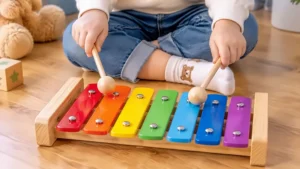
How does a xylophone fit? It gives toddlers a concrete way to practice steady tapping and pattern repetition. For stronger early rhythm development, try these:
- Tap a slow, steady beat and let your child copy it.
- Alternate loud and soft taps to teach dynamics.
- Sing a familiar song and tap along with the syllables.
Keep expectations realistic. These studies looked at structured programs, not toys alone, so the xylophone works best as a shared activity rather than a babysitter.
Price Range and Value: What Your Money Buys
Cost matters, but so does cost per year of play. Here’s how the seven picks compare on value, using ranges that were typical at the time of research.
| Product | Typical Price Range | Tuning Reputation | Value Verdict |
|---|---|---|---|
| Fisher-Price Classic Xylophone | $10-$20 | Mixed, some keys off | Best for tight budgets |
| Melissa & Doug Caterpillar Xylophone | $15-$25 | Mostly good | Best everyday value |
| MUSICUBE Fish-Shaped Wooden Xylophone | $15-$25 | Claimed tuned, few reviews | Good if tuning checks out |
| Halilit Baby Xylo Box | $15-$30 | Claimed accurate | Worth a look for tuning |
| Hape Pound & Tap Bench | $25-$40 | Praised as in tune | Best for one-year-olds |
| Lehoo Castle Musical Instruments Set | $25-$45 | Variable across pieces | Best for growth |
| Upado Unlimited Glockenspiel | $25-$40 | Praised as in tune | Best for tuning |
The takeaway: spending $10 more often buys you a better tuning reputation and sturdier bars, which stretches the toy across more years. The Fisher-Price Classic Xylophone is the budget champion for a first walker, while the Melissa & Doug Caterpillar Xylophone offers the best balance of price and longevity. If you’re planning for a younger sibling too, the Upado Unlimited Glockenspiel can pay for itself over time.
First 30 Days: A Practical Guide to Your Xylophone for Toddlers
Amazon listings tell you what a toy is. They don’t tell you how to make it work in your house. Try this four-week plan.
Week 1: Unbox and tune-check. Compare each bar against a keyboard or tuner app. Wipe down the mallets and inspect for loose parts. Set the xylophone on a rug to soften the sound.
Week 2: Explore and imitate. Sit on the floor, let your child tap freely, then copy their rhythm back to them. This simple call-and-response teaches turn-taking and listening.
Week 3: Add songs. Use the color-coded song sheets that come with models like the Halilit Baby Xylo Box or the song card on the Melissa & Doug Caterpillar Xylophone. Pick one song and play it daily so your child hears a repeating pattern.
Week 4: Add movement and variety. March while tapping a steady beat, or switch to soft taps for “sleepy time” and loud taps for “parade time.”
Maintenance is easy: wipe with a lightly damp cloth, keep wooden bars away from soaking, and check metal pieces for loose rivets or paint chips.
Common first-month mistakes include leaving the toy buried in a toy chest (kids need to see it), expecting melodies too soon, and letting sessions run long. Ten focused minutes beat an hour of frustrated banging every time.
Real-World Scenarios: Matching a Xylophone for Toddlers to Your Family
Specs are abstract. Families are not. Here are three common situations and the picks that suit them.
The apartment family with an 18-month-old. Walls are thin, budget is tight, and the child is just walking. The Fisher-Price Classic Xylophone is an easy fit: affordable, tethered mallet, and apartment-friendly volume noted by reviewers. Add a rug underneath and play in the early evening.
The music-loving parents with a two-year-old. They hear a flat note from across the room and it bugs them. Look at the Hape Pound & Tap Bench for its in-tune xylophone, or step up to the Upado Unlimited Glockenspiel for supervised sessions. Verify tuning on arrival and return any dud.
The family planning ahead with a three-year-old and a baby on the way. Longevity matters. The Lehoo Castle Musical Instruments Set offers 13 keys plus percussion for growing skills, while a durable wooden option like the MUSICUBE Fish-Shaped Wooden Xylophone can be passed down. Keep baby-safe musical toys for 6 month old babies, such as soft shakers, separate from the mallet toys until the younger child is ready.
In every scenario, the right xylophone for toddlers is the one that matches your child’s current age, your home’s noise tolerance, and your tuning standards, not the one with the flashiest box.
Frequently Asked Questions
❓ What age can a child start playing a xylophone for toddlers?
❓ Are toy xylophones usually out of tune?
❓ Is a xylophone for toddlers too loud for an apartment?
❓ Should I buy a practice pad or an electronic kit for a five-year-old?
❓ How many keys does a first xylophone need?
Conclusion: Pick the Xylophone That Fits Your Toddler Today
The best xylophone for toddlers is the one your child will actually play, in a volume your household can enjoy, with tuning you can trust. For a first walker on a budget, the Fisher-Price Classic Xylophone is hard to beat. For longevity, the Melissa & Doug Caterpillar Xylophone and MUSICUBE Fish-Shaped Wooden Xylophone hit the sweet spot. For a restless one-year-old, the Hape Pound & Tap Bench channels all that banging into pitched notes. For tuning purists, the Halilit Baby Xylo Box and Upado Unlimited Glockenspiel deserve a long look, and the Lehoo Castle Musical Instruments Set gives growing kids room to explore.
Beyond the shopping list, remember what the science says: timing and rhythm are the foundation on which other musical skills are built, as researchers at UCSF’s Sound Health program have highlighted in their work on rhythm and meter. A xylophone, a rug, and ten minutes of shared tapping can start that foundation more effectively than any gadget with a screen.
Take your time, check the age label, test the tuning, and keep the volume kind to little ears. Then sit on the floor and play along. That’s where the music really starts.
✨ Ready to bring home the first note?
Check current prices and availability on the picks above and let the tapping begin! 🎶
Recommended for You
- 500 Piece Jigsaw Puzzles For Family Puzzle Night: 7 Best Picks 2026
- Wooden Puzzles Vs Cardboard Puzzles For 2 Year Olds: 7 Top Picks 2026
- Speed Cubes For Beginners: 7 Best Picks, No Regrets (2026)
Disclaimer: This article contains affiliate links. As an Amazon Associate, I earn from qualifying purchases. If you purchase products through these links, we may earn a small commission at no additional cost to you.
✨ Found this helpful? Share it with your friends! 💬🤗
