
In This Article
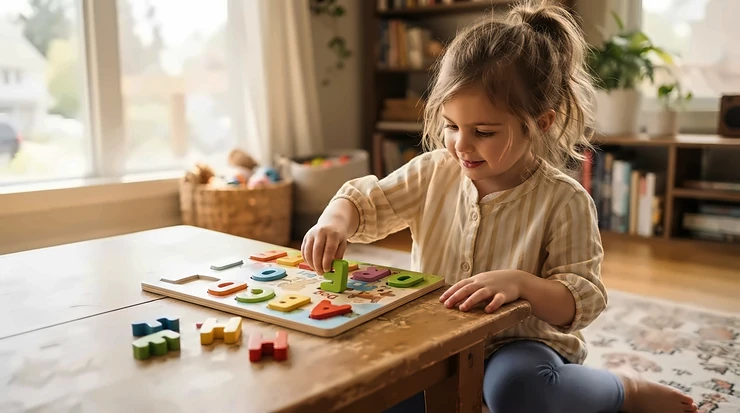
Learning toys for 4 year olds preparing for kindergarten are hands-on games, manipulatives, and interactive tools that build what schools quietly expect on day one. That means knowing some letters, counting with meaning, gripping a pencil, taking turns, and following a two-step direction. The best ones disguise practice as play. For a reality check on what typical four-year-olds can already do, the CDC’s 4-year milestone checklist is a handy yardstick.
Here’s the thing about the toy aisle: every box shouts “STEM,” “Montessori-inspired,” or “brain-boosting.” Most of those words are decoration. What matters is whether a toy gives your kid repeated, low-stakes practice at one specific skill, and whether it survives a four-year-old’s enthusiasm. Many don’t.
This guide sticks to what can be verified. Every pick rests on published specs and the consistent themes in buyer reviews, not a staged living-room test, so you’ll see “reviewers report” instead of invented anecdotes. You’ll get seven real products, from a pocket-friendly counting set to a tablet-powered kit. Then we’ll dig into the skills teachers look for, including alphabet and phonics learning toys for preschoolers, letter recognition games, counting and number sense activities, and even math learning toys for first graders, because a few of these picks keep paying off for years.
One housekeeping note: prices move constantly, so you’ll see ranges and a reminder to check current price. Nothing here promises a deal.
Quick Comparison: 7 Best Learning Toys for 4 Year Olds Preparing for Kindergarten
Short on time? This table is the cheat sheet. Details, caveats, and real-world reasoning follow in the product breakdowns.
| Product | Skill Focus | Format | Price Range | Best For |
|---|---|---|---|---|
| LeapFrog LeapStart Learning Success Bundle | Reading, math, problem-solving | Stylus + activity books | $40-$60 range | Independent, gadget-loving kids |
| Osmo Little Genius Starter Kit | Phonics, drawing, social-emotional | Hands-on pieces + iPad | $40-$80 range | Families who already own a compatible iPad |
| LeapFrog Fridge Phonics Magnetic Letter Set | Letter names and sounds | Talking magnetic tiles | Mid-$20s to mid-$30s | Kids still learning the alphabet |
| ThinkFun Zingo Bingo | Word recognition, turn-taking | Matching game | $20-$25 range | Family game night, siblings |
| Learning Resources MathLink Cubes Early Math Activity Set | Counting, patterns, early addition | Snap cubes + activity cards | $25-$40 range | Hands-on math learners |
| Hot Dots Jr. Let’s Master Kindergarten Math | Counting, shapes, patterns, time | Workbooks + talking pen | $25-$35 range | Older fours heading into K |
| Learning Resources Smart Snacks Counting Cookies | Number order, one-to-one counting | Soft plastic cookies | $15-$25 range | Budget number-sense practice |
Looking at the table, the cheapest picks aren’t the weakest. Counting Cookies and Fridge Phonics target one skill each, and that focus is exactly why they work. If your child already knows most letters, skip the phonics set and put the money toward Zingo or MathLink Cubes. Hot Dots Jr. leans older, so it fits a child turning five soon, while Osmo only makes sense if the iPad already lives in your house.
💬 Just one click — help others make better buying decisions too!😊
Top 7 Learning Toys for 4 Year Olds Preparing for Kindergarten: Expert Analysis
Each pick below follows the same logic: what the specs mean in practice, who it suits, what reviewers keep saying, and whether the price range earns its keep.
1. LeapFrog LeapStart Learning Success Bundle — screen-free tutor that grows with your child
The big idea is touch-and-talk. Your child taps a printed page with a stylus and the unit answers back. It’s the nearest thing to a tablet that doesn’t glow, which matters if you’re trying to keep screens boring.
LeapStart is built for preschool through first grade, with 30-plus activities per book, and many activities come in two difficulty levels. On paper, that means a four-year-old starts easy and graduates without a new toy. The stylus also nudges a pencil-style grip, a small but real kindergarten skill, since holding a crayon between fingers and thumb is a typical milestone around this age.
Based on the spec comparison, this suits the self-directed kid who loves gadgets, and the parent who needs twenty quiet minutes without a YouTube spiral. What the spec sheet won’t tell you: the books are the recurring cost. The bundle includes only two, and the unit runs on AA batteries. Some listings also say book content loads through a computer connection, so confirm the current setup steps.
Reviewers consistently praise how engaging the letter and word activities are. Durability draws mixed reports, and some parents say battery costs add up over a year.
Pros:
- ✅ Two difficulty levels on many activities
- ✅ Stylus encourages a pencil-style grip
- ✅ Book library runs from preschool to first grade
Cons:
- ❌ Extra books are sold separately and add up
- ❌ Mixed durability and ongoing battery costs
Expect roughly the $40-$60 range for the bundle at the time of research; check current price. It’s good value if your child will work through at least a few books.
2. Osmo Little Genius Starter Kit — real pieces that come alive on the screen
Here’s a clever hybrid. Your child handles physical pieces while an iPad watches and reacts, so the screen becomes a game board instead of a babysitter.
The Osmo kit targets ages 3-5 with four games covering phonics, drawing, and social-emotional cues. It includes the Osmo base, a reflector for certain tablet models, and stackable storage. The iPad is not included, and that’s the catch. Compatibility varies by model, so check the maker’s current compatibility list for your exact device before ordering. Listings say gameplay needs no WiFi once the apps are installed.
My analysis: this is a smart buy if a compatible tablet already sits in your house, because it converts passive scrolling into letter-building and drawing. It’s a poor buy if you’d need to purchase the tablet.
Osmo‘s own page shows about 4.7 stars across 6,000-plus ratings, though manufacturer-hosted scores deserve a grain of salt. Parents describe sturdy, small-hand-friendly pieces and easy setup, with one practical warning: the apps eat device storage.
Pros:
- ✅ Hands-on pieces sized for small hands
- ✅ Phonics, drawing, and emotion games in one kit
- ✅ No WiFi needed during play after setup
Cons:
- ❌ Requires a compatible iPad, not included
- ❌ App downloads consume device storage
Plan on roughly $40-$80 depending on bundle and promotions; prices may vary. Terrific value with an existing iPad, steep without one.
3. LeapFrog Fridge Phonics Magnetic Letter Set — turns the kitchen into a letter lab
Kitchens are where kids wait: for dinner, for you, for the pasta water. This set hijacks that dead time.
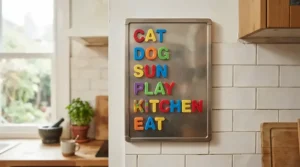
You get 26 magnetic letter tiles and a little school-bus reader. Slide a tile in and it speaks the letter name, its sound, and an example word, and a button sings the alphabet. That trio matters because Reading Rockets describes alphabet knowledge as naming letters, knowing their sounds, and recognizing printed shapes. One tile drills all three.
Listed for ages 2 and up, it skews young. A four-year-old who already knows most letters will outgrow it fast. A four-year-old who confuses half the alphabet? Perfect.
Retail listings show ratings near 4.8 stars across tens of thousands of reviews. Reviewers say kids learned letter sounds and loved lining tiles up. Complaints include tiles sliding down the fridge, smaller tiles than older versions, and toddlers flinging letters.
Pros:
- ✅ Letter name, sound, and word in one tile
- ✅ Strong magnets cling to the fridge
- ✅ Works for younger siblings too
Cons:
- ❌ Tiles can slide down the door
- ❌ Too easy for confident letter-knowers
Expect the mid-$20s to mid-$30s range; check current price. Strong value for beginners, weak for kids past the basics.
4. ThinkFun Zingo Bingo — fast-paced matching that sneaks in reading
Bingo, but with a plastic “Zinger” that spits out tiles like a tiny slot machine. Kids lose their minds over it, in the good way.
Zingo includes 72 picture tiles and six double-sided cards with two levels of play, for two to six players and roughly 15-20 minutes a round. Each card pairs pictures with printed words, so kids match images and quietly absorb how words look. That’s word recognition and vocabulary rather than pure letter naming, and the game’s real kindergarten payoff is social: waiting, taking turns, and losing without a meltdown.
Reviewers describe it as durable and easy to scale up or down. Practical gripes: adults need to run the first few rounds, the tile holder can be fiddly, and kids past eight may find it repetitive. For targeted skills, the same maker sells Zingo Sight Words and Zingo 1-2-3.
Pros:
- ✅ Builds turn-taking and good-sport habits
- ✅ Two play levels stretch across ages 4-8
- ✅ Sturdy pieces survive family game nights
Cons:
- ❌ Needs an adult for the first rounds
- ❌ Teaches words more than letter names
Typically around $20-$25; prices may vary. Excellent value for multi-kid households.
5. Learning Resources MathLink Cubes Early Math Activity Set — the math toy that doubles as building blocks
Snap-together cubes are the Swiss Army knife of early math. They count, sort, pattern, and build, and they never need a software update.
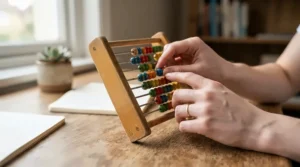
This set packs 100 cubes in ten colors, 15 double-sided write-and-wipe cards offering 30 challenges, and an activity guide. The cubes connect on every side, so a “number train” and a robot are the same material. The cards walk through sorting, patterning, early addition and subtraction, and sequencing. On paper that’s one-to-one correspondence practice disguised as construction.
My take: this is the best “grows-with-you” math pick on the list, useful from counting to ten through early addition. Reviewers say kids treat it as play rather than homework, and describe the cubes as solid. Cards need adult guidance at first, and 100 loose cubes escape. Plan a bin.
Pros:
- ✅ Cards cover sorting, patterns, and early addition
- ✅ Cubes double as open-ended building toys
- ✅ Solid, reusable write-and-wipe cards
Cons:
- ❌ Needs adult guidance to start
- ❌ Loose cubes demand a storage plan
Roughly the $25-$40 range; check current price. Strong long-term value because it spans preschool to first grade.
6. Hot Dots Jr. Let’s Master Kindergarten Math — self-checking practice for older fours
This one comes with a talking dog-shaped pen that tells your child instantly whether an answer is right. Immediate feedback keeps kids from practicing mistakes.
The set holds two books and 100 lessons: 85 kindergarten-level plus 15 challenge lessons covering counting, patterns, time, shapes, fractions, and measurement. Here’s the honest wrinkle: it’s labeled for ages 5-6. For a four-year-old, treat it as a summer-before-kindergarten tool, or look at the Hot Dots Let’s Learn Pre-K Math line for a gentler start.
Reviewers on a major listing give it around 4.6 stars across roughly a thousand ratings. They like the screen-free format and the variety of skills. The pen runs on AAA batteries, and kids who tap every dot until it chirps are practicing guessing, not math, so watch the first few pages.
Pros:
- ✅ Instant feedback from the talking pen
- ✅ 100 lessons across many math skills
- ✅ Screen-free and travel-friendly
Cons:
- ❌ Labeled 5+, so fours may need help
- ❌ Dot-tapping can turn into guessing
Around the $25-$35 range; check current price. A good deal if your child is turning five soon.
7. Learning Resources Smart Snacks Counting Cookies — cheap, sneaky number sense
Sometimes the humblest toy does the heaviest lifting. Eleven soft plastic cookies, numbered 0-10, each with matching chocolate chips.
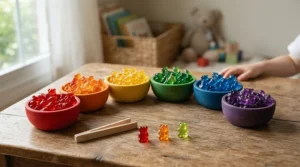
Matching chips to numerals builds one-to-one counting and cardinality, the idea that the last number counted tells “how many.” That’s real number sense, not just reciting 1-2-3 like a nursery rhyme. The cookies double as pretend-play baking, which is how they sneak into a kid’s day.
Listed for ages 2 and up, but one reviewer sensibly suggests treating it as ages 3+ with supervision, since the chips are small. Reviewers call it simple, versatile, and good for addition and subtraction later.
Pros:
- ✅ Builds one-to-one counting and number order
- ✅ Doubles as pretend-play food
- ✅ Very low price for the practice value
Cons:
- ❌ Small chips need supervised play
- ❌ Only covers numbers 0-10
Usually in the $15-$25 range; prices may vary. Outstanding value for the skill it targets.
Side-by-Side Specs and Value
| Product | Listed Age | Standout Spec | Needs | Rating Signal |
|---|---|---|---|---|
| LeapStart | 2-5 (some listings go higher) | Two-level activities, preschool to 1st-grade books | AA batteries; extra books | Roughly 4.3-4.6 stars on retail listings |
| Osmo | 3-5 | 4 games, base, reflector | Compatible iPad | About 4.7 on maker’s site |
| Fridge Phonics | 2+ | 26 talking tiles | Magnetic surface | Around 4.8 on a major listing |
| Zingo | 4-8 | 72 tiles, 6 double-sided cards | 2+ players | Mostly 4+ stars |
| MathLink Cubes | 4+ | 100 cubes, 15 cards, 30 challenges | A storage bin | Positive themes; no single verified score |
| Hot Dots Jr. | 5-6 | 100 lessons, self-checking pen | AAA batteries | About 4.6 on a major listing |
| Counting Cookies | 2+ listed, 3+ sensible | 11 cookies, 0-10 | Adult supervision | Positive themes; no single verified score |
The tightest value picks are Counting Cookies and Fridge Phonics, because they’re inexpensive and laser-focused. LeapStart and Osmo cost more upfront and carry hidden costs in books and hardware. MathLink Cubes and Zingo land in the sweet spot, since both stretch across several years and several kids.
Your First 30 Days: A Practical Usage Guide
Buying the toy is the easy part. Using it well is where kindergarten readiness actually happens.
Week one: start small. Pick one literacy toy and one number toy, not all seven. Keep sessions to 10-15 minutes, ending while your child still wants more. That “one more!” feeling is the whole trick.
Week two: add a game. Bring in Zingo after dinner. Play the easier card level first and narrate the words out loud together.
Week three: connect it to real life. Count Counting Cookies chips onto a real plate, then count actual crackers. Ask your child to find the first letter of their name on cereal boxes.
Week four: review and rotate. Notice what your child avoids. That’s the gap. Swap in the toy that targets it.
Maintenance: Pull batteries from LeapStart and Hot Dots Jr. if they’ll sit unused for weeks. Keep a bin for MathLink Cubes, and keep spare AA and AAA batteries somewhere kids can’t reach.
Common first-month mistakes: introducing everything at once, correcting every error, and turning play into a quiz. If your child hears “no, try again” ten times a session, they’ll start avoiding the toy.
✨ Don’t Miss These Exclusive Deals!
🔍 Take your kindergarten prep to the next level with these carefully selected products. Click on any highlighted item to check current pricing and availability. These tools will help you create confident, curious first-day-of-school moments your family will love!
Real-World Scenarios: Matching Toys to Three Different Kids
These are hypothetical household profiles, built to show the reasoning rather than to report anyone’s real experience.
Profile 1: The kitchen-hanger. A family with a modest budget and a child who knows about ten letters. The analysis points to Fridge Phonics for letter sounds during dinner prep, plus Zingo on weekends. Combined, that’s a manageable spend, and both are low-maintenance.
Profile 2: The independent gadget kid. Two busy working parents, a child who loves buttons and sounds, and a household that wants fewer apps. LeapStart fits because the child can run activities alone, and the two-level design means it won’t be outgrown in March. If a compatible iPad already exists, Osmo earns a spot too.
Profile 3: The counting-but-guessing kid. This child recites to twenty but can’t tell you how many crackers are on the plate. That’s rote counting without number sense. Counting Cookies targets one-to-one matching directly, and MathLink Cubes adds building and patterns. A late-year fifth birthday makes Hot Dots Jr. a reasonable summer addition.
The common thread: start from the gap, not the gadget. A toy that’s brilliant for one child is a closet ornament for another.
Problem → Solution: When Kindergarten Prep Hits a Snag
Problem: “My child won’t sit still for learning.” Shrink the session. Five minutes with MathLink Cubes, building a color pattern standing up, beats fifteen minutes of forced focus.
Problem: “My child mixes up similar letters.” Confusion between look-alike letters is common at this age. Use Fridge Phonics to hear each letter’s sound, then trace the shape with a finger on the fridge. Short, repeated passes work better than long drills.
Problem: “My child counts by rote but doesn’t understand quantity.” Use Counting Cookies to line up one chip per count, touching each as you go. The goal is to see that the last number said means “how many.”
Problem: “I feel guilty about screens.” Lean on screen-free options like Hot Dots Jr. and Zingo, and treat Osmo as a hands-on use of screen time rather than a replacement for play.
Problem: “A younger sibling keeps stealing pieces.” Store small parts like cookie chips and loose cubes up high. Small pieces and magnets are real choking and swallowing hazards for toddlers, so keep them out of reach.
How to Choose Learning Toys for 4 Year Olds Preparing for Kindergarten
The short answer: pick two or three toys that target your child’s actual gaps, match the age label to the child’s ability, and check for hidden costs before buying. Here’s the step-by-step.
- Start with the gap, not the gadget. Skim a school-readiness checklist, then spot what your child hasn’t mastered. Buy for that.
- Match the label to the child. Age ranges are guesses. A four-year-old on the cusp may thrive on a “5+” product, while a young four may need a “3+” one.
- Prefer self-correcting or open-ended designs. Toys that tell kids right from wrong, or that can be built any way, keep practice productive.
- Count the hidden costs. Batteries, extra books, and compatible tablets can double a toy’s real price.
- Check safety first. Small parts and loose magnets are for supervised play only.
- Choose toys that scale. A toy that works through first grade, or for siblings, stretches your budget.
- Limit the rotation. Two or three toys at a time beats a pile that overwhelms.
What Skills Kindergartners Need Before the First Bell
What skills kindergartners need is a question every parent Googles in August, and the answer is broader than ABCs and 123s. The federal Head Start Early Learning Outcomes Framework organizes school readiness into five domains: approaches to learning, social and emotional development, language and literacy, cognition (including math and scientific reasoning), and perceptual, motor, and physical development.
Translated into everyday terms, school-district readiness checklists commonly list items like these:
- Self-help: managing the bathroom, washing hands, putting on a jacket and zipping it.
- Language: speaking in complete sentences and following multi-step directions.
- Literacy: recognizing some letters, rhyming, hearing beginning sounds.
- Math: counting to ten (some lists say twenty), counting objects by pointing, naming shapes.
- Fine motor: holding a pencil with the fingers instead of a fist, using scissors.
- Social: taking turns, waiting, handling a loss without a meltdown.
Notice how many items have nothing to do with flashcards. That’s the point. Toys like Zingo train waiting and turn-taking, MathLink Cubes train counting and fine motor skills, and the LeapStart stylus trains grip. And every checklist comes with the same caveat: no child masters everything before day one, and teachers expect that.
Alphabet and Phonics Learning Toys for Preschoolers: What Actually Works
Alphabet and phonics learning toys for preschoolers earn their keep when they teach letter names, letter sounds, and letter shapes together. Reading research summaries note that alphabet knowledge is among the strongest predictors of later reading success, so this isn’t busywork.
The most useful pattern is short, repeated practice rather than marathon sessions. Reading Rockets summarizes one research-based approach that favors brief lessons, extra attention to harder letters, and regular cycles of review. In toy terms, that means a few minutes a day with Fridge Phonics beats an hour on Sunday.
A sensible sequence: begin with letters in your child’s own name, since those carry personal meaning. Add letter sounds next, using the talking tiles on Fridge Phonics. Then move into combining letters with Osmo‘s phonics game or the reading activities on LeapStart. For a more structured upgrade, the Hot Dots Jr. Let’s Master Kindergarten Reading set covers letter recognition, phonics, and sight words, though like its math sibling it’s aimed at kids around five.
One caution: toys that sing the alphabet song help with memorization, but singing isn’t recognition. Mix in pointing games, such as “which one is B?”, so your child connects the name to the shape.

Letter Recognition Games Worth Playing
Letter recognition games work best when they’re quick, social, and slightly competitive. Four-year-olds love beating a parent to the answer.
Zingo is the classic crowd-pleaser, though its original version matches pictures to words rather than isolating letters. If the goal is pure letter work, check the Zingo Sight Words variant once your child is ready for printed words. Magnetic letter sets, including Fridge Phonics, let kids sort and match shapes by hand, which adds a touch of fine motor practice.
Free games work too, and arguably better than anything boxed:
- Letter hunt: find the letter “M” on cereal boxes, street signs, and shirts.
- Name scramble: spell your child’s name with magnets, then scramble it for them to fix.
- I spy, letter edition: “I spy something that starts with /b/.”
The logic comes straight from the readiness lists: kindergarten teachers want children who know some letters, recognize their own name, and hear beginning sounds. A game that does all three in ten minutes is worth a spot on the shelf.
Counting and Number Sense Activities That Stick
Counting and number sense activities should go past reciting numbers. The NAEYC’s math resources emphasize that young children build math concepts through play and daily routines, from counting to comparing “more” and “less.”
Here’s a quick progression:
- One-to-one counting: touch each object once. Counting Cookies is built for this.
- Cardinality: after counting, ask “how many?” and listen for the last number.
- Quantity recognition: quickly recognizing groups of up to five without counting each item.
- More and less: compare two piles and say which has more.
- Early addition: snap two MathLink Cubes towers together and count the total.
Everyday versions cost nothing: count stairs, divide snack crackers evenly between stuffed animals, or race to count toys into a bin. Rhymes with numbers and board games with dice add repetition without feeling like school.
The trap to avoid is mistaking rote counting for number sense. A child who says “one through twenty” but can’t hand you four crackers hasn’t yet connected numbers to quantity. Toys that make that connection physical, like cookies with matching chips or cubes that click together, bridge the gap.
Math Learning Toys for First Graders: Buy Once, Use Twice
Math learning toys for first graders overlap with preschool tools more than you’d guess, which is good news for your budget. The smartest purchases are the ones your child can grow into.
MathLink Cubes is the headline example. The same set that teaches counting to ten also supports patterning, early addition and subtraction, and number bonds, and the maker also sells a Numberblocks MathLink Cubes set for fans of the show. Hot Dots Jr. Let’s Master Grade 1 Math is the natural follow-up to the kindergarten set, with 85 first-grade lessons on patterns, time, shapes, measurement, money, place value, and math facts, plus 15 challenge lessons. Zingo 1-2-3 extends the bingo format into counting, number recognition, and simple addition.
The value logic is simple. A toy that serves a four-year-old now and a first grader later has a lower cost per year of use. If you’re comparing options, favor open-ended or leveled products over single-skill gadgets, and keep them in good shape for younger siblings. Just don’t rush: building number sense at four makes first-grade math feel like a victory lap instead of a hurdle.
Features That Actually Matter (And Those That Don’t)
What matters:
- Immediate feedback. Whether it’s a talking pen or a self-correcting puzzle, kids learn faster when they know right from wrong.
- Leveled difficulty. Two-level activities, like those on LeapStart and Zingo, extend a toy’s life.
- Durability. Four-year-olds are rough on things. Thick pieces and sturdy cases beat flimsy sets.
- Low setup friction. If it takes ten minutes to prepare, it won’t get used.
- Real hidden-cost math. Add batteries, extra books, and tablets before judging value.
What doesn’t:
- Buzzwords. “STEM,” “Montessori-inspired,” and “brain-boosting” aren’t regulated promises.
- Flashy sounds. Music and lights grab attention, but they rarely increase learning.
- Giant piece counts. A 200-piece set isn’t better than a focused 11-piece one.
A safety note: small parts, loose magnets, and button batteries are hazards around toddlers. Check age labels, supervise play, and keep pieces from younger siblings. That’s especially relevant for Counting Cookies and MathLink Cubes.
Learning Toys vs Worksheets and Tablet Apps
Parents often wonder whether toys beat workbooks or apps. The honest answer is that each has a role.
| Factor | Learning Toys | Worksheets | Tablet Apps |
|---|---|---|---|
| Engagement | High, hands-on | Low to moderate | High, but easy to over-use |
| Fine motor practice | Strong (cubes, tiles, stylus) | Strong (pencil work) | Limited |
| Social skills | Strong with games like Zingo | Minimal | Minimal |
| Parent effort | Low to moderate | Low | Low |
| Ongoing cost | One-time, plus batteries or books | Printing or workbooks | Subscriptions possible |
| Best For | Play-based skill building | Writing practice | Short, supervised sessions |
The comparison shows toys pulling ahead on engagement and social skills, while worksheets win on pencil control. Apps are convenient but come with the most risk of drifting into passive screen time. A balanced mix works best: toys for exploration like MathLink Cubes, a few minutes of writing practice, and tightly limited tablet use, such as Osmo‘s hands-on format.
FAQ
❓ What is the best learning toy for a 4 year old who doesn't know letters yet?
❓ Are letter recognition games better than flashcards?
❓ Do I need an iPad to use the Osmo Little Genius Starter Kit?
❓ Which math learning toys for first graders also work for preschoolers?
❓ How much should I spend on learning toys for 4 year olds preparing for kindergarten?
Conclusion
Here’s the takeaway. Kindergarten readiness isn’t a shopping spree. It’s a handful of well-chosen toys, used in short bursts, aimed at the gaps your child actually has. Start from the checklists, not the packaging.
If letters are the weak spot, Fridge Phonics and Zingo make a strong pair. If numbers need work, Counting Cookies and MathLink Cubes cover the basics at a gentle price. If you want independence, LeapStart is the screen-free pick, and Osmo rewards families that already own a compatible iPad. Save Hot Dots Jr. for the older four heading into kindergarten.
And remember: teachers expect incoming kids to be works in progress. A child who arrives curious, able to take turns, and excited about letters and numbers is ahead of the game, whatever the checklist says.
Recommended for You
- Educational Toys For 2 Year Olds: 7 Best Picks In 2026 (Smart Buys)
- Gender Neutral Toys For Long Car Rides And Flights: 7 Best Picks 2026
- Gender Neutral Christmas Gifts For 5 Year Olds: 7 Best Picks (2026)
Disclaimer: This article contains affiliate links. As an Amazon Associate, I earn from qualifying purchases. If you purchase products through these links, we may earn a small commission at no additional cost to you.
✨ Found this helpful? Share it with your friends! 💬🤗
