

In This Article
A ukulele for kids who are beginners is a small four-string instrument, usually a 21-inch soprano with soft nylon strings, sized for little hands and forgiving of early mistakes. It plays real chords with just a few finger shapes. That is why so many buying guides treat it as the friendliest first instrument for children.
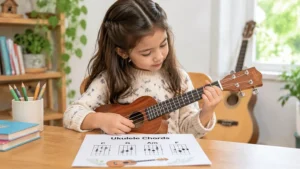
Your child points at a tiny guitar-shaped thing in a shop window and announces, with total conviction, that they are going to be a musician. Now you have to buy something. The market is a minefield: glossy plastic toys that never hold a tune, bundles with fourteen accessories nobody asked for, and “kids’ guitars” that are really furniture with strings.
This guide cuts through that. We compared seven real products across ukuleles, a half-size guitar, a school recorder, strings and a tuner, using published specs and the review patterns buyers actually report. Ukuleles come in four common sizes, but only one really matters for small hands, and we’ll get to it. We’ll also settle the guitar for 6 year olds question, work out where a recorder for elementary school music class fits in, and explain why nylon vs steel strings for kids is not really a debate at all.
One note on honesty: nobody here has handled these instruments for you. Everything below comes from specs, retailer listings and aggregated reviewer comments, and where a data point couldn’t be verified, we say so.
Quick Comparison: Which Ukulele for Kids Who Are Beginners Fits Your Child?
| Pick | Instrument | Typical price range | Best For |
|---|---|---|---|
| Kala KA-15S | Mahogany soprano ukulele | $60–$80 range | Kids who’ll stick with it |
| Donner DUS-1 | Soprano ukulele kit | Under $70 range | Budget-minded families wanting extras |
| Kala Learn to Play Soprano Starter Kit | Soprano kit with lessons | $70–$100 range | Parents who want guided learning |
| Yamaha CGS102AII | Half-size classical guitar | $130–$160 range | Kids set on guitar |
| Yamaha YRS-24B | Soprano recorder | Under $20 | School music class |
Looking at the table, the Kala KA-15S is the “buy once, play for years” option, while the Donner DUS-1 and the Kala Learn to Play Soprano Starter Kit trade a little purity for convenience. The Yamaha CGS102AII costs roughly double the ukulele picks, so it only makes sense if your child truly wants a guitar. The Yamaha YRS-24B barely counts as a purchase, but it is often the one a teacher requires.
💬 Just one click — help others make better buying decisions too!😊
Top 7 Picks for Kids Who Are Beginners: Expert Analysis
Here is the full lineup. Prices are ranges at the time of research and may vary, so check current pricing before you buy.
| Product | Type | Key spec | Price range | Best For |
|---|---|---|---|---|
| Kala KA-15S | Soprano ukulele | Mahogany body, Aquila Super Nylgut strings | $60–$80 | Long-term first uke |
| Donner DUS-1 | Soprano ukulele kit | 21-inch mahogany body, Aquila strings | Under $70 | Budget starter bundle |
| Kala Learn to Play Soprano Starter Kit | Soprano ukulele kit | Online lessons, tuner app, booklet | $70–$100 | Guided beginners |
| Yamaha CGS102AII | 1/2-size classical guitar | Spruce top, 535 mm scale | $130–$160 | Guitar-obsessed 6–8 year olds |
| Yamaha YRS-24B | Soprano recorder | ABS resin, Baroque fingering | Under $20 | School music class |
| Aquila Kids Ukulele Strings | Replacement string set | Color-coded nylgut | Under $15 | Faster learning, fresh sound |
| Snark ST-8 | Clip-on tuner | Chromatic, 360° display | $15–$25 | Keeping everything in tune |
The pattern is deliberate. Three ukuleles anchor the list, because the instrument is the point. One guitar and one recorder cover the common detours, and two small accessories fix the problems that quietly kill most first instruments: strings that sound dull and tuning that never stays put.
1. Kala KA-15S — the classic first “real” ukulele
The Kala KA-15S earns its reputation by being a genuine instrument at a beginner’s price. It is not a toy wearing a ukulele costume.
On paper, it has a mahogany body and Aquila Super Nylgut strings, with a scale length of roughly 13.6 inches. That scale is short enough that a small child’s fingers can reach the first few frets without contortion. It also weighs only about 13.4 ounces, per a MusicRadar review, which means a seven-year-old can hold it for a whole practice session without sagging. The satin finish and vintage-style open tuners give it a plain, honest look.
If your child is still deciding whether music is “their thing,” this is the safest middle path. It is cheap enough to risk and good enough that, if they quit, you aren’t left with a frustrating dud.
Reviewers consistently describe it as easy to play, with comfortable string height and good intonation, meaning chords sound in tune up and down the neck. The recurring complaint is the open geared tuners, which some reviewers call less dependable and say make tuning tedious. A MusicRadar review covers the build in more detail.
Pros:
- ✅ Comfortable string height for small fingers
- ✅ Warm mahogany tone that sounds genuinely musical
- ✅ Light enough for long practice sessions
Cons:
- ❌ Open tuners can drift and annoy beginners
- ❌ Gig bag not included
Expect a price in the $60–$80 range. For a child likely to keep playing, that’s a strong value.
2. Donner DUS-1 — the bundle that comes ready to strum
The Donner DUS-1 shines when you want everything handled in one purchase. It is a 21-inch soprano with a mahogany body, Aquila carbon nylon strings and chrome-plated tuners, according to published specs. Several kit versions bundle extras, so check exactly what comes in the box.
Why does this matter? Aquila strings are a step above the generic strings that cheap ukuleles often ship with. Better strings mean a rounder, more pleasant sound, and a child who likes the sound practices more. The enclosed (chrome-plated) tuners are also worth noticing: in the spec comparison, they are a different design from the Kala KA-15S‘s open tuners, and many beginners find enclosed tuners hold pitch a bit more steadily.
Based on the specs, this is the pick for families who want a complete setup without separate shopping trips. It is also a sensible choice if a gift is involved and you’d rather not hand over a bare instrument.
Roundup sites list it as an editor’s choice, and the feature set is easy to understand. However, we couldn’t verify a deep, independent pool of reviews, so treat the praise as a promising signal, not a verdict.
Pros:
- ✅ Aquila strings included for better tone
- ✅ Chrome-plated tuners for steadier tuning
- ✅ Often sold as a complete starter bundle
Cons:
- ❌ Bundle contents vary by listing
- ❌ Independent review depth is thin
Look for it in the “under $70” range. The value verdict: excellent if the bundle includes what you need.
3. Kala Learn to Play Soprano Starter Kit — the guided route for parents who can’t read music
The Kala Learn to Play Soprano Starter Kit is less about the ukulele and more about what happens after you open the box. Along with a satin mahogany soprano, it includes online lessons, a tuner app and a booklet.
That bundle matters more than it sounds. The most common reason kids abandon a first instrument isn’t lack of talent. It’s that nobody at home knows how to help, so frustration wins by week three. A structured lesson path hands a non-musical parent a script, and the tuner app means you can tune without buying a gadget on day one.
If you or your child are complete beginners, this kit reduces the “now what?” moment dramatically. The trade-off is that you are paying for the guidance, not a better instrument than the Kala KA-15S.
Roundup reviewers rate it highly, and the lesson content is its main talking point. We couldn’t verify review counts, so we won’t quote any. Also note that one listing describes the body wood as sapele rather than mahogany, so confirm the current version before you order.
Pros:
- ✅ Lessons, tuner app and booklet included
- ✅ Soprano size suits ages four to eight
- ✅ Reduces parent guesswork significantly
Cons:
- ❌ Costs more than a bare ukulele
- ❌ Lesson quality is hard to judge in advance
Plan for the $70–$100 range. The value verdict: worthwhile if nobody in your house plays.
4. Yamaha CGS102AII — a proper half-size guitar for the determined six-year-old
The Yamaha CGS102AII is for the child who has seen a guitar and will accept no substitutes. It is a half-size classical guitar with a spruce top, meranti back and sides, and a rosewood fingerboard and bridge.
The numbers explain the fit. A 535 mm (about 21-inch) scale and 48 mm nut width are far smaller than an adult classical guitar, which is what makes it usable for little hands. Nylon strings are gentle on fingertips, and a spruce top typically gives a fuller sound than the laminate tops common in toy guitars. Retailers pitch it for roughly ages six to eight, with some going from five to nine.
One reviewer who identifies as a guitar teacher reportedly called it perfect for a 6 to 8 year old who is interested but not ready to commit, though not for a serious student. Another parent said it fit their 121 cm tall six-year-old well.
Pros:
- ✅ Genuine spruce top for fuller sound
- ✅ Nylon strings are kind to small fingertips
- ✅ Same product family scales up to full size
Cons:
- ❌ Six strings mean slower first chords
- ❌ Outgrown within a couple of years
Expect the $130–$160 range. The value verdict: fair for a motivated child, steep as a casual experiment.
5. Yamaha YRS-24B — the school-standard recorder
The Yamaha YRS-24B is the instrument half of America’s second graders have blown into. It is a three-piece soprano recorder in durable ABS resin, with Baroque fingering and a straight windway, built for beginners.
Here’s what those specs mean in practice. Resin shrugs off drops and spit, so no oiling is needed. The straight windway gives a forgiving, focused tone with minimal air resistance, so a small child can produce a pleasant sound early. Baroque fingering is what most modern recorder method books and school programs expect, but check your child’s school list, because some programs specify otherwise.
This is the instrument to buy when a teacher has said “bring a recorder on Monday.” It is also a nearly free way to test whether your child enjoys wind instruments.
Reviewers frequently mention that it closely resembles what their kids use in class, and several describe it as well made for the money. We found no verified evidence of widespread defects, though contents of the package, such as cleaning rods or bags, vary by seller.
Pros:
- ✅ Nearly indestructible resin construction
- ✅ Straight windway helps beginners sound good
- ✅ Matches typical school requirements
Cons:
- ❌ Not a long-term instrument
- ❌ Accessories vary by seller
At under $20, the value verdict is easy: buy it if school asks.

6. Aquila Kids Ukulele Strings — color-coded strings that make learning visible
The Aquila Kids Ukulele Strings are the sleeper pick of this list. They are a nylgut set whose strings are color-coded, so a child can see which is which.
MusicRadar’s string roundup rates them as great for younger players, with the color coding helping new learners find notes faster. Its stated caveat is that they are not meant for older players. For a five- or six-year-old still learning that the strings have names at all, color is a surprisingly powerful teaching tool: “press the red string” beats “press the C string” every time.
There’s a second benefit. A cheap ukulele that ships with dull, stretched factory strings can sound lifeless, and swapping in fresh nylgut can noticeably improve the sound. That makes this an inexpensive upgrade for a Donner DUS-1 or any soprano that came with bargain strings.
We couldn’t verify a large review pool, so we’re leaning on the MusicRadar assessment and the product’s stated design.
Pros:
- ✅ Color coding speeds up string recognition
- ✅ Fresh strings improve tone on cheap ukuleles
- ✅ Same brand as many bundled sets
Cons:
- ❌ Aimed at younger players only
- ❌ Tuning still needed as strings settle
Expect a price under $15 range. The value verdict: a small spend for a real learning aid.
7. Snark ST-8 — the tuner that keeps small musicians from quitting
The Snark ST-8 is the least glamorous item here and possibly the most important. It is a clip-on chromatic tuner with a 360-degree rotating display and a tap-tempo metronome, and it works on ukuleles, guitars and basses.
You clip it to the headstock, pluck a string, and the screen tells you sharp or flat. A beginner can’t hear when a ukulele is off, so without a tuner every song sounds slightly wrong and the child concludes they are bad at music. The rotating display helps a parent tune from any angle, and the metronome is a bonus once practice gets serious.
Reviewers praise its accuracy, easy-to-read display and low price, and one noted it works well for beginners. One mention warned that a clip could dent certain finishes, so remove it after tuning. An Equipboard analysis suggests professionals chasing studio-level precision may want alternatives, though that is irrelevant for a six-year-old.
Pros:
- ✅ Clear display readable from any angle
- ✅ Works on ukulele, guitar and more
- ✅ Includes a handy tap-tempo metronome
Cons:
- ❌ Clip can mark delicate finishes
- ❌ Battery needs occasional replacement
Plan on a $15–$25 range. The value verdict: essential, not optional.
How to Choose a Ukulele for Kids Who Are Beginners
The right choice comes down to six practical checks. Work through them in order and you’ll avoid most regrets.
- Pick the size first. A soprano is the smallest standard size and suits most children under about eight. Bigger bodies mean bigger stretches, and stretches mean frustration.
- Check that it’s a real instrument. If the strings are metal-looking plastic or the neck wobbles, it is a toy. Toy ukuleles often cannot hold a tune, and an out-of-tune instrument teaches a child nothing.
- Look at the strings and tuners. Nylon or nylgut strings are the standard, and enclosed tuners tend to stay in pitch more steadily than open ones.
- Set a realistic budget. A small step up from toy price brings a major jump in playability. See the cost breakdown later in this guide.
- Decide how much guidance you need. If nobody at home plays, favor a kit with lessons, like the Kala Learn to Play Soprano Starter Kit.
- Budget for a tuner. Pair any pick with a Snark ST-8 or a tuner app so practice always sounds right.
The reasoning behind all six is simple: remove every obstacle between a child and a pleasant sound. Motivation at this age is fragile, and the first two weeks decide almost everything.

Soprano Ukulele Size: Why 21 Inches Fits Small Hands
Understanding soprano ukulele size takes thirty seconds and saves real money. Four sizes dominate: soprano at about 21 inches (53 cm), concert at about 23 inches (58 cm), tenor at about 26 inches (66 cm), and baritone at about 30 inches. Soprano, concert and tenor share the same GCEA tuning. The baritone is tuned DGBE, like the top four strings of a guitar, so skills don’t transfer neatly if you mix sizes.
Why does a few inches matter? Because frets get farther apart as the instrument gets longer. On a soprano, a small hand can span the first few frets comfortably. On a tenor, the same hand has to stretch, and a stretching child tends to press poorly, producing buzzy, muted notes that sound like failure.
One buying guide we found suggests soprano for kids under about eight and concert for roughly eight to twelve. That seems sensible, but treat it as a rule of thumb, not a law. A tall, nimble seven-year-old may be happier on a concert, and a petite ten-year-old may prefer a soprano. When in doubt, choose the smaller size, since playing comfortably matters more than a slightly bigger sound.
There is one trade-off worth admitting. Sopranos have the brighter, more “plinky” tone, while concerts are mellower. But the Kala KA-15S and Donner DUS-1 show that a well-made soprano sounds warm enough to enjoy. Choose soprano ukulele size for fit first and tone second.
Nylon vs Steel Strings for Kids: What Actually Matters
The question of nylon vs steel strings for kids sounds like a genuine debate. For ukuleles, it isn’t one.
Nearly all acoustic ukuleles are designed for nylon or similar low-tension synthetic strings. Steel is not conventional for ukuleles, and several buying guides warn that putting steel strings on an instrument built for nylon can damage it. Nylon is also softer on little fingertips, with a warmer, rounder tone.
The picture gets more interesting with guitars. Steel strings are brighter and louder, but they are firmer and stiffer, and one guide notes that players typically need around a month before calluses make them comfortable. A child’s tender fingers rarely enjoy that process. Nylon-string classical guitars, like the Yamaha CGS102AII, are the gentler path for a young beginner.
Here is the rule that protects your wallet: match strings to how the instrument was built, not to what sounds cool. Look at the bridge. A classical guitar or ukulele uses tie-on nylon strings. A steel-string acoustic uses ball-end strings held by pins, and steel strings on a nylon-built guitar can cause permanent damage. If you want upgrades, stick with nylon-family sets such as Aquila Kids Ukulele Strings.
Guitar for 6 Year Olds: Ukulele or Half-Size Guitar?
Every parent asks about a guitar for 6 year olds, usually because a relative plays one. It’s a fair question, and the honest answer is: it depends on the child.
A half-size guitar like the Yamaha CGS102AII is physically possible for a six-year-old, since retailers pitch it for roughly ages six to eight. But look at the geometry. Its scale length is about 21 inches, while a soprano ukulele’s scale is around 13 to 14 inches. That means every chord asks the child to stretch much farther, on six strings instead of four, pressing harder against a wider neck.
| Feature | Ukulele (Kala KA-15S) | Half-size guitar (Yamaha CGS102AII) | Recorder (Yamaha YRS-24B) |
|---|---|---|---|
| Strings / holes | 4 nylon strings | 6 nylon strings | 8 finger holes |
| Reach and stretch | Short, easy | Longer, harder | Minimal |
| First songs | Quick with simple chords | Slower | Quick melodies |
| Typical price range | $60–$80 | $130–$160 | Under $20 |
| Best For | Most 4–8 year olds | Determined 6–8 year olds | School music class |
Looking at the comparison, the ukulele wins on speed to a first song and on cost, while the guitar wins on long-term path and “real guitar” bragging rights. The recorder is the cheapest and teaches melody, but it won’t teach chords. For most six-year-olds, the ukulele is the lower-friction start, and nothing stops a child from moving to guitar later, since the finger skills carry over.
If your child is adamant about guitar, though, motivation beats logic. A reviewer-teacher’s caution applies: this half-size guitar is great for an interested child who isn’t ready to commit, but not a long-term student instrument.
Recorder for Elementary School Music Class: Where Does a Ukulele Fit?
Many schools hand out a recorder for elementary school music class, often in second or third grade. A ukulele and a recorder are not rivals. They train different things.
The recorder teaches breath control, reading single notes and playing melodies. The ukulele teaches chords, rhythm and strumming, the skills that let a child accompany a song. Together they build a more complete musician, and many kids happily juggle both.
If your child’s school requires a recorder, buy exactly what the supply list says. The Yamaha YRS-24B is widely described by retailers as a classroom standard, with Baroque fingering that matches most modern method books. It is cheap enough that a lost or chewed one is not a crisis.
A practical tip: don’t let the recorder become a chore that sours your child on music. Keep the ukulele as the “fun” instrument for free play, and let the recorder be the “class” instrument. Different jobs, different moods.
Tuners and Beginner Accessories: What’s Worth Buying
The phrase tuners and beginner accessories launches a thousand overstuffed bundles. Most of the add-ons are filler. Here’s what actually earns its place.
The tuner, above all. A Snark ST-8 or a good tuner app is the one non-negotiable. Beginners can’t hear slight detuning, so a tuner prevents the “this sounds wrong” spiral. Ukuleles with open tuners, like the Kala KA-15S, may need retuning more often, which makes a tuner even more valuable.
A gig bag or soft case. Kids drop things. A padded bag turns a dropped ukulele from a disaster into an anecdote. The Kala KA-15S does not include one, so budget a little.
A spare string set. Strings stretch, dull and occasionally snap. Aquila Kids Ukulele Strings are handy to keep in a drawer.
A strap. Optional for small ukuleles, but it helps a standing child keep both hands free.
A footstool for guitar. If you go the half-size guitar route, a footstool props the instrument at a better angle for short legs.
What to skip: picks (ukuleles are usually strummed with fingers), novelty stickers and anything labeled “10-piece accessory kit” unless you’ve confirmed the pieces are useful. Spend on the tuner and the bag, and ignore the rest.

Transformation Guide: Your Child’s First 30 Days With a Ukulele
Amazon listings tell you what a ukulele is. They don’t tell you what to do on Tuesday. Here is a simple month plan.
Week 1: Make friends with the instrument. Skip songs. Let your child hold it, strum open strings and name the parts. Tune it together with your tuner. Five to ten minutes a day is plenty, because short wins beat long slogs.
Week 2: One finger, one chord. Teach a simple one- or two-finger chord. Many beginner songs for kids use very few chords, so a child can accompany real music surprisingly early. Pair strumming with a familiar tune they already sing.
Week 3: Add a second chord and switch. The switch between chords is the real hurdle. Practice it slowly, with a metronome or just a steady count. The Snark ST-8‘s tap-tempo metronome is handy here.
Week 4: Perform something. A family “concert” with one song, even a wobbly one, builds pride and momentum.
Common mistakes in the first month: practicing too long, skipping tuning, and comparing progress to other children. Also watch for new-string stretch. Fresh strings drift flat for the first several days, so retune often.
If you’ve chosen the Kala Learn to Play Soprano Starter Kit, its lessons can structure this plan for you. Either way, keep sessions light, finish while your child still wants more, and treat the first month as habit-building, not skill-building.
Real-World Scenarios: Which Pick Fits Which Kid?
Specs get abstract fast. Here are three plausible family profiles, matched to products with reasoning.
Scenario 1: The five-year-old explorer. Your child is curious but unproven, and you want to spend modestly. A soprano with Aquila-type strings is ideal, such as the Donner DUS-1 at an under-$70 range. Add a Snark ST-8 and you’re in for under $100 total. Practice: five minutes, a few days a week.
Scenario 2: The seven-year-old with a school recorder. Class requires a Yamaha YRS-24B, and your child already loves singing. Pair the recorder with the Kala KA-15S for free-play strumming, since a ukulele chords-plus-singing combo is satisfying. Total budget lands around $80–$100 plus a tuner. Practice: ten minutes daily, alternating instruments.
Scenario 3: The six-year-old who only wants a guitar. Your kid refuses anything but guitar and has been air-strumming for months. The Yamaha CGS102AII respects that desire, and its nylon strings are gentle on small fingers. Budget around $130–$160 plus a tuner and footstool. Practice: short sessions with lots of patience, since six strings are harder.
The pattern: match the instrument to the child’s motivation, then protect that motivation with a tuner and easy early wins.
Common Mistakes When Buying a Ukulele for Kids Who Are Beginners
A few recurring pitfalls cause most buyer’s remorse.
Buying a toy. Plastic or painted-wood toys look cute but often cannot hold a tune, and a child hears every wrong note. Spend a little more for a real instrument.
Choosing too big. Parents often buy a concert “so they can grow into it.” A too-large instrument makes everything harder. Fit now matters more than fit later.
Forgetting the tuner. The cheapest fix for a dull-sounding ukulele is tuning it, yet many beginners never do. A Snark ST-8 costs about the price of a movie ticket.
Ignoring string type. Never put steel strings on a ukulele or classical guitar. Match strings to the instrument.
Over-buying accessories. A 12-piece bundle can bury the useful items under junk.
Skipping the lesson path. Buying an instrument with no plan for learning is a recipe for dust. Even free video lessons beat nothing.
The common thread: most mistakes come from optimizing for looks or price instead of playability.
Long-Term Cost & Maintenance
What does this really cost? Here is a rough total cost of ownership for three setups, using price ranges at the time of research.
| Setup | Contents | Estimated total range | Best For |
|---|---|---|---|
| Ukulele starter | Kala KA-15S + Snark ST-8 | $75–$105 | Most beginners |
| Ukulele plus spare strings | Above + Aquila Kids Ukulele Strings | $85–$120 | Families planning ahead |
| Guitar path | Yamaha CGS102AII + Snark ST-8 | $145–$185 | Guitar-set kids |
The analysis: the ukulele setups cost roughly half the guitar path, and a spare string set is a small insurance policy. The Yamaha YRS-24B at under $20 can be added to any of them.
Maintenance is light. Retune before every session, wipe the strings and body with a dry cloth, and store the instrument away from heat, direct sun and damp. Replace strings when they sound dull or won’t hold tune, which depends on how often your child plays. Keep it in a bag when traveling.
Value-wise, a modest-quality ukulele that survives childhood and gets handed to a younger sibling has a low cost-per-use. The most expensive instrument is the cheap one that gets abandoned.
FAQ
❓ What age can kids start learning ukulele?
❓ Is a cheap toy ukulele okay for a toddler?
❓ How much should I spend on a first kids' ukulele?
❓ Can my child learn recorder and ukulele together?
❓ Do I need a gig bag for a kids' ukulele?
Conclusion
Choosing a ukulele for kids who are beginners comes down to fit, sound and support. Pick a soprano that suits small hands, keep it in tune, and give your child a gentle path to a first song. The Kala KA-15S is the best all-round instrument on this list, the Donner DUS-1 and the Kala Learn to Play Soprano Starter Kit make convenient bundles, and the Yamaha CGS102AII answers the guitar-loving child. The Yamaha YRS-24B covers school, while Aquila Kids Ukulele Strings and the Snark ST-8 keep everything sounding right.
Does it matter in the bigger picture? An overview of neuroscience research from The Royal Conservatory of Music links music study with benefits such as attention and language development. Nobody can promise your child a particular outcome, but a small, cheerful instrument is a low-risk way to find out.
Start small, tune often, and celebrate the wobbly first song. That’s how musicians are made.
✨ Ready to Pick Your Child’s First Ukulele!
🔍 Take your child’s first musical steps with these carefully selected products. Click on any highlighted item to check current pricing and availability. A well-chosen ukulele can help you create warm, memorable music moments your family will love! 🎶
Recommended for You
- Xylophone For Toddlers: 7 Best Picks That Stay In Tune (2026)
- 500 Piece Jigsaw Puzzles For Family Puzzle Night: 7 Best Picks 2026
- Wooden Puzzles Vs Cardboard Puzzles For 2 Year Olds: 7 Top Picks 2026
Disclaimer: This article contains affiliate links. As an Amazon Associate, I earn from qualifying purchases. If you purchase products through these links, we may earn a small commission at no additional cost to you.
✨ Found this helpful? Share it with your friends! 💬🤗
