

In This Article
A microscope for kids is a beginner-friendly optical instrument, either a simple low-power viewer or a true compound scope. It is built with sturdier bodies, simpler controls, and gentler magnification so children can explore specimens, from leaves and rocks to prepared slides, without frustration. The best models balance real glass optics with ease of use.
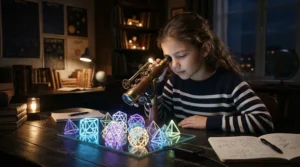
Here’s the thing about buying a first scope: the box lies. “Up to 1,200x!” it screams, while your seven-year-old squints at a blurry smear and wanders off to find the dog. The gap between a microscope for kids that gets used for a decade and one that gathers dust by February comes down to three unglamorous things: optics, lighting, and fit for the child’s age. Get those right and the magic takes care of itself. 🔬
This guide ranks seven real models, from a chunky preschool viewer to an all-metal 1000x workhorse. It also spends serious time on what most listings skip: magnification power for beginners, glass vs plastic microscope lenses, prepared slides for kids, and which specimens (hello, crystal growing kits for kids and dinosaur fossil dig kits for 6 year olds) actually reward a closer look. If you want the physics behind it all, Florida State’s Molecular Expressions microscopy primer is a superb free reference.
A quick note on method. This article is built from spec sheets, published expert roundups, and aggregated buyer feedback, not hands-on lab time, so every opinion below is analysis grounded in that data. Prices appear as ranges and shift often, so check current price before you buy.
Quick Comparison: 7 Microscope for Kids Options at a Glance
| Product | Type | Magnification | Best Age | Best For |
|---|---|---|---|---|
| National Geographic Dual LED Kids Microscope | Compound + top light | 20x and 50x | 8-12 | Best all-round first “real” scope |
| GeoSafari Jr. My First Microscope | Low-power viewer | 8x | 3-7 | Preschoolers and toddlers |
| Celestron 44121 Microscope Kit | Monocular compound | 40x-600x | 8+ | Budget-friendly curiosity |
| Omano JuniorScope | Battery compound | Confirm on listing | 8+ | Real optics in a kid-proof body |
| AmScope SE305R-PZ | Binocular stereo | 10x-60x | 7+ | 3D bugs, rocks, and fossils |
| AmScope M150C-I | All-metal compound | 40x-1000x | 10+ | A scope that grows with the child |
| Swift SW200DL | Dual-LED compound | 40x-1000x | 10-14 | Science fairs and middle school |
Read the table as a ladder. The GeoSafari Jr. My First Microscope sits on the bottom rung for preschoolers, and the National Geographic Dual LED Kids Microscope is the sweet spot for most 8-to-12-year-olds. The two 1000x compounds are for kids who’ve already caught the bug. The AmScope SE305R-PZ is the odd one out on purpose: stereo scopes show solid objects in 3D, which is what most young kids actually want to look at.
💬 Just one click — help others make better buying decisions too!😊
Top 7 Microscope for Kids in 2026: Expert Analysis
Each pick below translates the spec sheet into what it means at the kitchen table. Review sentiment is aggregated from published reviews and retailer listings, and where I couldn’t verify a rating, I say so.
1. National Geographic Dual LED Kids Microscope — best all-rounder for ages 8-12
The standout here is the lighting: LEDs below the stage for slides, LEDs above for solid objects. That two-in-one setup turns a coin, a feather, or a pebble from “can’t see anything” into “can’t stop looking.”
The listing describes optical glass lenses delivering 20x and 50x, and buyers mention the lenses swap easily. It runs on two AA batteries (not included). The kit adds 10 prepared slides, 10 blank slides, and a lab-shrimp experiment. A 50x ceiling means onion skin and pond-water critters, not bacteria. One buyer called it marginal for slides for exactly that reason, so think of it as a 3D explorer first and a slide viewer second.
Aggregated sentiment is strong: roughly 4.6 stars across several thousand ratings, with buyers repeatedly praising the surprisingly clear lenses for the money.
Pros:
- ✅ Dual lighting handles slides and solid objects
- ✅ Clear glass optics for the price
- ✅ Generous kit with prepared and blank slides
Cons:
- ❌ 50x maximum limits serious slide work
- ❌ Batteries not included
Price range: around $50-$90. Strong value for a first scope.

2. GeoSafari Jr. My First Microscope — chunky enough for preschool hands
The hook is how little it asks of a child. Two extra-large eyepieces, a fat focus knob, and a push-button LED mean a three-year-old can operate it without a grown-up hovering.
It offers 8x magnification and takes three AAA batteries. You set a specimen on the tray rather than mounting a slide, so you get a 3D, dissecting-style view of leaves, coins, and rocks. Eight times is loupe territory, and the honest analysis is that this is a seeing-things-bigger toy, not a cell explorer. That’s the right ambition for ages three to seven.
Buyer feedback runs about 4.0 stars across several thousand ratings on one retailer listing. Fans love the sized-for-small-hands design. Recurring complaints include units breaking within a short time and some disappointment at the modest magnification.
Pros:
- ✅ Kid-sized controls and extra-large eyepieces
- ✅ No slides to fumble with
- ✅ Gentle 8x suits young explorers
Cons:
- ❌ Durability complaints appear in buyer reviews
- ❌ Magnification too low for older kids
Price range: roughly $25-$50. Cheap enough to be a low-risk gateway scope.
3. Celestron 44121 Microscope Kit — widest magnification range for the smallest budget
Celestron’s selling point is the sheer number range: 40x to 600x from 4x, 15x, and 30x objectives paired with a 10-20x zoom eyepiece. The kit adds three prepared glass slides, two blanks, a well slide, and a honeybee wing and brine shrimp slide, plus tweezers, an eyedropper, a needle probe, and a light diffuser.
Here’s the reasoning buyers should apply: big numbers on a light, budget body are where cheap optics tend to fall apart. Critical reviewers reported that the highest power wouldn’t come into focus and called the build lightweight. Aggregated sentiment lands near 3.8 stars across a few hundred ratings. Defenders say it’s fine for kids and absolute beginners. Treat 40x-150x as your realistic working zone. Availability varies, and some retailers list it as discontinued, so confirm stock.
Pros:
- ✅ Huge accessory set for the money
- ✅ Real glass slides included
- ✅ Wide on-paper magnification range
Cons:
- ❌ Mixed reviews on high-power focus
- ❌ Lightweight build feels less durable
Price range: typically under $65. Good value only if you keep expectations modest.
4. Omano JuniorScope — real optics in a kid-proof body
The appeal is philosophical: it was built as a working microscope, not a toy dressed up as one. A homeschooling magazine reviewer described it as lightweight enough for kids to pass around yet not toy-like, and said her ten- and thirteen-year-old were using it within minutes.
It’s battery-powered with a bottom LED, aimed at ages eight and up. The bundled “Amazing Microscope Adventures” cards and a Microscope Basics card are the underrated bonus, because they hand a non-scientist parent a script. I couldn’t verify one consistent magnification range across listings, so confirm it before buying.
Buyer comments praise value and customer service. One cautions it suits elementary kids better than middle or high schoolers, which matches its positioning. Buyers also report that it works well with plastic color-coded slides. I found no reliable aggregate rating.
Pros:
- ✅ Real working microscope design
- ✅ Activity cards help beginner parents
- ✅ Lightweight and easy to share
Cons:
- ❌ Outgrown by many middle schoolers
- ❌ Specs vary across listings, so verify
Price range: check current price; positioned in the budget-to-mid tier.
5. AmScope SE305R-PZ — best for 3D treasure hunts
Stereo scopes are the secret weapon for younger kids. The binocular head gives depth, so a beetle looks like a beetle, not a smudge.
Specs: 10x, 20x, 30x, and 60x via 1x and 3x objectives with WF10x and WF20x eyepieces, a metal pillar stand, and halogen lights above and below. Halogen bulbs run hotter than LEDs and the unit plugs in, so little fingers need supervision (a cordless LED version, the SE305R-PZ-LED, also exists). One buyer called it an “amazing first scope/gift for kids” and praised the metal build and easy eyepiece adjustment. Ratings hover around 4.4 across roughly 130 listings.
The caveat from a reviewer is fair: stereo scopes don’t resolve truly microscopic specimens. For slides, you want a compound.
Pros:
- ✅ Binocular 3D view is comfortable
- ✅ Sturdy metal pillar stand
- ✅ Top and bottom lighting
Cons:
- ❌ Max 60x rules out cell work
- ❌ Halogen version is corded and warm
Price range: roughly $85-$180 depending on lighting and version. Excellent for specimen collectors.
6. AmScope M150C-I — all-metal scope that outlasts childhood
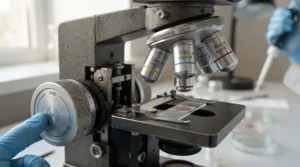
This is the “buy once” option: five settings (40x, 100x, 250x, 400x, 1000x) from glass objectives, plus an all-metal frame, LED lighting, cordless capability, a rotating monocular head, and a dust cover.
On paper, 1000x sounds absurd for a child, but the AmScope M150C-I earns it with a solid frame. A Live Science review judged it a good beginner scope for the price. It also noted the monocular head can cause eye strain and flagged inconsistent quality control. So inspect on arrival. A retailer listing shows roughly 4.4 stars across about 2,900 ratings, with buyers calling it great for the money, especially for middle and high schoolers.
Pros:
- ✅ Metal frame and glass optics
- ✅ 400x covers most school slides
- ✅ Cordless operation
Cons:
- ❌ Monocular head can strain eyes
- ❌ Reports of uneven quality control
Price range: about $100-$130. A strong long-term value pick.
7. Swift SW200DL — dual-light step-up for science-fair kids
The headline feature is upper and lower LEDs on a compound body, so solids and slides share one scope. It also has three glass DIN objectives (4x, 10x, 40x), wide-field 10x and 25x eyepieces, and coaxial coarse and fine focus knobs.
Interpretation: the 45° head reduces neck-craning for shorter kids, and rotation lets siblings share. The metal body and carrying handle suit science-fair transport. It’s aimed at middle and high schoolers, so younger children may need help. One reviewer called it well built and portable, another a good hobbyist intro. I found no reliable aggregate rating.
Pros:
- ✅ Dual LED lighting on a compound scope
- ✅ Metal body with carrying handle
- ✅ Precise coaxial focus knobs
Cons:
- ❌ Pitched at older students
- ❌ Monocular head only
Price range: roughly $90-$150. Great when your child is ready to graduate.
Specs and Value Side by Side
| Product | Lighting | Optics | Price Range | Best For |
|---|---|---|---|---|
| National Geographic Dual LED Kids Microscope | Top + bottom LED | Glass | $50-$90 | First “real” scope |
| GeoSafari Jr. My First Microscope | LED | Not specified | $25-$50 | Ages 3-7 |
| Celestron 44121 Microscope Kit | Dual-source | Glass (listed) | Under $65 | Tight budgets |
| Omano JuniorScope | Bottom LED | Verify | Check price | Guided learning |
| AmScope SE305R-PZ | Halogen (LED version exists) | Achromatic glass | $85-$180 | 3D specimens |
| AmScope M150C-I | LED | All glass | $100-$130 | Long-term use |
| Swift SW200DL | Top + bottom LED | Glass DIN | $90-$150 | Science fairs |
The table shows a clear price-to-ambition curve. The National Geographic Dual LED Kids Microscope delivers the most flexibility under $100, while the AmScope M150C-I and Swift SW200DL cost more but offer far higher ceilings. If you only buy one scope this decade, the metal-bodied compounds win on durability, while the GeoSafari Jr. My First Microscope wins on sheer approachability.
✨ Don’t Miss These Exclusive Deals!
🔍 Take your microscope for kids shopping to the next level with these carefully selected products. Click on any highlighted item to check current pricing and availability. These picks will help you create authentic “wow” moments your family will love!
How to Choose a Microscope for Kids: 7 Steps
- Match type to age. Under seven, choose a low-power viewer or a stereo scope. At eight and up, a compound scope with prepared slides becomes realistic.
- Check the lighting. Top and bottom lights beat bottom-only, because kids love looking at coins and bugs, not just slides.
- Demand glass optics. Look for glass objectives specifically, since they set image quality. Plastic is fine for drop-prone preschool viewers.
- Be realistic about numbers. Most kids thrive between 20x and 400x. More on this below.
- Plan the power source. Batteries mean portability, a cord means steady light. Decide which fits your home.
- Audit the box. Slides, blanks, tweezers, and an activity guide save follow-up purchases.
- Weigh durability. Metal frames and responsive customer support matter more than brand prestige when a nine-year-old is the lab technician.

Magnification Power for Beginners: Why Less Is More
Total magnification is simply the objective’s power multiplied by the eyepiece’s. A 10x eyepiece with a 40x objective gives 400x, which is exactly how the AmScope M150C-I gets its 40x, 100x, 250x, 400x, and 1000x settings. Miami University’s microscope guide walks through the same arithmetic and the habit of always starting on the lowest objective.
So what’s the right magnification power for beginners? Think in tiers:
- 8x: loupe-style, perfect for preschoolers (GeoSafari Jr. My First Microscope).
- 20x-60x: fantastic for solid objects, bugs, rocks, and fabrics (AmScope SE305R-PZ, National Geographic Dual LED Kids Microscope).
- 40x-400x: the true slide-viewing zone where plant cells, pollen, and tissue appear.
- 1000x: possible, but demands bright light, a steady stage, and patience.
The trap is “empty magnification.” As Florida State’s primer explains, resolving power depends on the objective’s numerical aperture, not just the headline number. Cranking up magnification beyond what the optics can resolve just produces a bigger blur. Magnification power for beginners works best when it’s modest and sharp. A child who sees onion cells crisply at 100x learns far more than one who stares at a dim 1000x smudge.
Glass vs Plastic Microscope Lenses: What Actually Matters
The glass vs plastic microscope lenses debate gets overheated, so here is the practical version, based on general optics principles rather than lab testing.
Glass is more scratch-resistant, handles heat and cleaning better, and typically shows less color fringing. Plastic is lighter, cheaper, and shatterproof. That’s why plastic makes sense in a toddler’s drop-prone viewer but is a red flag for the objectives in a scope advertising high magnification.
Here’s the part marketing hides: “glass optics” on a listing might refer only to the eyepiece. The objective lenses, the small barrels near the specimen, do the heavy lifting for image quality, so look for glass objectives specifically. The National Geographic Dual LED Kids Microscope, Celestron 44121 Microscope Kit, AmScope M150C-I, and Swift SW200DL all advertise glass optics. The GeoSafari Jr. My First Microscope is a different animal, built for durability at 8x.
A smart buyer’s rule: if a microscope for kids claims 1200x for under $50 and says nothing about glass, assume plastic and plan accordingly.
Prepared Slides for Kids: What to Buy and What to Skip
Prepared slides for kids are the fastest route from “cool” to “I can’t believe that’s a leaf.” They’re permanently mounted, labeled, and ready to view, so a child skips the fiddly prep and goes straight to wonder.
Kit contents vary widely. The National Geographic Dual LED Kids Microscope ships with 10 prepared and 10 blank slides, while the Celestron 44121 Microscope Kit includes three prepared glass slides. AmScope sells separate sets of 25 and 50 for owners who want to expand.
Good starter specimens include insect wings, pollen, plant stem cross-sections, and natural versus synthetic fibers like cotton, wool, and silk. Skip novelty sets stuffed with mislabeled or poorly mounted samples. Buyers sometimes mention plastic color-coded slides working fine with the Omano JuniorScope, which is a nice budget bridge. The cheapest upgrade of all costs pennies: blank slides plus clear tape let kids lift their own specimens, like a strand of hair or a bit of sand. Prepared slides for kids teach vocabulary; homemade ones teach curiosity.
Crystal Growing Kits for Kids: Microscope Projects That Pay Off
Picture a nine-year-old with a weekend, a modest budget, and a hunger for results. Crystal growing kits for kids are among the best low-effort, high-reward microscope companions, because the growth is dramatic and the payoff under magnification is real.
Kits typically rely on alum, borax, or salt-based solutions, with growth times ranging from hours to several days. Check the age rating (one kit listing recommends 10+), and note that educator blogs flag borax as not taste-safe, so adult supervision with hot water and safety glasses is non-negotiable.
Then comes the fun part. A stereo or top-lit scope like the AmScope SE305R-PZ or the National Geographic Dual LED Kids Microscope at 20x-50x reveals the geometry: cube-shaped salt crystals, faceted borax edges, tiny seed crystals clinging to the bottom of the jar. Have your child sketch three crystals, then compare shapes across two kits. That’s crystal growing kits for kids doing double duty as a geometry lesson and a data-collection exercise. For a younger sibling, the GeoSafari Jr. My First Microscope at 8x is plenty to spot sparkle and structure.
Dinosaur Fossil Dig Kits for 6 Year Olds: A Microscope-Ready Adventure
For a six-year-old, a dig is theater: goggles on, brush in hand, a mystery block waiting to crumble. Dinosaur fossil dig kits for 6 year olds generally come as plaster-style blocks hiding replica bones, though contents vary by product, so read the box.
The microscope enters at the cleanup stage. Dusty fragments, grain texture, and tool marks all look fascinating at low power. This is where a stereo or top-lit scope beats a slide-based one every time. Try the GeoSafari Jr. My First Microscope for small hands or the National Geographic Dual LED Kids Microscope, whose upper lights are ideal for opaque chunks.
Practical tips for dinosaur fossil dig kits for 6 year olds: dig inside a tray, keep dust away from eyes with goggles, and let your child sweep fragments onto a dark cloth for inspection. Ask questions like “what color is the grain?” or “where do you see lines?” It’s a gentle first lesson in observation. Be honest that replicas aren’t real fossils, but real fossil pieces, available from museum shops, can be examined with the same low-power scopes.
Your First 30 Days: A Practical Usage Guide
The first month sets the habit. Here’s a rhythm that keeps interest high.
Week 1: Learn the machine. Set the scope on a stable table, start at the lowest power, and practice focusing on a printed letter. Always start low and work up.
Week 2: Prepared slides. Work through two or three prepared slides, naming what you see.
Week 3: Make your own. Use blank slides for hair, sugar, salt, and pond water.
Week 4: Keep a journal. Sketch three observations and note the magnification.
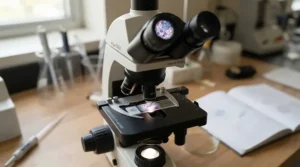
Maintenance matters as much as technique. Use a dust cover, clean lenses with lens paper (never a shirt), and remove batteries during long storage. The most common new-owner blunder is cranking the focus knob into the slide, so teach the “watch the stage, not the eyepiece” rule. For a mini lab, NASA’s educator guide includes a build-your-own-microscope activity that shows older kids exactly how an objective and eyepiece team up.
Which Microscope for Kids Fits Your Child? A Decision Framework
Use these quick “if, then” rules:
- If your child is 3-6 and rough on toys, choose the GeoSafari Jr. My First Microscope because it’s sized and priced for chaos.
- If your child is 7-9 and loves bugs and rocks, choose the AmScope SE305R-PZ because 3D beats slides at that age.
- If your child is 8-12 and wants “real” science, choose the National Geographic Dual LED Kids Microscope for its dual lighting and kit.
- If you want guided learning for a non-scientist parent, choose the Omano JuniorScope because of its activity cards.
- If you’re on a tight budget and accept trade-offs, choose the Celestron 44121 Microscope Kit, and inspect it promptly.
- If your child is 10+ and serious, choose the AmScope M150C-I or Swift SW200DL for the 1000x headroom and metal frames.
When in doubt, buy for the child you have now, not the scientist you hope they’ll become. A scope that fits today gets used tomorrow.
Common Mistakes When Buying a Microscope for Kids
Chasing big numbers. A listing shouting 2000x on a plastic body is marketing, not optics. Magnification without resolution is just a larger blur.
Ignoring lighting. Kids want to see coins, leaves, and bugs. Bottom-only light misses half the fun, which is why dual-lit models like the Swift SW200DL and National Geographic Dual LED Kids Microscope earn their keep.
Buying for “someday.” A 1000x metal scope is wonderful, but if your five-year-old can’t reach the focus knob, it’s a shelf ornament.
Skipping the accessories audit. Kits with prepared slides, blanks, and tools save money. Bare scopes can look cheap and cost more.
Forgetting power logistics. Batteries die at the worst moment. Keep spares, or choose a cord for steady classroom-style use.
Ignoring return policies. Quality-control complaints crop up even on respected models, so buy from a seller with easy returns and test it the day it arrives.
Long-Term Cost & Value: Microscope vs Alternatives
Value isn’t the sticker price, it’s cost per curious afternoon. A scope in the ~$100 range used three times a week for three years works out to well under a dollar per session. Add small recurring costs: batteries, extra slides, and (for halogen models like the AmScope SE305R-PZ) replacement bulbs.
| Option | Typical Cost | Best For | Limits |
|---|---|---|---|
| Magnifying glass | Low | Ages 3+, quick outdoor looks | No slides or lighting |
| Preschool viewer (GeoSafari Jr. My First Microscope) | $25-$50 | Ages 3-7 | 8x only |
| Starter compound (National Geographic Dual LED Kids Microscope) | $50-$90 | Ages 8-12 | 50x ceiling |
| Student scope (AmScope M150C-I) | $100-$130 | Ages 10+, long-term | Monocular head, higher cost |
A magnifying glass costs the least, but it can’t show a single cell. Preschool and starter scopes sit in the middle, offering real optics at gift-friendly prices. The metal student compounds cost more upfront but hold their usefulness through high school, making them the better total-cost-of-ownership pick for families with several kids.
FAQ
❓ What is the best microscope for kids ages 5 to 7?
❓ How much should I spend on a first microscope for a child?
❓ Do kids need a monocular or binocular microscope?
❓ Can a kids microscope see bacteria?
❓ Is a digital screen microscope better than an eyepiece model?
Conclusion
Choosing a microscope for kids doesn’t require a physics degree, just a clear sense of who will use it. For preschoolers, the GeoSafari Jr. My First Microscope keeps things simple and durable. For most 8-to-12-year-olds, the National Geographic Dual LED Kids Microscope is the best all-round pick thanks to its dual lighting and generous kit. For bug and rock collectors, the AmScope SE305R-PZ delivers 3D drama. The Omano JuniorScope and Celestron 44121 Microscope Kit serve guided learners and tight budgets, and the AmScope M150C-I and Swift SW200DL are the buy-once options for serious young scientists.
Whatever you pick, keep magnification modest, insist on glass objectives, stock a few prepared slides for kids, and feed the habit with weekend projects like crystal growing kits for kids and dinosaur fossil dig kits for 6 year olds. Prices change, so check current price and availability before you buy.
Recommended for You
- Air Dry Clay Kits For Kids Ages 8 And Up: 7 Fun, Safe Picks 2026
- Kids Art Easel With Storage: 7 Best Mess-Free Picks 2026
- Art Supply Sets For 5 Year Olds: 7 Safe, Best-Value Picks (2026)
Disclaimer: This article contains affiliate links. As an Amazon Associate, I earn from qualifying purchases. If you purchase products through these links, we may earn a small commission at no additional cost to you.
✨ Found this helpful? Share it with your friends! 💬🤗
