
In This Article
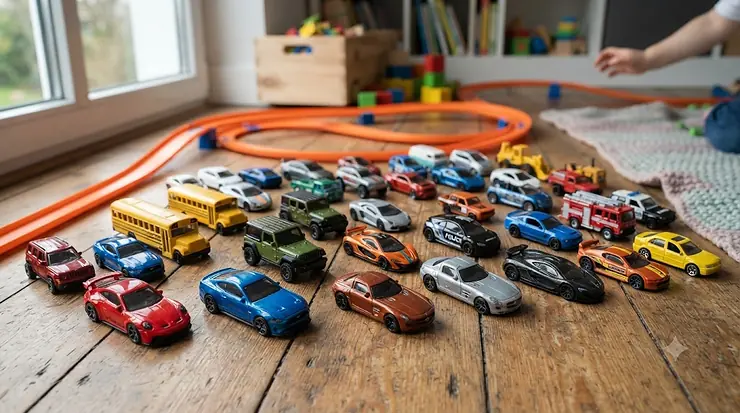
Somewhere between the couch cushions and the bottom of a toy bin, there’s a decent chance a tiny metal Charger or a scuffed-up Corvette is hiding right now. Diecast cars for kids have survived three generations of screens, subscriptions, and shifting toy fads for one simple reason: a two-inch metal car doesn’t need batteries, doesn’t need Wi-Fi, and somehow still wins arguments about “who gets the blue one.” Before you toss a random 20-pack into your cart, though, it helps to know what actually separates a $12 impulse buy from a diecast car your kid genuinely plays with for years.
So, what is a diecast car? A diecast car for kids is a small-scale toy vehicle made by injecting molten zinc alloy into a mold, then finishing it with plastic, rubber tires, and paint — a process that produces sturdier, more detailed toys than plain molded plastic ever could. That manufacturing method, first used for toys in the early 20th century by brands documented in Meccano’s Dinky Toys line and other pioneering die-cast makers, is exactly why die-cast cars still feel satisfyingly heavy in a kid’s palm compared to hollow plastic knockoffs.
This guide walks through seven real, currently available diecast cars for kids — from $10 bulk multipacks to premium 1:18 display pieces — with honest analysis of what each one actually delivers, where the value really sits, and which type fits your specific kid. We researched real specs, real aggregated review sentiment, and pulled in safety guidance so you’re not just staring at a wall of near-identical packaging at the store, wondering which one is worth the money.
Quick Comparison Table: Diecast Cars for Kids at a Glance
| Product | Scale | Best For | Price Range |
|---|---|---|---|
| Hot Wheels 20-Pack | 1:64 | Budget starter collection | Under $25 |
| Matchbox Set of 20 | 1:64 | Realism-focused kids | Under $25 |
| Matchbox 8-Pack Themed | 1:64 | Themed play (rescue, construction) | Under $15 |
| KiNSMART Pull-Back Set | ~1:36-1:48 | Toddlers and preschoolers | Under $20 |
| Maisto 1:18 Corvette Stingray | 1:18 | First “real” scale model | $25-$40 range |
| Jada Fast & Furious Charger | 1:24 | Movie-loving kids, collectors | $20-$30 range |
| Maisto Premiere Cadillac Eldorado | 1:18 | Premium display piece | $40-$60 range |
Look at the spread here and a pattern jumps out fast: price climbs almost in lockstep with scale size and detail level, not with brand prestige alone. A die cast car multipack in 1:64 scale gets you volume and variety for pocket change, while a single 1:18 scale diecast car costs roughly the same as ten of those tiny ones — because it’s trading quantity for engineering: opening doors, detailed engine bays, and metal-to-plastic ratios that actually hold up to years of shelf display. If your kid is a “line them all up and race them” type, multipacks win. If they’re a “stare at the one perfect car” type, scale and detail matter more than count.
💬 Just one click — help others make better buying decisions too!😊
💬 One tap could save another parent’s next toy aisle headache — pin this comparison before you shop!😊
Top 7 Diecast Cars for Kids: Expert Analysis
1. Hot Wheels Toy Cars & Trucks 20-Pack — best budget die cast car multipack for starting a collection
Twenty vehicles in one box sounds like a gimmick until you actually open one and realize just how much variety Mattel crams into a single die cast car multipack. Each vehicle sits at 1:64 scale with the brand’s signature low-friction axles, and the open-window packaging means your kid can actually see what they’re getting before it’s unwrapped, which cuts down on the “why is this one already broken” disappointment that sealed blind-box toys often create.
Real-world meaning matters here: the low-friction wheel design isn’t just marketing language — it’s the same axle engineering that made Hot Wheels famous for speed on plastic track sets back in 1968, and it’s why these cars roll noticeably farther on a hardwood floor than most Matchbox competitors. Based on the spec comparison with other multipacks in this price bracket, the 20-Pack edges out rivals mainly on styling variety; Mattel rotates classic muscle cars alongside contemporary licensed vehicles, so no two 20-packs look quite the same.
This is the pick for parents who want an “instant collection” without decision fatigue, and it particularly suits kids ages 4 to 9 who play more than they display. Reviewers consistently note that paint quality varies slightly by individual car within the same pack, which tracks with the mass-production process at this price point — don’t expect showroom finishes across all twenty.
Pros:
✅ Huge variety in a single die cast car multipack
✅ Fast-rolling low-friction axles built for play
✅ Compatible with most Hot Wheels track sets
Cons:
❌ Paint consistency varies car to car
❌ Styles are randomized, no control over which cars you get
Priced under $25, this multipack delivers the best per-car value on this entire list — check current price, as Amazon Exclusive multipack pricing shifts with demand around holidays.
2. Matchbox Cars, Set of 20, 1:64 Scale — most realistic matchbox cars set for detail-focused kids
If Hot Wheels leans into speed and flash, this matchbox cars set leans hard into realism, and that’s by design. These 1:64 scale cars and trucks feature realistic details and authentic designs to inspire kid-driven adventure rooted in realism, which in practice means proportions that more closely mirror actual vehicles rather than exaggerated hot-rod styling.
What most buyers overlook about this set is that it blends original Matchbox castings with officially licensed real-world vehicles, so a kid gets both fantasy fire trucks and an accurate little Ford pickup in the same box. The real, rolling wheels aren’t a throwaway spec — they mean these cars survive being pushed across carpet, tile, and the occasional driveway without seizing up the way cheaper toy cars sometimes do after a few weeks. This set suits kids who like sorting, categorizing, and identifying real cars and trucks more than racing them, and it plays well as a starter for a diecast car collection boys (or girls) can keep adding to over birthdays and holidays.
Aggregated customer sentiment across major retailers points to a common theme: parents appreciate the variety within a matchbox cars set but note that “styles may vary” means you can occasionally land duplicates, especially in larger case orders. That’s a known trade-off of blind-assortment multipacks industry-wide, not a Matchbox-specific flaw.
Pros:
✅ Authentic, real-world vehicle designs
✅ Durable rolling wheels for repeated play
✅ Doubles as party favors if split up
Cons:
❌ Occasional duplicate vehicles in the mix
❌ Less speed-oriented than Hot Wheels for racing play
At under $25, this matchbox cars set is a strong value pick for kids 3 and up who care more about “what is this car” than “how fast does it go.”
3. Matchbox 1:64 Scale Die-Cast Toy Cars, Set of 8, Themed Multipack — best matchbox cars bulk pack for themed play
Smaller than the 20-count set but more focused, this matchbox cars bulk pack groups eight vehicles around a single theme — think construction, emergency response, or off-road adventure — rather than a random grab-bag assortment. Each die-cast 1:64 scale car or truck features authentic details and castings with a unifying theme, including a variety of officially licensed and Matchbox original vehicles from the mainline collection.
Here’s what the spec sheet won’t tell you, but the format itself implies: themed packs are genuinely better for imaginative storytelling than randomized ones, because a kid gets a complete “cast of characters” for a pretend scenario — a fire truck, an ambulance, and a police car that actually work together in play, rather than eight unrelated vehicles that don’t share a narrative thread. That’s a meaningful upgrade in play value for kids who build worlds rather than just race cars across the floor.
This matchbox cars bulk pack is best suited to preschool-through-early-elementary kids who gravitate toward specific themes — the dinosaur-obsessed kid, the future firefighter, the kid who narrates entire rescue missions under the coffee table. Because the pack connects with corresponding Matchbox playsets sold separately, it also functions as a lower-cost entry point before committing to a full playset purchase.
Pros:
✅ Cohesive theme supports imaginative storytelling
✅ Compatible with Matchbox playsets for expanded play
✅ Smaller pack size is easier to gift or restock
Cons:
❌ Fewer vehicles per pack than the 20-count set
❌ Theme availability rotates, so a favorite theme may sell out
Typically priced under $15, this is one of the more budget-friendly matchbox cars bulk pack options and a smart add-on gift alongside a bigger set.
4. KiNSMART 5-Inch Die-Cast Pull-Back Cars — best metal toy cars boys aged 3-6 can actually operate solo
Younger kids don’t always have the hand strength or patience to push a tiny 1:64 car across the floor repeatedly, which is exactly the gap this line of metal toy cars boys fills with pull-back friction motors. You pull the car backward, let go, and a spring-loaded mechanism sends it rolling forward on its own — no batteries, no fine-motor frustration, just cause and effect that toddlers grasp almost instantly.
The 5-inch size sits noticeably larger than 1:64 scale competitors, which practically speaking means fewer choking-hazard concerns for the lower end of the 3+ age range and easier gripping for smaller hands still developing fine motor control. Based on how this mechanism compares to plain push-around diecast, the pull-back function adds genuine play value rather than being a gimmick — it rewards repeated action with a satisfying, predictable result, which is exactly the kind of feedback loop young kids find endlessly rewarding.
Reviewers who buy these as metal toy cars boys gifts consistently mention the pull-back spring holding up well over months of use, though a handful note the mechanism eventually loosens with heavy daily play, which tracks with any friction-motor toy at this price tier. This pick is best for the youngest end of the diecast-buying spectrum — kids who aren’t ready for detailed 1:18 models but have outgrown oversized plastic cars.
Pros:
✅ Pull-back motor works independently, no batteries needed
✅ Larger 5-inch size suits smaller hands and younger kids
✅ Real die-cast metal body adds durability plastic alternatives lack
Cons:
❌ Friction spring can loosen with months of heavy use
❌ Limited detail compared to 1:18 or 1:24 scale models
Generally priced under $20 for a multi-car set, this is the practical choice when “will my three-year-old actually play with this” is the deciding question.
5. Maisto 1:18 Special Edition 2014 Corvette Stingray Z51 — best entry point into 1:18 scale diecast cars
This is where the category shifts from “toy” to “model,” and the jump is immediately obvious the moment you pick one up. Since 1967, Maisto has delivered impressive 1:18 scale models combining opening features, detailed construction, and extensive subject selection at value-oriented pricing, and the Corvette Stingray Z51 is a solid representative of that formula — opening doors and hood, a detailed cockpit, and proportions that actually track the real car’s silhouette.
What most buyers overlook about entry-level 1:18 scale diecast cars is that the jump in size and detail from 1:64 isn’t incremental, it’s dramatic — you’re looking at roughly six times the linear scale, which translates into visible stitching lines on seats, a distinguishable dashboard, and wheels that actually match the real Corvette’s design language rather than a generic hot-rod substitute. For a kid transitioning from “cars I push around” to “cars I display on a shelf,” this is a natural next step that doesn’t require premium-tier pricing to get there.
Aggregated reviewer sentiment on Maisto’s 1:18 line frequently highlights the value angle specifically: the opening features and paint quality punch above the price point, even if the interior plastics feel a notch below what pricier collector brands offer. That’s a fair trade for a model aimed at kids old enough to appreciate detail but still likely to handle it during play, not just admire it behind glass.
Pros:
✅ Opening doors and hood add interactive play value
✅ Dramatic detail upgrade over 1:64 scale toys
✅ Recognizable, accurately proportioned real-world car
Cons:
❌ Less durable than pure play-focused diecast for rough handling
❌ Smaller production variety than Maisto’s 1:24 lineup
Sitting in the mid-$20s to mid-$30s range depending on retailer, this is a smart mid-tier pick for kids around 8 and up who are ready to graduate from bulk multipacks.
6. Jada Toys Fast & Furious Dom’s 1970 Dodge Charger, 1:24 Scale — best collectible diecast vehicles for movie-loving kids
Licensed collectible diecast vehicles live or die on accuracy to the source material, and this is where Jada consistently earns its reputation. Combining the adrenaline-pumping action from the big screen with iconic styling, Jada brought the Fast & Furious brand to market in 2015 with highly detailed collectible vehicles as seen in the storied evergreen franchise, and the 1970 Dodge Charger remains one of the most recognizable castings in that catalog.
Here’s what the spec sheet doesn’t fully convey: at 1:24 scale, this model sits in a sweet spot between the display-only feel of larger 1:18 pieces and the pocket-sized play scale of 1:64 cars — it’s substantial enough to feel like a real collectible but still manageable for a kid to hold and act out scenes with. The die-cast metal body with opening doors, hood, and trunk gives it tactile weight that plastic movie merchandise simply can’t replicate, and the included character figure ties directly into franchise storytelling for kids already invested in the films.
Because this counts among genuinely collectible diecast vehicles rather than disposable toys, resale and trade value within collector communities tends to hold up better than generic unlicensed die-cast, particularly for castings tied to a specific film moment. Reviewers frequently mention the opening-panel engineering as a highlight, though a recurring note in aggregated feedback is that paint on the character figure accessory is more delicate than the vehicle itself and should be handled gently by younger kids.
Pros:
✅ Movie-accurate casting appeals to franchise fans
✅ 1:24 scale balances display quality with playability
✅ Includes character figure for storytelling play
Cons:
❌ Figure accessory paint is more fragile than the car body
❌ Licensed pricing runs higher than unlicensed equivalents
Typically found in the $20-$30 range, this is the pick for the kid who’s already watched the movie a dozen times and wants the car in their hands.
7. Maisto Premiere Edition 1959 Cadillac Eldorado Biarritz, 1:18 Scale — best premium display piece for serious young collectors
At the top of this lineup sits a genuinely premium 1:18 scale diecast car, and the Premiere Edition line exists specifically to separate casual toy buyers from families building an actual collectible diecast vehicles display. As far as collectible die-cast vehicles are concerned, Maisto’s Premiere Edition 1:18 scale line is the absolute gold standard, meticulously engineered, and featuring highly detailed die-cast metal bodies with plastic parts.
What sets this apart in practice is the finish quality: chrome trim detailing, a two-tone paint scheme faithful to the original Eldorado’s iconic styling, and interior detailing that goes noticeably further than Maisto’s standard Special Edition tier. Based on the spec comparison against entry-level 1:18 models, the Premiere line justifies its higher price primarily through finishing work — the underlying opening-door and hood mechanisms are similar across tiers, but the paint depth and trim accuracy are a clear step up.
This is best suited for kids around 10 and up who’ve already shown genuine interest in collecting rather than playing, or for parents building a shared shelf collection with their kid as a bonding hobby rather than a daily-play toy. Reviewers describe the Premiere line as display-first: it holds up beautifully on a shelf but isn’t engineered for the kind of rough handling a 1:64 multipack shrugs off without complaint.
Pros:
✅ Premium chrome and paint detailing beyond entry-level 1:18 models
✅ Faithful two-tone finish to the classic Eldorado design
✅ Strong long-term display and shelf-life value
Cons:
❌ Not designed for rough, everyday floor play
❌ Highest price point on this list
In the $40-$60 range, this is an investment piece more than a toy — reserve it for kids who’ve already proven they treat their diecast collection with care.
How to Choose Diecast Cars for Kids
Picking the right diecast car for kids honestly comes down to answering a few questions before you ever open a shopping app. Here’s the reasoning, step by step:
- Check the age range first, not last. Toys intended for children under 3 are subject to strict federal small-parts regulation, so anything with detachable wheels, opening doors, or small trim pieces is typically labeled for ages 3 and up — take that label seriously rather than as a suggestion.
- Match scale to attention span. Younger kids with shorter play sessions generally do better with 1:64 multipacks they can swap through quickly; older kids ready for focused, detailed play benefit more from a single 1:18 or 1:24 model.
- Decide play versus display upfront. A car meant to survive being driven off the coffee table daily needs different durability than a car meant to sit on a shelf — buying a premium display piece for a rough-and-tumble four-year-old sets everyone up for disappointment.
- Weigh licensed versus unlicensed pricing. Collectible diecast vehicles tied to movies or franchises carry licensing costs baked into the price; that’s fine if your kid genuinely cares about the source material, but it’s not where you save money if they don’t.
- Consider variety versus focus. A die cast car multipack maximizes novelty and sorting play; a single detailed model maximizes appreciation and care. Neither is objectively better — it depends entirely on your kid’s play style.
- Read for real-world durability notes, not just star ratings. Aggregated review sentiment about paint chipping, wheel durability, or mechanism longevity tells you more about long-term satisfaction than an overall rating alone.
- Budget for growth, not just today. A starter matchbox cars set today can become the foundation of a genuine diecast car collection boys build over years — buying with that trajectory in mind avoids re-buying entirely different product types later.
1:18 Scale Diecast Cars vs 1:64 Scale Diecast Cars
This comparison comes up constantly, and the honest answer is that it’s less “which is better” and more “which matches your kid’s current phase.” 1:64 scale dominates the toy aisle because it’s the size Hot Wheels and Matchbox built their entire ecosystems around — compact, affordable, and durable enough for genuine floor play. 1:18 scale diecast cars, by contrast, sit closer to true collector territory: bigger, heavier, and detailed enough that opening a door reveals an actual dashboard rather than a painted-on suggestion of one.
| Factor | 1:64 Scale | 1:18 Scale |
|---|---|---|
| Typical Price | $1-$3 per car (multipack) | $25-$60 per car |
| Play Durability | High — built for daily handling | Moderate — better for careful play/display |
| Detail Level | Basic to moderate | High, often with opening features |
| Best Age | 3-8 | 8 and up |
| Best For | Volume collecting, racing, storytelling | Display, appreciation, gifting milestones |
The practical takeaway: most families end up owning both, and that’s not a failure of decision-making, it’s just how the category naturally works. A die cast car multipack in 1:64 handles the daily wear-and-tear of actual play, while one or two 1:18 scale diecast cars become the “special occasion” pieces that mark birthdays or reward good behavior. Trying to force one scale to do both jobs usually ends with either a bored kid or a heartbroken parent staring at a scratched premium model.
Matchbox Cars Bulk Pack vs Collectible Diecast Vehicles
Here’s a distinction that trips up a lot of first-time buyers: a matchbox cars bulk pack and collectible diecast vehicles aren’t competing products, they’re serving entirely different goals, and conflating them leads to buyer’s remorse either way.
A matchbox cars bulk pack is optimized for quantity and accessibility — you’re paying for volume, variety, and the freedom to let a kid handle, lose, or trade individual cars without much financial consequence. Collectible diecast vehicles, on the other hand, are optimized for accuracy, finish quality, and long-term value retention — you’re paying a premium specifically because the casting, paint, and licensing make that individual piece worth preserving.
The real-world impact shows up in how kids interact with each: bulk pack cars get thrown in toy bins, dragged through sandboxes, and lined up in races down the hallway. Collectible diecast vehicles, especially licensed ones like the Fast & Furious Charger or Premiere Edition Cadillac on this list, tend to migrate toward shelves, display cases, or “special car” status where a kid asks permission before playing with them. Neither pattern is wrong — but buying a $50 collectible expecting bulk-pack durability, or buying a $12 multipack expecting collector-grade detail, sets unrealistic expectations from day one.
✨ Don’t Miss These Exclusive Deals!
🔍 Whether you’re stocking up on a matchbox cars bulk pack or hunting down that one perfect collectible diecast vehicle, click through to check current pricing and availability before the good styles sell out!
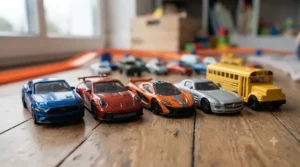
Building a Diecast Car Collection for Boys (and Girls): Practical Usage Guide
Starting a diecast car collection boys can actually maintain and enjoy for years takes a little more intention than just buying whatever multipack is closest to the checkout line. Here’s a practical setup approach:
First 30 days: Start with one die cast car multipack to establish baseline interest and play style before investing in premium pieces. Watch whether your kid gravitates toward racing, sorting by color or type, or storytelling — that tells you what to buy next.
Storage matters more than people expect. A shoebox works for the first month, but loose diecast cars scratch each other’s paint fast. A simple divided storage case or even an egg carton repurposed as a garage prevents avoidable damage and teaches basic organizational habits early.
Maintenance is minimal but not zero. Wipe down wheels periodically to remove carpet fuzz and debris that builds up in axles over time — this single habit meaningfully extends how smoothly cars roll. For pull-back models like the KiNSMART line, avoid over-winding the mechanism repeatedly in quick succession, which is the fastest way to fatigue the internal spring.
A common first-30-days mistake: buying several different scales at once before knowing what a kid actually connects with. It’s tempting to grab a 1:64 multipack, a 1:18 model, and a themed matchbox cars bulk pack in a single haul, but that often means money spent on scales or styles that end up ignored. Start narrow, expand based on observed interest.
Optimization trick: rotate a portion of the collection out of sight every few weeks. Kids re-engage with “new” cars that were simply forgotten in a drawer, which stretches the value of an existing diecast car collection boys already own without buying anything new.
Real-World Scenarios: Matching Diecast Cars to Your Kid
Specs only tell half the story — here’s how these picks map onto real kids and real households.
The toddler who loves cause and effect (ages 2-4): A metal toy cars boys and girls this age can actually operate solo, like the KiNSMART pull-back set, wins every time. The satisfaction of pulling, releasing, and watching it roll independently matches exactly where this age group is developmentally — repetition and predictable results.
The elementary-age racer who wants volume (ages 5-9): The Hot Wheels 20-Pack or Matchbox Set of 20 covers this kid perfectly. They’re building elaborate ramp setups, racing siblings, and losing track of individual cars under furniture — durability and quantity matter more than fine detail here.
The budding car enthusiast who watches car shows or Fast & Furious movies (ages 8-12): This is where the Jada Fast & Furious Charger and Maisto 1:18 Corvette earn their keep. These kids notice proportions, ask questions about real engines, and treat their favorite models with visible extra care — they’re ready for detail-forward pieces that reward that attention.
Common Mistakes When Buying Diecast Cars for Kids
Even well-intentioned shoppers trip over a handful of recurring errors:
Buying based on packaging alone. Bright, busy packaging sells the moment of purchase but says nothing about wheel durability or paint quality months later — check aggregated review sentiment, not just box art.
Ignoring age labels on collectible pieces. A 1:18 scale diecast car with small trim pieces and opening panels genuinely isn’t designed for a toddler’s grip strength or supervision level, regardless of how much a younger sibling wants “the cool car.”
Assuming all multipacks are equal value. A die cast car multipack advertising “50 cars” at a suspiciously low price often uses thinner metal, simpler castings, and less durable wheels than a reputable 20-count set from an established brand — more units isn’t automatically better value.
Overlooking storage from day one. Diecast paint chips against other diecast far more than people expect; tossing an entire matchbox cars set loose into a general toy bin guarantees scuffing within weeks.
Forgetting that “styles may vary” is real. Multipack listings that specify randomized assortments mean you cannot guarantee specific vehicles arrive — that’s an industry-standard practice, not a listing error, so don’t buy expecting a specific casting from a bulk pack.
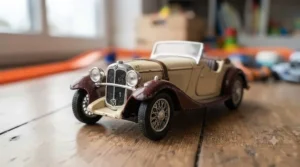
What to Expect: Real-World Performance
Specs on a box rarely translate directly into lived experience, so here’s the honest, everyday version. A 1:64 die cast car multipack rolls fast on hard flooring, noticeably slower on carpet, and holds up to being dropped, stepped on lightly, and dragged across textured surfaces without major damage — that’s exactly the resilience that made this scale the industry standard for actual kid play.
Move up to 1:18 scale diecast cars and the experience shifts entirely: opening doors and hoods invite closer inspection rather than speed-based play, and paint finishes that looked flawless in product photos will show fingerprint smudges and light scuffing after handling — that’s normal wear, not a defect, and it’s part of why these models suit older, gentler-handed kids better than toddlers.
Pull-back mechanisms, like those on the KiNSMART line, perform reliably for the first several months of regular use before the internal spring gradually loses some snap — a pattern consistent across friction-motor toys industry-wide, not specific to any one brand. And licensed collectible diecast vehicles like the Fast & Furious Charger tend to get handled more carefully by kids specifically because the character tie-in makes the object feel special — which, in practice, means these often outlast generic diecast of the same scale simply due to gentler treatment.
Safety, Age Grading & Regulations Guide
Toy safety regulation in the United States isn’t optional guidance — it’s federal law, and it directly shapes what you’ll see on diecast packaging. A small part is any object that fits completely into the small parts cylinder, which the U.S. Consumer Product Safety Commission defines as approximating the size of the fully expanded throat of a child under three years old, and products intended for that under-3 age group are legally banned from containing them. That’s precisely why nearly every diecast car for kids on this list carries a 3+ age recommendation — opening doors, small wheels, and detachable trim pieces all fall under small-parts scrutiny.
For the 3-to-6 age bracket, manufacturers aren’t required to eliminate small parts, but they are required to label them clearly as a choking hazard warning, which is why you’ll see that language printed directly on Matchbox and Hot Wheels packaging even though the toys are marketed to preschoolers. Practically, that means the age label on a die cast car multipack isn’t a marketing suggestion — it reflects an actual regulatory threshold, and ignoring it for a younger sibling in the house carries real risk, not just a technicality.
A few practical safety habits worth adopting regardless of age label: periodically check that wheels and small trim pieces haven’t loosened on well-loved diecast cars, especially on pull-back and opening-panel models where mechanisms see repeated stress. Store detailed collectible diecast vehicles with small accessory pieces — like the character figures included with licensed Jada models — separately from younger children’s play areas if your household spans multiple age groups.
Long-Term Cost & Value of Collectible Diecast Vehicles
Diecast collecting isn’t just a toy category — it’s genuinely a growing hobby market, and understanding that context helps explain pricing at the premium end of this list. Industry research pegs the global diecast toy market at roughly USD 3.9 billion in 2024, expected to grow to USD 4.19 billion in 2025 and reach USD 6.09 billion by 2034, with nostalgia and retro-themed marketing serving as key growth drivers as adult collectors purchase vintage-style releases and limited editions.
What that means practically for a parent buying today: entry-level and mid-tier diecast, like the products in the $1-$30 range on this list, are pure consumption purchases — buy them for play value and don’t expect resale returns. Premium collectible diecast vehicles, particularly licensed pieces and Premiere Edition 1:18 scale models kept in original packaging or well-preserved condition, can retain or even appreciate in value within collector communities over years, especially if a specific casting becomes discontinued.
The practical cost-per-use math also favors different products depending on goals: a die cast car multipack costing $20 for 20 cars works out to roughly $1 per vehicle for pure play value, while a single $50 premium model only makes financial sense if display enjoyment and potential long-term value matter more than per-unit play cost. Neither approach is wrong — they’re simply optimizing for different outcomes.
Problem → Solution: Fixing Common Diecast Car Headaches
Problem: Wheels stop spinning smoothly. Debris and carpet fuzz build up in axles over months of floor play. Solution: a quick wipe with a dry cloth around the wheel wells every few weeks prevents most of this before it becomes noticeable.
Problem: Paint chips on favorite cars. Diecast scraping against other diecast in a communal toy bin is the most common cause. Solution: separate premium or collectible diecast vehicles into their own small case, keeping bulk-pack play cars in general storage where scuffs matter less.
Problem: Pull-back mechanism feels weaker over time. Repeated rapid winding fatigues the internal spring faster than normal use. Solution: encourage full releases between pulls rather than quick repeated tugs, which extends mechanism life noticeably.
Problem: A kid loses interest in an entire matchbox cars set within weeks. Often this stems from having every car visible and accessible at once, which removes novelty. Solution: rotate a portion of the collection out of sight periodically, reintroducing “new” cars from storage to refresh engagement.
Problem: Sibling conflict over collectible diecast vehicles. Higher-value or licensed pieces naturally cause more possessiveness than bulk-pack cars. Solution: establish clear ownership rules for premium pieces early, separate from the shared “communal” toy bin cars everyone can access freely.
Features That Actually Matter (And Those That Don’t)
Marketing copy on diecast packaging loves to emphasize certain specs — here’s an honest filter for what genuinely affects the experience versus what’s mostly noise.
Actually matters: Real metal body construction (versus mostly-plastic “diecast-style” toys that use the term loosely), wheel and axle quality that determines rolling smoothness, and paint/finish consistency that affects both appearance and durability. Opening doors and hoods matter specifically for kids old enough to appreciate detail-oriented play, less so for younger kids who mainly push cars around.
Doesn’t matter as much as packaging suggests: Exact vehicle count in oversized multipacks — a 50-pack isn’t inherently double the value of a 20-pack if per-unit quality drops to compensate; scrutinize construction quality over raw numbers. Licensing alone also doesn’t guarantee superior build quality — a licensed collectible diecast vehicle can have excellent or middling construction depending on the manufacturer, so franchise appeal shouldn’t be the only deciding factor for durability-focused buyers.
The genuinely useful filter: match construction quality and scale to how your specific kid plays, not to whichever spec sounds most impressive on the box.
Frequently Asked Questions
❓ What age are diecast cars for kids appropriate for?
❓ Are Matchbox or Hot Wheels better for kids?
❓ How many diecast cars should I buy to start a collection?
❓ What's the difference between 1:64 and 1:18 scale diecast cars?
❓ Do collectible diecast vehicles hold their value over time?
Conclusion
There’s no single “best” diecast car for kids — there’s only the best match for the specific kid holding it. A die cast car multipack wins for volume-loving toddlers and elementary racers who measure success in how many cars fit on one ramp. A matchbox cars set or matchbox cars bulk pack hits the sweet spot for realism-focused, story-driven play. And once a kid starts noticing proportions, engines, and movie tie-ins, 1:18 scale diecast cars and licensed collectible diecast vehicles become the natural next step — pieces that reward patience and careful handling with genuinely impressive detail.
Whichever direction fits your household, the core buying logic stays consistent: match scale and durability to actual play style, take age labeling seriously rather than as a suggestion, and resist the urge to buy every scale at once before knowing what actually holds a kid’s attention. Do that, and whatever ends up in the cart is far more likely to become a genuinely loved diecast car collection boys (or girls) return to for years, not just another toy that vanishes under the couch by March.
✨ Ready to Start the Collection?
🔍 Take your family’s diecast car collection boys and girls will actually love to the next level — click through on any pick above to check current pricing and availability before your favorite styles sell out!
Recommended for You
- 7 Best Monster Jam Toy Trucks in 2026 (Real Amazon Picks)
- Electric Slot Car Racing Set for Kids: 7 Best Picks (2026)
- Hot Wheels Track Sets Large: 7 Epic Picks for 2026
Disclaimer: This article contains affiliate links. As an Amazon Associate, I earn from qualifying purchases. If you purchase products through these links, we may earn a small commission at no additional cost to you.
✨ Found this helpful? Share it with your friends! 💬🤗
