
In This Article
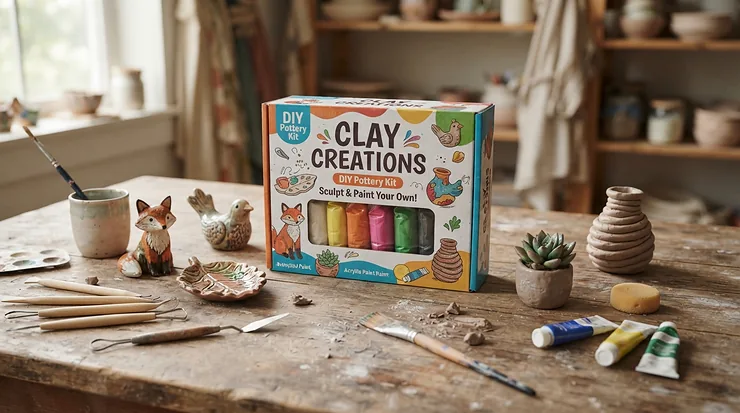
Air dry clay kits for kids ages 8 and up are boxed craft sets that bundle soft, water-based, no-bake modeling clay with shaping tools, paints, and guided projects. Kids sculpt, let each piece harden at room temperature over a day or two, then decorate it. No oven, no kiln, no steep learning curve.

Eight is a sweet spot for this. Hands are steady enough for real detail, patience is long enough to survive an overnight dry, and kids can follow a tutorial without a grown-up reading every line aloud. The mess is real, but so is the payoff: a lumpy, glorious, entirely-theirs dragon on the bookshelf.
I built this guide around that idea. Four of the picks below are clay kits. Because the same kid who loves squishing clay often loves needle and thread, I added two sewing kits (more on sewing kits for 9 year olds later) and one friendship bracelet maker, a natural fit for friendship bracelet making kits for tweens. Along the way we’ll settle the air dry vs polymer clay debate, map out beginner sculpting projects, and round up handmade gifts kids can make before the holiday rush.
One shopping tip before the products. Look for the Approved Product (AP) seal from the Art and Creative Materials Institute, which marks art materials certified non-toxic by a toxicologist. Check the box rather than assuming; not every kit carries it.
Every product below comes from real listings and published roundups. Where I couldn’t verify review sentiment, I say so. Prices are ranges, so check current price before you buy.
Quick Comparison: 7 Craft Kits at a Glance
Here’s the lineup on one screen. I left star ratings out on purpose. They shift daily and differ by retailer, so a number printed here would be stale before you finished reading.
| Kit | Craft Type | Highlights | Price Range | Best For |
|---|---|---|---|---|
| National Geographic Air Dry Clay Kit | Air dry clay | 2 lb clay, 7 paints, stencils, 9 projects | Under $20 | Budget starters, ornaments |
| Klutz Tiny Ceramics Studio | Air dry clay | 7 oz clay, mini turntable, glaze, guide | $20-$30 range | Pottery-curious 8-12s |
| Sago Brothers Air Dry Clay Kit | Air dry clay | 24 colors, 3 tools, tutorial book | Roughly $15-$30 | Color lovers, gifting |
| Creatible Air Dry Clay Kit | Air dry clay | 12 themed boxes, 4 tools | Roughly $15-$30 | Character makers |
| KRAFUN My First Sewing Kit | Sewing | 224 pieces, organizer, thread | Roughly $15-$30 | First-time sewers |
| Alex Toys Sew Mini Treats | Sewing | Several mini patterns | Roughly $15-$30 | One-sitting projects |
| Make It Real Friendship Bracelet Maker | Bracelets | Maker, beads, buttons, thread | Mid-$20s MSRP at launch | Tween gift-givers |
Looking at the comparison above, the National Geographic Air Dry Clay Kit delivers the most clay for the money, while the Klutz Tiny Ceramics Studio earns its higher price with a turntable and glaze that mimic real pottery. For friend-to-friend gifting, the Make It Real Friendship Bracelet Maker is the only kit here built around swapping creations. The sewing kits trade clay’s forgiving “squish it and retry” nature for neater skills, so mistakes cost more patience.
💬 Just one click — help others make better buying decisions too!😊
Top 7 Picks: Air Dry Clay Kits for Kids Ages 8 and Up (Plus Sewing and Bracelet Add-Ons)
1. National Geographic Air Dry Clay Kit — nine projects without breaking the bank
Nine finished pieces from one box is the pitch: according to the listing, five holiday ornaments and four leaf-shaped dishes. The 2 lb of air dry clay is the quiet hero. That’s enough for a kid to botch a leaf, mash it back into a ball, and try again without rationing, which is the difference between a craft and a lesson in frustration. Add a sculpting tool, seven paint colors, and nature-themed stencils, and the kit carries a child from raw lump to painted keepsake with no supply run.
Based on the spec sheet, this one suits the follow-the-steps kid and the parent who wants a clear finish line. The project list leans seasonal, so free-form sculptors may exhaust it quickly, though the generous clay supply invites improvising. In my research I couldn’t verify a meaningful body of customer reviews, so skim the live listing for themes about drying time and cracking before you buy.
Pros:
- ✅ Generous 2 lb of clay allows do-overs
- ✅ Paints, stencils, and instructions included
- ✅ Nine guided projects, holiday-ornament ready
Cons:
- ❌ Project mix leans seasonal and nature-themed
- ❌ Basic paint set limits fine detail
Price & verdict: Typically under $20 (check current price), making this the best value-per-ounce starter in the lineup.

2. Klutz Tiny Ceramics Studio — a pocket-sized pottery wheel
Klutz bills this as an entire pottery workshop, and the turntable is the hook. The contents: 7 oz of air dry clay, six 1 oz paints, 5 oz of glaze, a brush, a roller, three shaping tools, a paper bowl mold, and a roughly 2-inch spinner you turn by hand. The guide covers five ceramic shapes and six painting techniques, and the publisher recommends it for ages 8-12.
In practice, seven ounces is small, so think tiny bowls, plates, and vases rather than statues. The mold and spinner teach a real hand-building rhythm of roll, press, smooth, rotate, which transfers neatly to bigger clay work later. The glaze step gives finished pieces a glossy, store-bought look that paint alone can’t manage.
Reviewers describe it as complete and charming. One notes the clay needs a full day to dry, which tests a kid’s patience, and advises making a few test pieces before spending all the clay. Another calls the turntable “just functional enough.” A parent blog suggests allowing one to two days of drying before painting.
Pros:
- ✅ Turntable and mold teach real technique
- ✅ Paint and clear glaze come in the box
- ✅ Nothing extra to buy
Cons:
- ❌ Only 7 oz of clay limits project size
- ❌ Hand-spun turntable is toy-scale
Price & verdict: Around the $20-$30 range (check current price), the strongest “wow” factor for pottery-curious kids.
3. Sago Brothers Air Dry Clay Kit — 24 colors, no painting required
Color is the selling point: 24 pre-colored clays, 24 extra sealed bags, three clay tools, and a tutorial book (listings cite up to 72 pages) in a gift-ready package. Pre-colored clay changes the whole workflow. Kids can sculpt a finished-looking character in one sitting and skip the wait-then-paint step that sinks many projects. The sealed bags matter more than they look, because air dry clay starts drying the moment it meets air.
My take from the specs: this is the pick for kids who love characters, tiny food, and gift-ready pieces. Reviewers consistently describe the clay as soft, pliable, and nearly odorless, and say pieces dry overnight. A common tip is to add a few drops of water to revive clay that stiffens. One reviewer noted the clay needs the right moisture level to behave, so expect a short learning curve.
Pros:
- ✅ Pre-colored clay skips the painting step
- ✅ Resealable bags keep unused clay soft
- ✅ Soft, low-odor clay that reviewers like
Cons:
- ❌ Clay stiffens quickly when left exposed
- ❌ Moisture level takes practice to master
Price & verdict: Roughly the $15-$30 range (check current price), a strong gift-box choice for colorful, small-scale sculpting.
4. Creatible Air Dry Clay Kit — twelve character projects, tutorials included
The structure is clever: twelve boxes, each holding four compartments of different colored clay, four sculpting tools, and a project tutorial, enough for twelve themed models. The listing is labeled for ages five and up, so an eight-year-old will move quickly. For ages 8 and up, think of it as the confidence builder: premeasured colors, step-by-step guidance, and a finished figure in one sitting.
Here’s what the structure means in practice. Pre-portioned boxes mean less waste and less “who took all the blue?” drama among siblings. The trade-off is scale, since these are small figurines, not ambitious builds. Shopper reviews on the retail listing describe the clay as drying fairly quickly and hardening well, producing cute figures kids keep playing with, and several parents mention fine motor benefits.
Pros:
- ✅ Twelve guided character projects
- ✅ Pre-portioned colors reduce waste
- ✅ Quick wins that build confidence
Cons:
- ❌ Age label starts at 5, so older kids may outgrow it
- ❌ Small figurines only, not larger builds
Price & verdict: Roughly $15-$30 (check current price), best as a starter or sibling-sharing kit.
5. KRAFUN My First Sewing Kit — 224 pieces for first stitches
The big number here is 224 pieces, including a sewing-and-craft organizer and thread. Interpret that number carefully. Most of the count is likely notions and supplies, so judge the kit by its instructions and projects rather than the piece total. The roundup I found lists it as an excellent beginner choice but flags a beginner-level ceiling.
That ceiling cuts both ways. It’s a feature if your child has never threaded a needle, since easy wins build confidence fast. It’s a limitation if a crafty nine-year-old will outgrow it in a month. The bigger variable is needle handling: sharp needles call for supervision, so check which needles your version includes. I couldn’t verify enough reviews for this specific model, so read recent buyer feedback on projects, instruction clarity, and needle type.
Pros:
- ✅ Organizer keeps tiny parts together
- ✅ Thread and supplies included
- ✅ Beginner design reduces frustration
Cons:
- ❌ Beginner-level ceiling limits long-term use
- ❌ Piece count inflates perceived value
Price & verdict: Roughly $15-$30 (check current price), best for true first-timers.
6. Alex Toys Sew Mini Treats — mini projects finished in one sitting
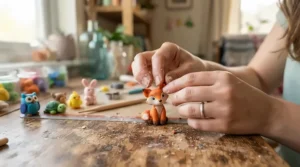
A roundup of craft kits for nine-year-olds named this its best beginner sewing kit, and the reasoning is sound: a nine-year-old can complete a mini project in one session, and the multiple included patterns stretch the kit across several sittings. Small projects solve the biggest problem with kid sewing, which is momentum. A child who finishes something in an afternoon wants to start another. A child staring at a three-week quilt does not.
Based on the spec comparison, the “mini” format also keeps stitch counts low, so wobbly early stitching doesn’t wreck the result. Smaller pieces do demand tidy handwork, though, and the treat theme may not suit every kid. I couldn’t verify enough individual customer reviews to summarize sentiment, so rely on the published recommendation and check recent buyer comments for needle and thread quality.
Pros:
- ✅ Mini projects finish in one session
- ✅ Several patterns stretch across sessions
- ✅ Clear starter level for nine-year-olds
Cons:
- ❌ Small pieces demand tidy stitching
- ❌ Themed designs may not suit every kid
Price & verdict: Roughly $15-$30 (check current price), a motivating first sewing kit.
7. Make It Real Friendship Bracelet Maker — twenty bracelets, four knots to learn
Friendship bracelets used to mean hours of tangled thread. This kit’s pitch is mastering four knots and following a color-coded pattern, so complex designs that once felt out of reach become doable. Listings promise 20 bracelets across 10 patterns, and sources cite between 10 and 15 pattern templates, so confirm on the live listing. The launch announcement lists 60 beads, 20 buttons, eight thread colors (146 meters total), and an instruction sheet, all stored inside the maker. It’s labeled for ages 8 and up, with a small-parts warning.
The honest analysis: the maker lowers the learning curve and keeps supplies organized, which matters at sleepovers. The trade-off is that a plastic device replaces some of the hands-on knotting of the classic method. I couldn’t verify a large body of reviews, so treat the pitch as the manufacturer’s claim and read buyer feedback on thread quality.
Pros:
- ✅ Color-coded patterns lower the learning curve
- ✅ Materials store neatly inside the maker
- ✅ Friend-sized gifts, ready to swap
Cons:
- ❌ Small parts carry a choking-hazard warning
- ❌ Plastic maker replaces some hands-on knotting
Price & verdict: Mid-$20s MSRP at launch (retail varies, so check current price), a solid pick for tween gift-givers.
✨ Don’t Miss These Top Picks!
🔍 Take your next craft weekend to the next level with these carefully selected kits. Click on any highlighted product name to check current pricing and availability. These tools will help your kid create keepsakes the whole family will love!
How to Choose Air Dry Clay Kits for Kids Ages 8 and Up
Picking the right kit is mostly about matching the box to the kid. Here are the six criteria that matter most:
- Check age labels and safety marks. Look for the AP seal or an ASTM D 4236 conformance statement, and respect small-parts warnings on the box.
- Count the clay, not the accessories. Ounces and pounds predict how many projects you’ll get; “100 pieces” often means stencils and stickers.
- Match projects to the child’s style. Pattern-followers love guided tutorials; free-form sculptors want more raw clay and fewer instructions.
- Inspect the finishing supplies. Paint and sealer decide whether a piece looks finished or unfinished.
- Plan for drying. Air dry clay generally takes 24 to 72 hours, so you need a safe shelf the dog can’t reach.
- Think about storage. Resealable bags extend clay life between sessions and save you from rock-hard leftovers.
Air Dry vs Polymer Clay: Which Is Better for Kids?
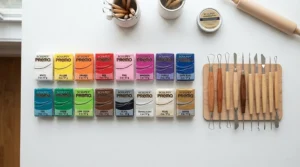
The air dry vs polymer clay question comes down to heat. Air dry clay hardens as water evaporates, so no oven is involved. Polymer clay stays soft until baked, so it needs an adult, a thermometer, and ventilation. Sculpey’s comparison guide also notes that baking air dry clay isn’t recommended and can ruin the project.
Shrinkage and Durability
Air dry clay loses water as it cures, so it shrinks, often 5% to 10%, and can crack if wrapped tightly around a rigid armature. It also cures porous and fairly brittle. Polymer clay shrinks negligibly and finishes sturdier.
Supervision and Age Fit
Polymer clay brands often label products 8+ or 14+ because of the baking step, so read the box. For a kid working solo on a Saturday morning, air dry clay is simply easier to supervise.
| Factor | Air Dry Clay | Polymer Clay |
|---|---|---|
| How it hardens | Room-temperature evaporation (24-72 hours) | Oven baking per package directions |
| Shrinkage | Often 5-10%, crack risk | Negligible |
| Durability | Lightweight, porous, can chip | Sturdier, slightly flexible |
| Adult involvement | Minimal | Oven supervision, dedicated tools |
| Cost per volume | Generally more economical | Usually higher |
| Best For | Painted keepsakes, beginners, groups | Jewelry, tiny details, durable charms |
For ages 8 and up working independently, air dry clay wins on convenience and cost. Polymer clay earns its place when a kid wants permanent charms or razor-sharp detail and an adult can manage the oven. Never mix the two in one project: water escaping from raw air dry clay can make polymer clay bubble or crack.
Beginner Sculpting Projects for Ages 8 and Up
The best beginner sculpting projects teach one skill each, then stack. Here’s a ladder that works with any kit above:
- Pinch pot: Roll a ball, press a thumb in, and pinch the walls outward. It teaches even thickness, the secret to crack-free drying.
- Leaf dish: Press a real leaf into a flat slab and trim the edge. This mirrors the leaf-shaped dishes in the National Geographic Air Dry Clay Kit.
- Coil snake: Roll ropes and spiral them. Coil work is the foundation of larger pottery, and it’s forgiving.
- Fridge magnet animals: Build small, simple creatures. The Creatible Air Dry Clay Kit is built around exactly this kind of quick win.
- Mini bowl on a turntable: Press clay into the paper mold and spin. This is what the Klutz Tiny Ceramics Studio is designed for.
A few rules save heartbreak. Keep walls roughly a quarter-inch thick, since thick lumps dry unevenly and crack. Score and dab water where pieces join, and dry flat on parchment. Expect every piece to shrink a little.
Sewing Kits for 9 Year Olds: What Actually Works
The best sewing kits for 9 year olds share three traits: pre-cut materials, big-eye needles, and projects that finish fast. A nine-year-old has the hand coordination for basic stitches but not the patience for a long slog. That’s why a one-session design like Alex Toys Sew Mini Treats works, and why the supply-rich KRAFUN My First Sewing Kit suits kids who want to explore.
Safety matters more here than with clay. One DIY gift tutorial recommends blunt-tipped wool or tapestry needles for young beginners, plus a needle threader and a pincushion. Supervise any sharp needles, and keep scissors age-appropriate.
The payoff goes beyond the finished plush. Scholastic’s Klutz parent guide connects crafting to fine motor development, problem-solving, and self-esteem, and sewing delivers a double dose: a skill that lasts a lifetime and a finished object to be proud of. Start small, praise the wonky stitches, and let your child pick the next project.
Friendship Bracelet Making Kits for Tweens: Knots, Beads, and Bragging Rights
Friendship bracelet making kits for tweens come in three flavors, and the right one depends on your kid’s patience:
- Knotting-by-hand kits like the Klutz Friendship Bracelets book kit, which teaches ten styles from braided to twisted and includes a clip to hold your work in place.
- Maker-device kits like the Make It Real Friendship Bracelet Maker, which uses templates and four core knots to produce complex patterns.
- Wheel-and-bead kits like the Spice Box Best Friends Bracelets set, which pairs a wheel and templates with 12 colors of floss, paracord, and beads for 16 designs.
Tweens crave identity and belonging, which is why friendship bracelets stay evergreen. Kits that include beads and charms feed the personalization instinct, and kits with clear patterns protect fragile confidence. For a group, buy one maker and one book, and let kids trade techniques.
One practical caution: nearly every bracelet kit carries a small-parts warning, so keep beads away from younger siblings. For a sleepover, pre-sort threads by color into little bags and you’ll save twenty minutes of tangle diplomacy.
Handmade Gifts Kids Can Make (Start Now for the Holidays)
It’s late October, which means the clock on handmade gifts kids can make has quietly started. Clay needs 24 to 72 hours to dry, painting needs another day, and sealing needs one more. Starting in early November gives you a comfortable runway.
Here are gift ideas that work with the kits above:
- Ornaments: The National Geographic Air Dry Clay Kit includes five holiday ornament projects. Poke a hole before drying for a ribbon.
- Trinket dishes: Leaf-shaped or pinch-pot dishes make lovely gifts for grandparents.
- Fridge magnets: Small figures from the Creatible Air Dry Clay Kit glue easily to magnets.
- Friendship bracelets: Made with the Make It Real Friendship Bracelet Maker, these are ideal for classmates.
- A DIY sewing basket: A sewing gift box with blunt needles, thread, a hoop, and a pincushion makes a thoughtful present for a cousin.
Handmade works because it carries time and intention. A slightly crooked ornament from your nine-year-old will outlast any store-bought gift on the grandparents’ tree. Add a handwritten tag naming the maker and the year.

Practical Usage Guide: From Soft Lump to Finished Keepsake
Amazon listings don’t tell you how to actually get good results, so here’s the workflow.
Setup
Cover the table with parchment or wax paper. Keep a cup of water and a damp cloth nearby, and a resealable bag open for unused clay.
Working and Drying
Keep clay you’re not using sealed, because air dry clay starts hardening immediately. A few drops of water can revive stiffening clay. Dry pieces flat, away from heat vents, for 24 to 72 hours.
Painting and Sealing
Paint only when completely dry. Because cured air dry clay stays porous and water-soluble, a sealer helps keepsakes survive handling and humidity.
Troubleshooting Your First 30 Days
- Cracks: Usually from thick spots or uneven drying. Fill hairline cracks with a dab of wet clay.
- Warping: Dry flat and avoid direct heat.
- Pieces falling apart: Score and add a little water at joints.
- Never bake air dry clay to speed things up. It can ruin the piece.
Real-World Scenarios: Matching Kits to Kids
These are hypothetical profiles, built to show how the reasoning works.
The Rainy-Weekend Eight-Year-Old
Budget under $20, one afternoon, a parent who wants guided projects. The National Geographic Air Dry Clay Kit fits: plenty of clay, instructions, and a seasonal payoff.
The Detail-Obsessed Ten-Year-Old
She loves miniatures and has the patience for a two-day dry. The Klutz Tiny Ceramics Studio is the natural match, since the turntable and glaze feed her instinct for polish.
The Sleepover Crowd
Four tweens, one evening, a need for something they can share. The Make It Real Friendship Bracelet Maker plus a few extra threads turns the evening into swap-and-wear time, while the Sago Brothers Air Dry Clay Kit is a good clay alternative because its pre-colored clay skips the painting wait.
Common Mistakes When Buying Craft Kits for Kids
- Buying by piece count. A 224-piece kit isn’t necessarily better than a 30-piece kit with better instructions.
- Ignoring age labels. Small parts and needles are the most common reasons to read the box twice.
- Choosing polymer for a solo kid. Baking needs an adult, which defeats the “go play” appeal.
- Forgetting drying space. Pieces need a safe shelf for days, not minutes.
- Skipping the sealer. Cured air dry clay is porous and water-soluble, so unsealed pieces are fragile in humidity.
- Expecting waterproof results. Air dry clay is decorative, not for food or water use.
Safety, Labels, and Regulations: A Parent’s Quick Guide
Art materials sold in the U.S. fall under the Labeling of Hazardous Art Materials Act, which requires manufacturers to review products for chronic hazards and label them accordingly. You can read the law’s summary from the Consumer Product Safety Commission for the details. In practice, you’ll see three things on a box:
- The ACMI AP seal, which certifies a product non-toxic when used as intended and is the one to look for on children’s materials.
- A conformance statement, such as “Conforms to ASTM D 4236,” which indicates compliance with the labeling standard.
- Small-parts and age warnings, which are separate from toxicity labeling and matter for beads and needles.
Materials marketed to children 12 and under also fall under children’s product rules, so a legitimate kit should carry clear labeling. If a box lacks any safety statement, skip it. Supervise needles, scissors, and anything baked.
Long-Term Cost & Value: Kit vs Bulk Supplies vs Ready-Made Toys
Kits cost more per ounce than bulk clay, but they save you a shopping trip and the “now what?” moment. Here’s how the options compare:
| Factor | Craft Kit | Bulk Supplies | Ready-Made Toy |
|---|---|---|---|
| Upfront cost | Moderate | Lower per ounce | Varies |
| Guidance | Instructions included | You find tutorials | None needed |
| Clutter | Contained in one box | Many loose items | Low |
| Skill growth | High | High, if self-directed | Low |
| Best For | First-timers, gifts | Repeat crafters | Short-term play |
The kit makes sense as a first purchase, since it removes guesswork and delivers early wins. Once your child is hooked, bulk clay and a few quality tools stretch every dollar further. A ready-made toy is gone in an afternoon, while a kit’s finished pieces become keepsakes.
FAQ
❓ Can you bake air dry clay to harden it faster?
❓ Do I need to seal painted air dry clay pieces?
❓ Can a 9 year old use a real needle for sewing?
❓ Are friendship bracelet kits safe for kids under 8?
❓ Is a craft kit worth it versus buying bulk clay?
Conclusion
The right pick comes down to your kid. For a budget-friendly first clay experience, the National Geographic Air Dry Clay Kit offers the most clay and the clearest path to finished projects. For a pottery-curious child, the Klutz Tiny Ceramics Studio brings a mini turntable and glaze that make small pieces feel professional. For color-obsessed character makers, the Sago Brothers Air Dry Clay Kit and the Creatible Air Dry Clay Kit skip the painting wait entirely.
If needle and thread call, the KRAFUN My First Sewing Kit and Alex Toys Sew Mini Treats are sensible beginner choices, with the latter’s one-sitting projects especially motivating. And for tweens who live for friend-to-friend gifting, the Make It Real Friendship Bracelet Maker turns a handful of knots into wearable memories.
Whichever you choose, check the safety marks, plan for drying time, and let your child lead. A wobbly pinch pot made with pride beats a perfect store-bought one every time.
✨ Ready to start crafting?
🎨 Click any highlighted product name above to check current pricing and availability, and give your kid a weekend project they’ll actually be proud of!
Recommended for You
- Kids Art Easel With Storage: 7 Best Mess-Free Picks 2026
- Art Supply Sets For 5 Year Olds: 7 Safe, Best-Value Picks (2026)
- Homeschool Learning Toys For 6 Year Olds: 7 Best Picks (2026)
Disclaimer: This article contains affiliate links. As an Amazon Associate, I earn from qualifying purchases. If you purchase products through these links, we may earn a small commission at no additional cost to you.
✨ Found this helpful? Share it with your friends! 💬🤗
