
In This Article
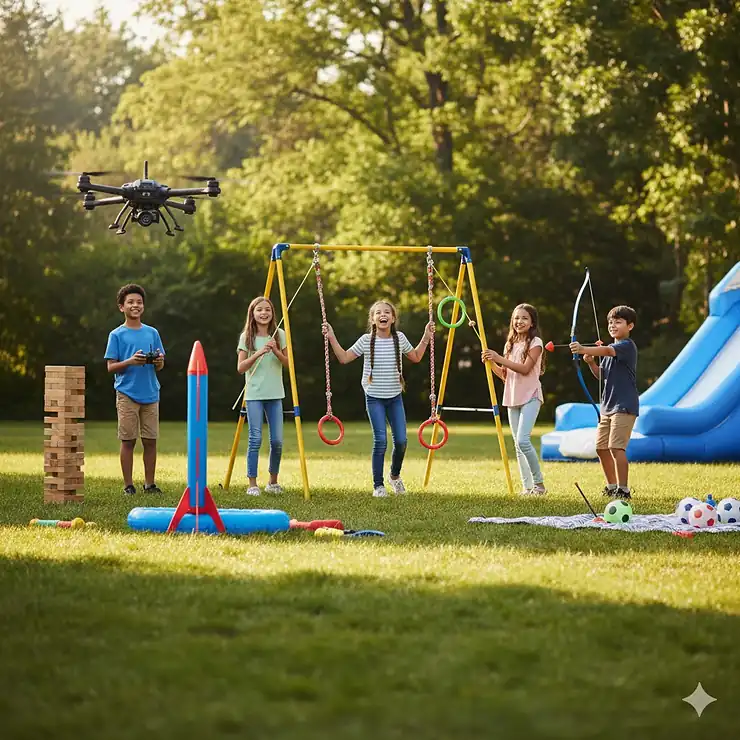
Remember when your kids were little and couldn’t wait to race outside? Fast forward to the tween years, and suddenly screens seem far more appealing than sunshine. I get it—getting 10-12 year olds outdoors can feel like an uphill battle. But here’s the thing: the right outdoor toys can transform your backyard into an adventure zone they won’t want to leave.
Research from the CDC shows that children who engage in regular outdoor play demonstrate improved attention spans, better grades, and enhanced physical development. For tweens specifically, outdoor play builds confidence, strengthens social skills, and provides essential physical activity during a critical growth period.
The challenge? Finding outdoor toys for 10-12 year olds that actually hold their interest. Tweens aren’t toddlers—they need equipment that matches their evolving skills and growing independence. That’s exactly why I’ve tested and researched dozens of products to bring you this comprehensive guide. Whether you’re shopping for birthdays, holidays, or just because, you’ll discover options that get kids off devices and into action-packed outdoor fun.
Quick Comparison Table
| Product | Age Range | Price Range | Best For | Rating |
|---|---|---|---|---|
| Razor RipStik Classic | 8+ | $45-$65 | Balance & coordination | ⭐⭐⭐⭐⭐ |
| NERF Elite 2.0 Commander RD-6 | 8+ | $15-$25 | Group battles | ⭐⭐⭐⭐½ |
| Spikeball 3-Ball Set | 6+ | $40-$60 | Team sports | ⭐⭐⭐⭐⭐ |
| Stomp Rocket Ultra LED | 5+ | $30-$45 | STEM learning | ⭐⭐⭐⭐½ |
| Laser Tag Set of 4 | 8-12 | $50-$90 | Active combat games | ⭐⭐⭐⭐ |
| Kan Jam Original | All ages | $35-$50 | Family fun | ⭐⭐⭐⭐⭐ |
| Micro Maxi Deluxe LED Scooter | 5-12 | $150-$200 | Daily transportation | ⭐⭐⭐⭐⭐ |
💬 Just one click – help others make better buying decisions too!😊
Top 7 Outdoor Toys for 10-12 Year Olds: Expert Analysis
1. Razor RipStik Classic Caster Board
If your tween has been eyeing skateboards but you’re worried about safety, the Razor RipStik Classic offers the perfect middle ground. This two-wheeled caster board delivers that surfing-on-pavement sensation with significantly more stability than traditional skateboards.
Key Specifications:
- Weight capacity: 220 lbs
- 76mm urethane wheels with ABEC-5 bearings
- 360-degree inclined caster trucks
The RipStik’s unique twisting motion engages core muscles while building balance and coordination. Unlike push-scooters, this requires no foot propulsion—kids generate momentum through hip movements, making it a fantastic full-body workout disguised as pure fun.
Customer feedback consistently highlights the learning curve. Most kids master basic riding within 20-30 minutes, though tricks take considerably longer. Parents appreciate the durable polymer construction that withstands daily use and occasional crashes.
✅ Pros:
- Excellent for developing balance and core strength
- Lightweight (under 5 lbs) for easy transport
- Available in multiple colors
- Smooth ride on various surfaces
❌ Cons:
- Steeper learning curve than traditional scooters
- Requires smooth pavement for best performance
Price range: $45-$65 | Best for: Kids who love skateboarding culture but need safer alternatives
2. NERF Elite 2.0 Commander RD-6 Dart Blaster
The NERF Elite 2.0 Commander RD-6 transforms your backyard into an action-packed battlefield. This pump-action blaster features a 6-dart rotating drum and slam-fire capability, launching foam darts up to 90 feet.
Key Specifications:
- 6-dart rotating drum capacity
- Includes 12 NERF Elite foam darts
- 3 tactical rails for customization
- Fires up to 90 feet (27 meters)
What sets this NERF blaster apart is its customization potential. The tactical rails and attachment points let kids modify their blaster for different battle scenarios. Slam-fire action adds intensity—hold the trigger while pumping to unleash rapid-fire volleys.
Parents love that it encourages outdoor group play. According to research on playground benefits, team-based outdoor activities significantly improve social development and cooperative skills in this age group.
✅ Pros:
- Affordable entry into NERF battles
- No batteries required
- Customizable with accessories
- Promotes teamwork and strategy
❌ Cons:
- Dart retrieval can be time-consuming
- Additional darts sold separately
Price range: $15-$25 | Best for: Group play and neighborhood NERF wars
3. Spikeball 3-Ball Original Roundnet Game Set
Think volleyball meets four-square, and you’ve got Spikeball. This increasingly popular game has become a backyard staple for good reason—it’s addictively fun and suitable for various skill levels.
Key Specifications:
- Includes 3 Spikeball balls
- Portable net and carrying case
- Plays on any surface (grass, sand, indoor)
- 2-on-2 competitive gameplay
The beauty of Spikeball lies in its simplicity. Players spike a small ball onto a circular net placed at ankle level. The opposing team has three touches to return it. What starts as casual volleys quickly escalates into fast-paced, laughter-filled matches.
One parent shared: “We bought this for our 11-year-old’s birthday party. Six months later, the kids still ask to play every weekend. It’s gotten them away from screens naturally.”
✅ Pros:
- Incredible replay value
- Develops hand-eye coordination
- Whole family can participate
- Weather-resistant materials
❌ Cons:
- Requires at least 4 players for proper gameplay
- Can be intense for beginners
Price range: $40-$60 | Best for: Active families who love competitive games
4. Stomp Rocket Ultra LED Launcher
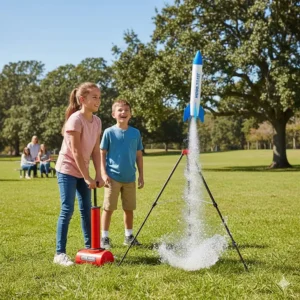
The Stomp Rocket Ultra LED combines physics education with pure outdoor excitement. Kids jump on the launch pad, sending foam rockets soaring up to 150 feet into the air—all powered by air pressure, no batteries needed.
Key Specifications:
- Launches up to 150 feet
- 6 LED foam-tipped rockets included
- 100% kid-powered (no batteries)
- Adjustable launch angle
The LED lights transform this into a day-and-night activity. Rockets glow brilliantly against twilight skies, extending playtime well past dinner. It’s STEM learning wrapped in active play—kids naturally experiment with launch angles, stomping force, and trajectories.
According to studies on outdoor play’s impact on child development, unstructured outdoor activities like rocket launching enhance problem-solving skills and scientific thinking.
✅ Pros:
- No batteries or electricity required
- Encourages scientific experimentation
- Suitable for individual or group play
- Durable foam construction
❌ Cons:
- Rockets can drift in windy conditions
- Requires open space for safe launching
Price range: $30-$45 | Best for: STEM-minded kids who love hands-on science
5. Laser Tag Guns Set of 4 with Vests
Want to bring the arcade experience home? This Laser Tag Set of 4 delivers immersive tactical combat right in your backyard. Complete with guns, vests, and LED score displays, it’s everything needed for epic laser tag battles.
Key Specifications:
- 4 guns with digital LED score vests
- Multiple game modes and team configurations
- Indoor and outdoor compatible
- Range up to 130 feet
The vest vibrates when hit, and realistic sound effects amp up the excitement. Kids can form teams (red vs. blue) or go free-for-all. Each gun displays real-time scores, adding competitive tension to every match.
Parents note these get tweens moving—a lot. One review mentioned: “Our 10-year-old and his friends played for two hours straight. They were exhausted but begging for more.”
✅ Pros:
- Complete multiplayer experience in one package
- Develops strategic thinking
- Weather-resistant for outdoor use
- Keeps kids active for hours
❌ Cons:
- Requires batteries (not included)
- Set-up can be complex for younger kids
Price range: $50-$90 | Best for: Birthday parties and regular neighborhood play dates
6. Kan Jam Original Disc Toss Game
Kan Jam is deceptively simple yet endlessly entertaining. Two teams toss a flying disc toward opponent cans, attempting to deflect it in for points. First to 21 wins—but there’s a twist: landing the disc perfectly through the can’s slot ends the game instantly.
Key Specifications:
- 2 Kan Jam goal cans
- 1 official flying disc included
- Portable and weather-resistant
- Suitable for all ages
What makes Kan Jam brilliant for this age group is its scalability. Beginners enjoy casual throwing, while competitive players develop complex deflection strategies. Setup takes mere seconds, and the compact design means it travels everywhere—beaches, parks, campgrounds.
The game originated from backyard fun with trash cans (true story!) and has evolved into an official sport with tournaments. That authentic grassroots vibe resonates with tweens looking for “cool” activities.
✅ Pros:
- Easy to learn, challenging to master
- Extremely portable
- Multigenerational appeal
- American-made quality
❌ Cons:
- Requires 4 players for optimal experience
- Wind can affect disc flight
Price range: $35-$50 | Best for: Family gatherings and tailgating
7. Micro Kickboard Maxi Deluxe LED Scooter
The Micro Maxi Deluxe LED isn’t just a toy—it’s transportation that tweens actually want to use. This Swiss-engineered scooter features motion-activated LED wheels, adjustable handlebars, and the smooth glide Micro is famous for.
Key Specifications:
- Weight capacity: 110 lbs
- Ages 5-12
- Adjustable T-bar grows with child
- Motion-activated light-up wheels (no batteries)
- 2-year manufacturer warranty
The lean-to-steer design feels skateboard-like but offers superior control. Kids shift their weight to turn rather than pivoting handlebars—intuitive and fun. The LED wheels activate with movement, making evening rides spectacular.
Build quality separates Micro from competitors. The fiberglass-reinforced deck, anodized stem, and precision bearings create a scooter that genuinely lasts “virtually forever” according to the manufacturer. Parents confirm this isn’t marketing hype—these scooters frequently outlast childhood.
✅ Pros:
- Exceptional build quality and longevity
- Grows with child through adjustable handlebar
- Promotes daily outdoor activity
- Replaceable parts extend lifespan
❌ Cons:
- Higher price point than budget scooters
- Requires smooth surfaces for best performance
Price range: $150-$200 | Best for: Daily use and kids ready for premium quality
Understanding the Developmental Benefits of Outdoor Play
What Makes Outdoor Toys for 10-12 Year Olds Essential?
The tween years mark a critical developmental window. According to research published by the National Institutes of Health, outdoor play during ages 10-12 directly influences long-term health outcomes, social competence, and cognitive development.
Outdoor toys for 10-12 year olds serve multiple purposes beyond entertainment. They combat sedentary lifestyles increasingly common in this age group. The CDC reports that only 27-33% of children meet recommended physical activity levels—outdoor toys make hitting those targets enjoyable rather than obligatory.
Physical Development Through Active Play
Quality outdoor toys challenge growing bodies appropriately. The RipStik builds core strength and balance. Laser tag delivers cardiovascular benefits through sustained movement. Stomp Rocket encourages explosive leg power. Each toy targets different physical skills, creating well-rounded development.
Tweens in this age range are refining motor skills and spatial awareness. Equipment like Spikeball demands quick reactions and precise hand-eye coordination. These aren’t just games—they’re disguised physical therapy that strengthens neural pathways connecting mind and muscle.
Social and Emotional Growth
Most outdoor toys for 10-12 year olds incorporate social elements. Kan Jam requires teamwork and communication. Laser tag teaches strategic thinking and graceful winning or losing. These experiences build emotional intelligence that classroom learning alone cannot provide.
Research indicates that children who engage in regular outdoor group play demonstrate higher empathy levels and better conflict resolution skills. The informal nature of backyard games creates safe spaces for tweens to navigate social dynamics independently, preparing them for adolescence.
How to Choose the Perfect Outdoor Toys for 10-12 Year Olds
Assess Your Child’s Interests and Skill Level
Start by observing what already captures their attention. Does your tween gravitate toward competitive sports? Consider Spikeball or laser tag. More interested in individual challenges? The RipStik or scooter might be perfect.
Skill level matters tremendously. Some kids master new activities instantly, while others need gradual progression. The NERF blaster offers immediate satisfaction with low entry barriers, whereas the RipStik demands practice and patience.
Space Considerations
Evaluate your available outdoor area realistically. Stomp Rocket requires significant vertical clearance and open ground. Laser tag needs roaming space for exciting gameplay. Conversely, the scooter works anywhere with smooth pavement.
Don’t overlook storage. Bulky equipment that’s difficult to store often goes unused. The Kan Jam design collapses flat, Spikeball fits in a compact bag, and scooters lean against garage walls—convenience directly correlates with usage frequency.
Safety Without Compromise
Safety doesn’t mean boring. Modern outdoor toys incorporate protective features without sacrificing excitement. NERF uses foam darts, Stomp Rocket employs soft tips, and quality scooters like the Micro include non-slip decks.
Always verify weight limits and age recommendations. These aren’t arbitrary—they’re engineered specifications ensuring safe use. A 10-year-old weighing 75 lbs on equipment rated for 50 lbs risks both injury and equipment damage.
Budget and Long-term Value
Price ranges vary dramatically in this category. Budget-friendly options like NERF blasters ($15-$25) deliver tremendous value for group play. Premium choices like the Micro scooter ($150-$200) justify higher costs through years of daily use.
Calculate cost-per-use rather than upfront expense. A $150 scooter used 200 times annually for three years costs just 25 cents per ride. A $40 toy collecting dust after one summer? Terrible value regardless of low price.
Consider expandability too. Systems with add-ons (like NERF accessories or additional Spikeball sets) grow with your child’s enthusiasm, extending product lifespan significantly.
Maximizing Outdoor Play: Tips from the Trenches
Creating an Irresistible Outdoor Environment
Simply buying toys isn’t enough—you’re competing with perfectly optimized digital experiences designed to hijack attention. Stack the deck in your favor by making outdoor time genuinely appealing.
Designate specific “outdoor zones” in your yard. A Spikeball area, a NERF battle field, a scooter track. Defined spaces make activities feel intentional rather than random. Add simple touches like chalk boundaries or flags marking territories.
Schedule outdoor time before screen time. Rather than “earn” devices through chores, flip it: outdoor play first, screens second. This positions physical activity as the main event, not an interruption.
Encouraging Solo and Group Play
Not every outdoor toy requires friends, and that’s actually beneficial. Solo practice on a RipStik or scooter builds confidence kids bring to group settings. They arrive at playdates with skills rather than learning publicly.
For naturally social equipment like laser tag or Kan Jam, help facilitate connections. Host regular game days, invite neighborhood kids, or coordinate with other parents for regular outdoor meetups. Consistency creates traditions kids anticipate.
Weather and Seasonal Adaptation
Most outdoor toys for 10-12 year olds function across seasons with minor adjustments. NERF battles work year-round—summer in shorts, winter in snow pants. Scooters transition from sidewalks to smooth basements during rain.
Embrace seasonal variation rather than fighting it. Spring focuses on Stomp Rockets and Spikeball. Summer brings water-based modifications (yes, laser tag survives gentle rain). Fall means leaf-pile obstacles for RipStik courses. Winter? Indoor laser tag tournaments.
Safety Guidelines for Outdoor Toys
Essential Protective Gear
Even “safe” toys benefit from basic protection. Helmets aren’t negotiable for wheeled equipment—RipStiks and scooters demand them. Knee and elbow pads add confidence for beginners attempting tricks.
For projectile toys like NERF or Stomp Rocket, establish eye-safety rules. Official NERF guidelines recommend eyewear during intense battles. While foam is soft, direct hits to faces aren’t fun. Teach kids to aim low and avoid head shots.
Supervision Versus Independence
Tweens crave independence, and outdoor play provides healthy opportunities to develop it. However, supervision levels should match both the activity and your child’s maturity.
High-energy group games like laser tag benefit from adult presence—not hovering, but nearby for rule disputes or injuries. Individual activities like scootering or RipStik practice often work better with distant observation, giving kids space to experiment.
Establishing Clear Boundaries
Create specific play zones and enforce them consistently. NERF battles happen in the backyard, not near cars or windows. Stomp Rockets launch from designated areas away from power lines. Scooters stick to driveways and sidewalks, never streets.
Discuss neighbor considerations openly. Loud games should respect quiet hours. Projectiles must stay within property lines. Teaching boundary respect now builds social awareness that extends far beyond outdoor play.
Maintenance and Care for Longevity
Regular Inspection Routines
Quality outdoor toys require minimal maintenance but benefit from quick weekly checks. Inspect wheels for wear, tighten loose screws, and verify moving parts function smoothly. Five minutes of prevention beats replacing damaged equipment.
For electronic toys like laser tag sets, clean sensors with soft cloths and check battery compartments for corrosion. Store indoors when not in use—even weatherproof equipment lasts longer sheltered from elements.
Proper Storage Solutions
Create dedicated storage that encourages cleanup. Wall hooks for scooters, bins for NERF equipment, bags for portable games. When putting away takes 30 seconds, kids actually do it. When it requires complex processes, toys languish outside collecting mildew.
Seasonal storage matters for occasional-use items. Stomp Rockets and Spikeball might hibernate during school years but return for summer. Clean thoroughly before storage, and choose climate-controlled spaces over damp garages when possible.
Teaching Responsibility Through Ownership
Involve tweens in maintenance as part of ownership. They can wipe down scooter decks, organize NERF darts, or pump basketballs. These small tasks build pride and investment in their equipment.
Establish that care equals privilege. Well-maintained toys earn continued use; neglected equipment gets retired temporarily. This natural consequence teaches responsibility without lectures or nagging.
Seasonal Buying Guide: Best Times to Purchase
Holiday and Birthday Strategies
Major holidays offer predictable sales patterns. Black Friday and Cyber Monday feature 20-40% discounts on outdoor toys. Amazon Prime Day (mid-July) provides competitive pricing perfect for summer outdoor toys for 10-12 year olds.
Spring (March-April) marks new model releases for scooters and wheeled equipment. Previous years’ inventory often sees clearance pricing. Conversely, winter brings deep discounts on “summer” items like Spikeball and Stomp Rockets that work year-round.
For birthdays, consider asking relatives to contribute toward higher-end items like the Micro scooter rather than receiving multiple smaller toys. Group gifting enables access to premium equipment that lasts years rather than accumulating clutter.
Understanding Price Fluctuations
Online tools track historical pricing patterns. CamelCamelCamel for Amazon shows typical price ranges and identifies genuine deals versus manufactured “sales.” Patience often saves 30-50% without compromising timing.
New releases temporarily inflate competitor pricing. When Razor launches updated RipStik models, classic versions often discount. Similarly, off-brand alternatives proliferate after popular toys gain traction—sometimes delivering adequate quality at fraction of costs.
Comparing Traditional vs. Modern Outdoor Toys
Evolution of Outdoor Play Equipment
Twenty years ago, outdoor toys for 10-12 year olds meant bicycles, balls, and maybe rollerblades. Today’s landscape includes technology-enhanced options that maintain physical benefits while incorporating modern design.
LED integration exemplifies this evolution. Motion-activated lights on scooters and rockets don’t require batteries yet add visual excitement absent from predecessors. These features attract screen-accustomed kids while delivering identical physical benefits to “boring” traditional versions.
However, classics persist for good reason. Balls, frisbees, and simple tag never require batteries, updates, or replacement parts. They represent outdoor play distilled to purest form—utterly reliable and infinitely replayable.
Budget-Friendly Alternatives
Not every family can invest $150 in premium scooters or $90 in laser tag systems. Fortunately, outdoor play doesn’t require expensive equipment. A $15 frisbee, chalk for sidewalk games, and jump ropes provide hours of active entertainment.
Budget alternatives exist across categories. Off-brand caster boards cost $30 versus Razor’s $60 but may lack durability. Generic laser tag sets run $30-$40 with reduced range and features. Consider whether savings justify potential quality compromises.
Sometimes DIY creativity trumps purchases entirely. Homemade obstacle courses using household items, water balloon battles, or neighborhood-wide hide-and-seek cost nothing yet deliver memorable experiences. The best outdoor play often springs from imagination rather than store shelves.
FAQ
❓ What outdoor toys keep 12 year olds entertained longest?
❓ Are expensive outdoor toys worth the investment?
❓ How much outdoor time do 10-12 year olds need daily?
❓ Can outdoor toys help reduce screen time naturally?
❓ What safety gear is essential for wheeled outdoor toys?
Conclusion: Investing in Active, Healthy Childhoods
Choosing outdoor toys for 10-12 year olds represents more than purchasing entertainment—you’re investing in physical health, social development, and lifelong active lifestyle patterns. The tween years form critical habits that often persist into adulthood.
The seven products featured here offer diverse paths toward the same destination: kids who prefer sunshine over screens, at least sometimes. The RipStik and scooter provide daily-use transportation that builds skills incrementally. Spikeball and Kan Jam create family traditions and neighborhood connections. Laser tag and NERF deliver excitement that rivals video games without the sedentary downsides.
Remember that the “best” outdoor toy varies by child. Some tweens thrive on competition, others prefer solo challenges. Some master new skills quickly, others need patient progression. Start with options matching your child’s current interests while gently stretching their comfort zones.
Whatever you choose, the real magic happens when you participate alongside them, at least initially. Your involvement signals that outdoor play matters, creating memories that last far longer than any toy. Race on scooters, stumble through RipStik basics together, or join laser tag teams—your participation transforms products into experiences.
Finally, manage expectations realistically. Outdoor toys won’t instantly eliminate screen time or create outdoor enthusiasts overnight. Progress happens gradually. Celebrate small wins: choosing scooters over iPads, inviting friends over for Spikeball, or simply spending 20 minutes more outside than yesterday.
The tweens currently glued to devices will someday be adults making lifestyle choices for themselves and their children. The outdoor play experiences you facilitate now plant seeds for healthier futures—both theirs and the next generation’s.
Recommended for You
- 7 Best Toys for 6 Year Olds in 2026: Expert Picks
- 7 Best Learning Toys for 5 Year Olds 2026 | STEM Toys
- 7 Best Toys for 4 Year Olds That Spark Joy (2026 Guide)
Disclaimer: This article contains affiliate links. If you purchase products through these links, we may earn a small commission at no additional cost to you.
✨ Found this helpful? Share it with your friends! 💬🤗
