

In This Article
Remember that feeling when you first discovered how eggs got from chickens to your breakfast table? That’s exactly what a wooden toy farm brings to your child’s playroom. I’ve spent countless hours watching little ones transform simple wooden barns into bustling farmyards, and honestly, there’s nothing quite like seeing their eyes light up when they realize where milk actually comes from.
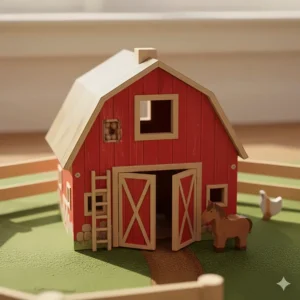
The wooden toy farm has become more than just a plaything in 2025. Parents are rediscovering the timeless charm of sustainably crafted wooden toys that their grandparents cherished. Unlike those flashy plastic sets that break after a week, quality wooden farm sets withstand years of imaginative play while teaching kids about agriculture, animal care, and sustainable living. According to Wikipedia, wooden toys have been cherished for centuries, offering durability and educational value that modern materials struggle to match.
What makes wooden toy farm sets special? They’re tactile, they’re sturdy, and they spark creativity without batteries or screens. Your child develops fine motor skills while feeding toy chickens, strengthens problem-solving abilities when figuring out which animal goes where, and learns responsibility through pretend farm chores. Plus, that natural wood grain and smooth finish? Kids instinctively gravitate toward it.
Quick Comparison Table: Top 7 Wooden Toy Farms at a Glance
| Product Name | Age Range | Pieces | Key Features | Price Range |
|---|---|---|---|---|
| Terra by Battat Wooden Barn | 3+ years | 20 pieces | Pulley system, opening roof, hay loft | $50-$70 |
| Melissa & Doug Fold and Go Barn | 3+ years | 7 animals + barn | Portable, folding corral, sliding doors | $35-$50 |
| Melissa & Doug Take-Along Sorting Barn | 2+ years | 10 pieces | Shape sorting, flip-up roof, handle | $20-$30 |
| Fisher-Price Wood Farm Animals Board | 1+ years | 4 doors + animals | Peek-a-boo doors, FSC-certified | $15-$25 |
| Pearhead Wooden Barn Shape Sorter | 2+ years | 7 pieces | Montessori design, chunky animals | $25-$35 |
| KidKraft Wooden Farm Playset | 3+ years | 28 pieces | Interactive garden, rolling wheelbarrow | $60-$85 |
| Puzzled Farm Barn 3D Building Kit | 8+ years | 21 pieces | DIY construction, paintable | $15-$25 |
💬 Just one click – help others make better buying decisions too!😊
Top 7 Wooden Toy Farm Sets: Expert Analysis
1. Terra by Battat Wooden Animal Barn Set
The Terra by Battat Wooden Animal Barn has become my go-to recommendation for families wanting a substantial farm playset that’ll last through multiple kids. This 20-piece masterpiece isn’t just another toy barn – it’s a complete farmyard experience housed in beautifully crafted wood.
Key Specifications:
- 20-piece comprehensive set with barn, ladder, 4 hay bales, 2 food troughs, 10 fences
- Working pulley system for hay transportation
- Opening roof and barn doors for easy access
- Dimensions: 19.57″ L x 13.90″ W x 13.07″ H
What really sets this barn apart is that functional pulley system. Kids can actually crank the handle to lift hay bales to the second-level loft, teaching basic mechanical principles through play. The roof folds back completely, so even smaller hands can reach inside without frustration. Parents appreciate the FSC-certified wood construction and the fact that it accommodates most standard farm animal figurines (sold separately).
Customer feedback consistently praises its durability and educational value. One parent mentioned their barn survived three years of daily play and still looks brand new. The only minor complaint? You’ll need to purchase animal figurines separately.
Pros:
✅ Working pulley system teaches cause-and-effect
✅ Large size accommodates group play
✅ FSC-certified sustainable wood
Cons:
❌ Animals sold separately
❌ Higher price point at $50-$70
2. Melissa & Doug Fold and Go Wooden Barn
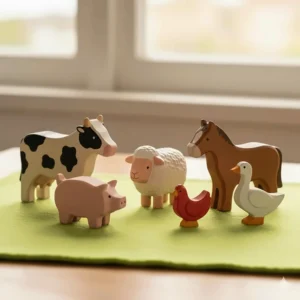
For families who value portability without sacrificing quality, the Melissa & Doug Fold and Go Wooden Barn delivers brilliantly. This clever design folds into a compact carrying case while providing a complete farm experience with 7 detailed animal figures.
Key Specifications:
- Includes 7 wooden animals: horse, cow, pig, sheep, chicken, goat, dog
- Sliding barn doors with brass hinges
- Folding corral adjusts to multiple configurations
- Sturdy carrying handle
- Made from responsibly sourced wood
I love how this set solves the “where do we play?” problem. Whether you’re heading to grandma’s house or setting up a playdate, everything packs neatly into the barn itself. The sliding doors operate smoothly, and the adjustable corral lets kids create different farm layouts. Each animal is chunky enough for toddlers to grasp easily yet detailed enough to encourage imaginative storytelling.
Parents consistently rate this 4.8 out of 5 stars on Amazon, with many mentioning it became their child’s favorite toy. The animals stand upright independently, which sounds simple but makes a huge difference during play.
Pros:
✅ Complete set with animals included
✅ Portable design with handle
✅ Adjustable corral for varied play
Cons:
❌ Smaller size limits group play
❌ Fewer pieces than some competitors
3. Melissa & Doug Take-Along Sorting Barn Toy
The Melissa & Doug Take-Along Sorting Barn brilliantly combines educational value with farm-themed fun. This shape-sorting toy disguises learning as play, making it perfect for toddlers developing those crucial early skills.
Key Specifications:
- 10 wooden pieces: 8 animals plus farmer and tractor
- Shape-matching slots in barn structure
- Flip-up roof for quick storage
- Built-in carry handle
- Extra-thick pieces for easy grasping
This barn doubles as a shape sorter and pretend play set. Each animal fits through a specifically shaped slot, teaching shape recognition and problem-solving. When playtime ends, the flip-up roof makes cleanup incredibly simple. The pieces are intentionally oversized – perfect for preventing choking hazards and helping little hands develop pincer grip.
What surprised me most? How long kids actually engage with this seemingly simple toy. One reviewer mentioned their two-year-old played with it daily for over a year, progressing from basic shape matching to complex farm stories. At $20-$30, it offers tremendous value.
Pros:
✅ Educational shape-sorting features
✅ Budget-friendly option
✅ Perfect size for toddlers
Cons:
❌ Limited expansion possibilities
❌ Simpler design than full farm sets
4. Fisher-Price Wood Baby Toy Farm Animals Board
The Fisher-Price Wood Baby Toy Farm Animals Board introduces the youngest children to farm life through interactive peek-a-boo play. This board perfectly balances simplicity with engagement for babies and early toddlers.
Key Specifications:
- 4 flip-open doors revealing farm animals and babies
- Features horse, pig, goose, and chicken families
- FSC-certified wood with water-based paints
- Designed for ages 1+
- Promotes fine motor skills and animal recognition
Each door flips open to reveal a parent animal with its baby, teaching animal names and family concepts simultaneously. The doors are sized just right for small hands to grasp and flip, strengthening those developing motor skills. Fisher-Price used their 90+ years of child development expertise to ensure every detail serves a developmental purpose.
Parents love that it’s virtually indestructible – important when you’re dealing with the dropping, throwing, and chewing phases. The non-toxic, water-based paint gives peace of mind, and the simple design means babies focus on the activity rather than getting overwhelmed.
Pros:
✅ Perfect first farm toy for babies
✅ FSC-certified sustainable materials
✅ Durable construction for rough handling
Cons:
❌ Limited pieces compared to full sets
❌ May outgrow quickly as child develops
5. Pearhead Wooden Barn Shape Sorter Montessori Farm Toy
The Pearhead Wooden Barn Shape Sorter brings Montessori principles to farmyard play. This 7-piece set focuses on hands-on learning through chunky, easy-to-manipulate pieces that encourage independent exploration.
Key Specifications:
- 6 chunky farm animals: cow, horse, pig, sheep, chicken, dog
- Classic red barn with matching shape cutouts
- Flip-up roof for storage
- FSC-certified wood with non-toxic finishes
- Promotes shape recognition and problem-solving
The Montessori approach shines through in this design. Each animal fits into its corresponding barn cutout, but kids can also stack them into towers or line them up for storytelling. The chunky design ensures even toddlers can grip and manipulate the pieces confidently. Parents appreciate how it grows with their child – starting as a simple shape sorter and evolving into a prop for complex farm narratives.
Customer reviews highlight the smooth, rounded edges and quality construction. The built-in handle makes it a favorite for car trips, and cleanup takes seconds when everything fits neatly inside the barn.
Pros:
✅ Montessori-inspired educational design
✅ Multi-functional play options
✅ Chunky pieces perfect for toddlers
Cons:
❌ Smaller animal selection
❌ Limited expansion accessories
6. KidKraft Wooden Farm Playset with 28 Pieces
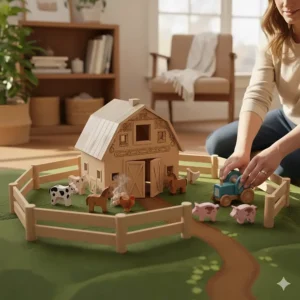
The KidKraft Wooden Farm Playset takes farm play to the next level with interactive features that teach the complete farm-to-market cycle. This 28-piece set stands out for its innovative garden bed and rolling accessories.
Key Specifications:
- 28 total pieces including barn, animals, farmer family, vehicles
- Interactive garden bed with plantable seeds
- Magnetic tractor and rolling wheelbarrow
- Opening barn doors and side hatch
- Built-in carrying handle
- Hen’s roost with eggs
This set tells a complete farming story. Kids plant seeds in the garden bed, nurture them until they “sprout,” then harvest and load crops into the wheelbarrow or magnetic tractor. The barn interior reveals a detailed hen’s roost where children collect eggs. Everything packs into the barn via the built-in handle, making it surprisingly portable despite the extensive piece count.
Parents consistently mention how this set holds children’s attention longer than simpler farms. The farm-to-market narrative naturally teaches patience, responsibility, and where food comes from. At $60-$85, it’s pricier but delivers exceptional play value.
Pros:
✅ Complete farm-to-market experience
✅ Interactive garden teaches plant growth
✅ Extensive 28-piece set
Cons:
❌ Higher price point
❌ More pieces mean more cleanup
7. Puzzled Farm Barn 3D Wooden Building Kit
The Puzzled Farm Barn 3D Building Kit serves a different purpose – it’s a construction project that becomes a toy. This 21-piece DIY kit appeals to older kids who enjoy building as much as playing.
Key Specifications:
- 21 interlocking laser-cut pieces
- Natural unfinished wood ready for painting
- Assembled dimensions: 7″L x 9″W x 7″H
- Includes sandpaper and instructions
- Ages 8+ recommended
This kit transforms woodworking into a family activity. The laser-cut pieces fit together precisely without glue, teaching spatial reasoning and following instructions. Once assembled, kids can paint and customize their barn however they imagine. The natural wood invites creativity – I’ve seen kids create everything from weathered rustic barns to bright rainbow farmhouses.
Parents appreciate the screen-free building experience and the sense of accomplishment kids feel when completing their barn. It makes an excellent rainy day project or thoughtful gift for crafty kids.
Pros:
✅ Educational building experience
✅ Customizable with paint
✅ Budget-friendly at $15-$25
Cons:
❌ Requires assembly time and patience
❌ Not suitable for younger children
What Makes a Great Wooden Toy Farm? Essential Buying Factors
Material Quality and Safety Standards
Not all wooden toy farms are created equal. The best sets use FSC-certified hardwoods like beech, maple, or rubberwood, sourced from sustainably managed forests. These woods resist warping, withstand years of play, and offer that solid, substantial feel kids instinctively prefer. Avoid sets using composite wood or MDF, which can splinter and don’t hold up to moisture or rough handling.
Safety certifications matter enormously. Look for ASTM F963 (American Society for Testing and Materials) certification, which means the toy passed rigorous safety tests for mechanical hazards, sharp edges, and choking risks. European EN71 certification provides similar assurance. The finish deserves scrutiny too – water-based, non-toxic paints and natural oils are essential since young children often mouth their toys.
Check edge finishing carefully. Quality manufacturers sand edges smooth and round sharp corners. Your fingers shouldn’t catch on any rough spots or splinters. The best wooden farms feel pleasant to touch, which actually encourages longer, more engaged play sessions.
Age-Appropriate Design Features
Different ages need different features from their wooden toy farm. For babies 12-18 months, simple boards with flip doors or chunky animals they can grasp work best. These introduce farm animals and cause-effect relationships without overwhelming tiny attention spans. Pieces should be large enough to prevent choking – generally, nothing smaller than 1.25 inches in any dimension.
Toddlers ages 2-3 years benefit from shape-sorting barns that combine learning with play. They’re developing fine motor skills and problem-solving abilities, so matching animals to correct slots provides perfect practice. Look for pieces thick enough for pudgy fingers to manipulate but detailed enough to recognize animals easily.
Preschoolers 3-5 years old are ready for complete farm playsets with multiple buildings, animals, fences, and accessories. They’re creating complex narratives now, so expandability matters. Can they add more animals? Does the barn open fully for access? Are there movable parts like doors, gates, or pulley systems?
School-age kids 6+ years might enjoy construction-focused sets where they build the barn itself, then use it for play. These combine woodworking skills with creativity, offering dual value.
Educational Value and Developmental Benefits
The wooden toy farm serves as a powerful educational tool disguised as fun. Research from child development experts indicates that open-ended toys like wooden farm sets promote cognitive development more effectively than electronic alternatives. Kids develop spatial reasoning when arranging fences and buildings, practice fine motor control when manipulating small pieces, and strengthen language skills through farm-themed storytelling.
Animal recognition forms a foundation for biological understanding. Children learn to categorize (these animals have wings, those have hooves), compare sizes, and understand basic ecology (what animals eat, where they sleep). Many sets introduce farm-to-table concepts, helping kids understand food origins – increasingly important as children become disconnected from agricultural realities.
Problem-solving opportunities abound in quality wooden farms. Which animals fit in which barn spaces? How do you build a stable fence? Where does the hay go? These seemingly simple questions require planning, trial and error, and logical thinking. According to research from HABA USA, farm-themed play encourages imaginative scenarios that develop social skills as children engage in role-playing and negotiation.
Durability and Long-Term Value
A quality wooden toy farm represents an investment that pays dividends for years. The best sets survive multiple children, rough play, and even outdoor adventures. Look for construction techniques like mortise-and-tenon joints, dowel connections, or tongue-and-groove assembly rather than simple gluing. These traditional woodworking methods create stronger, longer-lasting toys.
Hardware quality matters surprisingly much. Metal hinges on barn doors should move smoothly without binding or falling off. Latches should click satisfyingly but remain easy enough for small hands to operate. Wheels on vehicles need secure axles that won’t pop out during enthusiastic play.
Consider whether pieces can be replaced if lost. Some manufacturers sell individual animals or accessories, extending the set’s useful life. Others design sets where missing pieces don’t prevent play – lose one sheep but still have a functioning farm.
The best wooden farms appreciate rather than depreciate. They become family heirlooms, passed from child to child with stories attached. That heritage aspect adds value beyond the purchase price, making the initial investment feel surprisingly reasonable when you calculate cost-per-play-hour over a decade.
Wooden vs. Plastic Farm Toys: The Honest Comparison
| Factor | Wooden Toy Farms | Plastic Farm Toys |
|---|---|---|
| Durability | Lasts 10+ years, withstands rough play | Often breaks within 1-2 years |
| Environmental Impact | Biodegradable, renewable resource | Non-biodegradable, petroleum-based |
| Sensory Experience | Natural texture, pleasant weight, authentic feel | Artificial texture, lightweight, sometimes “cheap” feel |
| Price | Higher upfront ($20-$85) | Lower upfront ($10-$40) |
| Educational Value | Encourages imagination, open-ended play | Often feature-driven, limited imagination |
| Safety | Natural materials, non-toxic finishes | Concerns about BPA, phthalates, lead paint |
| Aesthetic Appeal | Timeless, display-worthy | Modern but disposable appearance |
| Maintenance | Simple cleaning, ages gracefully | Fades, scratches easily, plastic ages poorly |
The plastic versus wooden debate often comes down to philosophy rather than simple economics. Yes, wooden farm sets cost more initially, but they typically deliver 5-10 times the lifespan of plastic alternatives. When you factor in replacement costs, wooden toys often prove more economical long-term.
There’s something deeper happening too. Children treat wooden toys differently – more carefully, more respectfully. The weight and natural material command a certain reverence that plastic doesn’t inspire. I’ve watched the same child handle a wooden barn gently while simultaneously hurling plastic toys across the room.
Environmental considerations increasingly influence purchasing decisions. Wooden toys biodegrade naturally when they finally wear out, while plastic toys contribute to landfills for centuries. Sustainably harvested wood supports responsible forestry, whereas plastic production depletes finite petroleum resources.
How to Choose the Perfect Wooden Toy Farm for Your Child
1. Assess Your Child’s Age and Developmental Stage
Start by honestly evaluating where your child sits developmentally, not just chronologically. Some three-year-olds possess the focus and dexterity for complex 30-piece sets, while others thrive with simpler 7-piece collections. Watch how they play with current toys – do they build elaborate scenarios or prefer straightforward cause-and-effect activities?
For children under 18 months, prioritize safety and simplicity. Choose sets with large, chunky pieces impossible to swallow and simple interactive elements like flip doors or peek-a-boo features. The Fisher-Price Farm Animals Board exemplifies this perfectly.
Toddlers 18 months to 3 years need a balance of challenge and success. Shape-sorting barns work beautifully at this stage, teaching matching skills while allowing free play. Look for pieces they can grasp easily but detailed enough to recognize different animals.
Preschoolers 3-5 years old are ready for comprehensive playsets with multiple elements. They’re creating complex narratives now, so choose sets offering expansion possibilities and varied accessories. The KidKraft Farm Playset with its garden beds and wheelbarrows provides perfect complexity for this age.
2. Consider Available Play Space and Storage
That gorgeous 40-piece farm set looks amazing until you realize you have nowhere to store it. Measure your available play space realistically before purchasing. Will the barn sit permanently on a shelf, or must it pack away nightly?
Small apartments or shared bedrooms benefit from compact, all-in-one sets like the Melissa & Doug Take-Along Sorting Barn. Everything stores inside the barn itself, and the carry handle makes transport effortless. You can set up on the coffee table for an hour, then stash it away before dinner.
Dedicated playrooms or spaces where toys remain accessible can accommodate larger, more elaborate sets. The Terra by Battat Wooden Barn, with its 20 pieces and substantial footprint, works beautifully when it can live out permanently, becoming a focal point for daily play.
Think vertically too. Some children’s furniture includes built-in farm toy storage or designated shelves that keep the barn displayed but organized. This visibility encourages play while maintaining tidiness.
3. Evaluate Set Completeness vs. Expansion Options
Decide whether you want a complete, ready-to-play set or a foundation you’ll expand over time. Complete sets like the Melissa & Doug Fold and Go Barn include everything needed for immediate play – barn, animals, fences, accessories. No additional purchases required, making them ideal gifts or for budget-conscious families.
Foundation sets focus on the barn structure, expecting you to purchase animals and accessories separately. The Terra by Battat Barn takes this approach, pairing beautifully with their extensive animal figurine collections. This strategy offers flexibility but requires ongoing investment.
Expandability matters if your child stays engaged with toys long-term. Can you add more animals as interests develop? Does the manufacturer offer complementary products like tractors, farmers, or additional buildings? Systems that grow with your child deliver better long-term value.
Consider your child’s play style too. Some kids become deeply attached to specific toys, playing with them daily for years. They benefit enormously from expandable systems. Others rotate interests frequently, making complete, self-contained sets more practical.
4. Set a Realistic Budget and Calculate Long-Term Value
Wooden farm sets range from $15 budget options to $100+ premium collections. The sweet spot typically falls between $30-$60, where you’ll find quality construction, adequate piece counts, and reputable manufacturers.
Calculate cost per year of use rather than just sticker price. A $60 set used daily for 5 years costs $12 annually – incredibly reasonable entertainment value. Compare that to a $20 plastic set replaced twice in two years, totaling $40 for diminished quality and shorter engagement.
Watch for quality indicators that justify higher prices: FSC-certified wood, water-based paints, secure hardware, detailed craftsmanship, and comprehensive warranties. These features translate to durability and safety worth paying for.
Budget-conscious families can build collections gradually. Start with a basic barn, add animals for birthdays, introduce accessories as holidays approach. This strategy spreads costs while maintaining quality standards.
5. Research Manufacturer Reputation and Customer Service
Not all wooden toy manufacturers operate equally. Established companies like Melissa & Doug, Haba, and PlanToys have decades of experience, rigorous safety testing, and responsive customer service. They stand behind their products with solid warranties and often replace defective or lost pieces.
Check manufacturer websites for safety certifications, sustainable sourcing commitments, and manufacturing locations. Reputable companies transparently share this information, understanding parents need assurance about what they’re buying.
Read customer reviews critically. Look for patterns rather than individual complaints. Multiple reviews mentioning splintering, loose joints, or missing pieces signal quality control issues. Conversely, reviews praising durability across multiple children suggest worthwhile investment.
Contact customer service with questions before purchasing. Their responsiveness and knowledge indicate overall company culture. Companies genuinely committed to quality toys eagerly answer questions and help you choose the right product.
Maintaining Your Wooden Toy Farm: Care Tips for Longevity
Regular Cleaning and Sanitization
Wooden toys require different care than plastic, but proper maintenance keeps them looking beautiful for decades. Weekly dusting with a soft, dry cloth prevents dirt buildup in crevices and keeps surfaces smooth. For deeper cleaning, use a barely damp cloth with mild dish soap, wiping immediately with a dry cloth to prevent moisture absorption.
Never submerge wooden toys in water or put them in dishwashers. Water causes wood to swell, warp, and potentially crack as it dries. The same prohibition applies to harsh chemical cleaners, which damage protective finishes and leave toxic residues.
Sanitizing matters, especially with toys mouthed by babies. Mix equal parts white vinegar and water in a spray bottle, lightly mist the toy, then wipe immediately with a clean cloth. The vinegar kills bacteria naturally without harming wood or finishes. Alternatively, wipe with a cloth moistened with rubbing alcohol.
Periodic conditioning maintains wood beauty and prevents drying. Apply food-safe mineral oil or beeswax polish once or twice yearly, rubbing in small amounts with a soft cloth. Let it absorb for an hour before buffing away excess. This simple treatment replenishes natural oils and creates a protective barrier.
Storage Best Practices
Where and how you store wooden farm toys significantly impacts their lifespan. Avoid damp basements or hot attics where humidity fluctuations cause wood expansion and contraction. Instead, store at room temperature in moderate humidity – the same conditions comfortable for people work well for wooden toys.
Direct sunlight fades painted finishes over time, so keep wooden farms away from sunny windowsills. If displaying on open shelves, rotate pieces periodically to ensure even light exposure.
Proper organization prevents damage too. Store small pieces in divided containers rather than jumbled together where they can chip or scratch each other. Many families use clear bins labeled with pictures so children can help with cleanup independently.
If packing away seasonally or between children, wrap pieces individually in tissue paper or bubble wrap. Store in sturdy cardboard boxes in climate-controlled areas. Add a few silica gel packets to absorb any residual moisture.
🔍 Take Your Child’s Farm Play to the Next Level!
Don’t settle for ordinary toys when you can give your child a developmental powerhouse disguised as fun. These carefully selected wooden toy farms combine education with entertainment, creating memories that last a lifetime. Click on any highlighted product to check current availability and customer reviews. Your future farmer awaits their perfect barnyard!
Beyond the Barn: Complementary Wooden Farm Accessories
Expanding Your Farm with Additional Animals
Most basic wooden farm sets include 4-8 core animals, but real farms house dozens of creatures. Expanding your animal collection transforms simple scenarios into complex ecosystems. Look for sets offering variety beyond the standard horse-cow-pig-chicken lineup.
Terra by Battat offers remarkable 60-piece farm animal buckets featuring cows, pigs, horses, sheep, chickens, ducks, goats, cats, dogs, and even farmers at various life stages. This diversity enables richer storytelling – the sheepdog herding sheep, the barn cat catching mice, baby animals playing while mothers watch.
Consider scale when purchasing additional animals. Mixing manufacturers sometimes creates awkward size mismatches where a “small” horse towers over the barn. Stick with compatible brands or measure existing pieces before expanding.
Animal families teach relationship concepts beautifully. Sets including mothers with babies, or bulls alongside cows, introduce family structures and animal reproduction basics naturally through play. These subtle lessons about life cycles happen organically during farm scenarios.
Farm Vehicles and Equipment
Tractors, wagons, and other equipment elevate farm play from static animal care to dynamic agricultural operations. Your child can harvest fields, transport hay, and deliver products – understanding the work behind food production.
Melissa & Doug offers beautiful wooden tractors with magnetic hitches that connect to trailers, teaching cause-effect relationships. Kids discover that larger loads require more effort to pull, introducing basic physics concepts through play.
Farm trucks, wheelbarrows, and hay wagons add authenticity to harvest scenarios. Children developing narratives about planting, growing, and harvesting crops need these tools to complete their stories. The KidKraft Farm Playset includes some equipment, but standalone pieces from compatible brands expand possibilities.
Look for vehicles with rotating wheels, opening beds, and movable parts. These interactive features extend engagement and teach mechanical concepts. Quality vehicles withstand being pushed across floors, yards, and even sandboxes without wheels falling off.
Fences, Buildings, and Landscaping Elements
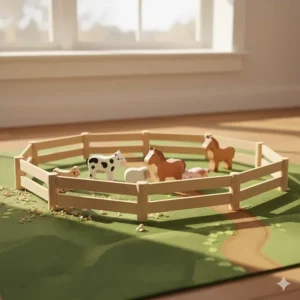
Creating distinct areas within the farm teaches organizational thinking and allows multiple children to play cooperatively. Fencing systems help children create paddocks, corrals, and pastures, segmenting different animal types just as real farmers do.
Modular fence pieces that connect via grooves or magnetic links offer maximum flexibility. Children can build square pens, long runways, or circular corrals, experimenting with shapes while developing spatial reasoning skills.
Additional buildings expand play possibilities dramatically. A separate chicken coop focuses on egg collection, a stable houses horses specifically, a grain silo stores harvest – each structure introducing new vocabulary and concepts. Le Toy Van and PlanToys create beautiful building sets that coordinate aesthetically with major wooden farm brands.
Natural landscaping elements like wooden trees, hay bales, rocks, and vegetables ground play in agricultural reality. These simple additions teach about farm infrastructure and resource management. Children discover that animals need food, water, and shelter – fundamental biology lessons wrapped in play.
Frequently Asked Questions About Wooden Toy Farms
❓ What age is appropriate for wooden toy farm sets?
❓ How do I clean and maintain wooden farm toys safely?
❓ Are wooden farm toys better than plastic alternatives?
❓ Can wooden toy farms be used outdoors or in sandboxes?
❓ What certifications should I look for in wooden toy farms?
Conclusion: Investing in Timeless Play Experiences
Choosing the right wooden toy farm means more than just buying another toy. You’re selecting a developmental tool that teaches responsibility, nurtures imagination, and connects your child to agricultural heritage increasingly distant from modern life. These beautifully crafted sets withstand years of play while growing in sentimental value, often becoming cherished family heirlooms passed between siblings and generations.
The seven wooden toy farms reviewed here represent the best options available in 2025, each excelling in specific areas. The Terra by Battat Wooden Barn delivers comprehensive farm experiences with its functional pulley system and substantial construction. Melissa & Doug’s portable options solve storage challenges without compromising play value. Fisher-Price introduces the youngest children to farm life through safe, developmentally appropriate design. And building kits like Puzzled’s 3D Barn merge woodworking skills with imaginative play.
Remember that the best wooden toy farm aligns with your child’s current developmental stage while offering room for growth. Consider available space, budget constraints, and whether you prefer complete sets versus expandable systems. Prioritize quality construction using FSC-certified woods and non-toxic finishes, ensuring safety alongside longevity.
Ultimately, these wooden farms deliver something screens and electronic toys cannot – tactile, open-ended play that engages multiple senses simultaneously while teaching real-world concepts. Your investment in quality wooden toys pays dividends through years of creative play, skill development, and those precious childhood memories centered around a simple red barn and its wooden inhabitants.
Recommended for You
- 7 Best Farm Toys ERTL Collections That Transform Playtime 2025
- 7 Best 1/64 Scale Farm Toys 2025 (Expert Tested)
- 7 Best Toy Farm Sets 2025: Expert Reviews & Buying Guide
Disclaimer: This article contains affiliate links. If you purchase products through these links, we may earn a small commission at no additional cost to you.
✨ Found this helpful? Share it with your friends! 💬🤗
