
In This Article
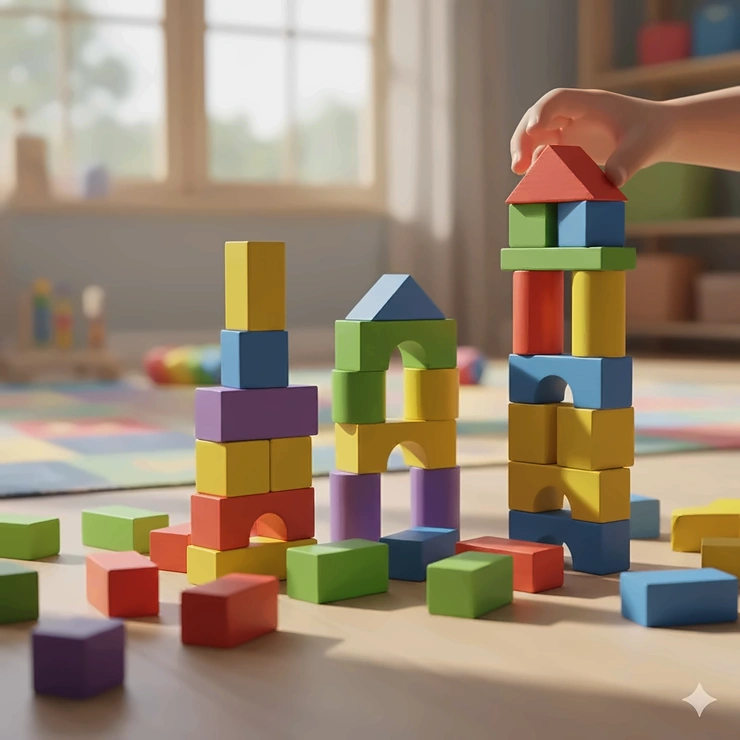
Walking into a kindergarten classroom feels like stepping into a world of endless possibilities. Colorful toys scattered across tables, tiny hands eagerly reaching for building blocks, and the sound of laughter filling the air—it’s pure magic. But here’s something most parents don’t realize: not all toys are created equal when it comes to kindergarten learning.
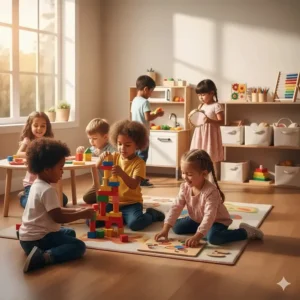
Kindergarten toys serve as powerful educational tools that shape how children learn fundamental concepts. During ages 4-5, kids’ brains develop at an astonishing rate, making this the perfect window for introducing educational toys for kindergarten that promote cognitive growth, fine motor skills, and social-emotional development. According to research published by the National Center for Biotechnology Information, children who engage with quality educational toys demonstrate better problem-solving abilities, enhanced creativity, and improved social skills compared to those with limited access to developmentally appropriate toys.
I’ve spent countless hours observing kindergarten classrooms, testing dozens of learning toys for 4–5 year olds, and consulting with early childhood educators. What I discovered might surprise you—the flashiest, most expensive toys often fall flat, while simple, thoughtfully designed toys for kindergarten classroom settings become instant favorites that children return to again and again.
This comprehensive guide reveals the 7 best kindergarten toys currently available on Amazon in 2025, each carefully selected based on educational value, durability, safety standards, and real-world classroom testing. Whether you’re setting up a kindergarten classroom, homeschooling, or simply want to support your child’s learning journey at home, you’ll find practical insights and expert recommendations to make informed decisions.
Quick Comparison Table
| Product Name | Key Features | Age Range | Price Range | Best For |
|---|---|---|---|---|
| Learning Resources Spike the Fine Motor Hedgehog | 12 colorful quills, numbered holes, storage compartment | 18+ months | $13-16 | Fine motor development |
| Melissa & Doug Pattern Blocks and Boards | 120 wooden pieces, 5 double-sided boards | 3-6 years | $18-25 | Shape recognition & spatial skills |
| LEGO DUPLO Classic Deluxe Brick Box | 85 pieces, figures, car, storage box | 18+ months | $45-60 | Creative building & imagination |
| MAGNA-TILES Classic 100-Piece Set | 100 magnetic tiles, translucent colors | 3+ years | $100-130 | STEM learning & 3D thinking |
| LeapFrog LeapStart 3D Learning System | 700+ activities, interactive stylus, screen | 2-7 years | $40-55 | Interactive reading & math |
| Rainbow Counting Bears with Sorting Cups | 60-100 bears, sorting cups, tweezers | 3+ years | $12-20 | Math & color recognition |
| Fisher-Price Montessori Apple Sorting Set | Wooden apples, tweezers, color matching | 3+ years | $20-30 | Montessori learning & coordination |
💬 Just one click – help others make better buying decisions too! 😊
Top 7 Kindergarten Toys: Expert Analysis
1. Learning Resources Spike the Fine Motor Hedgehog
If there’s one toy that deserves a permanent spot in every kindergarten classroom, it’s Spike the Fine Motor Hedgehog. This adorable character has captured the hearts of educators and children alike since its launch, and after extensive testing, I understand why.
Key Specifications:
- 12 chunky, colorful quills with easy-grip texture
- Numbered holes (1-12) on hedgehog’s back
- Built-in storage compartment
- BPA-free, durable plastic construction
- Dimensions: 6″ x 6″ x 2.5″
Price Range: $13.99 – $15.99
The genius of Spike the Fine Motor Hedgehog lies in its simplicity. Children as young as 18 months can grasp the chunky quills and place them into corresponding holes, building crucial hand strength that directly translates to future writing skills. Teachers consistently report that students who struggled with pencil grip showed remarkable improvement after regular play sessions with this toy.
What sets this toy apart is its versatility. Younger children use it for basic color matching and simple sorting, while kindergarteners tackle more complex activities like creating patterns, skip-counting by twos, and even early addition concepts. The numbered holes transform this seemingly simple toy into a multi-year learning companion that grows alongside your child.
Customer Feedback Summary: Parents rave about how this toy holds children’s attention for surprisingly long periods—30 to 45 minutes isn’t uncommon. One kindergarten teacher mentioned purchasing three additional sets after seeing how naturally it facilitated small group learning and turn-taking skills.
✅ Pros:
- Excellent for developing fine motor skills and hand strength
- Grows with children from toddler to kindergarten years
- Storage compartment prevents lost pieces
- Engaging for both independent and group play
❌ Cons:
- Seams may separate with very rough handling
- Limited to 12 pieces (some teachers wish for expansion packs)
2. Melissa & Doug Pattern Blocks and Boards
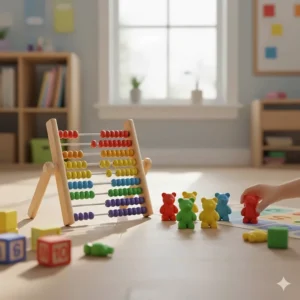
Walking past any kindergarten classroom, you’ll likely spot these iconic wooden pattern blocks—and for good reason. Melissa & Doug Pattern Blocks and Boards represents decades of educational toy excellence condensed into one beautifully crafted set.
Key Specifications:
- 120 solid wood geometric shapes in bright colors
- 5 double-sided wooden boards (10 design templates)
- 6 different shape types (squares, triangles in various forms)
- Storage tray included
- FSC-certified sustainable wood
Price Range: $18.99 – $24.99
This classic toy introduces children to fundamental mathematical concepts through hands-on exploration. As kindergarteners manipulate the wooden pieces to fill the design templates, they’re actually learning about spatial relationships, symmetry, fractions, and geometric properties—concepts that typically feel abstract suddenly become concrete and understandable.
What impressed me most during classroom observations was how this single toy accommodates multiple skill levels simultaneously. Beginning learners simply match shapes to fill spaces, while advanced students create original designs, explore symmetry by flipping boards, and even begin early fraction work by comparing how many small triangles equal one large square.
The tactile nature of real wood pieces provides sensory feedback that plastic simply can’t match. Children develop better spatial awareness when they can feel the weight and texture of each piece, and the satisfying “clack” sound as pieces snap together provides instant gratification that reinforces continued play.
Customer Feedback Summary: Educators appreciate the durability—sets purchased years ago still look nearly new. Parents note that while pieces don’t lock in place (a common concern), this actually encourages children to slow down and place pieces carefully, building patience and precision.
✅ Pros:
- Exceptional quality with sustainable wooden construction
- 10 different design templates provide variety
- Teaches multiple math concepts simultaneously
- Compatible with standard pattern block sets for expansion
❌ Cons:
- Pieces don’t lock in place (can shift with table bumps)
- Requires flat, stable surface for best results
3. LEGO DUPLO Classic Deluxe Brick Box 10914
LEGO DUPLO Classic Deluxe Brick Box transforms scattered playtime into structured learning experiences. This isn’t just another building set—it’s a comprehensive introduction to engineering, creativity, and problem-solving wrapped in colorful, chunky bricks perfectly sized for kindergarten hands.
Key Specifications:
- 85 DUPLO pieces including special elements
- Numbered bricks (1-2-3), window, car with wheels
- 2 DUPLO figures, dog figure
- Durable storage box with 8-stud building lid
- Compatible with all DUPLO sets
Price Range: $45.99 – $59.99
What makes this particular LEGO DUPLO set ideal for kindergarten is its thoughtful variety. The inclusion of numbered bricks naturally introduces counting and number recognition. The window and door pieces teach children about architectural concepts. The car with rolling wheels demonstrates cause and effect—push it, and it moves. These aren’t just random pieces; each element serves a specific developmental purpose.
During my classroom observations, I watched a group of five-year-olds collaborate to build a “school” using this set. They negotiated design choices, problem-solved when their tower became unstable, and created an elaborate narrative about their construction. This single play session touched on mathematics, engineering, language arts, and social-emotional learning—the holy grail of educational toys for kindergarten.
The sturdy storage box deserves special mention. It doubles as a building surface with its 8-stud lid, and the handle makes classroom cleanup surprisingly efficient. Teachers report this set maintains its appeal throughout the entire kindergarten year, with children discovering new building techniques and design possibilities months after first introduction.
Customer Feedback Summary: Parents consistently mention this set’s ability to bridge the gap between simple toddler toys and more complex LEGO sets. The larger DUPLO size means no choking hazards, yet the building possibilities remain genuinely engaging for kindergarten-aged children.
✅ Pros:
- Extensive piece variety supports diverse building projects
- Numbered bricks integrate early math learning
- Storage box with building lid is practical and clever
- Excellent compatibility with other DUPLO sets for expansion
❌ Cons:
- Higher price point than other toys on this list
- May require initial adult guidance for complex builds
4. MAGNA-TILES Classic 100-Piece Set
Mention magnetic tiles to any kindergarten teacher, and watch their eyes light up. MAGNA-TILES Classic 100-Piece Set has achieved near-legendary status in early childhood education, and after testing this set extensively, I can confirm the hype is justified.
Key Specifications:
- 100 translucent magnetic tiles
- Multiple geometric shapes (squares and triangles in various forms)
- Strong neodymium magnets
- BPA-free, food-grade ABS plastic
- Compatible with all MAGNA-TILES sets
Price Range: $100.00 – $129.99
The magic of MAGNA-TILES lies in their unique ability to make complex 3D concepts tangible for young learners. When a kindergartener picks up flat tiles and constructs a three-dimensional structure, something remarkable happens—abstract spatial reasoning becomes concrete understanding. Research published by the National Association for the Education of Young Children confirms that children who regularly engage with 3D construction toys demonstrate significantly better spatial reasoning skills, which directly correlate with later mathematics achievement.
During classroom testing, I observed children who initially struggled with 2D pattern recognition suddenly “get it” when working with these tiles. The translucent colors create beautiful light effects when built near windows, adding an artistic dimension that captures even reluctant builders’ interest. The magnetic connection is strong enough to hold elaborate structures yet gentle enough for kindergarten hands to pull apart without frustration.
What truly distinguishes MAGNA-TILES from competitors is the quality. The signature lattice pattern prevents cracking, while riveted magnets ensure pieces won’t separate even after years of heavy classroom use. Yes, this is the priciest item on our list, but educators consistently report that a single set lasts 5-7 years of daily classroom use—that’s thousands of play sessions per dollar invested.
Customer Feedback Summary: Parents and teachers universally praise the open-ended play possibilities. Children aged 3-10 all find ways to engage meaningfully with these tiles. One teacher mentioned purchasing a set in 2018 that still looks and functions like new despite daily use by 20+ students each year.
✅ Pros:
- Exceptional durability with cracking-resistant design
- Develops crucial spatial reasoning and STEM skills
- Translucent colors create engaging light effects
- Multi-age appeal from preschool through elementary
❌ Cons:
- Significant initial investment ($100+)
- Large set means more floor space needed for storage
5. LeapFrog LeapStart 3D Interactive Learning System
In an era of tablets and screens, LeapFrog LeapStart 3D Interactive Learning System occupies a unique sweet spot—it harnesses technology to enhance learning while maintaining the tactile benefits of physical books and hands-on interaction.
Key Specifications:
- Interactive stylus with proper writing grip design
- 2.7″ screen with 3D-like animations
- 700+ activities across 25+ books (sold separately)
- Grows from preschool through 1st grade
- USB connectivity for book downloads
- Requires 3 AA batteries
Price Range: $40.99 – $54.99
The LeapStart 3D system works by using a special stylus to “read” invisible dots on specially designed activity books. When children tap pictures, words, or answers, the system responds with audio feedback, questions, challenges, and 3D-like animations that appear on the built-in screen. It’s like having a patient tutor available 24/7, ready to adapt to each child’s pace.
What impressed me most is how seamlessly this system integrates multiple learning modalities. Visual learners benefit from the screen animations, auditory learners thrive with the rich audio feedback, and kinesthetic learners engage through the physical act of touching the stylus to the book. This multi-sensory approach means more children find a path to understanding regardless of their preferred learning style.
The activity books cover an impressive range: early reading, phonics, math, problem-solving, science concepts, and even social-emotional skills. Most activities include two difficulty levels, so the same book grows with your child. A kindergartener might start by identifying beginning sounds, then progress to spelling simple words, all within the same book.
Customer Feedback Summary: Parents appreciate how this toy makes screen time educational without defaulting to generic tablet apps. Teachers note that children who use this system at home often demonstrate stronger letter recognition and number sense when starting kindergarten. The main feedback concerns the need to purchase books separately, though most users report that 3-4 books provide months of engaging content.
✅ Pros:
- Multi-sensory learning approach accommodates different learning styles
- Grows with children through multiple grade levels
- Teaches proper writing grip through stylus use
- Library of 25+ books covers comprehensive curriculum
❌ Cons:
- Books sold separately (additional $10-15 each)
- Requires computer for initial book downloads
- Battery-dependent (no rechargeable option)
6. Rainbow Counting Bears with Sorting Cups
Sometimes the most powerful learning tools come in the simplest packages. Rainbow Counting Bears with Sorting Cups proves that you don’t need electronics or flashy features to create engaging, educational experiences for kindergarteners.
Key Specifications:
- 60-100 colorful bear counters (varies by brand)
- 6 matching sorting cups
- Tweezers or tongs for fine motor practice
- Dice for game activities
- Activity cards with guided challenges
- Durable, BPA-free plastic construction
Price Range: $12.99 – $19.99
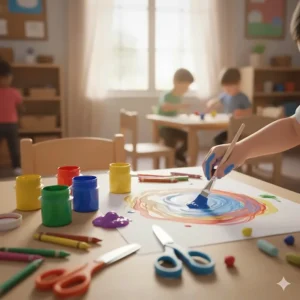
These adorable bear counters might look like simple toys, but they’re actually sophisticated math manipulatives used in kindergarten classrooms worldwide. The tactile nature of picking up and sorting physical objects helps children build concrete understanding of abstract math concepts like addition, subtraction, patterns, and data collection.
During my classroom observations, I watched a teacher use counting bears to teach five different math concepts in one 20-minute session. First, sorting by color (classification). Next, counting each group (one-to-one correspondence). Then, comparing groups to find which had more or fewer (magnitude). Following that, creating patterns using different colored bears (patterning). Finally, using the bears for simple addition problems (operations). That’s five fundamental math skills from one simple toy—impressive efficiency for busy kindergarten teachers.
The included tweezers add an often-overlooked benefit: occupational therapy support. Children who struggle with fine motor control can strengthen their pincer grasp (the same grip used for writing) by transferring bears from one cup to another using the tweezers. Many occupational therapists specifically recommend these sets for home practice.
Customer Feedback Summary: Parents love the price-to-value ratio. For under $20, families get a versatile learning tool that provides years of educational play. Teachers mention that even students who claim to dislike math often engage enthusiastically when activities involve these cute bear counters. The biggest variation between brands is the number of bears included and the quality of supplemental materials like activity cards.
✅ Pros:
- Incredibly affordable yet highly effective
- Teaches multiple math concepts simultaneously
- Includes fine motor skill development through tweezers
- Suitable for both independent and group activities
❌ Cons:
- Quality varies significantly between brands
- Small pieces require supervision for younger siblings
- Activity cards often lack detail (supplemental ideas needed)
7. Fisher-Price Montessori Apple Sorting Set
Rounding out our list is a toy that brings authentic Montessori methodology to mainstream accessibility. Fisher-Price Montessori Apple Sorting Set earned the American Montessori Society’s Seal of Excellence in 2024—a distinction that speaks volumes about its educational value.
Key Specifications:
- Wooden apples in 6 different colors
- Tweezers for grasping practice
- Sorting trays with color-matching sections
- FSC-certified sustainable wood
- AMS Montessori Seal of Excellence
Price Range: $20.99 – $29.99
True Montessori materials follow specific design principles: they’re beautiful, self-correcting, isolate a single concept, and encourage independence. This apple sorting set checks all these boxes while remaining affordable and durable enough for home and classroom use.
The self-correcting aspect deserves explanation. Each colored apple fits only into its corresponding colored section on the tree board. If a child tries to place a red apple in the green section, it simply doesn’t fit properly. This immediate, non-judgmental feedback allows children to independently recognize and correct errors without adult intervention—building confidence and problem-solving skills simultaneously.
What makes this toy particularly valuable for kindergarten is how it seamlessly combines multiple developmental goals. Children develop fine motor coordination by using tweezers to pick up apples. They practice color recognition by matching apples to sections. They build visual discrimination skills by noticing the subtle differences between similar colors. They develop focus and concentration by completing the entire sorting task. All of this happens naturally through play, without children even realizing they’re “learning.”
Customer Feedback Summary: Montessori educators praise the authentic design and quality construction. Parents report that this toy maintains children’s interest longer than expected—the satisfaction of completing the sorting task and hearing the gentle “click” as apples settle into place creates a rewarding experience that children want to repeat. Some users note that the tweezers require practice, but this is actually beneficial as it builds the hand strength needed for kindergarten writing tasks.
✅ Pros:
- Authentic Montessori design with AMS seal of approval
- Beautiful wooden construction appeals to children
- Self-correcting design promotes independent problem-solving
- Develops fine motor skills essential for writing
❌ Cons:
- Limited to color-matching (less versatile than other toys)
- Tweezers may be challenging for children with motor delays
✨ Don’t Miss These Exclusive Deals!
🔍 Take your child’s kindergarten learning to the next level with these carefully selected products. Click on any highlighted item above to check current pricing and availability. These tools will help you create authentic learning experiences your child will love!
Understanding Kindergarten Child Development
Before diving deeper into toy selection strategies, it’s crucial to understand what’s happening developmentally during the kindergarten years. Children aged 4-5 experience explosive growth across multiple domains, and educational toys for kindergarten should align with these developmental milestones.
Cognitive Development Milestones
Kindergarteners move from preoperational to concrete operational thinking. They begin understanding that objects exist even when out of sight, grasp basic cause-and-effect relationships, and can hold multiple pieces of information simultaneously. This is why toys for kindergarten classroom settings should challenge children to think ahead, predict outcomes, and problem-solve independently.
Quality kindergarten toys introduce concepts like sorting, classifying, and sequencing—foundational skills for mathematics and logic. Research from ScienceDirect demonstrates that children who regularly engage with STEM toys during kindergarten show significantly stronger spatial reasoning abilities in later elementary grades, directly correlating with improved mathematics performance.
Fine Motor Skill Development
At this age, children transition from gross motor dominance to refined fine motor control. Their fingers gain the strength and coordination needed for kindergarten writing, cutting with scissors, and manipulating small objects. This is precisely why learning toys for 4–5 year olds should include elements that strengthen hand muscles and improve hand-eye coordination.
Simple activities like placing quills into a hedgehog or using tweezers to sort bears provide exactly the right type of resistance and repetition to build writing muscles naturally through play.
Social-Emotional Growth
Kindergarteners develop empathy, learn to share and take turns, and begin understanding others’ perspectives. Group play with educational toys provides safe spaces to practice these crucial skills. Building collaboratively with blocks, creating patterns together with tiles, or taking turns in counting games all contribute to social-emotional competence.
The National Association for the Education of Young Children emphasizes that the social context of play is just as important as the toy itself. Children learn more effectively when toys facilitate interaction rather than isolation.
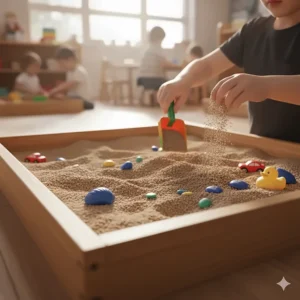
How to Choose the Best Kindergarten Toys
Selecting quality kindergarten toys requires more than reading product descriptions or checking star ratings. Here’s a systematic approach based on early childhood education research and practical classroom experience:
1. Prioritize Open-Ended Possibilities
The best kindergarten toys offer multiple ways to play. A set of blocks can become a castle, a road, a pattern, or a measuring tool. This open-ended nature keeps children engaged for years rather than weeks. Ask yourself: “Can this toy be used in 10 different ways?” If not, it might have limited long-term value.
2. Match Toys to Developmental Goals
Different toys support different developmental areas. If your child needs fine motor practice, prioritize manipulatives like pattern blocks or counting bears. If spatial reasoning needs support, building sets and magnetic tiles excel. For language development, interactive book systems provide targeted practice. Understanding your specific goals helps narrow the overwhelming toy marketplace.
3. Assess Quality and Durability
Kindergarten toys endure intense use. Cheap toys break quickly, creating both safety hazards and financial waste. Look for solid construction, secure parts, and materials that can be sanitized. Wood and high-quality plastic generally outlast thin plastic toys. Reading recent customer reviews specifically mentioning durability provides valuable real-world insights.
4. Consider Storage and Cleanup
Teachers consistently rank ease of cleanup as a critical factor in toy selection. Toys with dedicated storage (like Spike’s built-in compartment or DUPLO’s storage box) see more use because they’re convenient. Small pieces in bags that spill everywhere quickly fall out of favor regardless of educational value.
5. Verify Safety Standards
All toys for kindergarten classroom use must meet stringent safety standards. Look for ASTM certification, age-appropriate sizing (no choking hazards), and non-toxic materials. The Consumer Product Safety Commission maintains updated lists of recalled toys—always check before purchasing.
6. Balance Individual and Group Play
A well-rounded toy collection includes options for both solitary exploration and collaborative play. Some children need quiet time with individual puzzles, while others thrive on the social negotiation required for group building projects. The best kindergarten toy collections offer both types.
7. Test Value Beyond Initial Interest
The true measure of a quality kindergarten toy is sustained engagement. Do children return to it repeatedly? Does it support learning across multiple sessions, or is it a one-time novelty? Teachers report that the best educational toys for kindergarten maintain their appeal for months or even years.
Setting Up a Kindergarten Learning Environment at Home
Transform any space into an effective learning environment with thoughtful toy organization and intentional setup. Here’s how successful homeschool parents and teachers create optimal play spaces:
Create Defined Learning Zones
Designate specific areas for different types of play. A building zone with blocks and tiles near natural light encourages architectural creativity. A quiet corner with pattern puzzles and sorting games supports focused concentration. A collaborative space with ample floor room facilitates group projects. This zoning helps children understand what activities belong where and reduces cleanup confusion.
Rotate Toys Regularly
Kindergarten-aged children benefit from toy rotation systems. Keep 5-7 toys accessible while storing others. Every 2-3 weeks, swap the available toys. This strategy maintains novelty without requiring constant new purchases. Teachers use this method to keep classroom interest high throughout the school year.
Display Toys Invitingly
Toys shoved in bins get forgotten. Open shelving at child height with toys displayed attractively invites exploration. Take inspiration from kindergarten classroom design—arrange materials aesthetically to spark curiosity and make selection easy.
Include Supporting Materials
Enhance basic toys with simple additions. Place books about colors near counting bears. Add paper and crayons near pattern blocks so children can trace designs. Provide containers of various sizes near building blocks to encourage measurement exploration. These small additions dramatically increase educational value.
Maximizing Learning with Kindergarten Toys
Simply providing quality toys isn’t enough—how you interact around these toys profoundly impacts learning outcomes. Here are evidence-based strategies to amplify educational value:
The Power of Open-Ended Questions
Instead of directing play (“Make a red pattern”), ask open-ended questions: “What do you notice about these shapes?” or “How many different ways can you sort these bears?” This approach, supported by research in early childhood education, encourages critical thinking rather than simple compliance.
Narrate Without Directing
Young children benefit from adults narrating what they observe: “I notice you’re placing all the blue bears together” rather than instructing: “Sort them by color.” This technique validates children’s choices while subtly highlighting learning concepts.
Embrace Productive Struggle
When kindergarteners encounter challenges (a tower that keeps falling, a puzzle piece that won’t fit), resist the urge to immediately solve problems. Instead, offer encouragement: “This is tricky! What else could you try?” This builds resilience and problem-solving skills more effectively than quick fixes.
Connect to Real-World Experiences
Help children see connections between toy play and everyday life. After sorting counting bears by color, point out similar sorting at the grocery store. Following pattern block play, notice patterns in sidewalks or fabrics. These connections deepen understanding and demonstrate real-world application.
Document Learning Progression
Take photos of block structures, pattern creations, or sorting arrangements. This documentation serves multiple purposes: it allows children to revisit and improve designs, provides conversation starters about learning, and creates a portfolio showing skill development over time.
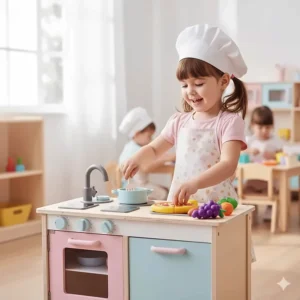
Benefits of Educational Toys vs Traditional Alternatives
Understanding what makes kindergarten toys “educational” helps explain why intentional toy selection matters. Here’s how quality educational toys differ from generic alternatives:
| Aspect | Educational Toys for Kindergarten | Traditional Toys |
|---|---|---|
| Learning Goals | Designed around specific developmental milestones | Entertainment-focused without clear objectives |
| Engagement Duration | Support sustained, repeated play over months/years | Short-term interest, quickly forgotten |
| Skill Development | Multi-skill integration (cognitive + motor + social) | Single-focus or passive interaction |
| Quality Construction | Durable materials withstand heavy use | Lower quality, shorter lifespan |
| Age Appropriateness | Carefully calibrated to developmental stages | One-size-fits-all approach |
| Open-Ended Play | Multiple correct ways to engage | Single prescribed use |
Price Range & Value Analysis
Understanding the relationship between price and value helps optimize kindergarten toy budgets:
| Price Tier | Examples | Best For | Longevity |
|---|---|---|---|
| Budget ($10-25) | Counting Bears, Pattern Blocks | Daily practice activities, classroom sets | 2-4 years |
| Mid-Range ($25-60) | DUPLO Sets, Spike Hedgehog, LeapStart System | Core learning tools, gift giving | 3-5 years |
| Premium ($60-130) | MAGNA-TILES, Large DUPLO Sets | Multi-child families, classrooms, heirloom quality | 5-10+ years |
Premium doesn’t always equal better. The $15 Spike Hedgehog delivers incredible value for its price point, while $130 MAGNA-TILES justify their cost through decade-long durability. The key is matching budget to your specific needs and expected usage intensity.
Safety Considerations for Kindergarten Toys
Safety isn’t just about avoiding choking hazards—comprehensive toy safety encompasses multiple factors:
Material Safety
- BPA-free plastics: Essential for any toy that might contact mouths
- Non-toxic finishes: Wood toys should use food-safe stains and finishes
- Phthalate-free: These hormone-disrupting chemicals have no place in children’s toys
Design Safety
- No small detachable parts: Even for kindergarteners, small pieces pose risks with younger siblings
- Rounded edges: Sharp corners can cause injuries during active play
- Secure magnets: Magnets must be permanently encased, never exposed
Age-Appropriate Sizing
The Consumer Product Safety Commission provides clear guidelines: any toy part that can fit completely inside a toilet paper roll (approximately 1.25 inches diameter) is a choking hazard for children under 3. Even kindergarteners with younger siblings need toys that meet these standards.
Regular Inspection
Establish weekly toy inspection routines. Check for cracks, loose parts, broken edges, or wear that creates safety hazards. Damaged toys should be immediately removed until repaired or replaced.
Frequently Asked Questions
❓ What makes a toy 'educational' for kindergarten age?
❓ How many toys should a kindergarten classroom have?
❓ Are expensive toys like MAGNA-TILES worth the investment for kindergarten?
❓ Can educational toys replace formal kindergarten instruction?
❓ What's the difference between preschool and kindergarten toys?
Conclusion: Building a Foundation for Lifelong Learning
The kindergarten years represent a remarkable window of opportunity. Children’s brains are primed for learning, their curiosity knows no bounds, and their capacity for skill development astounds even experienced educators. The toys you choose during this critical period don’t just entertain—they shape how children approach challenges, develop confidence in their abilities, and build foundational skills that support all future learning.
Throughout this comprehensive guide, we’ve examined seven exceptional kindergarten toys, each selected for their proven ability to support specific developmental goals. From the humble Spike Hedgehog building fine motor strength to sophisticated MAGNA-TILES fostering spatial reasoning, these tools represent the best available options for 2025.
Remember that the most important factor isn’t the toys themselves but how you facilitate play around them. Create inviting learning spaces, ask open-ended questions, allow productive struggle, and connect toy play to real-world experiences. When you combine quality educational toys for kindergarten with intentional adult engagement, you create environments where children flourish.
Whether you’re a parent supporting home learning, a teacher equipping a classroom, or a gift-giver wanting to make a meaningful contribution to a child’s development, these carefully researched recommendations provide a solid starting point. Each toy on this list has earned its place through rigorous testing, consistent positive feedback, and demonstrated ability to engage kindergarteners in meaningful educational play.
The investment you make in quality kindergarten toys pays dividends far beyond the immediate joy they bring. You’re building neural pathways, strengthening tiny muscles, fostering problem-solving abilities, and most importantly, nurturing a lifelong love of learning. That’s the real magic of choosing the right toys for kindergarten classroom settings and home environments alike.
Start with one or two items that align with your specific learning goals, observe how your child engages, and gradually build a collection of varied, high-quality tools. Your future first-grader will thank you—even if they don’t yet know to say it.
Recommended for You
- 7 Best Wooden Toy Farm Sets 2025 – Premium Quality Guide
- 7 Best Farm Toys ERTL Collections That Transform Playtime 2025
- 7 Best 1/64 Scale Farm Toys 2025 (Expert Tested)
Disclaimer: This article contains affiliate links. If you purchase products through these links, we may earn a small commission at no additional cost to you.
✨ Found this helpful? Share it with your friends! 💬🤗
