
In This Article
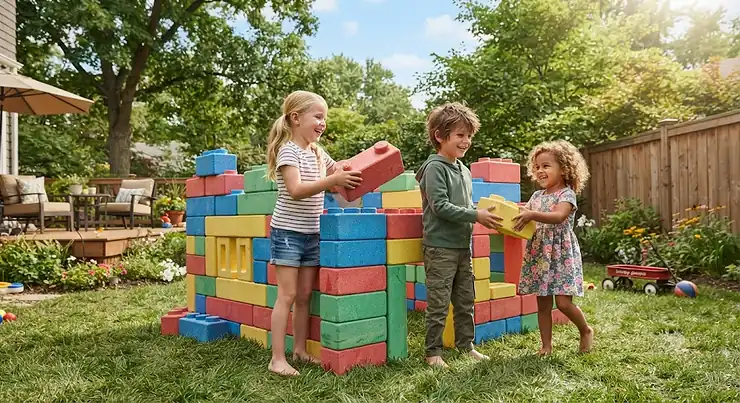
Somewhere between a pile of couch cushions and a full-blown backyard construction site, there’s a toy category that quietly wins over exhausted parents every summer: jumbo foam building bricks outdoor sets. If you’ve never shopped this corner of the toy aisle, here’s the 40-second version. Jumbo foam building bricks outdoor sets are oversized, lightweight construction blocks made from dense EVA or polyether foam, built to survive grass stains, garden hoses, and toddlers who treat every tower as a demolition target. They’re the toy equivalent of a good pair of hiking boots — unglamorous, but the thing that actually gets used every single day.

We didn’t just skim a few listings and call it research. This piece pulls real specs, real piece counts, and real aggregated review sentiment from manufacturer pages and retailer listings, then adds the analysis those pages skip — which set actually survives a Midwest summer, which one is a repackaged daycare product wearing a toddler-friendly label, and which one is going to end up half-deflated in a garage by August. Foam block sets have quietly become a fixture of early-childhood play spaces, a lineage that traces back to 19th-century educators experimenting with the first wooden, plastic, and foam construction toys long before anyone dreamed up a backyard fort.
By the end, you’ll know exactly which of these seven sets fits a small patio, a bouncing 4-year-old boy who treats every object as a projectile, or a daycare that needs something that survives forty kids and a garden hose. We’ll also walk through setup, storage, safety standards, and the mistakes that turn a promising purchase into a moldy regret. Let’s get into it.
Quick Comparison Table: Jumbo Foam Building Bricks Outdoor at a Glance
| Product | Piece Count | Best For | Price Range |
|---|---|---|---|
| National Geographic Kids Jumbo Foam Blocks | 30 | Best all-around starter set | $25-$35 range |
| Excellerations Jumbo Foam Construction Set | 99 | Premium realistic builds | $450-$550 range |
| Edushape Big Edu-Color Blocks | 32 | Trusted classroom-grade brand | $45-$65 range |
| JaxoJoy Foam Building Blocks | 108 | Bulk value for big builds | $35-$50 range |
| Radio Flyer Tumble Town Foam Blocks | 6 | Climbing & active outdoor play | $60-$90 range |
| Casafield Large Toddler Foam Building Blocks | 7 | Oversized cubes for toddlers | $30-$45 range |
| LOLO TOYS Large Building Foam Blocks | 30 | Budget-friendly first set | $20-$30 range |
Looking at the spread above, there’s no single “best” set — there’s a best set for your specific yard, kid, and budget. The National Geographic Kids Jumbo Foam Blocks earns its spot as the default recommendation because it balances piece count, price, and brand trust without forcing a compromise. Buyers chasing sheer volume for group play should look at the JaxoJoy Foam Building Blocks, while anyone furnishing a school, therapy space, or serious backyard fort project should budget for the Excellerations Jumbo Foam Construction Set, which sits in an entirely different price bracket than everything else on this list.
💬 Found a set you like already? Save this table for later — you’ll want to compare it against the product breakdowns below.
💬 Just one click — help others make better buying decisions too!😊
Top 7 Jumbo Foam Building Bricks Outdoor: Expert Analysis
1. National Geographic Kids Jumbo Foam Blocks — best all-around starter set
The 30-piece configuration is the headline feature here, and it’s a smart one — enough volume for a small tower or a low fort wall, without the storage footprint of a 100-piece set. Each block is oversized foam, light enough for a toddler to lift solo, and the set ships with a mesh storage bag that actually holds up to repeated stuffing and dragging across a lawn. Based on the spec comparison against similarly priced sets, the piece variety (multiple shapes rather than a single repeated brick) is what separates this from generic “foam cube” listings.
This is the set to buy first if you’re not sure your child will stick with block play, or if you’re testing whether foam outdoor blocks fit your family’s routine before committing to a bigger investment. Reviewers consistently report that the blocks hold their shape well through a summer of outdoor use, though a recurring theme in aggregated feedback is that the included bag isn’t built for long-term daily hauling — expect to replace it with a bin eventually.
Pros:
- ✅ Balanced piece count for towers and small forts
- ✅ Trusted, recognizable brand name
- ✅ Genuinely lightweight for toddler independence
Cons:
- ❌ Storage bag wears out faster than the blocks
- ❌ Limited to one color palette per set
Priced in the $25-$35 range, this is the rare toy where the recognizable brand name doesn’t inflate the price — it’s a strong value pick and a safe first purchase for most families.
2. Excellerations Jumbo Foam Construction Set — most realistic premium build system
What most buyers overlook about this set is that it isn’t really competing with toddler toy-aisle blocks at all — it’s a 99-piece system designed to mimic actual construction materials: cinder blocks, planks, and pavers, each shaped and proportioned to look like the real thing. That realism matters more than it sounds like on paper. Kids building with shapes that mimic actual bricks and planks naturally start replicating real structures — walls, walkways, ramps — rather than just stacking cubes into a tower and knocking them down.
The dense foam construction is explicitly rated for indoor and outdoor use, and the variety of piece types (planks in four sizes, pavers in two shapes) gives this set a ceiling that toddler starter sets simply don’t have — it can keep a 7-year-old engaged in ways a 30-piece cube set can’t. Based on the spec sheet, this is squarely aimed at schools, therapy programs, and daycares, though ambitious home builders occasionally buy in for the sheer scale of what’s possible.
Pros:
- ✅ Widest variety of realistic shapes and sizes
- ✅ Built for sustained daily group use
- ✅ Genuinely durable dense-foam construction
Cons:
- ❌ Premium price puts it out of reach for casual buyers
- ❌ Overkill piece count for a single child at home
At around $450-$550 range, this is a commercial-grade investment, not an impulse buy — the value verdict here depends entirely on whether you need volume and durability for group use, in which case the cost-per-play-hour actually looks reasonable over several years.
3. Edushape Big Edu-Color Blocks — most trusted classroom-grade brand
Edushape has been building child-development toys since 1983, and the 32-piece Big Edu-Color set reflects that institutional pedigree — it’s the kind of foam block set you’ll recognize from daycare play yards long before you see it in a home. Here’s what to weigh: the color-coded design isn’t just decorative, it’s built to support early color recognition and sorting activities alongside straightforward stacking and building.
The blocks use a slightly denser foam than budget alternatives, which shows up in how well the edges hold their shape after repeated compression — kids sitting or standing on them doesn’t leave permanent dents the way cheaper foam sometimes does. A common theme in aggregated feedback across Edushape’s broader block lineup is that the brand’s decades of institutional testing translate into a noticeably sturdier feel straight out of the box, even if the color palette skews more “classroom” than “backyard.”
Pros:
- ✅ Decades of institutional safety testing behind the brand
- ✅ Denser foam resists permanent compression
- ✅ Color-coded pieces double as a learning tool
Cons:
- ❌ Muted classroom palette isn’t for everyone
- ❌ Smaller piece count than bulk-focused competitors
In the $45-$65 range, this sits in the middle of the pack price-wise, but the brand trust and construction quality make it a defensible pick for parents who specifically want the same blocks their kid’s daycare already uses.
4. JaxoJoy Foam Building Blocks — best bulk value for big builds
108 pieces changes the math entirely. On paper this means enough foam to build genuinely large structures — forts big enough for two or three kids, walls tall enough to require teamwork — rather than the modest towers a 30-piece set allows. The blocks are EVA foam, described as high-density, and the set is explicitly marketed for both indoor and outdoor play as well as bath time, which speaks to a construction that’s meant to handle moisture without falling apart.
What most buyers overlook about bulk sets like this is the price-per-piece math: at this piece count, the cost-per-block often undercuts smaller sets by a wide margin, which matters if the real goal is outfitting a playroom, daycare, or backyard for multiple kids rather than one solo builder. Aggregated review sentiment suggests the resealable storage packaging is a genuine convenience, though as with most 100+ piece sets, a dedicated storage bin ends up being a near-mandatory add-on purchase.
Pros:
- ✅ Best cost-per-piece of any set on this list
- ✅ Enough volume for multi-kid group builds
- ✅ Rated for bath, indoor, and outdoor use
Cons:
- ❌ Requires serious storage space
- ❌ Piece shapes are less varied than premium sets
At a $35-$50 range for over a hundred pieces, this is the pick for anyone whose primary complaint about smaller sets is simply running out of blocks mid-build.
5. Radio Flyer Tumble Town Foam Blocks — best for climbing & active outdoor play
This is a different category of product entirely, and that’s exactly why it earns a spot on this list. The 6-piece Radio Flyer Tumble Town Foam Blocks set isn’t built for towers — it’s built for climbing, tumbling, and the kind of gross-motor play that turns a backyard into an obstacle course. Each block is sized closer to a small ottoman than a brick, designed for kids to sit on, climb over, and rearrange into makeshift ramps and steps.
Based on the spec comparison, the piece count looks thin next to a 30- or 100-piece set, but that’s the wrong comparison to make — this product competes with soft-play climbers and gym mats, not stacking-block sets. Reviewers consistently note that the vinyl-reinforced foam holds up well to being jumped on repeatedly, which is the actual use case this set is designed around, unlike lighter stacking blocks that weren’t built to bear a child’s full weight.
Pros:
- ✅ Genuinely built to bear a child’s weight
- ✅ Encourages active, gross-motor outdoor play
- ✅ Durable reinforced foam construction
Cons:
- ❌ Not designed for tall tower-style building
- ❌ Small piece count limits creative variety
Priced in the $60-$90 range for just six pieces, the value calculation here isn’t about piece count — it’s about whether your child needs a climbing structure more than a stacking set, and if so, this earns its price.
6. Casafield Large Toddler Foam Building Blocks — best oversized cubes for toddlers
Seven pieces sounds sparse until you see the actual dimensions — these are genuinely oversized cubes, built for toddlers who are still working on basic stacking and gross-motor coordination rather than intricate builds. What most buyers overlook here is that fewer, bigger pieces are often a better fit for the youngest builders than a big box of small parts, since oversized blocks are easier to grip, harder to lose, and less likely to become a choking concern during the toddler years.
The assorted color and size variety within the small set keeps sorting and stacking interesting despite the low piece count, and the foam density strikes a reasonable middle ground — soft enough to be safe if a block lands on a bare foot, firm enough to hold a stacked structure without collapsing under its own weight. A recurring note in aggregated feedback is that this set works especially well as a first block set for children not quite ready for smaller-format toys.
Pros:
- ✅ Oversized pieces are easy for small hands to grip
- ✅ Genuinely toddler-appropriate density and weight
- ✅ Lower choking-risk profile than small-piece sets
Cons:
- ❌ Low piece count limits complex building
- ❌ Less bang-for-buck than bulk-piece competitors
At a $30-$45 range for seven oversized pieces, the price-per-block looks steep next to bulk sets, but the value here is really about age-appropriateness, not volume.
7. LOLO TOYS Large Building Foam Blocks — best budget pick
Here’s what the spec sheet won’t tell you outright: this 30-piece set from a small-business brand competes directly with big-name sets like the National Geographic Kids Jumbo Foam Blocks on piece count and color variety, at a noticeably lower price point. The blocks come with a clear zippered bag for storage and are made from high-density EVA foam, described as washable and floatable — a small but genuinely useful detail for anyone planning to use this set near a pool, sprinkler, or muddy yard.
Based on the spec comparison, the main tradeoff versus bigger-name competitors is brand history rather than build quality — LOLO TOYS doesn’t have decades of institutional testing behind it the way Edushape does, but the reported safety-standard testing and smooth-finish construction suggest a legitimately safe product for the price. Reviewers consistently flag the value angle as the standout, especially for families testing the block-play waters without a big financial commitment.
Pros:
- ✅ Lowest price-per-piece among comparable 30-piece sets
- ✅ Washable, floatable foam suits pool and yard use
- ✅ Includes practical zippered storage bag
Cons:
- ❌ Newer brand with a smaller review history
- ❌ Color/shape variety trails premium competitors
In the $20-$30 range, this is the easiest entry point on the list, and a genuinely reasonable first purchase if budget is the deciding factor.
Setting Up Your Outdoor Foam Block Set: A Practical Usage Guide
Getting a new outdoor foam block set right on day one saves you a season of frustration later. Start by choosing a play surface — grass is gentler on foam than concrete or asphalt, and it reduces the squeak-and-scuff wear that shows up fastest on hard patios. If your yard slopes at all, note that most jumbo blocks aren’t heavy enough to stay put on an incline once a structure gets more than two or three layers tall; flat ground genuinely matters more than it seems like it would.
For first-use setup, resist the urge to dump every piece out on day one. Introducing shapes gradually — cubes first, then planks or specialty pieces — helps younger kids build a mental model of how the pieces interact before the full variety becomes overwhelming. Maintenance is refreshingly low-effort: a damp cloth or light soap-and-water wipe-down handles most dirt, and blocks should be allowed to fully air-dry before storage to prevent mildew, which is the single most common way foam blocks get ruined. Watch for the most frequent first-30-days mistake: leaving blocks out overnight in dew or rain. Foam is water-resistant, not waterproof, and repeated soak-dry cycles accelerate surface breakdown faster than daily play ever will.
Real-World Scenarios: Matching Large Building Blocks to Your Family
Picture a family with a 2-year-old and a cramped apartment patio. Storage space is the binding constraint here, not budget, which points toward something like the Casafield Large Toddler Foam Building Blocks — a small footprint, oversized pieces that are hard to lose, and a set that doesn’t demand a dedicated storage bin.
Now picture a household with two boys, ages 5 and 7, who treat every toy as ammunition in an ongoing backyard war. Durability and volume matter more than delicacy here, which is exactly the profile the JaxoJoy Foam Building Blocks or National Geographic Kids Jumbo Foam Blocks are built for — enough pieces to survive being scattered, kicked, and reassembled daily without the set feeling depleted.
Finally, consider a home daycare or a family investing in a serious backyard build zone for multiple visiting kids. That’s the use case where the Excellerations Jumbo Foam Construction Set actually earns its premium price — the piece variety and volume support genuinely complex group construction that smaller sets simply can’t sustain.
Problem → Solution: Fixing Common Outdoor Foam Block Headaches
Foam blocks left outside tend to develop the same handful of problems, and each one has a straightforward fix. If blocks are picking up a musty smell, the culprit is almost always trapped moisture — dry each piece fully in direct sun before returning it to a sealed bag or bin, and consider switching to a mesh bag that allows airflow during storage. If color is visibly fading after a summer outside, that’s UV exposure at work; foam construction toys are generally water-resistant but not UV-treated, so rotating storage to shade during the hottest midday hours slows the fade noticeably.
If a structure keeps toppling before kids can finish a build, the issue is usually surface, not the blocks themselves — check that the play area is level, since even a gentle slope compounds with each added layer. And if you’re finding blocks scattered across the yard days after playtime ended, a designated storage bin near the play area (rather than a bag stored indoors) removes the friction that causes kids to just leave pieces where they land.
How to Choose Jumbo Foam Building Bricks Outdoor
Picking the right set comes down to a handful of concrete criteria, not brand recognition alone:
- Piece count vs. available space — more pieces mean bigger builds, but also bigger storage demands; match the set to your actual yard or playroom size.
- Foam density — denser foam resists dents and holds structural integrity longer, which matters more for daily outdoor use than indoor-only play.
- Age-appropriate sizing — toddlers do better with fewer, larger pieces; older kids benefit from higher piece counts and shape variety.
- Weather resistance claims — look specifically for “indoor/outdoor” language rather than assuming a foam toy automatically tolerates yard use.
- Storage solution included — a bag or bin bundled with the set saves a follow-up purchase and reduces lost pieces.
- Brand safety history — established brands with a longer testing track record tend to have fewer reported quality-control surprises.
- Price-per-piece — useful for comparing bulk sets against smaller, specialty sets fairly.
Running any of the seven sets above against this checklist should make the right pick fairly obvious for your specific yard and kid.
Common Mistakes When Buying Jumbo Building Bricks Outdoor
The most common mistake is buying based on piece count alone without checking foam density — a 100-piece set made from thin, low-density foam can wear out faster than a well-built 30-piece set. A second frequent misstep is skipping the storage question entirely; sets without a bundled bag or bin often end up scattered and half-lost within a month. Buyers also regularly overlook age-appropriateness, choosing bulk sets with small interlocking pieces for toddlers who’d be better served by oversized, simplified blocks — a mismatch that researchers studying children’s product safety have flagged as a recurring factor in toy-related choking incidents. Finally, plenty of shoppers assume “foam” automatically means “outdoor-proof,” when in reality most sets are water-resistant rather than fully weatherproof, and treating them like permanent lawn furniture shortens their lifespan considerably.
Jumbo Foam Building Bricks vs Giant Construction Blocks: Foam, Wood & Plastic Compared
Foam isn’t the only material in the giant construction blocks category, and the tradeoffs are worth spelling out. Oversized wooden blocks look and feel more substantial, and they hold up to years of use without the surface wear foam eventually shows — but they’re heavier, harder for toddlers to lift solo, and genuinely risky if one lands on a bare foot. Giant plastic interlocking blocks, the kind that scale up a classic brick design, offer sturdier connections for tall builds, but they’re louder underfoot, less forgiving in a fall, and considerably pricier at comparable scale.
Foam splits the difference: lighter than wood, softer than plastic, and forgiving enough that a toppled tower doesn’t send anyone running for an ice pack. What foam gives up in exchange is longevity — it won’t outlast a decade of wood blocks — and structural rigidity, since foam builds rarely reach the height a well-engineered plastic system can achieve. For most backyard use with kids under 8, that tradeoff favors foam; for a family building genuinely tall, semi-permanent structures, oversized plastic blocks may be worth the extra cost and risk.
Soft Foam Blocks for Boys: What Active Outdoor Play Demands
There’s a real pattern in how boys, on average, tend to engage with large building blocks outdoors — more full-body contact, more climbing on top of finished structures, more treating a tower as something to knock down rather than admire. That play style changes what “good” looks like in a block set. Density and impact resistance matter more here than color variety or aesthetic realism; a set that dents permanently after a few sit-and-climb sessions is going to look tired within weeks.
This is where sets like the Radio Flyer Tumble Town Foam Blocks genuinely outperform lighter stacking sets — they’re built to be sat on, jumped over, and repositioned into makeshift ramps, which lines up with rougher outdoor play patterns far better than delicate stacking cubes do. For bulk, high-energy group play, the JaxoJoy Foam Building Blocks and National Geographic Kids Jumbo Foam Blocks also hold up well, since their higher piece counts mean a few dented or scuffed blocks don’t compromise the whole set.
Features That Actually Matter (And Those That Don’t)
Foam density and weather-resistance labeling matter enormously — they’re the difference between a set that lasts one summer and one that lasts three. Piece variety (multiple shapes rather than a single repeated brick) matters for keeping older kids engaged over time. What matters less than marketing copy suggests: exact color count and “educational” branding language, which rarely correlates with actual play value once you strip away the packaging claims. A high piece count also matters less than it seems if the foam itself is thin or low-density — more pieces of a mediocre product is still a mediocre product, just with more of it.
Safety, Weatherproofing & Regulations Guide
Foam building blocks intended for children under three fall under the same federal framework as other children’s toys. Products in that age range are required to meet federal small-parts safety standards designed to prevent choking, aspiration, or ingestion hazards, and reputable brands will note compliance with the relevant safety testing on their packaging or product listings. Given the oversized nature of jumbo foam blocks, most sets are naturally exempt from small-parts concerns — but it’s still worth checking listings for explicit age recommendations rather than assuming “jumbo” automatically means “safe for any age.”
Weatherproofing is a separate consideration entirely. Most jumbo foam blocks use closed-cell or high-density EVA foam that resists water absorption, but that’s different from being UV-stable — repeated sun exposure over a season will fade color and can gradually stiffen or crack the foam’s outer surface. Bringing blocks indoors or under cover during extended dry spells, rather than leaving them out as permanent yard furniture, meaningfully extends their working life.
Long-Term Cost & Maintenance: Are Jumbo Foam Blocks Worth It?
Run the numbers over a few years and foam blocks generally come out ahead of most comparable outdoor toys. A $30-$50 set that survives two to three summers of regular use works out to well under a dollar per week of play — cheaper than most subscription-based kids’ entertainment, and with no ongoing costs beyond an occasional wipe-down. The math shifts with premium sets like the Excellerations Jumbo Foam Construction Set, where the higher upfront cost only pays off with sustained group or institutional use; for a single child at home, that investment rarely earns back its price relative to a $30 alternative.
Maintenance costs are close to zero across the board — soap, water, and occasional sun-drying cover nearly everything. The one real ongoing cost to budget for is replacement storage, since bundled bags on most sets wear out well before the blocks themselves do.
Frequently Asked Questions
❓ Are jumbo foam building bricks outdoor sets actually safe to leave outside?
❓ What age is best for large foam building blocks?
❓ How do you clean outdoor foam blocks?
❓ Do foam building blocks fade in the sun?
❓ Are giant foam blocks better than plastic ones for toddlers?
Conclusion
Choosing among jumbo foam building bricks outdoor sets really comes down to matching piece count and density to how your kids actually play — not chasing the biggest box or the flashiest listing photos. For most families, the National Geographic Kids Jumbo Foam Blocks hits the right balance of price, durability, and volume without forcing tradeoffs. Families with more active, climbing-focused kids should look toward the Radio Flyer Tumble Town Foam Blocks, while anyone furnishing a daycare or serious group build zone has good reason to consider the Excellerations Jumbo Foam Construction Set despite its premium price tag.
Whichever set you land on, the research consistently backs up what parents already suspect from watching their kids play — early-childhood research links unstructured active outdoor play to stronger gross motor development, and a good set of oversized foam blocks is one of the simplest, lowest-maintenance ways to get that play happening in your own backyard.
✨ Don’t Miss These Exclusive Deals!
🔍 Take your backyard building sessions to the next level with any of these carefully selected sets. Click on any highlighted product to check current pricing and availability. These jumbo foam building bricks outdoor picks will help you create the kind of outdoor memories your family will love!
Recommended for You
- 7 Best construction site toy playset for boys Picks (2026 Guide)
- 7 Best Gear Building Toy Set Boys Picks for 2026 (Ranked)
- Magnetic Construction Tiles for Boys: 7 Best Sets for 2026
Disclaimer: This article contains affiliate links. As an Amazon Associate, I earn from qualifying purchases. If you purchase products through these links, we may earn a small commission at no additional cost to you.
✨ Found this helpful? Share it with your friends! 💬🤗
