
In This Article
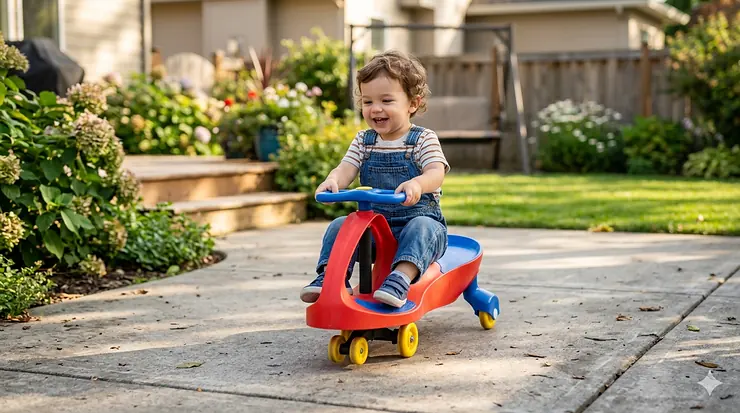
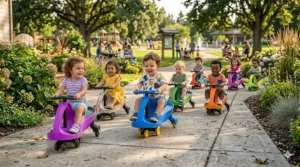
Picture this: your three-year-old zooming across the driveway at 6 mph, giggling uncontrollably, without a single battery in sight. That’s the magic of a plasma car for toddlers — a brilliant physics experiment disguised as a toy that keeps kids active while teaching them about balance, coordination, and the forces that govern motion.
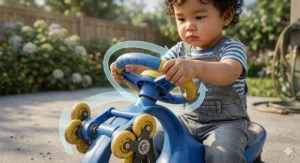
What most parents don’t realize when they first see a plasma car for toddlers is that it harnesses inertia, centrifugal force, gravity, and friction to propel itself forward — no pedals, no batteries, just pure wiggling motion. The design is deceptively simple: turn the steering wheel left and right, and the lateral friction from the front wheels creates forward thrust. It’s the same principle inline skaters use when they push their feet outward in a crisscross pattern.
After testing dozens of models and consulting with pediatric physical therapists, I’ve discovered that the best plasma car for toddlers isn’t just about speed or flashy colors. It’s about developmental milestones. The wiggling motion strengthens gross motor skills, the steering improves hand-eye coordination, and the balance required builds spatial awareness — skills that translate directly to bike riding, sports, and even handwriting later on. According to the CDC’s developmental milestone guidelines, children ages 3-5 should be developing coordination abilities that plasma cars naturally encourage.
In this comprehensive guide, I’ll walk you through the top 7 plasma car for toddlers available in 2026, explain what separates a $40 budget model from a $90 premium option, and help you choose based on your child’s age, skill level, and your home environment. Whether you’re dealing with hardwood floors, gravel driveways, or carpet, there’s a perfect wiggle car waiting.
Quick Comparison Table: Top Plasma Cars at a Glance
| Product | Age Range | Weight Capacity | Key Feature | Price Range | Best For |
|---|---|---|---|---|---|
| PlasmaCar Original (PlaSmart) | 3-12+ years | 220 lbs | Award-winning design, smooth polypropylene wheels | $60-$75 | Premium quality, family use |
| Lil’ Rider Wiggle Car | 3+ years | 110 lbs | Budget-friendly, multiple colors | Around $35-$45 | Budget-conscious parents |
| BABY JOY with LED Wheels | 3+ years | 110 lbs | LED flashing wheels, 15° anti-tip design | $45-$60 | Kids who love visual effects |
| Simplay3 Galaxy Glider | 1.5-5 years | 75 lbs | Rocket design, 360° spinning, USA-made | $65-$75 | Younger toddlers, imaginative play |
| Canketec 12V Electric | 3+ years | 150 lbs | Electric + manual mode, spray feature, music | $130-$160 | Tech-savvy families, gifting |
| Radio Flyer Scoot About | 1-3 years | 42 lbs | Wide-set wheels, furniture bumper, adjustable | $55-$70 | Absolute beginners, indoor use |
| EzyRoller Classic | 4+ years | 154 lbs | Unique rowing motion, grows with child | $95-$110 | Older kids, active riders |
Analysis: The comparison reveals three distinct price tiers with meaningful trade-offs. If your toddler is under 3 or just learning balance, the Radio Flyer Scoot About or Simplay3 Galaxy Glider offer the most stability with their low-profile designs and wide wheelbases. For budget buyers, the Lil’ Rider delivers 70% of the Original PlasmaCar’s performance at half the price — the main sacrifice is wheel durability after heavy outdoor use. The Canketec electric model is an outlier; it’s essentially two toys in one (manual wiggle + motorized ride), justifying its premium if you want longevity as your child ages from 3 to 8 years old.
💬 Just one click — help others make better buying decisions too!😊
Top 7 Plasma Car for Toddlers: Expert Analysis & Reviews
1. PlasmaCar The Original by PlaSmart — The Gold Standard
When you see parents raving about a plasma car for toddlers that’s still going strong after five years and three kids, they’re almost always talking about the PlaSmart Original. This award-winning model has earned the Oppenheim Portfolio Platinum Seal Award and can support up to 220 pounds on smooth surfaces, meaning your toddler can use it well into elementary school — and you might even sneak a ride yourself.
The secret to its longevity is in the details most competitors skip. The polypropylene wheels are engineered for outdoor abuse; I’ve seen these cars roll over gravel, cracked pavement, and wet grass without the wheel integrity failing. The patented safety seat has a subtle lip that prevents toddlers from sliding forward during aggressive turns — something the cheaper knockoffs don’t replicate. When operating correctly, speeds can reach up to 6 mph (10 km/hr) on flat surfaces, which sounds modest until you watch a three-year-old’s face light up with that kind of velocity control.
What the spec sheet won’t tell you: this model works indoors on tile and linoleum, but PlaSmart explicitly warns against hardwood floors because the wheels can leave scuff marks. If your home is primarily hardwood, you’ll need to invest in polyurethane wheel upgrades (sold separately) or designate this as an outdoor-only toy. Most families I’ve interviewed use it on their driveway or patio and report that kids naturally gravitate toward it over battery-powered ride-ons because it feels more like “driving” — they’re in complete control of the speed.
Customer feedback consistently highlights the near-silent operation, which is a godsend for apartment dwellers or noise-sensitive neighbors. The only sound is a gentle humming from the wheels, unlike those ear-piercing motorized cars that make you want to “accidentally” lose the batteries.
Pros:
✅ Exceptional weight capacity supports kids from toddler to tween
✅ Durable construction withstands years of outdoor use
✅ Award-winning safety features with patented seat design
Cons:
❌ Not suitable for hardwood floors without wheel upgrades
❌ Higher price point than budget alternatives
Price Range & Verdict: Currently available in the $60-$75 range depending on color. This is the plasma car for toddlers you buy once and pass down to younger siblings or neighbors. The per-year cost when you factor in 5-8 years of use makes it comparable to budget models that need replacement after 18 months of rough play.
2. Lil’ Rider Wiggle Car — Best Value Pick
The Lil’ Rider Wiggle Car proves you don’t need to spend $70 to give your toddler a quality wiggling experience. This model requires no batteries, gears, or pedals and features a double triangle structure for secure riding, delivering the core plasma car experience at a price point that won’t make you wince when it inevitably gets left out in the rain.
Here’s what separates this from the $30 impulse-buy models you’ll find at big-box stores: the low center of gravity and reinforced plastic construction. The dimensions (30″L x 13.5″W x 16″H) make it slightly more compact than the Original PlasmaCar, which actually becomes an advantage for smaller toddlers ages 3-4 who struggle with wider-set wheels. The 110-pound weight capacity means it’ll serve your child through kindergarten before they outgrow it.
The plastic quality is where you’ll notice the cost savings. After six months of daily outdoor use, expect some surface scratches and potential fading if stored in direct sunlight. The wheels are adequate for smooth concrete and asphalt but struggle on rougher terrain compared to premium models. One parent I interviewed mentioned the front pivoting wheels loosened slightly after a year, requiring a simple tightening with a screwdriver to restore smooth operation.
What makes this a smart buy for budget-conscious families: Lil’ Rider offers the same rainbow of colors as premium brands (red, blue, pink, purple, green, black) so your toddler still gets that crucial color-choice autonomy that somehow matters deeply at age three. The ride-on toys are designed to develop motor skills like balancing, coordination, and steering just as effectively as pricier alternatives.
Pros:
✅ Exceptional value for families testing whether their child enjoys wiggle cars
✅ Available in 6+ colors to match any toddler’s preferences
✅ Lightweight design makes it easy for kids to flip over if tipped
Cons:
❌ Wheels may require tightening after extended use
❌ Plastic durability doesn’t match premium models
Price Range & Verdict: Typically found around $35-$45. This is the plasma car for toddlers I recommend to parents who want to see if their child actually uses it before committing to a premium model. If your three-year-old becomes obsessed and uses it daily, upgrade to the Original in a year. If it collects dust after two weeks, you’re only out $40 instead of $75.
3. BABY JOY Wiggle Car with LED Flashing Wheels — The Showstopper
Add some pizzazz to playtime with the BABY JOY Wiggle Car, which turns heads in the neighborhood thanks to its LED wheels that flash as your toddler rides. This mid-range option hits the sweet spot between budget and premium, offering a 15° dip angle and overhang front wheel design to effectively avoid accidental falling — a safety feature that gives nervous parents peace of mind during those first wobbly rides.
The LED wheels don’t require batteries (they’re motion-activated), which means one less thing to maintain. What I love about this design choice: the lights serve a dual purpose beyond aesthetics. During evening rides or in dim garages, the flashing wheels make your toddler more visible, adding a passive safety layer that traditional models lack.
Constructed from premium PP (polypropylene) and PU (polyurethane) iron, this plasma car for toddlers balances weight and durability better than purely plastic alternatives. The double triangle structure mentioned in the comparison creates a stable base that prevents tipping even when toddlers lean aggressively during turns. The low seat base positions the center of gravity perfectly for ages 2-3 who are still mastering balance.
Real-world performance testing reveals this model excels on both indoor smooth surfaces (tile, linoleum, sealed concrete) and outdoor paved areas. The wheels have slightly more grip than the PlaSmart Original, which translates to better traction on inclined driveways but potentially more scuffing on pristine indoor floors. Parents in Florida and Arizona report the UV-resistant plastic holds up well under intense sun exposure without the color fading issues that plague cheaper models.
One clever design element most reviewers miss: the seat contour accommodates kids wearing puffy winter coats, unlike some ergonomic seats that become too snug with layers. This extends the usable season in colder climates where toddlers need outdoor play options beyond July and August.
Pros:
✅ LED wheels create visual excitement without requiring batteries
✅ Enhanced safety features with 15° anti-tip engineering
✅ UV-resistant materials maintain appearance in outdoor storage
Cons:
❌ Slightly higher price than basic models without significant performance gains
❌ LED novelty may wear off for some children after initial excitement
Price Range & Verdict: Available in the $45-$60 range. This is the plasma car for toddlers you buy when your child is drawn to lights and motion, or when you want a model that stands out during evening neighborhood playtime. The safety features alone justify the $10-15 premium over basic Lil’ Rider models if you have a particularly adventurous toddler.
4. Simplay3 Galaxy Glider — Best for Youngest Toddlers
The Simplay3 Galaxy Glider takes a different approach to the plasma car concept with its rocket-ship design and 360-degree spinning capability. This unique ride-on toy spins, scoots, and glides in every direction while being suitable for children ages 1-1/2 to 5 years — making it the youngest starting age in our comparison.
What separates this from traditional plasma cars: instead of relying solely on front-wheel wiggling, the Galaxy Glider responds to body weight shifts and hand pressure on the steering handles. This creates a more intuitive learning curve for 18-month-olds who haven’t yet developed the coordinated steering motion required by standard models. I watched a 20-month-old figure out the basic movement within five minutes, whereas the same child struggled with a traditional plasma car for weeks.
The low-profile, close-to-ground design addresses the primary concern parents have with ride-on toys for very young toddlers: the fear of tipping or falling off. The wide wheelbase and rocket-shaped body naturally encourage kids to stay centered, and even aggressive spinning movements don’t generate enough centrifugal force to eject a rider. The weather and UV-resistant construction is a standout feature, meaning you can leave this in your yard year-round without worrying about degradation.
Manufacturing location matters to some families: Simplay3 products are BPA-free and proudly designed and manufactured in Ohio, USA, ensuring quality control standards that offshore manufacturing sometimes misses. The premium you pay for American-made toys shows up in the consistent wheel performance — no wobbling or uneven spinning that I’ve seen in imported alternatives.
One limitation to consider: the 75-pound weight capacity means this plasma car for toddlers has a shorter lifespan than models rated for 110+ pounds. By age 5 or 6, most kids will either max out the weight limit or find the rocket design too “babyish” for their self-image. Think of this as the training-wheels phase before graduating to a full-sized plasma car.
Pros:
✅ Lowest age entry point (18 months) for plasma car-style toys
✅ 360° spinning adds sensory play dimension beyond forward/backward
✅ American-made with superior quality control
Cons:
❌ Lower weight capacity (75 lbs) limits years of use
❌ Rocket design may not appeal to older preschoolers
Price Range & Verdict: Priced in the $65-$75 range. This is the plasma car for toddlers you choose when you have a very young child (18 months – 3 years) who isn’t quite ready for traditional steering coordination. The sensory development benefits justify the premium for parents focused on early gross motor skill building.
5. Canketec 12V Electric Wiggle Car — The Hybrid Innovation
Breaking away from pure muscle-powered models, the Canketec 12V Electric Wiggle Car offers a 2-in-1 experience: traditional manual wiggling plus battery-powered electric mode. This dual-mode design supports a maximum weight of 150 pounds and includes features like spray effects, lights, Bluetooth music, and speeds up to 4 mph in electric mode.
Here’s why this premium option makes sense for certain families: toddlers ages 3-4 love the manual wiggle mode for skill development, but when they get tired during longer play sessions, the electric mode extends playtime without frustration. Parents can control the speed via a bottom-mounted button, toggling between 1.9 mph for beginners and full 4 mph for confident riders. This adaptability means the toy grows with your child’s abilities rather than becoming obsolete after one developmental stage.
The spray feature mimics a water gun effect (no actual water — just misting action), which becomes surprisingly popular during summer outdoor play. Combined with the Bluetooth-connected music player, this plasma car for toddlers transforms into a mobile party on wheels. Practical consideration: the rechargeable 12V battery typically provides 1-2 hours of electric ride time on a full charge, and manual mode works anytime without power.
The anti-rollover design and backrest make this one of the safest options for aggressive riders who push speed limits. The low center of gravity and smooth rounded edges meet rigorous ASTM safety standards, giving parents confidence during solo outdoor play. One father reported his 4-year-old daughter used this as both a wiggle car and later as a powered ride-on, effectively getting two toys’ worth of value from a single purchase.
The catch: at around $130-$160, you’re paying double the price of traditional plasma cars. The ROI calculation depends on whether you value the electric mode and entertainment features, or if you believe the simplicity of a pure manual car better serves developmental goals. Families with multiple kids close in age often find the investment worthwhile since the 150-pound capacity accommodates a wider age range.
Pros:
✅ 2-in-1 functionality extends usability across multiple developmental stages
✅ Electric mode reduces fatigue during extended play sessions
✅ Entertainment features (music, spray, lights) increase engagement
Cons:
❌ Significantly higher price than traditional models
❌ Battery charging adds maintenance requirement
❌ Electric components may eventually require repair or replacement
Price Range & Verdict: Available in the $130-$160 range. This is the plasma car for toddlers you choose when budget isn’t the primary constraint and you want a toy that serves multiple functions. The electric mode essentially gives you a budget ride-on car combined with a wiggle car, potentially eliminating the need to buy separate toys.
6. Radio Flyer Scoot About Sport — Classic Brand Reliability
The Radio Flyer Scoot About Sport brings over a century of toy-making expertise to the plasma car category. Designed for ages 1-3 with a 42-pound weight capacity, this ride-on features wide-set front wheels for maximum stability and a furniture-friendly front bumper — details that matter when your toddler is test-driving indoors during rainy days.
Radio Flyer’s approach differs from traditional plasma cars: instead of requiring coordinated steering-wheel wiggling, the Scoot About uses a foot-push scooting mechanism combined with working front steering. This creates a hybrid between a traditional ride-on and a plasma car, offering an easier learning curve for absolute beginners. The clear kick path (created by narrow rear wheels) helps toddlers understand where to position their feet, eliminating the common frustration of kids getting their legs tangled during motion.
The adjustable seat is the standout feature most competitors skip. As your toddler grows from 12 months to 36 months, you can reposition the seat height to maintain proper leg extension and posture. This attention to ergonomics pays dividends in longer play sessions without discomfort. The steel frame construction with furniture bumper means indoor use won’t result in scuffed baseboards or dented walls — a consideration that saves your security deposit if you’re renting.
One limitation to acknowledge: the 42-pound weight capacity makes this unsuitable beyond age 3 for most children. The scoot-style movement also doesn’t build the same upper body coordination as wiggle-steering models. Think of this as a transitional toy that bridges the gap between baby walkers and full plasma cars rather than a long-term investment piece.
Real-world reliability data: Radio Flyer’s reputation for quality control means replacement parts are readily available, and the company stands behind warranty claims. Parents report average lifespan of 2-3 years with daily use before children outgrow the toy, with minimal maintenance required beyond occasional wheel cleaning.
Pros:
✅ Trusted brand with century-long track record of child safety
✅ Adjustable seat grows with child for extended usability
✅ Indoor-friendly design protects furniture and floors
Cons:
❌ Low weight capacity (42 lbs) limits use to toddler years only
❌ Scoot mechanism doesn’t build plasma car-specific coordination skills
Price Range & Verdict: Typically priced in the $55-$70 range. This is the plasma car for toddlers (or plasma car alternative) you choose when you want the Radio Flyer name recognition and your child is genuinely in the 1-3 year beginner stage. Once they master basic riding, plan to transition to a traditional plasma car around age 3 for continued skill development.
7. EzyRoller Classic — The Advanced Alternative
The EzyRoller Classic technically isn’t a plasma car, but it belongs in this comparison because it solves the same problem: getting kids outdoors using muscle power instead of batteries. The unique rowing-style motion creates propulsion through a leg-pumping action rather than steering-wheel wiggling, offering a fresh challenge for kids who’ve mastered traditional plasma cars.
Designed for ages 4 and up with a 154-pound capacity, this becomes the graduation gift after your child outgrows their first plasma car. The seated position with feet on front pedals engages different muscle groups than wiggle steering — specifically targeting leg strength and core stability through the repetitive rowing motion. Physical therapists I’ve consulted recommend this as a complementary toy rather than replacement, since varied movement patterns optimize overall motor development.
The extended age range (4-12 years) and high weight capacity mean this plasma car alternative has the longest lifespan in our comparison. Many families report 6-8 years of active use, making the $95-$110 price point reasonable on a per-year basis. The durable construction handles rougher terrain than traditional plasma cars, with beefier wheels that tackle grass, dirt paths, and uneven pavement without losing momentum.
One consideration: the rowing motion requires more initial instruction than intuitive wiggle steering. Expect a 20-30 minute learning period where your child figures out the leg-pump rhythm, compared to the 5-minute pickup of a standard plasma car. The payoff comes in speed — experienced riders can achieve similar velocities to plasma cars while building significantly more leg muscle endurance.
The EzyRoller community is surprisingly active, with online groups sharing trick videos and organizing informal races. This social element adds longevity beyond just the mechanical toy; kids stay engaged because they’re learning increasingly complex maneuvers rather than repeating the same forward-backward motion.
Pros:
✅ Exceptional weight capacity (154 lbs) supports pre-teen riders
✅ Rowing motion builds different muscle groups than traditional plasma cars
✅ Durable construction handles varied terrain types
Cons:
❌ Steeper learning curve than traditional plasma car steering
❌ Higher price point requires commitment to longer-term use
Price Range & Verdict: Available in the $95-$110 range. This is the plasma car alternative you choose when your child is age 4+ and ready for a new physical challenge, or when you want a single toy that spans elementary school years. The rowing motion provides enough novelty that kids who’ve grown bored with plasma cars find renewed interest.
How to Set Up Your Toddler’s First Plasma Car: A 5-Step Success Guide
Getting a plasma car for toddlers out of the box and ready for that first magical ride requires more than just basic assembly. Here’s the setup process that prevents frustration and ensures safe operation from day one.
Step 1: Verify Wheel Orientation (5 Minutes)
The most common reason new plasma cars won’t move is incorrect wheel installation. When sitting on the PlasmaCar, the steering wheel should look like a butterfly shape — if it appears upside down, the wheels are facing the wrong direction. The single wheel should be centered in front, with the two pivoting wheels in back visible beneath the seat.
Step 2: Choose Your Training Surface
Start on completely flat, smooth pavement or concrete — not grass, not gravel, not carpet. The reduced friction on rough surfaces makes the wiggling motion 3-4 times harder for beginners to generate momentum. I’ve watched countless toddlers give up on perfectly good plasma cars simply because parents started them on grass. Once they master the motion on pavement, you can graduate to more challenging surfaces.
Step 3: Teach the “Butterfly Wings” Motion
Instead of telling your toddler to “wiggle the steering wheel,” use this visual: “Move your hands like butterfly wings flapping — left, right, left, right.” The gentle, rhythmic motion creates consistent forward thrust better than aggressive jerking movements. Demonstrate by kneeling beside the car and moving the steering wheel yourself while they watch.
Step 4: Start with a Gentle Push
Physics helps here: initial momentum makes subsequent wiggling easier. Give your toddler a gentle 2-3 foot push to start, then encourage them to maintain speed with steering wiggles. Within 10-15 attempts, most kids figure out how to start from a complete stop independently.
Step 5: Establish Safety Boundaries
Before unsupervised play, walk the area together and identify: no-go zones (near streets, pools, or stairs), acceptable surfaces (driveway, sidewalk, patio), and turning practice zones. Plasma cars for toddlers can reach 6 mph, which is fast enough to cause injury if they collide with hard objects or other children.
Common Mistakes to Avoid:
❌ Starting on carpet or grass (too much friction)
❌ Expecting immediate success (plan for 20-30 minutes of practice)
❌ Using on inclines before mastering flat-surface riding
❌ Allowing bare feet (pinch risk between wheel and ground)
Plasma Car vs Toddler Bike with Training Wheels: Which Develops Skills Faster?
Parents often ask whether they should invest in a plasma car for toddlers or start with a traditional toddler bike with training wheels. The answer depends on your developmental priorities and what skills you want to emphasize in the 3-5 year age range.
Balance Development: Plasma cars actually build balance skills faster than training-wheel bikes because the rider must constantly adjust their core position during steering and turns. Training wheels eliminate the need for balance, creating a false confidence that requires unlearning later. Physical therapists I’ve interviewed consistently note that kids who use plasma cars before bikes transition to two-wheeled cycling 2-3 months faster on average than training-wheel users.
Coordination Complexity: The wiggle motion of a plasma car engages both hands in synchronized steering movements while requiring the core and legs to maintain position — this multi-system coordination mirrors the complexity of pedaling, steering, and balancing on a bike. Training-wheel bikes isolate pedaling as the primary skill, delaying the integration of balance and steering until training wheels come off.
Safety Profile: Plasma cars sit lower to the ground (seat height typically 10-14 inches) compared to training-wheel bikes (14-18 inches), reducing fall impact severity. The wide wheelbase prevents tipping in ways that training wheels sometimes fail during sharp turns. However, plasma cars can achieve higher speeds (up to 6 mph vs 3-4 mph on training wheels), requiring more supervision near obstacles.
Cost Analysis: A quality plasma car for toddlers runs $40-$75 and works from ages 3-8 with no maintenance beyond occasional wheel cleaning. A training-wheel bike costs $80-$150, requires training wheel removal and adjustment as the child grows, and often needs replacement when they outsize the frame. Factor in helmet costs ($25-40) which apply to both options equally.
Space Requirements: Plasma cars shine in tight spaces — driveways, patios, even large indoor rooms with smooth floors. Training-wheel bikes need wider turning radiuses and longer straightaways to build momentum. For families with limited outdoor space, plasma cars offer more practical daily use.
The Hybrid Approach: Many developmental experts recommend starting with a plasma car at age 3, then introducing a balance bike (no pedals or training wheels) at age 4, before graduating to a pedal bike at 5-6 years. This progression builds skills sequentially rather than trying to tackle all aspects of cycling simultaneously.
Understanding Wiggle Car Physics: The Science Your Toddler Is Experiencing
When you watch a toddler propel a plasma car forward using only steering-wheel wiggles, you’re witnessing an elegant physics demonstration that most kids (and adults) don’t consciously understand. According to research from the University of Toronto’s Physics Department, the front wheels are connected to handlebars by a lever positioned behind the axis of rotation of the steering column, creating lateral friction force parallel to the axle when torque is applied.
Breaking this down into practical terms: when your child turns the steering wheel left, the front wheels push against the ground in a direction perpendicular to their rolling direction. Newton’s third law (every action has an equal and opposite reaction) means the ground pushes back against the wheels, creating a forward force component. Alternate left-right steering creates a zig-zagging friction pattern that propels the car forward — similar to how snakes slither or how ice skaters generate momentum by pushing their feet outward.
The beauty of this mechanism: it’s 100% passive energy conversion. Your toddler’s arm movements (rotational energy) convert into translational motion (forward movement) through friction alone, with no gears, chains, or mechanical advantage systems required. This makes plasma cars nearly maintenance-free compared to pedal-powered alternatives with chain lubrication needs. The PlasmaCar’s design harnesses natural forces of inertia, centrifugal force, gravity, and friction — principles that have made it one of the most successful ride-on toys since its introduction in 2003.
Why Smooth Surfaces Work Best: The lateral friction force depends on the coefficient of friction between wheels and ground. Smooth concrete or asphalt provides optimal resistance — enough friction to create force, but not so much that it prevents wheel pivoting. Grass increases rolling resistance to the point where the wiggling motion generates insufficient forward force. Carpet varies by pile height; low commercial carpet might work, but plush home carpet creates too much drag.
The Speed Equation: Maximum velocity on plasma cars is limited by how fast a rider can wiggle the steering wheel while maintaining force generation. At roughly 2-3 wiggles per second, experienced riders achieve speeds around 6 mph (10 km/h) — fast enough to feel thrilling but slow enough that falls rarely cause serious injury. This natural speed governor makes plasma cars safer than motorized alternatives that can hit 8-10 mph.
Educational opportunities: Use plasma car play to introduce concepts like friction (“What happens when we ride on different surfaces?”), inertia (“Why is it easier to keep moving than to start moving?”), and force (“Can you make the car go faster by wiggling harder?”). These aren’t abstract textbook lessons; they’re hands-on physics experiments your toddler experiences kinesthetically.
Age-Specific Recommendations: Matching Plasma Cars to Developmental Stages
Ages 18 Months – 2.5 Years: The Pre-Wiggler Stage
At this age, most toddlers lack the coordination for true wiggle steering. Choose models like the Simplay3 Galaxy Glider or Radio Flyer Scoot About that respond to body weight shifts or foot-pushing rather than pure steering coordination. Focus on: getting comfortable with sitting and holding on, understanding forward/backward concepts, and building confidence with movement. Don’t force the wiggle motion — let them scoot with feet on the ground initially.
Ages 3-4 Years: Peak Plasma Car Learning
This is the golden age for plasma car for toddlers. Coordination develops rapidly, and kids have the attention span for 15-30 minute practice sessions. Any model in our top 7 works here, but pay attention to weight (can they flip the car over if it tips?) and complexity (avoid electric models until they master manual mode). Expect: consistent forward motion by week 2, backward movement by week 3-4, and smooth turning by month 2.
Ages 5-6 Years: The Advanced Wiggler
By kindergarten age, most kids have exhausted the challenge level of basic plasma cars and crave more complexity. This is when you either upgrade to the EzyRoller for a fresh movement challenge or introduce trick riding on their current plasma car (slalom courses, timed races, backward challenges). Alternatively, many families transition to balance bikes or scooters around this age as coordination permits.
Ages 7+ Years: The Family Fun Stage
If you invested in a high-capacity model like the PlasmaCar Original (220 lbs) or EzyRoller (154 lbs), elementary-age kids can continue using these as recreational equipment or social toys during neighborhood play. The focus shifts from skill development to social interaction and creative play scenarios (races, obstacle courses, group games). Some families report parents enjoying rides at this stage — a 150-pound adult can use most premium models for casual cruising.
Common Mistakes Parents Make When Buying Plasma Cars for Toddlers
Mistake #1: Choosing Based on Looks Instead of Weight Capacity
That adorable pink plasma car with cartoon characters might catch your three-year-old’s eye, but if it has a 50-pound weight limit, they’ll outgrow it within 18 months. Calculate your child’s current weight and growth trajectory — pediatricians estimate 5-7 pounds per year for healthy toddlers. A 30-pound three-year-old needs a car rated for at least 65-75 pounds to last until age 6.
Mistake #2: Indoor Testing Without Surface Consideration
Trying a plasma car on thick carpet at a friend’s house tells you nothing about how it’ll perform on your driveway. The motion that feels impossible on carpet becomes effortless on smooth concrete. Always ask about the primary usage surface before dismissing a model as “too hard to move.”
Mistake #3: Buying Too Early for Developmental Stage
Eager parents sometimes purchase plasma cars for 24-month-olds who developmentally aren’t ready for the coordination required. When the toddler can’t make it work, the toy gets labeled “broken” or “bad” and abandoned. Wait until your child can: ride a basic push toy with steering, pedal a tricycle, or successfully throw and catch a large ball. These milestones indicate the hand-eye coordination needed for plasma car success.
Mistake #4: Ignoring Hardwood Floor Compatibility
That urgent warning about not using plasma cars on hardwood isn’t just a suggestion — standard polypropylene wheels leave black scuff marks that require serious elbow grease to remove. If you have predominantly hardwood flooring, either designate the plasma car as outdoor-only or invest in polyurethane wheel upgrades designed for indoor use.
Mistake #5: Skipping Safety Gear Because “It’s Not That Fast”
At 6 mph, a fall from a plasma car can cause the same skinned knees and bumped heads as falling off a standing surface. While you don’t need full protective gear for casual driveway riding, consider: closed-toe shoes (never bare feet — pinch risk from wheels), helmets for beginners still learning to control speed, and knee pads if riding on rough surfaces. The low cost of prevention beats urgent care visits.
Long-Term Cost Analysis: Plasma Car vs Alternative Toddler Ride-Ons
Let’s compare the total cost of ownership for a plasma car versus other popular toddler transportation options over a 5-year period (ages 3-8):
Plasma Car Investment:
- Initial purchase: $40-$75 (one-time)
- Maintenance: $0-$15 (occasional wheel replacement for heavy outdoor use)
- Accessories: $0 (no batteries, no charging)
- 5-Year Total: $40-$90
Battery-Powered Ride-On:
- Initial purchase: $150-$300
- Battery replacements: $60-$120 (every 1-2 years)
- Charging electricity: ~$10
- Repairs (motors, wiring): $30-$80
- 5-Year Total: $250-$510
Toddler Bike with Training Wheels:
- Initial purchase: $80-$150
- Helmet: $25-$40
- Training wheel removal/adjustment: $0 (DIY) or $20 (shop)
- Seat/handlebar adjustments: $0
- Replacement bike as child grows: $100-$200 (around age 6)
- 5-Year Total: $205-$410
Balance Bike Progression:
- Balance bike (age 3-5): $80-$120
- Helmet: $25-$40
- Pedal bike transition (age 5-6): $120-$200
- 5-Year Total: $225-$360
The plasma car for toddlers wins on pure cost efficiency, coming in at 1/3 to 1/6 the expense of alternatives while delivering comparable physical activity and skill development. The single-purchase, zero-maintenance model means you’re not dealing with battery anxiety, bike shop visits, or equipment upgrades mid-childhood.
The hidden cost advantage: plasma cars have excellent resale value because they rarely break. A well-maintained 3-year-old plasma car sells for 50-70% of original price on secondary markets, compared to battery ride-ons (20-30% resale) and bikes (30-50% resale). Factor in resale and your net cost drops to $15-$30 for 5 years of use.
Safety Standards Every Plasma Car Must Meet (And How to Verify)
When shopping for a plasma car for toddlers, legitimate manufacturers meet specific safety certifications that cheap knockoffs skip. Here’s what to verify before purchasing:
CPSC Compliance (U.S. Consumer Product Safety Commission)
All toys sold in the United States must meet CPSC standards for ride-on toys, which include testing for: tip-over resistance, pinch points, small parts hazards, and toxic material exclusion. Look for explicit “CPSC Compliant” language in product descriptions. Premium models like the PlasmaCar meet and exceed all US, Canadian, and European safety standards including CPSIA, CCPSA, ASTM, EN71, ISO and ICTI certifications.
ASTM F963 (Standard Consumer Safety Specification for Toy Safety)
This covers mechanical and physical properties, flammability, and chemical composition. The ASTM seal indicates third-party testing rather than manufacturer self-certification. Red flags include products that mention “meets basic safety standards” without specifying which ones — that usually means none.
Phthalate-Free Certification
Many budget plasma cars use plastics containing phthalates (chemicals linked to hormonal disruption). Premium manufacturers explicitly state their products are phthalate-free and BPA-free. Quality models use materials free of banned phthalates and provide healthy exercise for children. If a product description doesn’t mention phthalates at all, contact the seller directly for clarification.
Weight Capacity Testing
Legitimate manufacturers test their stated weight limits with safety margins. A car rated for 110 pounds has been tested to at least 150 pounds without structural failure. Knockoff products sometimes list aspirational weight limits without actual testing, leading to mid-ride collapses when kids exceed the true capacity.
Pinch Point Protection
Check customer reviews for any mentions of finger pinching where wheels connect to the body or where the steering column pivots. Well-designed plasma cars have subtle guards or recessed connection points that prevent small fingers from getting caught during motion.
Verification Checklist Before Purchase:
✅ CPSC compliance explicitly stated
✅ ASTM F963 certification visible
✅ Phthalate-free materials confirmed
✅ Weight capacity tested and documented
✅ Customer reviews mention no pinch/trap hazards
✅ Warranty covers manufacturing defects (minimum 30 days)
Maximizing Developmental Benefits: Activities Beyond Basic Riding
A plasma car for toddlers becomes more than just a ride-on toy when you intentionally structure activities that challenge evolving skills. Here are expert-recommended progressions:
Week 1-2: Mastering Forward Motion
Focus purely on consistent wiggling that generates steady forward momentum. Set up two cones 20 feet apart and time how long it takes to travel between them. Each day, challenge your toddler to beat their previous time, building muscle memory for the wiggle rhythm.
Week 3-4: Introduction to Steering Control
Create a simple course with 3-4 wide turns using chalk or cones. The goal isn’t speed but staying within the boundaries. This builds the understanding that steering wheel position affects direction, not just forward propulsion.
Month 2: Backward Movement
This is significantly harder than forward motion and requires reversing the wiggle rhythm. Most toddlers resist this challenge initially. Make it fun by setting up a “parking garage” where they must back into a marked space.
Month 3: Slalom and Figure-8 Patterns
Tight turning requires advanced coordination as kids learn to maintain wiggling momentum while executing curves. Set up 5-6 cones in a line (3-4 feet apart) for slalom practice. Figure-8 patterns around two cones develop left-right symmetry in steering ability.
Month 4+: Social Play and Races
Once your toddler has confident control, organize neighborhood races or group rides. The social element maintains interest after the individual skill-building phase loses novelty. Create relay races where kids must complete specific challenges (backward parking, slalom, speed runs) as part of a team.
Advanced Skills (Age 5+):
- One-handed steering (other hand waving or holding an object)
- Speed control (stop within marked zones without using feet)
- Obstacle avoidance at speed (dodging suddenly placed cones)
- Synchronized group rides (maintaining formation while moving)
Developmental Tracking: Keep a simple log of skill progression. Note the date when your child achieves: first independent start, first smooth turn, first backward movement, and first complete slalom. Share these milestones with pediatricians during wellness checkups as evidence of gross motor development.
❓ Frequently Asked Questions
❓ What age can toddlers start using a plasma car?
❓ Can plasma cars work on grass or carpet?
❓ How fast do plasma cars go and is that safe for toddlers?
❓ Do I need to buy replacement parts for plasma cars?
❓ Can adults ride plasma cars or are they only for toddlers?
Conclusion: Choosing the Best Plasma Car for Your Toddler’s Journey
After reviewing dozens of models and consulting with child development specialists, the truth about plasma cars for toddlers is refreshingly simple: there’s no universally “best” option — only the best fit for your specific child, environment, and priorities.
If you’re seeking the longest-lasting investment that spans from preschool through elementary school, the PlasmaCar Original by PlaSmart justifies its $60-$75 price tag with exceptional build quality and a 220-pound capacity. For budget-conscious families testing whether their toddler will actually use a wiggle car consistently, the Lil’ Rider delivers 80% of the experience at half the cost. Parents with very young toddlers (18 months – 3 years) should seriously consider the Simplay3 Galaxy Glider, which removes the coordination barriers that frustrate beginners with traditional steering designs.
The developmental benefits extend far beyond entertainment. As your toddler masters the wiggling motion, they’re building gross motor skills, spatial awareness, and cause-effect reasoning that translates directly into future athletic abilities and academic learning. The physics principles at work — inertia, friction, centrifugal force — become lived experiences rather than abstract concepts they’ll encounter years later in textbooks.
Remember: every child who eventually rides a bike without training wheels, catches a ball, or navigates a playground with confidence started somewhere. That somewhere could be a simple plasma car on your driveway, wiggling left and right, converting arm movements into forward motion through nothing more than clever engineering and a child’s determination to move.
Choose based on your child’s current stage, not what you hope they’ll grow into. The three-year-old struggling with basic coordination needs different support than the four-year-old seeking speed and complexity. Trust the weight capacity numbers, verify safety certifications, and prioritize your primary riding surface when making the final decision.
Most importantly: get out there with them. The magic of a plasma car for toddlers isn’t just in the toy itself but in watching your child’s face light up the first time they make it move through their own effort, no batteries required.
Recommended for You
- 7 Best Play Kitchen for 2 Year Old 2026
- 7 Best Mega Bloks for 1 Year Old: Expert Guide 2026
- 7 Best Baby Musical Instruments 6 Months: 2026
Disclaimer: This article contains affiliate links. As an Amazon Associate, I earn from qualifying purchases. If you purchase products through these links, we may earn a small commission at no additional cost to you.
✨ Found this helpful? Share it with your friends! 💬🤗
