
In This Article
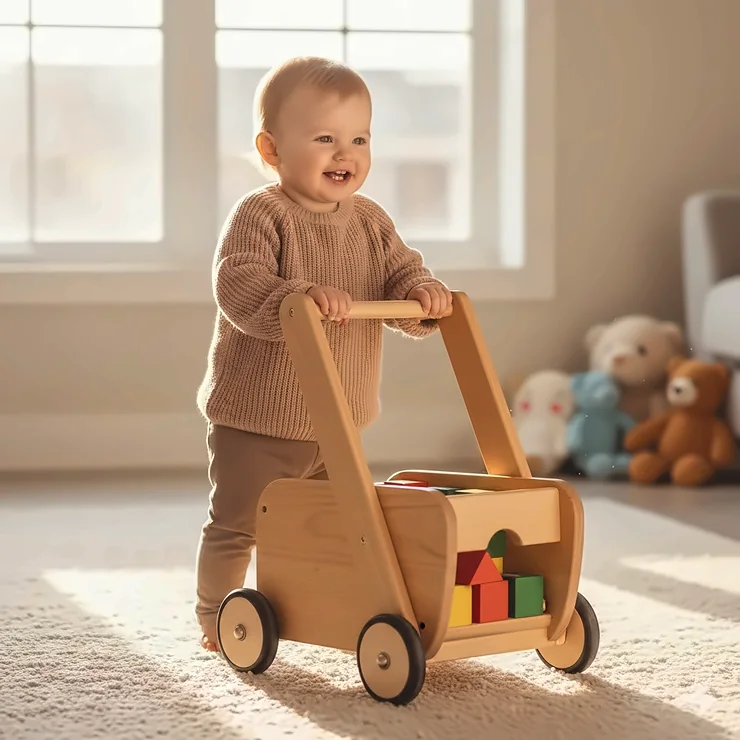
Picture this: your little one gripping the handle of a sturdy wooden walker, taking those wobbly first steps with the biggest smile you’ve ever seen. That’s the magic of wooden push toys for 1 year old children. These aren’t just cute nursery decorations—they’re developmental powerhouses that help your baby transition from crawling to confident walking.
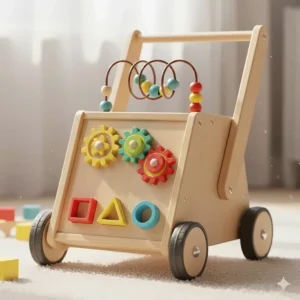
Unlike plastic alternatives that might tip over or break easily, quality wooden push toys offer the stability and durability your curious explorer needs. According to research from the National Institutes of Health, gross motor skill development in early childhood is crucial for fostering greater interaction with the environment. Push toys encourage natural movement patterns that strengthen leg muscles, improve balance, and build the coordination necessary for independent walking.
The American Academy of Pediatrics notes that most babies take their first steps around their first birthday, though the normal range extends from 11 to 18 months. The right push toy can make this journey safer, more enjoyable, and developmentally appropriate. Whether you’re searching for the best pull along toys for toddlers, a sturdy push walker for toddler adventures, or specialized options like a lawn mower push toy or shopping cart push toy, this guide covers everything you need to support your child’s toddler walking development while building crucial gross motor skills for toddlers through engaging learning to walk toys.
Quick Comparison Table: Top Wooden Push Toys at a Glance
| Product | Type | Age Range | Key Feature | Price Range | Rating |
|---|---|---|---|---|---|
| Hape Lawn Mower Push Toy | Push Mower | 12M+ | Realistic design with rolling beads | $20-$30 | 4.6/5 |
| WOODENFUN Shopping Cart Walker | Push Walker/Cart | 12M+ | Large storage chest with adjustable weight | $45-$60 | 4.5/5 |
| LOL-FUN 9-in-1 Baby Walker | Activity Walker | 6-12M | Multiple learning activities & adjustable speed | $60-$80 | 4.7/5 |
| Hape Block and Roll Cart | Push Cart with Blocks | 12M+ | Includes 24 colorful blocks for stacking | $35-$50 | 4.5/5 |
| Hape Wooden Shopping Cart | Pretend Play Cart | 3Y+ | Sturdy with rubber wheels & storage basket | $40-$55 | 4.6/5 |
| Hape Walk-A-Long Snail | Pull Toy | 12M+ | Award-winning with removable shell | $25-$35 | 4.7/5 |
| Hape Elephant Pull-Along | Pull Toy | 12M+ | Compact design perfect for small hands | $15-$22 | 4.5/5 |
💬 Just one click – help others make better buying decisions too! 😊
Top 7 Wooden Push Toys for 1 Year Old: Expert Analysis
1. Hape Wooden Push and Pull Lawn Mower
Bring outdoor fun indoors with this charming push toy that mimics a real lawn mower. The Hape Wooden Push and Pull Lawn Mower features a see-through chamber filled with colorful beads that pop and rattle as your toddler pushes it around.
Key Specifications:
- Dimensions: 22.3 x 3.9 x 5.4 inches
- Weight: 1.3 pounds
- Material: Sustainably harvested wood with water-based paint
This lawn mower push toy encourages active play while developing coordination and balance. The lightweight design makes it easy for beginning walkers to maneuver, and the sturdy construction ensures it won’t tip over easily. Parents love how it keeps toddlers engaged for hours, mimicking grown-up activities they see daily.
Customer Feedback: Reviewers consistently praise its durability and the mesmerizing bead action that keeps kids entertained. One parent noted their 14-month-old pushes it everywhere, helping develop walking confidence.
✅ Pros:
- Realistic design sparks imaginative play
- Lightweight yet stable construction
- Eco-friendly materials and non-toxic finishes
❌ Cons:
- May be too simple for older toddlers
- Beads cannot be removed for cleaning
Price: $20-$30
2. WOODENFUN Wooden Baby Push Walker (Shopping Cart Style)
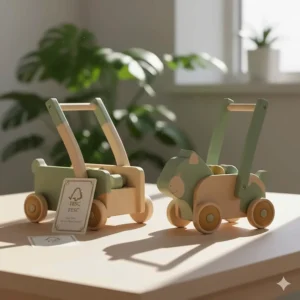
The WOODENFUN Wooden Baby Push Walker doubles as a shopping cart and learning-to-walk aid, making it one of the most versatile options available. This shopping cart push toy features a spacious storage chest where little ones can transport their favorite toys while practicing those important first steps.
Key Specifications:
- Premium quality wood with rubber-edged wheels
- Adjustable weight system for developmental stages
- Non-toxic paints and finishes
What sets this walker apart is its thoughtful weight control feature. You can add books or toys to the chest to adjust resistance as your baby’s strength improves. The rubber wheel edges protect delicate floors while preventing sudden falls—a crucial safety feature for nervous parents.
Customer Feedback: Parents report this walker works beautifully even on carpet, unlike many competitors. The hollow heart cutouts on both sides add aesthetic charm while reducing weight.
✅ Pros:
- Customizable weight for growing babies
- Floor-protective rubber wheels
- Generous storage encourages extended play
❌ Cons:
- Assembly required
- May be challenging for babies under 10 months
Price: $45-$60
3. LOL-FUN 9-in-1 Wooden Baby Walker (Activity Center)
Looking for maximum developmental bang for your buck? The LOL-FUN 9-in-1 Wooden Baby Walker packs an impressive array of learning activities into one sturdy push walker for toddler development. This multi-functional marvel includes a mirror, slide pieces, digital flip board, spinning gears, rolling drum, xylophone, and alphabet rolling ring.
Key Specifications:
- 9 integrated learning activities
- Adjustable speed settings for safety
- Suitable for babies 6-12 months and beyond
This baby walker push toy goes beyond simple walking assistance. Each activity targets different developmental skills: the xylophone develops musical awareness, gears teach cause-and-effect, and the alphabet ring introduces early literacy. The adjustable speed control is a game-changer, allowing you to slow down the walker for beginners and speed it up as confidence grows.
Customer Feedback: Parents love how this walker grows with their child, providing entertainment value long after walking is mastered. The storage space in back is perfect for carrying treasures around the house.
✅ Pros:
- Multiple activities prevent boredom
- Adjustable speed prevents falls
- Develops cognitive and motor skills simultaneously
❌ Cons:
- Higher price point
- Can be overwhelming for easily overstimulated babies
Price: $60-$80
4. Hape Block and Roll Cart
The Hape Block and Roll Cart combines walking practice with puzzle-solving fun. This clever push toy includes 24 brightly painted wooden blocks that fit perfectly inside the cart’s frame, encouraging both gross and fine motor development.
Key Specifications:
- Includes 24 colorful wooden blocks
- Dimensions accommodate single-layer block arrangement
- Made from environmentally sustainable wood
This isn’t just about pushing—it’s about problem-solving. Toddlers must figure out how to arrange blocks so they fit in one layer, exercising spatial reasoning while strengthening their legs. The blocks can also be dumped out for independent stacking play, making this toy a two-in-one developmental tool.
Customer Feedback: Parents appreciate how this walker keeps busy toddlers engaged beyond just walking practice. The block puzzle aspect adds educational value that plastic walkers simply can’t match.
✅ Pros:
- Dual-purpose design (walker + block toy)
- Encourages problem-solving skills
- Durable Hape quality construction
❌ Cons:
- Blocks may scatter everywhere
- Slightly heavier than basic walkers
Price: $35-$50
5. Hape Wooden Shopping Cart
For toddlers ready for more sophisticated pretend play, the Hape Wooden Shopping Cart delivers restaurant-quality durability with charm to spare. This shopping cart push toy features a cloth basket and bottom shelf, perfect for transporting toys, stuffed animals, or pretend groceries.
Key Specifications:
- Dimensions: 16.86 x 11.82 x 19.86 inches
- Weight: 4.87 pounds
- Recommended age: 3 years and up
While technically designed for slightly older children, many parents introduce this cart to confident walkers around 18-24 months. The sturdier construction and larger size make it ideal for toddlers who’ve mastered basic walking and are ready for more complex play scenarios. Rubber wheels protect floors while rolling smoothly across different surfaces.
Customer Feedback: Parents rave about how this cart has survived years of use through multiple children. The FSC-certified wood construction ensures it’s both safe and environmentally responsible.
✅ Pros:
- Restaurant-grade durability
- Encourages imaginative play scenarios
- Large capacity for toy transport
❌ Cons:
- Better for older toddlers (18M+)
- Heavier than beginner walkers
Price: $40-$55
6. Hape Walk-A-Long Snail Pull Toy
Not all wooden push toys for 1 year old require pushing forward. The Hape Walk-A-Long Snail is an award-winning pull toy that encourages toddlers to walk while looking back—a completely different coordination challenge that builds awareness and balance.
Key Specifications:
- Removable water-swirling shell
- Rubber-rimmed wheels for quiet play
- Chunky wheels handle any surface
This pull toy features a mesmerizing shell filled with colorful water that swirls as the snail moves. The shell detaches for individual play, and the pull cord is just the right length for little arms. As your toddler pulls the snail, they naturally practice the heel-to-toe walking pattern that physical therapists recommend.
Customer Feedback: The unique water-swirl effect keeps children fascinated, encouraging more walking practice than traditional pull toys. Parents love the quiet operation—no noisy wheels waking up napping siblings.
✅ Pros:
- Award-winning design
- Teaches backward walking awareness
- Quiet operation for indoor use
❌ Cons:
- Cord may tangle with other toys
- Water chamber eventually may leak (rare)
Price: $25-$35
7. Hape Wooden Elephant Pull-Along
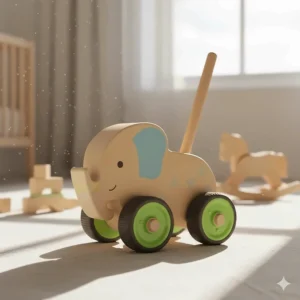
The Hape Wooden Elephant Pull-Along proves that simple can be spectacular. This compact pull toy is perfectly sized for toddler hands, making it an ideal first pull-along toy for emerging walkers.
Key Specifications:
- Dimensions: 4.5 x 5.7 x 2.4 inches
- Weight: 0.4 pounds (incredibly lightweight)
- Solid maple construction
Don’t let the small size fool you—this little elephant packs developmental benefits. The lightweight design means even tentative walkers can easily pull it along, building confidence with every step. The wooden wheels make minimal noise, and the friendly elephant face sparks emotional connections that encourage your child to “take their friend for walks.”
Customer Feedback: Parents love using this as a transition toy before graduating to larger push walkers. The compact size also makes it perfect for travel or restaurant outings.
✅ Pros:
- Perfect starter pull toy
- Ultra-lightweight for beginning walkers
- Travel-friendly size
❌ Cons:
- Very simple design (no extra features)
- May be outgrown quickly
Price: $15-$22
✨ Don’t Miss These Exclusive Deals!
🔍 Take your toddler’s development to the next level with these carefully selected products. Click on any highlighted item to check current pricing and availability. These tools will help you create authentic developmental experiences your family will love!
Understanding Toddler Walking Development: What Parents Need to Know
Before investing in wooden push toys for 1 year old, understanding the walking timeline helps you choose age-appropriate options. According to research published by the National Center for Health Statistics, gross motor development varies significantly between children, making standardized testing important for identifying delays early.
The Natural Progression of Walking
Walking doesn’t happen overnight. Your baby has been preparing for this milestone since birth through a predictable sequence:
8-10 Months: Pulling up to stand, cruising along furniture
10-12 Months: Standing independently for a few seconds, taking first tentative steps
12-15 Months: Walking independently with wide-stance gait
15-18 Months: Confident walking, beginning to run, walking backwards
Most babies take their first independent steps between 11 and 18 months, with the average around their first birthday. Push walkers and pull toys support this natural progression by providing stability without preventing the muscle development that seated baby walkers can delay.
Why Push Toys Beat Baby Walkers
The American Academy of Pediatrics has called for a complete ban on wheeled baby walkers since 2004. Why? Seated walkers actually delay walking development by allowing babies to move without bearing weight properly on their legs. They also cause thousands of injuries annually when babies reach dangerous heights or tumble down stairs.
Push walkers, by contrast, encourage proper weight-bearing, natural foot positioning, and coordinated movement patterns. Your toddler must actively engage their leg muscles, core, and balance systems—exactly what they need for independent walking.
How to Choose the Perfect Wooden Push Toy for Your 1 Year Old
1. Match the Toy to Your Child’s Developmental Stage
Early Pullers (8-10 months): Choose heavier walkers with adjustable speed controls like the LOL-FUN 9-in-1 model. The added weight prevents the toy from running away from your baby.
Beginning Walkers (10-14 months): Moderate-weight options like the WOODENFUN Shopping Cart offer the right balance of stability and maneuverability.
Confident Walkers (14+ months): Lightweight toys like the Hape Lawn Mower or pull-along toys provide fun challenges without tipping risks.
2. Prioritize Safety Features
Look for these essential safety elements:
- Rubber or grippy wheels that won’t slip on hardwood or tile
- Wide, stable base that resists tipping
- Rounded edges with no sharp corners or pinch points
- Non-toxic finishes certified safe for mouthing (babies explore everything with their mouths!)
- Weight customization options to slow down speedy toys
3. Consider Multi-Functional Designs
The best wooden push toys for 1 year old grow with your child. Activity walkers like the LOL-FUN 9-in-1 provide entertainment value long after walking is mastered. Shopping cart designs encourage pretend play that develops social and cognitive skills alongside physical development.
4. Check Wood Quality and Construction
Premium wooden toys use:
- Sustainably harvested hardwoods (maple, birch, beech)
- Mortise-and-tenon or dowel joints (not just glue)
- Water-based, non-toxic paints
- Smooth sanding with no splinter risks
- FSC or similar sustainability certifications
Cheaper alternatives may use particle board or veneer that won’t withstand the inevitable crashes and tumbles of toddler life.
5. Evaluate Floor Compatibility
Consider your home’s flooring when selecting a push walker for toddler use:
Hardwood/Tile: Choose rubber-edged wheels to prevent scratches and reduce noise
Carpet: Heavier walkers work better as lightweight ones may tip when meeting resistance
Mixed Surfaces: Test that wheels transition smoothly between rooms
The Science Behind Push Toys and Motor Development
Building Gross Motor Skills for Toddlers
Research from Brown University Health identifies push toy play as instrumental in developing several critical gross motor skills:
Balance and Coordination: Push toys require continuous balance adjustments, strengthening the vestibular system that controls spatial orientation.
Muscle Strengthening: Weight-bearing through arms and legs builds the strength necessary for independent walking, running, and eventually more complex movements like climbing.
Spatial Awareness: Navigating furniture, doorways, and obstacles with a push toy teaches spatial reasoning that translates to safer movement.
Reciprocal Movements: The alternating leg pattern used when pushing toys mirrors natural walking gait, reinforcing proper movement patterns.
Fine Motor Skill Integration
Don’t overlook the hand development happening simultaneously. Gripping handles, adjusting grip pressure, and steering all refine the fine motor control necessary for later skills like writing, buttoning clothes, and using utensils.
Cognitive Development Through Play
Learning to walk toys do more than build muscles. They encourage:
- Problem-solving: Figuring out how to navigate corners and tight spaces
- Cause and effect: Understanding that pushing makes the toy move
- Persistence: Getting up after falls and trying again
- Independence: Exploring spaces beyond parent’s arms
Safety Tips for Using Wooden Push Toys
Create a Safe Practice Environment
Clear the Path: Remove trip hazards like toys, cords, and loose rugs from walking practice areas. Even the best push walker can’t prevent falls if your baby trips over obstacles.
Gate the Stairs: Install sturdy safety gates at both the top and bottom of staircases. Push toys and stairs are a dangerous combination.
Supervise Always: Never leave your baby unattended with a push toy, especially during early walking stages. Babies can tip over, reach dangerous heights, or get into trouble faster than you’d imagine.
Check Toys Regularly: Inspect wheels, joints, and finishes weekly. Tighten any loose screws and retire toys showing significant wear.
Proper Sizing Matters
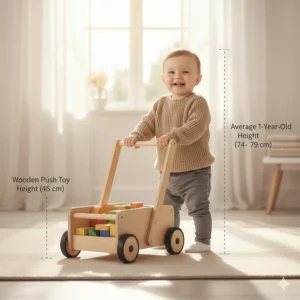
The handle height should allow your baby to grip comfortably with elbows slightly bent when standing upright. Handles too high force poor posture; too low don’t provide adequate support. Some models offer adjustable handles that grow with your child.
Barefoot is Best
While it might seem counterintuitive, babies actually learn to walk better barefoot. Going shoeless allows them to grip the floor with their toes and use their heels for stability—exactly what they need to develop proper gait patterns. Reserve shoes for outdoor walking or rough surfaces.
Beyond Basic Walking: Advanced Activities with Push Toys
Obstacle Course Fun
Once your toddler masters basic walking with their toy, create simple obstacle courses using pillows, cardboard boxes, or pool noodles. This challenges balance, planning, and problem-solving while keeping play exciting.
Pretend Play Scenarios
Transform the lawn mower push toy into outdoor lawn care adventures. Use the shopping cart push toy for grocery store role-play. These scenarios build language skills, social understanding, and executive function alongside physical development.
Musical Walking Games
Combine push toys with music for rhythm development. March to different tempos, stop-and-go games with music cues, or dance-walk combinations that integrate multiple skill areas.
Sibling Interaction
Older siblings can help by pulling younger ones along with a pull toy, creating social bonding opportunities. Set up “races” or parade games that involve multiple children and toys.
Wooden Push Toys vs. Plastic Alternatives: Making the Right Choice
Durability and Longevity
Quality wooden toys often last through multiple children and even generations. The solid wood construction withstands crashes, drops, and outdoor use that would crack or break plastic toys. While the initial investment may be higher, the cost-per-use typically favors wooden options.
Environmental Impact
Sustainably harvested wooden toys have significantly lower environmental footprints than petroleum-based plastics. Many wooden toy manufacturers use FSC-certified forests and water-based finishes, appealing to eco-conscious families.
Developmental Differences
Wooden toys’ natural weight distribution provides better stability and more realistic resistance, teaching body awareness that lightweight plastics can’t match. The tactile experience of wood also engages sensory development differently than smooth plastic.
Aesthetic Considerations
Wooden toys’ timeless beauty complements home decor rather than clashing with it. Natural wood tones and minimalist designs create a calming play environment compared to the bright, busy aesthetics of many plastic toys.
When to Introduce Different Types of Push Toys
Pull-Along Toys (10-12 Months)
Best pull along toys for toddlers can be introduced once your baby masters standing and takes a few independent steps. These toys teach spatial awareness and backward walking—your child must look behind while moving forward.
Start with lightweight options like the Hape Elephant Pull-Along. The emotional connection babies form with “their friend” often motivates more walking practice than utilitarian walkers.
Push Walkers (8-14 Months)
Push walkers shine during the cruising-to-walking transition. Introduce them when your baby can pull to stand and cruise furniture confidently. Begin with heavier, slower models and transition to lighter, more maneuverable options as confidence builds.
Activity Walkers (6-12 Months)
Multi-function activity walkers like the LOL-FUN 9-in-1 can be introduced earlier since babies can enjoy the activities while sitting or standing before using them for walking. This extended usability makes them excellent value investments.
Specialty Push Toys (12+ Months)
Themed toys like lawn mowers and shopping carts work best for confident walkers ready for pretend play. These typically require more coordination and balance than basic walkers.
Maintenance and Care for Wooden Push Toys
Regular Cleaning Protocols
Daily: Wipe down handles and high-touch areas with a slightly damp cloth. Wooden toys don’t need disinfection—the natural antimicrobial properties of wood help resist bacteria growth.
Weekly: Inspect all moving parts, tighten loose screws, and check for splinters or rough spots. A light coat of food-safe mineral oil keeps wood from drying out.
Monthly: Deep clean with mild soap and water, ensuring you dry thoroughly. Never soak wooden toys or run them through dishwashers, as water damage can cause warping and finish deterioration.
Storage Solutions
Store wooden push toys in dry areas away from direct sunlight, which can fade finishes and dry out wood. Avoid garages or basements with significant temperature fluctuations. If wheels collect dust or pet hair, clean them regularly to maintain smooth rolling.
Repairing Minor Damage
Scratches: Rub gently with fine-grit sandpaper and apply food-safe mineral oil or beeswax
Loose Wheels: Tighten screws or add a drop of wood glue if threads have stripped
Chipped Paint: Sand lightly and touch up with non-toxic acrylic paint
Splinters: Sand smooth immediately to prevent injuries
Red Flags: When to Consult Your Pediatrician About Walking
While wooden push toys for 1 year old support natural development, they can’t solve underlying developmental concerns. The Centers for Disease Control and Prevention recommends consulting your pediatrician if your child:
- Isn’t pulling to stand by 12 months
- Shows no interest in moving or exploring by 15 months
- Isn’t taking independent steps by 18 months
- Walks exclusively on toes after several months of independent walking
- Shows significant asymmetry (favoring one side over the other)
- Seems to have lost previously acquired motor skills
Early intervention services can address delays effectively, often helping children catch up to typical developmental timelines. Don’t wait to express concerns—pediatricians prefer cautious parents over missed opportunities for early support.
Budget-Friendly Alternatives and DIY Options
Secondhand Shopping Strategies
Wooden push toys hold up incredibly well to used conditions, making secondhand markets excellent sources for budget-conscious families. Check:
- Facebook Marketplace and Craigslist for local pickup
- Consignment shops specializing in children’s items
- Garage sales in family neighborhoods
- Online marketplaces like Mercari or Poshmark
Safety Check: Inspect secondhand toys carefully for loose parts, chipped paint (could contain lead), and structural integrity before purchasing.
DIY Push Toy Ideas
Handy parents can create effective push toys from common materials:
Weighted Laundry Basket: Add books or toys to a plastic laundry basket with a broomstick handle attached across the top. Surprisingly effective and adjustable!
Cardboard Box Walker: Reinforce a sturdy box with duct tape, fill with weighted items, and attach a rope or ribbon handle.
Repurposed Chair: Small wooden chairs (stable enough not to tip) make excellent push toys when your toddler holds the back and pushes forward.
While these DIY options won’t match commercial quality, they prove you don’t need expensive toys to support development. Supervise carefully with homemade versions to ensure safety.
❓ FAQ: Your Wooden Push Toy Questions Answered
❓ What age can babies use wooden push toys?
❓ Are push toys better than baby walkers for development?
❓ How do I stop a push toy from moving too fast?
❓ Can wooden push toys damage hardwood floors?
❓ Should I buy a push toy or pull toy for my 1 year old?
Conclusion: Investing in Your Toddler’s Walking Journey
Choosing the right wooden push toys for 1 year old isn’t just about buying another toy—it’s about investing in your child’s physical development, confidence, and independence. The seven toys featured in this guide represent the best combinations of safety, durability, and developmental appropriateness available in 2026.
Remember that every child develops at their own pace. Whether your little one masters walking at 10 months or 18 months, push toys provide valuable support throughout the journey. The Hape Lawn Mower offers simple, effective encouragement for beginners. The WOODENFUN Shopping Cart grows with your child through multiple developmental stages. And the LOL-FUN 9-in-1 Activity Walker provides entertainment and learning opportunities long after walking is conquered.
Consider your home environment, your child’s current abilities, and your long-term needs when making your selection. And don’t forget—the best wooden push toys for 1 year old are the ones your child actually uses. Sometimes the simplest option creates the most joy.
Ready to support your toddler’s first steps? Click any of the highlighted products above to check current availability and pricing. Your future confident walker awaits!
Recommended for You
- 7 Best Baby Play Gym with Piano in 2026
- 7 Best Teething Toys for 6 Month Old Babies – 2026
- 7 Best Sensory Toys for Autistic Toddlers 2026
Disclaimer: This article contains affiliate links. If you purchase products through these links, we may earn a small commission at no additional cost to you.
✨ Found this helpful? Share it with your friends! 💬🤗
