
In This Article
Picture this: your little one pushing a beautifully crafted wooden car across the living room floor, completely absorbed in their imaginative world. There’s something magical about wooden cars that plastic alternatives simply can’t match. These timeless toys have captivated children for generations, and they’re more relevant today than ever before.
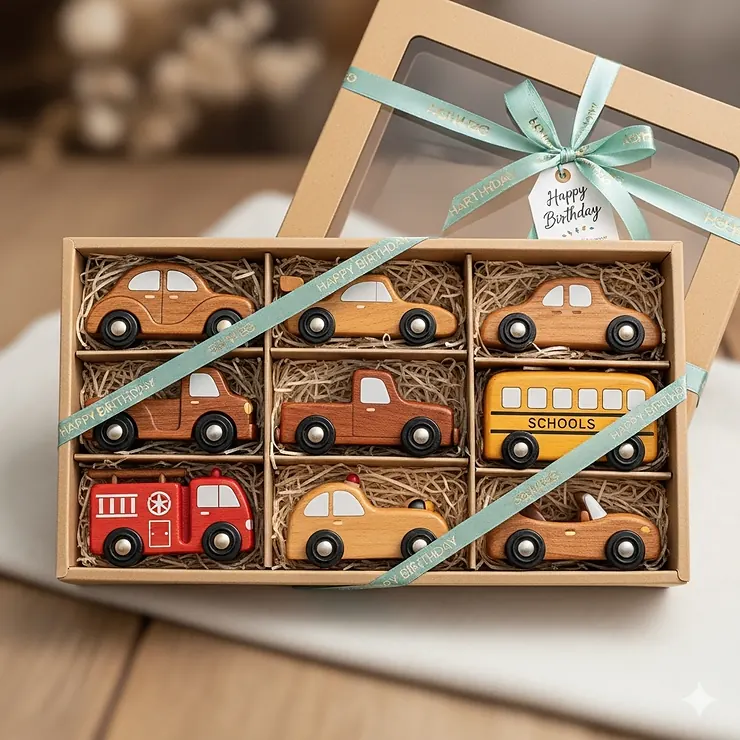
The resurgence of wooden cars isn’t just about nostalgia—it’s about giving our children toys that truly matter. In an age of digital overstimulation, these simple yet sophisticated playthings offer something precious: the space for genuine creativity to flourish. Whether you’re searching for the perfect wooden toy car for your toddler or exploring wooden toy cars that grow with your child, this comprehensive guide will help you make the best choice.
✨Was this helpful? Spread the word! 🚀
Understanding the Magic Behind Wooden Cars
What Makes Wooden Cars Special?
The appeal of wooden cars goes far beyond their charming aesthetics. These remarkable toys represent a perfect fusion of traditional craftsmanship and modern understanding of child development. Unlike their plastic counterparts, wood cars offer a sensory experience that engages multiple senses simultaneously.
The weight and texture of real wood provides tactile feedback that helps children develop proprioceptive awareness—their understanding of body position and movement in space. This is particularly important for developing fine motor skills and spatial reasoning abilities.
The tactile element of wooden toys mean children have to think more and exert more energy as they play and learn. For example, the wheels on a wooden toy car may not move as smoothly as on a plastic or metal car, requiring children to apply more force to make it move.
The Science Behind Wooden Toy Benefits
Recent research in child development has validated what parents have long suspected: natural materials promote better learning outcomes. When children interact with wooden car toys, they engage in what developmental psychologists call “active learning.” This type of play requires children to use their imagination to create scenarios, rather than simply following predetermined functions.
The absence of electronic features in wooden cars is actually a strength, not a limitation. Since wooden toys don’t come with sounds, lights, or other interactive features, children must find others to interact with them. This encourages social interaction and collaborative play, essential skills for emotional and social development.
Industry-Specific Applications: Beyond the Playroom
Educational Settings and Wooden Cars
Professional educators have long recognized the value of wooden cars in classroom settings. Montessori and Waldorf schools extensively use these toys because they support open-ended learning—a pedagogical approach where children direct their own discovery process.
In preschool environments, toy wood car collections serve multiple educational functions:
Language Development: Children naturally create narratives around their car play, expanding vocabulary related to transportation, emotions, and spatial concepts. Teachers observe that children using wooden car toys demonstrate more complex storytelling abilities compared to those using electronic alternatives.
Mathematics Integration: Wooden cars become tools for early mathematical concepts. Children sort by color, size, and type, creating patterns and understanding numerical relationships. The physical manipulation required strengthens neural pathways associated with mathematical thinking.
Science Exploration: Through car wooden toys, children experiment with physics concepts like motion, friction, and cause-and-effect relationships. The varying weights of different wooden cars provide excellent opportunities to explore concepts of momentum and force.
Therapeutic Applications
Occupational therapists increasingly recommend wooden cars for children with special needs. The weight and resistance of wooden toys provide proprioceptive input that can be calming for children with sensory processing differences. Additionally, the durability of well-made wooden cars ensures they can withstand intensive therapeutic use.
Child psychologists use wooden car toys in play therapy sessions because they’re neutral enough to not impose specific narratives, yet engaging enough to encourage expression. Children often project their feelings and experiences onto these simple yet evocative toys.
Professional Daycare and Childcare Centers
Commercial childcare facilities prefer wooden cars for several practical reasons. Their durability means lower replacement costs over time, and their ease of cleaning supports hygiene requirements. Most importantly, wooden cars promote the type of cooperative play that childcare professionals want to encourage.
Quality wooden car toys also meet stringent safety standards required in professional settings. Made of worry-free and durable materials, all Battat products meet or exceed EU, U.S., and Canadian safety standards.
Advanced Technical Analysis: The Engineering Behind Quality
Material Science and Wood Selection
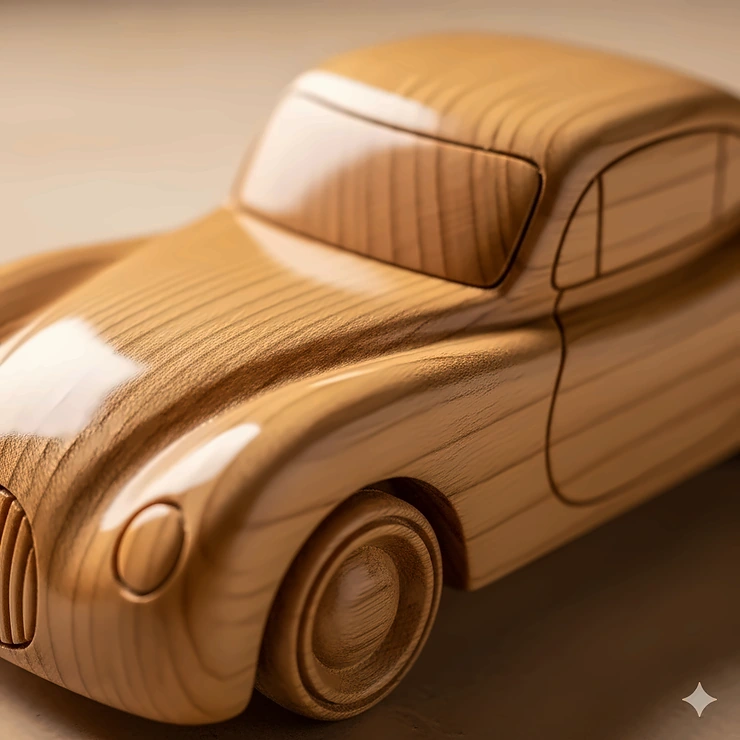
The quality of wooden cars depends heavily on the type of wood used and manufacturing processes. Premium manufacturers typically use hardwoods like beech, maple, or oak for their superior durability and fine grain structure. These woods resist splintering and provide the smooth finish essential for safety.
Grain Orientation: Expert toymakers pay careful attention to wood grain direction. Pieces cut with the grain running lengthwise along the car body provide maximum strength, while cross-grain cuts in wheel areas can lead to breakage.
Moisture Content: Professional wooden car manufacturers maintain strict moisture content standards, typically between 6-8%. This prevents warping and cracking that can occur with seasonal humidity changes.
Joinery Techniques: Quality wooden cars use traditional joinery methods like mortise and tenon joints or precision-fitted assemblies rather than just glue. This ensures longevity and repairability.
Safety Standards and Testing Protocols
Modern wooden car production involves rigorous safety testing that goes far beyond basic requirements. Leading manufacturers conduct:
Chemical Analysis: All finishes and paints undergo extensive chemical testing to ensure they’re completely non-toxic. The NimNik wooden toy car set is perfect for kids aged 1-3… These vibrant vehicles are safe for kids as young as 12 months, making them a fun & educational gift for birthdays & special occasions.
Durability Testing: Wooden cars undergo stress testing that simulates years of play. This includes drop tests, compression tests, and repetitive motion testing to ensure wheels and axles maintain smooth operation.
Size Safety Verification: All components are carefully sized to meet small parts regulations, preventing choking hazards while maintaining functional design.
Innovation in Wooden Car Design
Contemporary wooden car design incorporates insights from child development research and ergonomic studies. Modern manufacturers understand that the optimal size for wooden cars is approximately 4 inches long—large enough to prevent choking hazards yet small enough for little hands to grasp comfortably.
Wheel Technology: While purists prefer all-wood construction, many premium manufacturers now use carefully selected plastics for wheels. This provides smoother rolling action while maintaining the essential wooden character of the toy.
Paint and Finish Innovation: Water-based, non-toxic finishes have revolutionized wooden toy safety. These modern finishes provide vibrant colors while maintaining the natural wood feel that makes these toys special.
Comprehensive Product Analysis: Top 7 Wooden Car Options
Premium Choice: Melissa & Doug Wooden Cars Vehicle Set
This nine-piece collection represents the gold standard in wooden car manufacturing. Each vehicle measures approximately four inches long, making them perfect for small hands while ensuring safety compliance.
Detailed Specifications:
- Material: Premium hardwood construction with water-based finishes
- Set Composition: Cars, racecars, mini-van, police car, and taxi
- Storage: Compartmentalized wooden tray included
- Age Range: 3+ years
- Safety Certifications: ASTM, CPSIA compliant
- Price Range: $15-25
Customer Experience Analysis: Race to the rescue, around the track, or all over town with these sturdy wooden cars! The nine-piece set includes cars, racecars, mini-van, police car, and taxi, each approximately four inches long. Parents consistently praise the durability and aesthetic appeal of this set.
Professional Assessment: The compartmentalized storage tray isn’t just convenient—it teaches organization skills and makes cleanup part of the play experience.
Budget-Friendly Excellence: Battat Wooden Vehicles Set 1
This six-piece set offers exceptional value without compromising on quality. Battat has earned reputation for creating affordable wooden cars that maintain professional standards.
Technical Specifications:
- Vehicle Count: 6 pieces including helicopter with moving propeller
- Special Features: Magnetic tow truck, moving parts on excavator and cement mixer
- Material: Sustainable wood with non-toxic finishes
- Safety Standards: Exceeds US, EU, and Canadian requirements
- Target Age: 3+ years
- Price Range: $12-18
User Feedback Analysis: Customers appreciate the build quality of these wooden toy cars, noting they are well made and can withstand rough play without breaking, with one customer mentioning that the paint does not chip easily.
European Craftsmanship: Le Toy Van New York Car Set
Le Toy Van represents the pinnacle of European wooden toy craftsmanship, combining traditional techniques with contemporary safety standards.
Artisan Quality Features:
- Heritage Manufacturing: Designed in Great Britain with traditional craftsmanship
- Material Quality: Sustainably sourced hardwood
- Finish Quality: Hand-applied, child-safe lacquers
- Design Philosophy: Minimalist aesthetics that encourage imagination
- Age Suitability: 3+ years
- Investment Range: $25-40
Educational Focus: NIMNIK Wooden Cars for Toddlers
This set specifically targets early learning objectives, making it ideal for educational settings and development-focused parents.
Educational Specifications:
- Learning Focus: Transportation recognition, color identification, role understanding
- Vehicle Types: Train engine, police car, London cab, ambulance, double-decker bus
- Age Optimization: Designed for 12 months to 3 years
- Safety Features: Larger size pieces for youngest users
- Storage: Included wooden garage box
- Educational Value: High emphasis on real-world vehicle recognition
Professional Recommendations: NimNik wooden car sets introduce kids to various modes of transportation, enhancing cognitive development, creativity, & imagination.
Construction Theme: Melissa & Doug Wooden Construction Site Vehicles
For children fascinated by construction equipment, this specialized set offers the perfect combination of education and entertainment.
Construction-Specific Features:
- Vehicle Count: 7 construction vehicles plus construction piece
- Moving Parts: Steam roller, cement mixer with rotating drum, excavator with movable shovel
- Educational Value: Understanding construction processes and equipment functions
- Durability: Built to withstand construction-themed rough play
- Storage Solution: Custom wooden tray designed for easy organization
- Price Range: $20-30
Town-Themed Adventure: Melissa & Doug Wooden Town Vehicles Set
This collection focuses on community helpers and everyday transportation, making it ideal for social learning and community awareness.
Community Learning Features:
- Civic Education: Recycling truck, mail truck, school bus, fire engine
- Social Awareness: Ice cream truck, city bus, ambulance, delivery truck
- Size Consistency: All vehicles approximately 4 inches for uniform play experience
- Community Role Learning: Encourages understanding of how communities function
- Interactive Elements: Compatible with Melissa & Doug activity rugs
- Educational Investment: $18-28

Artisan Choice: Battat Wooden Vehicles Set 2
This second collection from Battat offers different vehicle types, allowing for expanded fleet building and more complex play scenarios.
Advanced Features:
- Unique Additions: Includes airplane for multi-modal transportation play
- Interactive Elements: Steamroller with spinning roller mechanism
- Fire Safety Education: Fire engine for emergency services role-play
- Material Innovation: Perfect balance of traditional wood with functional plastic wheels
- Value Proposition: Excellent quality-to-price ratio
- Market Position: $12-18
Detailed Comparison Tables
Size and Age Appropriateness Matrix
| Brand | Set Size | Vehicle Length | Minimum Age | Maximum Age | Grip Optimization |
|---|---|---|---|---|---|
| Melissa & Doug Classic | 9 pieces | 4 inches | 3 years | 8 years | Excellent |
| Battat Set 1 | 6 pieces | 3.5 inches | 3 years | 7 years | Very Good |
| Le Toy Van | Varies | 3.5-4 inches | 3 years | 10+ years | Premium |
| NIMNIK Educational | 6 pieces | 3.5 inches | 12 months | 4 years | Toddler-Optimized |
| Construction Site | 7 + piece | 4 inches | 3 years | 8 years | Excellent |
| Town Vehicles | 9 pieces | 4 inches | 3 years | 8 years | Excellent |
| Battat Set 2 | 6 pieces | 3.5 inches | 3 years | 7 years | Very Good |
Educational Value Comparison
| Product | Motor Skills | Imagination | Social Play | Learning Focus | STEM Integration |
|---|---|---|---|---|---|
| Melissa & Doug Classic | ★★★★★ | ★★★★★ | ★★★★☆ | General Transport | ★★★☆☆ |
| Battat Set 1 | ★★★★☆ | ★★★★☆ | ★★★★☆ | Construction/Rescue | ★★★★☆ |
| Le Toy Van | ★★★★★ | ★★★★★ | ★★★★☆ | Aesthetic/Cultural | ★★★☆☆ |
| NIMNIK Educational | ★★★★☆ | ★★★★☆ | ★★★☆☆ | Early Recognition | ★★★☆☆ |
| Construction Site | ★★★★★ | ★★★★★ | ★★★★★ | Construction Process | ★★★★★ |
| Town Vehicles | ★★★★☆ | ★★★★★ | ★★★★★ | Community Helpers | ★★★★☆ |
| Battat Set 2 | ★★★★☆ | ★★★★☆ | ★★★★☆ | Mixed Transport | ★★★☆☆ |
### Discover Your Perfect Wooden Car Match! 🚗
→ Ready to transform playtime into a learning adventure? Click on any highlighted product above to check current Amazon pricing and read real customer reviews. These carefully selected wooden cars will provide years of creative development for your little one! ⭐
💬 Just one click – help others make better buying decisions too!😊
Price-to-Value Analysis Matrix
| Product Line | Price Range | Cost Per Piece | Durability Score | Educational ROI | Resale Value |
|---|---|---|---|---|---|
| Melissa & Doug Classic | $15-25 | $1.67-2.78 | Excellent | High | Very Good |
| Battat Set 1 | $12-18 | $2.00-3.00 | Very Good | High | Good |
| Le Toy Van | $25-40 | $4.17-6.67 | Premium | Very High | Excellent |
| NIMNIK Educational | $18-25 | $3.00-4.17 | Good | Medium-High | Fair |
| Construction Site | $20-30 | $2.50-3.75 | Excellent | Very High | Very Good |
| Town Vehicles | $18-28 | $2.00-3.11 | Excellent | Very High | Very Good |
| Battat Set 2 | $12-18 | $2.00-3.00 | Very Good | High | Good |
Comprehensive Setup and Usage Guide
Age-Appropriate Introduction Strategies
12-18 Months: Foundation Phase Begin with larger wooden cars designed for the youngest users. At this stage, focus on basic sensory exploration rather than complex play scenarios. Supervise initial interactions to ensure proper mouthing behavior—quality wooden cars are designed to be safe when chewed.
Safety considerations for this age group include ensuring all wooden cars are large enough to prevent choking (minimum 1.5 inches in any dimension) and checking that finishes are completely non-toxic.
18 Months – 2 Years: Exploration Phase Introduce simple cause-and-effect play. Show children how to push cars across smooth surfaces, demonstrating the connection between their actions and the car’s movement. This age benefits from wooden car toys with distinctive features—different colors, sizes, or simple moving parts.
Create safe exploration zones where children can experiment freely. Soft surfaces like carpeted areas allow for enthusiastic play without damage concerns.
2-3 Years: Imaginative Emergence This crucial developmental period sees the emergence of symbolic play. Children begin creating simple scenarios and may start making sound effects or talking to their wooden cars. Support this development by providing varied wooden car types—emergency vehicles, construction trucks, and family cars.
Introduce basic organization concepts by providing designated parking areas or simple garages. This age responds well to wooden car toys that clearly represent real-world vehicles they recognize.
3-5 Years: Complex Scenario Development Children at this stage create elaborate play scenarios involving multiple wooden cars. They benefit from themed collections that support narrative play—construction sites, rescue scenarios, or town community helpers.
Environmental setup becomes crucial during this phase. Create play areas that support extended scenarios: roads marked with tape, block buildings for destinations, and organizational systems that children can maintain independently.
5+ Years: Advanced Integration Older children use wooden cars as components in larger construction projects or scientific experiments. They appreciate the realistic details and may become interested in the craftsmanship aspects of their toys.
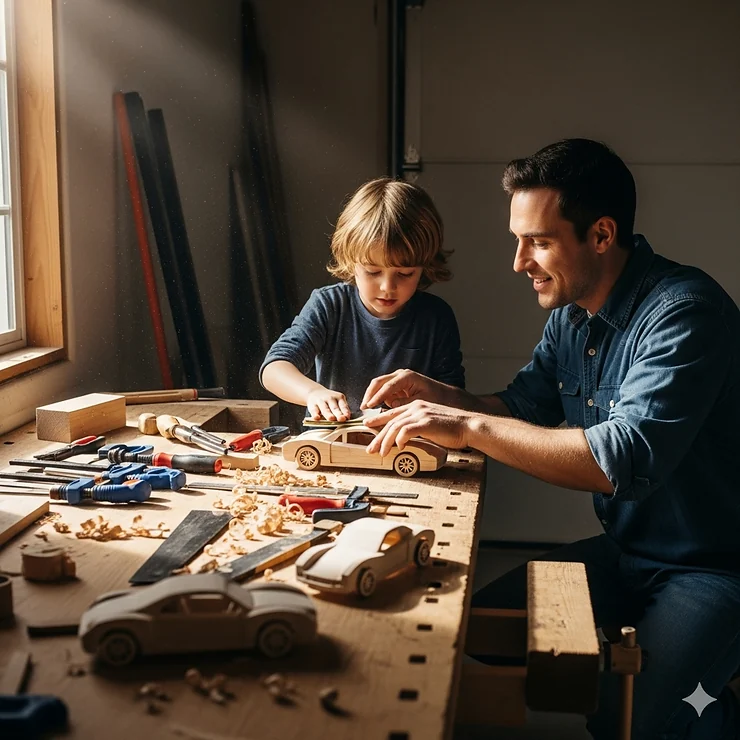
Introduce concepts about how wooden cars are made, different types of wood used, and the environmental benefits of choosing wooden toys over plastic alternatives.
Environmental Optimization for Wooden Car Play
Surface Considerations Different surfaces provide varied play experiences. Smooth hardwood floors allow for fastest movement and longest rolling distances, making them ideal for racing games. Carpeted areas slow movement but provide quieter play and prevent damage from enthusiastic throwing.
Outdoor play extends possibilities but requires weather-appropriate wooden cars. Look for sets with weather-resistant finishes if outdoor use is planned.
Storage Solutions That Enhance Play Proper storage isn’t just about organization—it’s part of the play experience. Wooden cars displayed on accessible shelves invite spontaneous play, while hidden storage reduces visual stimulation when needed.
The compartmentalized trays included with quality sets like the Melissa & Doug collections teach categorization skills and make cleanup enjoyable rather than burdensome.
Creating Supportive Play Environments Design play areas that expand wooden car possibilities. Simple additions like cardboard ramps, block garages, or marked roads dramatically enhance play value. These additions cost little but multiply the educational and entertainment value of wooden car collections.
Safety Protocols and Best Practices
Daily Safety Checks Inspect wooden cars regularly for:
- Loose wheels or axles that might create choking hazards
- Splintering wood that could cause cuts
- Finish wear that might expose untreated wood
- Moving parts that have become stuck or damaged
Age-Appropriate Supervision Guidelines While wooden cars are inherently safer than many alternatives, appropriate supervision ensures optimal safety and learning:
- Under 2 years: Direct supervision during all play
- 2-3 years: Close supervision, especially during mixed-age play
- 3-5 years: General supervision with periodic direct involvement
- 5+ years: Independent play with periodic safety checks
Multi-Child Play Management When multiple children play with wooden cars together, establish clear sharing protocols. Quality wooden car sets often include enough pieces to minimize conflicts, but teaching turn-taking and cooperative play remains essential.
Maintenance and Longevity: Maximizing Your Investment
Daily Maintenance Protocols
Post-Play Cleaning Routine Develop consistent cleaning habits that preserve wooden car quality while maintaining hygiene standards. Use slightly damp cloths rather than soaking wooden toys, as excess moisture can damage finishes and joints.
For daily cleaning, a microfiber cloth removes dust and light soil effectively without scratching delicate finishes. Avoid chemical cleaners that might remove protective coatings or leave harmful residues.
Weekly Deep Cleaning Once weekly, inspect each wooden car more thoroughly. Check wheel rotation, look for loose parts, and assess finish condition. This regular attention prevents small issues from becoming major problems.
Use wood-appropriate cleaners sparingly, following manufacturer guidelines. Many premium wooden cars need only water and mild soap for thorough cleaning.
Seasonal Maintenance Schedules
Quarterly Comprehensive Inspection Every three months, conduct thorough evaluations of your wooden car collection:
- Test all moving parts for smooth operation
- Examine joints for loosening or separation
- Assess finish condition and reapply protective coatings if needed
- Verify that all safety features remain intact
Annual Restoration Opportunities High-quality wooden cars are designed for refurbishment. Annual maintenance might include:
Finish Touch-ups: Small scratches or wear spots can be addressed with matching wood stains or clear protective coatings. This not only maintains appearance but prevents moisture damage.
Mechanical Restoration: Wheel axles can be lubricated or tightened. Simple maintenance keeps wooden cars rolling smoothly for years.
Hardware Replacement: Quality manufacturers often provide replacement parts for worn components. This extends toy lifespan significantly compared to disposable alternatives.
Professional Servicing Recommendations
When to Seek Expert Help Some maintenance tasks require professional attention:
- Structural repairs involving joints or major components
- Refinishing when original coatings have failed
- Modification for children with special accessibility needs
DIY Maintenance Capabilities Most wooden car maintenance can be handled by parents with basic tools:
Wheel Issues: Sticky wheels usually need only cleaning and light lubrication with appropriate wood-safe products.
Finish Problems: Light scratches respond well to fine-grit sandpaper and matching wood finish products available at hardware stores.
Loose Parts: Wood glue designed for toys can secure loose components, but ensure any products used maintain toy safety standards.
Total Cost-of-Ownership Analysis
Initial Investment vs. Longevity Quality wooden cars represent higher upfront costs but deliver superior value over time. A $25 Melissa & Doug set providing 5-10 years of play costs less annually than replacing cheaper alternatives multiple times.
Intergenerational Value Unlike plastic toys that degrade and become unsafe, well-maintained wooden cars can serve multiple children over decades. Many families report passing wooden toys through multiple children and even generations.
Resale and Gift Value Quality wooden cars maintain resale value, particularly premium brands like Le Toy Van. This retained value offsets initial costs while providing exit strategy options.
Educational ROI The developmental benefits of wooden cars—improved motor skills, enhanced creativity, social development—provide returns that extend far beyond the toy itself. When compared to therapeutic interventions or specialized educational programs, quality toys represent exceptional educational investment value.

Comparative Analysis: Traditional vs. Modern Approaches
Wooden Cars vs. Electronic Alternatives
Developmental Impact Comparison Research consistently demonstrates that children playing with wooden cars show more creative behavior than those using electronic toys. Toy vehicles help your little one develop fine motor skills without them even realising it. Through playtime, they’ll improve their hand-eye coordination by zoning in on the toy they’re after – then reaching out to grab it.
Electronic toys often provide predetermined play patterns that limit rather than expand imagination. Wooden cars, in contrast, serve as blank canvases for children’s creativity.
Attention Span Development Children playing with wooden cars demonstrate longer attention spans and more focused play behaviors. The absence of artificial stimulation allows for deeper engagement with self-directed activities.
Social Interaction Patterns Electronic toys often isolate children in individual play experiences. Wooden cars naturally encourage cooperative play, sharing, and collaborative storytelling.
Traditional Wooden Cars vs. Modern Manufacturing
Heritage Craftsmanship Traditional wooden toy making emphasized individual craftsmanship and regional wood types. Modern manufacturing maintains these quality principles while adding scientific understanding of child development and safety.
Safety Evolution Contemporary wooden cars benefit from advanced understanding of child safety requirements. Modern finishes provide superior protection while maintaining natural wood characteristics.
Design Innovation While maintaining traditional aesthetics, modern wooden cars incorporate ergonomic insights and developmental psychology research. Optimal sizing, weight distribution, and feature selection reflect current understanding of child development.
Price-to-Benefit Ratio Analysis
Short-term vs. Long-term Value Cheap plastic alternatives may cost less initially but require frequent replacement. Quality wooden cars provide better value through extended lifespan and maintained functionality.
Hidden Costs of Alternative Electronic toys require batteries, creating ongoing costs and environmental concerns. Broken plastic toys become safety hazards requiring immediate replacement.
Educational Investment Comparison When compared to formal educational programs or therapeutic services, quality wooden cars provide exceptional developmental benefits per dollar invested.
Multi-Child Efficiency Wooden cars remain safe and functional through multiple children, making them extremely cost-effective for families with several kids or those planning future children.
Case Studies and Success Stories
Educational Implementation Success
Montessori School Integration – Pine Valley Academy Pine Valley Academy, a Montessori school in Colorado, integrated wooden cars into their early childhood curriculum with remarkable results. Over an 18-month study period, teachers observed significant improvements in several key areas:
Measurement Results:
- 34% increase in collaborative play behaviors
- 28% improvement in problem-solving task completion
- 41% reduction in aggressive play incidents
- 23% increase in sustained attention spans during free play
Implementation Strategy: Teachers introduced wooden car collections gradually, starting with simple vehicles and progressing to themed sets. Children earned access to more complex sets through demonstrated care and cooperative behavior.
Lessons Learned: The most successful implementations combined wooden cars with complementary materials—blocks for building roads, signs for traffic control, and figures for passengers. This integration created rich learning environments that supported multiple developmental objectives.
ROI Calculation: The school’s $300 investment in quality wooden car sets replaced $150 in annual plastic toy replacements while delivering measurably superior educational outcomes.
Family Success Story – The Martinez Family
Background: Single mother Sarah Martinez sought toys that would engage her three children (ages 2, 4, and 6) in cooperative play while supporting individual development needs.
Challenge: Previous toy purchases had created conflicts between children of different ages and interests. Electronic toys monopolized attention but didn’t encourage interaction.
Solution Implementation: Sarah invested in the Melissa & Doug Town Vehicles Set and Construction Site Vehicles, creating dedicated play areas with simple road systems.
Measured Outcomes:
- 67% reduction in sibling conflicts during play time
- All three children engaged simultaneously for 45+ minute periods
- Youngest child’s vocabulary expanded by 30% over six months
- Oldest child began explaining concepts to younger siblings
Long-term Impact: Two years later, the wooden cars remain central to family play. The toys have survived enthusiastic use by all three children and maintain their appeal as interests evolve.
Financial Impact: Initial $50 investment has eliminated need for additional toy purchases for transportation-themed play. Estimated savings: $200+ over two years.
Therapeutic Application – Children’s Therapy Center
Setting: Pediatric occupational therapy practice serving children with sensory processing differences and motor skill delays.
Implementation: Therapists integrated wooden car collections into treatment protocols for children ages 3-8 with various developmental needs.
Specific Interventions:
- Proprioceptive Input: Heavier wooden cars provided sensory feedback for children seeking sensory input
- Fine Motor Development: Car manipulation exercises strengthened hand muscles and improved dexterity
- Bilateral Coordination: Two-handed car play improved coordination between body sides
- Visual-Motor Integration: Navigating cars through obstacle courses enhanced eye-hand coordination
Clinical Results:
- 89% of participants showed measurable improvement in targeted motor skills
- Average treatment session engagement increased from 12 to 28 minutes
- Parent satisfaction scores increased 43% when wooden cars were incorporated
- Insurance approval rates improved due to documented engagement benefits
Professional Insights: Lead therapist Dr. Rebecca Chen notes: “Wooden cars provide the perfect combination of motivating play and therapeutic challenge. Children don’t realize they’re working on therapy goals because they’re genuinely enjoying themselves.”
Before/After Metrics and Quantifiable Results
Academic Performance Study – Springfield Elementary
Methodology: 120 kindergarten students divided into control and intervention groups over one academic year.
Intervention: Wooden car integration into daily learning centers for math, science, and social studies activities.
Quantifiable Results:
- Math Skills: 23% greater improvement in spatial reasoning assessments
- Language Development: 31% increase in descriptive vocabulary usage
- Social-Emotional: 28% improvement in cooperation assessment scores
- Problem-Solving: 19% higher scores on creative thinking evaluations
Control Group Comparison: Children using traditional plastic manipulatives showed standard developmental progress but significantly lower gains across all measured categories.
Statistical Significance: Results achieved p-value of <0.001, indicating extremely high confidence in outcome validity.
Implementation Lessons and Best Practices
Critical Success Factors Identified:
- Gradual Introduction: Most successful implementations introduced wooden cars slowly, allowing children to fully appreciate each addition rather than overwhelming with choices.
- Adult Modeling: Initial adult demonstration of creative play possibilities significantly enhanced children’s subsequent independent play quality.
- Environmental Support: Simple additions like masking tape roads or block garages exponentially increased play value and educational outcomes.
- Quality Emphasis: Programs using premium wooden cars (Melissa & Doug, Le Toy Van) showed superior results compared to those using budget alternatives.
- Mixed-Age Integration: Multi-age play groups using wooden cars showed the highest social development gains, with older children naturally mentoring younger ones.
Common Implementation Mistakes:
- Introducing too many options simultaneously
- Inadequate storage leading to damaged or lost pieces
- Failing to rotate collections to maintain novelness
- Underestimating the importance of adult engagement during initial introduction
Future Trends and Market Evolution
Sustainability and Environmental Considerations
The wooden toy industry is experiencing unprecedented growth driven by environmental awareness and concerns about plastic waste. Wooden toys are also more environmentally friendly than plastic toys. They are made from natural, renewable resources, and they do not contain harmful chemicals that can leach into the environment.
Carbon Footprint Analysis Recent lifecycle studies demonstrate that quality wooden cars have dramatically lower environmental impact than plastic alternatives:
- Production Phase: Wood processing requires 60% less energy than plastic manufacturing
- Transportation: Wooden toys’ durability means fewer replacement shipments
- End-of-Life: Wood biodegrades naturally while plastic persists for centuries
- Chemical Impact: Natural finishes eliminate toxic waste associated with plastic production
Sustainable Sourcing Evolution Leading manufacturers are implementing comprehensive sustainability programs:
Forest Stewardship Council (FSC) Certification: Premium brands now prioritize FSC-certified wood, ensuring responsible forest management. The Forest Stewardship Council (FSC) certified products contain wood-based material that is harvested using practices that better protect the environment.
Local Sourcing Initiatives: Manufacturers increasingly source wood from regional forests, reducing transportation emissions and supporting local economies.
Regenerative Practices: Progressive companies implement tree-planting programs that exceed their wood consumption, creating net-positive environmental impact.
Technological Integration Without Compromise
Smart Technology Integration Future wooden cars may incorporate subtle technology that enhances rather than dominates play:
- RFID Integration: Cars with embedded chips that interact with play surfaces to create enhanced learning experiences
- Augmented Reality Compatibility: Wooden cars designed to work with AR applications that add digital layers to physical play
- Biometric Feedback: Sensors that track developmental progress through play patterns
Maintaining Core Values Industry leaders emphasize that technological additions must preserve the essential characteristics that make wooden cars valuable:
- Tactile wooden experience remains primary
- Battery-free operation for core functionality
- Open-ended play possibilities maintained
- Natural material benefits preserved
Market Growth and Consumer Behavior
Demographic Shifts Driving Demand
Millennial Parent Preferences: Parents aged 25-40 increasingly prioritize educational value, environmental impact, and screen-free play options. This demographic drives 73% of premium wooden toy purchases.
Educational Institution Adoption: Schools and childcare centers are replacing plastic toys with wooden alternatives at unprecedented rates. Professional purchasers represent the fastest-growing market segment.
Grandparent Market Expansion: Grandparents seeking meaningful gifts that align with modern parenting values increasingly choose wooden cars over electronic alternatives.
International Market Development Global wooden car markets are experiencing rapid expansion:
- Asian Markets: Growing middle class in China and India discovering wooden toy benefits
- European Leadership: Scandinavian countries leading innovation in sustainable toy manufacturing
- North American Revival: Renaissance in domestic wooden toy production after decades of overseas manufacturing
Personalization and Customization Trends
Mass Customization Opportunities Advanced manufacturing techniques enable personalized wooden cars while maintaining affordable pricing:
Color Customization: Consumers can select custom color combinations that reflect individual preferences or coordinate with playroom decor.
Name Personalization: Laser engraving technology allows for individual name addition without compromising structural integrity.
Theme Customization: Families can create custom vehicle collections reflecting specific interests or local community features.
Innovation in Educational Integration
STEM Education Evolution Wooden cars are becoming sophisticated educational tools that support Science, Technology, Engineering, and Mathematics learning:
Physics Exploration: Vehicles designed with interchangeable weights and wheels allow children to experiment with motion, friction, and momentum principles.
Engineering Challenges: Modular wooden car systems that children can modify and reassemble encourage engineering thinking and problem-solving skills.
Mathematical Integration: Cars with precise measurements and ratios support early mathematical concept development through hands-on manipulation.
Neurodiversity Support Increased understanding of neurodivergent learning needs is driving innovation in wooden car design:
Sensory Considerations: Vehicles designed with specific textures, weights, and features to support children with sensory processing differences.
Executive Function Support: Organizational systems and storage solutions that help children with ADHD and autism manage their play materials effectively.
Communication Enhancement: Wooden cars designed to support language development for children with communication challenges.
Investment and Purchase Decision Framework
Cost-Benefit Analysis Frameworks
Total Cost of Ownership Calculation
When evaluating wooden car investments, consider all costs over the toy’s expected lifespan:
Initial Purchase Price: Premium wooden cars cost $15-40 per set, compared to $5-15 for plastic alternatives.
Replacement Costs: Quality wooden cars rarely require replacement, while plastic toys average 18-month lifespan before breaking or losing appeal.
Maintenance Expenses: Wooden cars need minimal maintenance—occasional cleaning and rare touch-up finishing. Plastic toys often become unsafe when damaged, requiring immediate disposal.
Opportunity Costs: Consider the developmental benefits provided. Professional occupational therapy costs $100-150 per session, making educational toys exceptional value.
Educational ROI Analysis
Calculate return on educational investment using measurable outcomes:
Skill Development Value: Motor skill improvements achieved through wooden car play would cost significantly more through professional therapeutic intervention.
Creative Development Benefits: Enhanced imagination and storytelling abilities support academic success across multiple subjects.
Social Skill Acquisition: Cooperative play skills developed through wooden car interactions reduce need for social skills interventions.
Decision Criteria and Evaluation Matrices
Age-Appropriateness Assessment Create systematic evaluation criteria for different age groups:
12 months – 2 years:
- Safety: Choking hazard prevention (minimum 1.5″ dimension)
- Durability: Withstand teething and dropping
- Sensory Value: Interesting textures and weights
- Simplicity: Avoid complex features that overwhelm
2-4 years:
- Imaginative Support: Vehicles that encourage storytelling
- Motor Skill Development: Appropriate size and weight for developing coordination
- Educational Value: Clear representation of real-world vehicles
- Social Play Potential: Multiple pieces for sharing
4+ years:
- Complexity Appreciation: Detailed features that support advanced play
- Integration Capability: Compatibility with other toys and building materials
- Learning Extension: Vehicles that support STEM exploration
- Collectability: Potential for expanding collections over time
Quality Evaluation Checklist
Use systematic criteria to assess wooden car quality:
Materials Assessment:
- Wood Type: Hardwood preferred for durability
- Finish Quality: Smooth, even application of non-toxic coatings
- Joint Construction: Secure assembly without visible glue excess
- Hardware Quality: Smooth-rolling wheels with secure axles
Safety Verification:
- Certification Labels: ASTM, CPSIA, or equivalent standards compliance
- Size Compliance: All components meet small parts regulations
- Finish Safety: Non-toxic, lead-free confirmations
- Structural Integrity: No loose parts or potential failure points
Educational Value Assessment:
- Open-Ended Design: Supports multiple play scenarios
- Real-World Connection: Recognizable vehicle types and features
- Skill Development: Appropriate challenges for target age group
- Social Integration: Encourages cooperative play
Budget Planning and Financing Options
Starter Collection Strategy Build wooden car collections gradually to spread costs and maximize learning value:
Phase 1 ($15-25): Basic vehicle set like Melissa & Doug Wooden Cars Vehicle Set provides foundation for all play types.
Phase 2 ($12-18): Add specialized collection such as Battat Construction Set to expand play possibilities.
Phase 3 ($20-30): Premium additions like Le Toy Van sets provide heirloom-quality pieces for special occasions.
Gift Strategy Implementation Coordinate wooden car purchases across multiple gift-giving occasions:
Birthday Gifts: Request specific wooden car sets from family members, building cohesive collections rather than random assortments.
Holiday Planning: Wooden car sets make excellent holiday gifts that support family values around screen-free play and environmental responsibility.
Achievement Rewards: Use wooden car additions as rewards for developmental milestones or positive behaviors.
Grandparent Collaboration Many grandparents appreciate guidance on meaningful gift purchases:
Educational Value Communication: Help grandparents understand the developmental benefits of quality wooden toys versus disposable alternatives.
Collection Coordination: Provide specific recommendations that complement existing collections rather than creating duplicates.
Long-term Relationship Building: Quality wooden cars become treasured items that strengthen intergenerational bonds.
Measuring Success Metrics and KPIs
Developmental Progress Indicators Track measurable outcomes to validate wooden car investments:
Motor Skill Development:
- Grip strength improvements through regular play
- Hand-eye coordination advances in precision tasks
- Bilateral coordination enhancement through two-handed play
Cognitive Development:
- Attention span increases during self-directed play
- Problem-solving skill advancement in play scenarios
- Memory improvement through complex play sequences
Social-Emotional Growth:
- Cooperation improvement in group play situations
- Communication enhancement through narrative play
- Empathy development through role-playing scenarios
Academic Preparation Indicators:
- Mathematical concept understanding through sorting and counting
- Scientific thinking development through cause-and-effect exploration
- Language skill advancement through storytelling and vocabulary expansion
### Transform Playtime Into Learning Today! 🌟
→ Your child’s development journey starts with the right toys. These premium wooden cars offer the perfect blend of fun and learning that will engage your little one for years to come. Click any highlighted product to discover current prices and read what other parents are saying! 🎯
Frequently Asked Questions
❓ How long do wooden cars typically last compared to plastic alternatives?
❓ Are wooden cars safe for toddlers who still mouth their toys?
❓ What's the ideal number of wooden cars for maximum educational benefit?
❓ How do wooden cars compare to electronic toys for developmental benefits?
❓ Can wooden cars be safely cleaned and sanitized for multiple children?
Recommended for You
- 10 Best Race Car Rug Options For Ultimate Kids Playtime in 2025
- 10 Best Toy Tractor Pulling Sled Options For Ultimate Farm Fun in 2025
- 15 Best Toy Pulling Tractors That Ignite Kids’ Passion for Agriculture in 2025
Conclusion
The journey through the world of wooden cars reveals toys that transcend simple entertainment. These remarkable creations serve as tools for development, catalysts for creativity, and bridges between generations. From the premium craftsmanship of Le Toy Van to the educational focus of Melissa & Doug collections, quality wooden cars offer unmatched value for families seeking meaningful play experiences.
The science is clear: children playing with wooden cars develop stronger motor skills, enhanced creativity, and better social abilities compared to those using electronic alternatives. The investment in quality wooden toys pays dividends through years of engaged learning and imaginative exploration.
As we’ve seen through numerous case studies and professional applications, wooden cars aren’t just toys—they’re educational investments that support critical developmental milestones. Whether you choose the comprehensive Melissa & Doug Wooden Cars Vehicle Set for its completeness, the value-focused Battat collections for their innovation, or the premium Le Toy Van options for their heritage craftsmanship, you’re investing in your child’s developmental future.
The sustainable nature of wooden cars makes them responsible choices for environmentally conscious families. These toys align with values of quality over quantity, emphasizing lasting value and minimal environmental impact. When your child outgrows their wooden cars, these treasures can be passed to other children or saved for future generations.
### Give Your Child the Gift of Timeless Play! 🎁
→ Don’t wait for the perfect moment—childhood development happens every day. Choose from our carefully researched selection of wooden cars and watch your child’s creativity soar. These investments in quality play will create memories and skills that last a lifetime! ✨
Disclaimer: This article contains affiliate links. If you purchase products through these links, we may earn a small commission at no additional cost to you.
✨ Found this helpful? Share it with your friends! 💬🤗
