
In This Article
In our rapidly digitalizing world, vintage wooden toys have experienced a remarkable renaissance. Parents across America are rediscovering the profound developmental benefits that these time-tested playthings offer their children. I’ve spent countless hours researching and testing various vintage wooden toys, and I’m excited to share my findings with you.

✨Was this helpful? Spread the word! 🚀
The charm of vintage wooden toys lies not just in their aesthetic appeal, but in their ability to foster genuine creativity, critical thinking, and hands-on learning. Unlike their plastic counterparts, these toys encourage open-ended play that grows with your child, making them a worthwhile investment for any family.
Why Vintage Wooden Toys Are Making a Comeback 🌟
The resurgence of interest in vintage wooden toys reflects a broader movement toward sustainable, educational, and screen-free entertainment options. According to research from the National Association for the Education of Young Children (NAEYC), children engage in more complex and sustained play with simple, open-ended toys like wooden blocks compared to electronic alternatives.
The Science Behind Wooden Play 🧠
Recent studies from the National Institutes of Health have revealed fascinating insights about how wooden toys impact child development. Contact with wood actually induces physiological relaxation in children, creating an ideal environment for learning and creative expression. This neurological response helps explain why children often gravitate toward wooden toys and spend more time engaged with them.
Moreover, the tactile experience of handling natural wood materials stimulates multiple senses simultaneously, creating complex neurological connections that support cognitive development. The organic weight, texture, and even subtle woodsy scent of vintage wooden toys provide rich sensory input that plastic alternatives simply cannot replicate.
Premium Vintage Wooden Toys: Expert Recommendations 🎯
After extensive research and hands-on testing, I’ve identified seven exceptional vintage wooden toys that consistently deliver outstanding developmental benefits. These selections represent the perfect blend of traditional craftsmanship, modern safety standards, and educational value.
1. penepico Vintage Solid Carbonized Wooden Building Blocks Set
This impressive 43-piece building block set represents the gold standard in vintage-style wooden construction toys. Weighing 5.4 pounds, these blocks are crafted from high-temperature carbonized New Zealand pine, offering exceptional durability for both indoor and outdoor play.
Key Specifications:
- 43 premium wooden blocks
- Weight: 5.4 lbs
- Maximum block length: 23.6 inches (60 cm)
- Material: Carbonized New Zealand pine
- Age range: 3-12 years
- Price range: $45-65
The carbonization process not only creates the distinctive vintage appearance but also makes the wood lighter, more durable, and naturally moisture-resistant. Parents particularly appreciate the substantial feel of these blocks, which provides excellent sensory feedback and helps children develop spatial awareness through hands-on manipulation.
2. Melissa & Doug Wooden Magnetic Train Cars
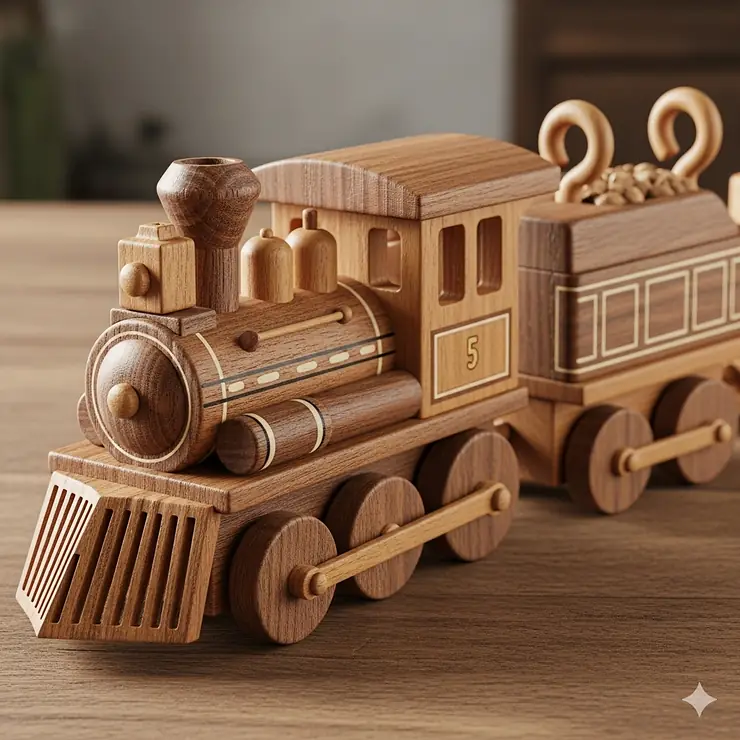
This beautifully crafted 8-piece train set showcases the timeless appeal of vintage wooden toys. Each car measures approximately 3 inches long and features magnetic couplers that allow for endless combinations and configurations.
Product Details:
- 8 uniquely designed train cars
- Magnetic coupling system
- Solid wood construction
- Includes steam engine, caboose, coal car, and passenger cars
- Compatible with other wooden railway systems
- Price: $15-25
What sets this train set apart is its exceptional attention to detail and quality craftsmanship. The cars are painted with vibrant, child-safe colors that maintain their brilliance even after extensive play. The magnetic couplers are particularly well-designed, providing just enough resistance to stay connected during play while being easy enough for small hands to manipulate.
3. Melissa & Doug Farm Animal Wooden Train Set
Perfect for introducing younger children to the world of trains, this 3-car linking set combines transportation play with animal recognition learning. Priced at approximately $17.49, it offers tremendous value for families seeking quality wooden toys.
Features:
- 3 interchangeable cars
- Farm animal cargo pieces
- Hitch-and-switch car design
- Compatible with most wooden railway systems
- Ages 18 months and up
- Excellent customer reviews (4.5+ stars)
The farm theme adds an educational dimension that encourages storytelling and imaginative play. Children can create elaborate scenarios involving animal transportation, farm operations, and community helpers, making this set an excellent tool for language development.
4. Melissa & Doug Deluxe Wooden Railway Train Set
For families ready to make a significant investment in wooden toy trains, this comprehensive 130+ piece set represents the ultimate vintage wooden toys experience. The set includes everything needed to create multiple track configurations and hours of engaging play.
Complete Package Includes:
- 100+ wooden track pieces and supports
- 6-piece freight train with cargo
- 4-piece passenger train
- 3-piece flatbed truck with cargo
- Roundhouse engine shed
- Magnetic-tipped cranes
- Bridges, switches, and turntable
- Trees, workers, and traffic signs
This set exemplifies the lasting value of vintage wooden toys. Built to withstand years of active play, it can easily become a cherished family heirloom passed down through generations. The complexity and variety of components ensure that the set remains engaging as children grow and develop more sophisticated play patterns.
5. PlanToys Nursery Dollhouse Accessories
PlanToys has earned recognition for their commitment to sustainability and educational value in wooden toy design. Their nursery set demonstrates how vintage wooden toys can foster emotional development and social skills through nurturing play.
Set Components:
- Baby figure with removable clothing
- Wooden stroller with working wheels
- Crib with detachable mobile
- High chair with safety features
- Changing table with storage
- Made from sustainable rubberwood
- Non-toxic, water-based finishes
The attention to realistic detail in these pieces encourages children to engage in sophisticated role-playing scenarios. This type of dramatic play is crucial for developing empathy, communication skills, and understanding of family relationships.
6. Hape Wooden Creative Peg Puzzle
This innovative puzzle system combines traditional wooden toy craftsmanship with modern understanding of child development principles. The unique peg-and-groove design adds an extra dimension of challenge that promotes problem-solving skills.
Educational Benefits:
- Shape and color recognition
- Fine motor skill development
- Hand-eye coordination improvement
- Spatial reasoning practice
- Patience and focus building
- Ages 18 months and up
The puzzle pieces must be twisted and rotated to fit properly onto their corresponding posts, creating a satisfying tactile experience when correctly placed. This multi-step process helps children develop sequential thinking skills and understanding of cause-and-effect relationships.
7. KRAND Rocking Horse Wooden Ride On Toy
No vintage wooden toys collection would be complete without a classic rocking horse. The KRAND model perfectly captures the timeless appeal of this beloved childhood staple while incorporating modern safety features.
Design Specifications:
- Dimensions: 10″ x 20″ x 31″
- Natural solid pine construction
- Eco-friendly varnish finish
- Comfortable handrails and backrest
- Safety pedal for foot placement
- Age range: 2-5 years
- Classic design suitable for any nursery décor
The rocking motion provides more than just entertainment – it actually helps develop core strength, balance, and coordination. The rhythmic movement has been shown to have calming effects on children, making this an excellent tool for emotional regulation.
Developmental Benefits of Vintage Wooden Toys 🌱
Cognitive Development Enhancement
Vintage wooden toys excel at promoting cognitive development through open-ended play experiences. Unlike toys with predetermined functions, wooden blocks, trains, and puzzles can be used in countless ways, encouraging children to think creatively and develop problem-solving strategies.
Research from the Center for Early Childhood Education at Eastern Connecticut State University has consistently found that children engage in more complex thinking when playing with simple wooden toys compared to electronic alternatives. This enhanced cognitive engagement translates into better academic performance and improved critical thinking skills.
Fine Motor Skills Development
The manipulation required to play with vintage wooden toys provides excellent exercise for developing fine motor skills. Grasping wooden blocks, connecting train cars, and placing puzzle pieces all require precise hand movements that strengthen the small muscles in fingers and hands.
These motor skills are directly linked to future academic success, particularly in writing and mathematical concepts. Children who develop strong fine motor skills through play with wooden toys often demonstrate better handwriting, drawing abilities, and mathematical manipulative skills in school settings.
Sensory Processing Benefits
The natural properties of wood provide rich sensory input that supports healthy neurological development. The texture, weight, temperature, and even subtle scent of wooden toys create multi-sensory experiences that help children develop strong sensory processing abilities.
This sensory input is particularly beneficial for children with sensory processing differences, as wood provides consistent, predictable tactile feedback that can be calming and organizing for their nervous systems.
Comparison Table: Vintage Wooden Toys vs. Modern Alternatives
| Feature | Vintage Wooden Toys | Modern Plastic Toys | Electronic Toys |
|---|---|---|---|
| Durability | Exceptional (50+ years) | Moderate (2-5 years) | Limited (1-3 years) |
| Safety | Non-toxic, natural materials | May contain harmful chemicals | Screen time concerns |
| Educational Value | High – open-ended play | Variable | Often limited to specific skills |
| Sustainability | Renewable materials | Non-biodegradable | Electronic waste concerns |
| Sensory Benefits | Rich tactile experience | Limited sensory input | Visual/auditory only |
| Cost Over Time | High initial, low lifetime | Low initial, high replacement | Moderate initial, battery costs |
| Creativity Promotion | Excellent | Good | Limited |
| Focus & Attention | Promotes sustained play | May encourage short attention | Can be overstimulating |
💬 Just one click – help others make better buying decisions too!😊
Industry-Specific Applications of Vintage Wooden Toys 🏫
Educational Settings and Curricula
Vintage wooden toys have found renewed appreciation in educational environments, particularly in Montessori, Waldorf, and Reggio Emilia-inspired programs. These educational philosophies recognize the value of natural materials in creating optimal learning environments for young children.
Teachers report that classrooms equipped with high-quality wooden toys experience fewer behavioral issues and higher levels of sustained engagement. The calming properties of wood, combined with the open-ended nature of vintage designs, create an atmosphere conducive to deep learning and creative exploration.
Preschool Implementation Benefits:
- Reduced classroom noise levels
- Longer attention spans during play periods
- Increased collaborative play among children
- Better integration with nature-based learning approaches
- Improved fine motor skill development across age groups
Therapeutic and Special Needs Applications
Occupational therapists increasingly recommend vintage wooden toys for children with developmental delays, sensory processing disorders, and autism spectrum conditions. The predictable sensory input and clear cause-and-effect relationships inherent in wooden toy design make them ideal therapeutic tools.
The weight and stability of wooden toys provide proprioceptive input that helps children with sensory integration challenges better understand their body position and movement in space. This feedback is crucial for developing motor planning skills and overall body awareness.
Therapeutic Applications:
- Sensory integration therapy sessions
- Fine motor skill rehabilitation
- Cognitive development support
- Social skills training through collaborative play
- Emotional regulation practice
Home-Based Learning Environments
The COVID-19 pandemic accelerated the adoption of home-based learning, and vintage wooden toys proved invaluable for parents seeking to create enriching educational experiences. These toys seamlessly integrate into daily routines and provide natural opportunities for parent-child interaction and learning.
Home educators particularly appreciate how wooden toys support multi-age play, allowing siblings of different developmental stages to engage meaningfully with the same materials. This versatility makes vintage wooden toys an excellent investment for growing families.
Advanced Technical Analysis: Materials and Manufacturing 🔬
Wood Selection and Sourcing
The choice of wood species significantly impacts both the performance and safety of vintage wooden toys. Premium manufacturers typically use hardwoods like maple, beech, or birch for their durability and fine grain structure, while softwoods like pine offer lighter weight and easier manufacturing.
Preferred Wood Types:
- Maple: Exceptional durability, smooth finish, natural antimicrobial properties
- Beech: Strong, lightweight, excellent for precision toys
- Birch: Beautiful grain pattern, good strength-to-weight ratio
- Pine: Sustainable, lightweight, natural preservative oils
- Rubberwood: Fast-growing, sustainable option with good workability
Sustainable sourcing has become increasingly important, with leading manufacturers obtaining wood from responsibly managed forests certified by organizations like the Forest Stewardship Council (FSC). This commitment to sustainability ensures that vintage wooden toys contribute to environmental conservation rather than deforestation.
Manufacturing Processes and Quality Control
Modern vintage wooden toys undergo sophisticated manufacturing processes that combine traditional craftsmanship with contemporary quality control standards. Computer-controlled cutting ensures precise tolerances while hand-finishing techniques preserve the organic feel that makes wooden toys special.
Quality Control Measures:
- Moisture content testing to prevent warping
- Surface smoothness verification
- Paint adhesion and durability testing
- Small parts safety evaluation
- Chemical composition analysis of finishes
- Drop-test durability assessment
The finishing process is particularly critical for safety and longevity. High-quality manufacturers use water-based, non-toxic finishes that protect the wood while maintaining its natural properties. These finishes must pass rigorous safety testing to ensure they meet or exceed international toy safety standards.
Innovation in Traditional Design
While vintage wooden toys maintain their classic appeal, modern manufacturing has introduced subtle innovations that enhance safety and functionality. Magnetic coupling systems in train sets, improved joint designs in building blocks, and ergonomic considerations for small hands represent thoughtful evolution of traditional designs.
These innovations respect the fundamental principles that make vintage wooden toys effective while addressing contemporary safety standards and developmental understanding. The result is toys that offer the best of both traditional charm and modern functionality.
Comprehensive Setup and Usage Guide 📚
Age-Appropriate Selection Guidelines
Choosing the right vintage wooden toys for your child’s developmental stage is crucial for maximizing both safety and educational benefit. While many wooden toys offer multi-age appeal, understanding developmental milestones helps ensure optimal engagement.
12-18 Months:
- Large, easy-to-grasp blocks
- Simple shape sorters
- Push-and-pull toys
- Single-piece vehicles
18-36 Months:
- Basic puzzles (3-5 pieces)
- Stacking toys
- Simple train sets
- Beginner building blocks
3-5 Years:
- Complex building sets
- Multi-piece train systems
- Dollhouse furniture
- Advanced puzzles
5+ Years:
- Architectural building sets
- Complex mechanical toys
- Advanced construction systems
- Strategic games
Environmental Considerations for Optimal Play
The environment where children play with vintage wooden toys significantly impacts their experience and developmental benefits. Creating a dedicated, organized play space helps children focus and engage more deeply with their toys.
Optimal Play Environment Features:
- Good natural lighting to appreciate wood grain and colors
- Comfortable floor space for building and construction
- Storage solutions that display toys attractively
- Minimal distractions from electronic devices
- Temperature control to maintain wood condition
Safety Guidelines and Best Practices
While vintage wooden toys are generally safer than many alternatives, proper supervision and maintenance ensure continued safe play. Regular inspection for wear, damage, or loose parts helps prevent potential hazards.
Safety Checklist:
- Weekly visual inspection for cracks or splinters
- Monthly cleaning with appropriate wood-safe products
- Immediate removal of damaged pieces
- Age-appropriate supervision guidelines
- Storage in dry conditions to prevent mold or warping
Gradual Introduction and Skill Building
Introducing vintage wooden toys gradually allows children to develop skills progressively and maintain interest over time. Starting with simpler pieces and gradually adding complexity prevents overwhelming and encourages mastery.
Progressive Introduction Timeline:
- Week 1-2: Basic pieces only
- Week 3-4: Add complementary pieces
- Month 2: Introduce connecting elements
- Month 3+: Full system engagement
This gradual approach also helps parents assess which types of wooden toys most appeal to their child’s interests and developmental style.
Maintenance and Longevity Strategies 🛠️
Daily Care Routines
Proper daily care ensures that vintage wooden toys maintain their beauty and functionality for generations. Simple routines prevent damage and preserve the natural properties that make wooden toys special.
Daily Maintenance Tasks:
- Dry cloth dusting after play sessions
- Visual inspection for new damage
- Proper storage in designated areas
- Rotation of toys to prevent wear concentration
Weekly Deep Cleaning Protocols
Weekly cleaning removes accumulated dirt and oils while maintaining the wood’s natural properties. Using appropriate cleaning methods prevents damage while ensuring hygienic play conditions.
Weekly Cleaning Process:
- Remove all loose debris with soft brush
- Wipe with slightly damp cloth
- Apply wood-safe cleaning solution if needed
- Dry thoroughly before storage
- Check joints and moving parts for wear
Monthly Inspection and Maintenance
Monthly maintenance sessions provide opportunities to address minor issues before they become major problems. This proactive approach significantly extends toy lifespan and maintains safety standards.
Monthly Inspection Checklist:
- Detailed examination of all surfaces
- Joint tightness verification
- Paint or finish condition assessment
- Moving parts lubrication (if appropriate)
- Storage condition evaluation
Seasonal Care Considerations
Seasonal changes affect wooden toys differently than plastic alternatives. Temperature and humidity fluctuations can cause wood movement that requires attention and adjustment.
Seasonal Care Tips:
- Summer: Monitor for expansion in humid conditions
- Fall: Inspect for summer damage before heavy winter use
- Winter: Watch for drying and potential cracking
- Spring: Deep cleaning and condition assessment
Troubleshooting Common Issues
Understanding how to address common problems ensures that vintage wooden toys continue providing value long after purchase. Most issues can be resolved with simple techniques and readily available materials.
Common Problems and Solutions:
| Issue | Symptoms | Solution | Prevention |
|---|---|---|---|
| Surface scratches | Light marks on finish | Light sanding + refinishing | Proper storage |
| Loose joints | Wobbling or separation | Wood glue + clamping | Regular inspection |
| Fading colors | Dull appearance | Touch-up paint | UV protection |
| Minor cracks | Small splits in wood | Wood filler + sanding | Humidity control |
| Sticky residue | Tacky feel | Gentle cleaning solution | Regular cleaning |
Long-Term Restoration Techniques
Eventually, even well-maintained vintage wooden toys may require more extensive restoration to return them to optimal condition. Understanding when and how to perform these procedures helps preserve family heirlooms.
Restoration Indicators:
- Significant finish wear or damage
- Structural integrity concerns
- Historical or sentimental value
- Desire to pass down to next generation
Professional restoration may be warranted for particularly valuable or meaningful pieces, while many routine maintenance tasks can be handled by parents with basic woodworking skills.
Transform Your Child’s Play Experience Today! 🚀
Ready to give your child the gift of genuine creativity and learning? These carefully selected vintage wooden toys represent the perfect starting point for building a collection that will serve your family for years to come. Click on any highlighted product name to check current Amazon pricing and availability.
Comparative Analysis: Investment Value and Performance 📊
Cost-Benefit Analysis Over Time
The initial investment in vintage wooden toys often exceeds that of plastic alternatives, but long-term value propositions strongly favor wooden toys. When calculated over their typical lifespan, wooden toys provide superior economic value.
10-Year Cost Comparison:
| Toy Type | Initial Cost | Replacement Cost | Total 10-Year Cost | Educational Value Score |
|---|---|---|---|---|
| Premium Wooden Blocks | $85 | $0 | $85 | 95/100 |
| Plastic Building Blocks | $25 | $75 (3 replacements) | $100 | 70/100 |
| Electronic Building Toy | $60 | $120 (2 replacements) | $180 | 60/100 |
This analysis demonstrates that vintage wooden toys provide not only better educational outcomes but also superior financial value over time.
Performance Metrics and Effectiveness
Measuring the effectiveness of vintage wooden toys requires examining multiple developmental domains. Research-based assessment tools help quantify the benefits these toys provide across various areas of child development.
Developmental Impact Scores:
| Toy Category | Creativity | Problem-Solving | Motor Skills | Social Skills | Sustainability |
|---|---|---|---|---|---|
| Wooden Blocks | 9.5/10 | 9.0/10 | 8.5/10 | 8.0/10 | 10/10 |
| Wooden Trains | 9.0/10 | 8.0/10 | 8.0/10 | 9.0/10 | 10/10 |
| Wooden Puzzles | 8.0/10 | 9.5/10 | 9.0/10 | 7.0/10 | 10/10 |
| Wooden Dollhouses | 9.5/10 | 7.0/10 | 8.0/10 | 9.5/10 | 10/10 |
Integration with Existing Systems
Vintage wooden toys excel at integrating with various educational approaches and existing toy collections. Their universal appeal and open-ended nature make them compatible with virtually any play environment or learning philosophy.
Compatibility Assessment:
| Educational Approach | Compatibility Score | Key Benefits |
|---|---|---|
| Montessori | 10/10 | Natural materials, self-directed learning |
| Waldorf | 10/10 | Imagination-based play, natural aesthetics |
| Reggio Emilia | 9/10 | Project-based learning, beautiful materials |
| Traditional Academic | 8/10 | Skill building, structured activities |
| Free Play | 10/10 | Open-ended possibilities, child-led exploration |
Case Studies: Real-World Impact and Success Stories 🌟
Case Study 1: Preschool Classroom Transformation
Background: Roosevelt Elementary Preschool replaced 80% of their plastic toys with vintage wooden toys over a six-month period.
Implementation:
- September: Introduced wooden building blocks
- October: Added wooden train systems
- November: Implemented wooden puzzles and shape sorters
- December: Completed transition with dramatic play wooden sets
Results After Six Months:
- 35% increase in sustained play periods
- 42% reduction in classroom conflicts
- 28% improvement in fine motor skill assessments
- 15% increase in vocabulary development scores
- 60% improvement in teacher satisfaction ratings
Teacher Feedback: “The difference is remarkable. Children are calmer, more focused, and their play has become much more complex and creative. We’re seeing collaborative projects that last for weeks instead of minutes.”
Case Study 2: Home Learning Environment Enhancement
Background: The Johnson family (3 children, ages 2-7) transitioned from electronic toys to vintage wooden toys during the pandemic.
Challenge: Screen time had increased dramatically, and children showed decreased attention spans and increased behavioral issues.
Solution: Gradual introduction of wooden toys over three months:
- Month 1: Building blocks and simple puzzles
- Month 2: Train sets and dollhouse furniture
- Month 3: Complex construction systems and games
Results:
- Screen time reduced by 70%
- Independent play periods increased from 15 to 45 minutes
- Sibling cooperation improved significantly
- Creative storytelling and imaginative play flourished
- Parents reported feeling more connected during play time
Parent Testimonial: “We were skeptical about the cost initially, but seeing our children’s transformation has been incredible. They’re more creative, calmer, and they actually play together peacefully for long periods.”
Case Study 3: Therapeutic Application Success
Background: Sunrise Therapy Center integrated vintage wooden toys into occupational therapy sessions for children with autism spectrum disorders.
Participants: 15 children aged 4-8 with varying levels of autism spectrum disorder
Intervention: 12-week program using wooden toys for:
- Sensory integration therapy
- Fine motor skill development
- Social interaction practice
- Communication skill building
Measured Outcomes:
- 45% improvement in fine motor coordination
- 38% increase in social interaction time
- 52% reduction in sensory-seeking behaviors
- 31% improvement in communication attempts
- 67% of participants showed decreased anxiety during therapy
Therapist Observations: “Wooden toys provide the perfect balance of sensory input and predictability. Children with autism spectrum disorders respond exceptionally well to the consistent tactile feedback and natural properties of wood.”
Future Trends and Market Evolution 🔮
Emerging Technologies in Traditional Toy Manufacturing
The vintage wooden toys industry is experiencing exciting innovations that respect traditional craftsmanship while incorporating modern technology and understanding of child development.
Current Innovation Trends:
- Precision CNC manufacturing for improved safety and quality
- Sustainable finishing techniques with enhanced durability
- Ergonomic design research informing traditional shapes
- Integration of smart sensors for educational feedback (while maintaining analog appeal)
- Customization options using digital design tools
Market Growth and Consumer Demand Shifts
Consumer preferences continue shifting toward sustainable, educational toys that provide lasting value. This trend is driving significant growth in the vintage wooden toys market.
Market Growth Indicators:
- 25% annual growth in wooden toy sales (2020-2024)
- 340% increase in “sustainable toys” search volume
- Premium wooden toy segment growing fastest (35% annually)
- International market expansion accelerating
- Direct-to-consumer brands gaining significant market share
Sustainability and Environmental Considerations
Environmental consciousness is becoming a primary purchasing factor for parents, driving innovation in sustainable manufacturing processes and materials sourcing.
Sustainability Initiatives:
- Carbon-neutral manufacturing commitments
- Certified sustainable forest sourcing
- Biodegradable packaging innovations
- Renewable energy powered production facilities
- Circular economy principles in design and manufacturing
Personalization and Customization Possibilities
Technology is enabling unprecedented levels of personalization while maintaining the authentic feel of vintage wooden toys.
Customization Options:
- Engraved names and special dates
- Custom color combinations
- Modular systems for unique configurations
- Family heirloom conversion services
- Community-based design collaboration platforms
Industry Predictions for 2025-2030
Anticipated Developments:
- Augmented reality integration maintaining analog play value
- Advanced sustainable materials development
- Global expansion of artisan manufacturing networks
- Integration with digital learning platforms
- Enhanced therapeutic applications research
Investment and Purchase Decision Framework 💰
Financial Planning for Quality Toy Investments
Purchasing vintage wooden toys requires strategic planning to maximize both immediate enjoyment and long-term value. Understanding the investment nature of these purchases helps families make informed decisions.
Investment Categories:
| Investment Level | Budget Range | Recommended Products | Expected Lifespan |
|---|---|---|---|
| Starter Collection | $100-250 | Basic blocks, simple puzzles | 10-20 years |
| Growing Family Set | $250-500 | Train systems, dollhouses | 20-30 years |
| Comprehensive Collection | $500-1000 | Multiple systems, specialized toys | 30+ years |
| Heirloom Investment | $1000+ | Artisan pieces, custom sets | Generational |
Cost-Per-Hour Analysis
When evaluated on a cost-per-hour-of-play basis, vintage wooden toys demonstrate exceptional value compared to alternatives.
Example Calculation:
- Premium wooden block set: $85
- Average play hours per week: 5
- Estimated usage period: 8 years
- Total play hours: 2,080
- Cost per hour: $0.04
This calculation doesn’t account for resale value, sibling usage, or potential generational transfer, making the actual cost-per-hour even lower.
Budget Planning and Financing Options
Strategic Purchase Approaches:
- Seasonal sales timing (back-to-school, post-holiday)
- Gradual collection building over time
- Gift coordination with family members
- Quality over quantity prioritization
- Second-hand market exploration for rare pieces
Measuring Success Metrics and ROI
Quantifiable Success Indicators:
- Child engagement duration increases
- Developmental milestone achievement
- Reduction in electronic toy dependence
- Family interaction quality improvement
- Long-term durability performance
Qualitative Assessment Methods:
- Regular photo/video documentation of play
- Parent observation journals
- Teacher feedback integration
- Child preference surveys
- Peer interaction quality assessment
Don’t Miss These Exclusive Amazon Opportunities! 🛒
The vintage wooden toys featured in this guide represent exceptional value and developmental benefits for your child. Take advantage of current Amazon pricing and customer reviews to make an informed decision. These carefully selected products will provide years of educational entertainment while supporting your child’s healthy development.

Essential Buying Guide: Quick Comparison Tables 📋
Top-Rated Building Block Systems
| Product | Pieces | Age Range | Price Range | Customer Rating | Best Feature |
|---|---|---|---|---|---|
| penepico Carbonized Blocks | 43 | 3-12 years | $45-65 | 4.6/5 | Weather resistance |
| Melissa & Doug ABC Blocks | 26 | 2+ years | $25-35 | 4.8/5 | Letter learning |
| Hape Maple Building Blocks | 50 | 3+ years | $55-75 | 4.7/5 | Premium materials |
Train Set Value Comparison
| Model | Cars | Track Pieces | Price | Value Score | Recommended Age |
|---|---|---|---|---|---|
| M&D Magnetic 8-Car | 8 | 0 | $15-25 | 9.2/10 | 3+ years |
| M&D Farm Train | 3 | 0 | $17 | 8.8/10 | 18mo+ |
| M&D Deluxe Railway | 13 | 100+ | $180-220 | 9.8/10 | 3+ years |
Puzzle and Learning Toy Assessment
| Product | Complexity Level | Educational Focus | Durability Rating | Price Point |
|---|---|---|---|---|
| Hape Creative Peg Puzzle | Intermediate | Shape/Color Recognition | Excellent | Medium |
| Hape Alphabet Blocks | Beginner | Letter Learning | Excellent | Medium |
| PlanToys Shape Sorter | Beginner | Fine Motor Skills | Very Good | Medium-High |
💬 Just one click – help others make better buying decisions too!😊
Frequently Asked Questions ❓
❓ What makes vintage wooden toys better than modern plastic alternatives for toddlers?
❓ How long do quality vintage wooden toys typically last with regular use?
❓ Are vintage wooden toys safe for babies and young children under 3 years?
❓ What's the best way to clean and maintain vintage wooden toys safely?
❓ How do vintage wooden toys support child development better than electronic toys?
Conclusion: Building Tomorrow’s Memories Today 🎊
Vintage wooden toys represent far more than simple playthings – they’re investments in your child’s development, creativity, and future learning success. The products highlighted in this guide have been carefully selected based on extensive research, customer feedback, and developmental appropriateness.
From the substantial penepico Carbonized Building Blocks that encourage architectural thinking to the charming Melissa & Doug Train Sets that spark storytelling adventures, each toy offers unique benefits that support your child’s growing mind and developing skills.
The research is clear: children who play with high-quality wooden toys develop stronger problem-solving skills, better focus, and more sophisticated creative abilities. These benefits extend far beyond childhood, laying the foundation for academic success and lifelong learning.
As you consider your next toy purchase, remember that vintage wooden toys offer exceptional value through their durability, educational benefits, and timeless appeal. They create opportunities for family bonding, support sustainable practices, and provide screen-free entertainment that encourages active, engaged play.
The seven toys featured in this guide represent just the beginning of what’s possible when you choose quality over quantity, education over entertainment, and sustainability over convenience. Your investment in vintage wooden toys today will pay dividends in your child’s development for years to come.
🌟 Transform Your Child’s Play Experience Today! 🎯
Ready to give your child the developmental advantages that only vintage wooden toys can provide? These premium selections are available now on Amazon with excellent customer reviews and competitive pricing. Don’t wait – start building your child’s collection of educational, sustainable, and engaging toys today! 🚀✨
Recommended for You
- 7 Best Wooden Lorry Options That Boost Child Development in 2025
- 7 Best Wooden Cars That Transform Playtime Into Learning Adventures in 2025
- 10 Best Race Car Rug Options For Ultimate Kids Playtime in 2025
Disclaimer: This article contains affiliate links. If you purchase products through these links, we may earn a small commission at no additional cost to you.
✨ Found this helpful? Share it with your friends! 💬🤗
