
In This Article
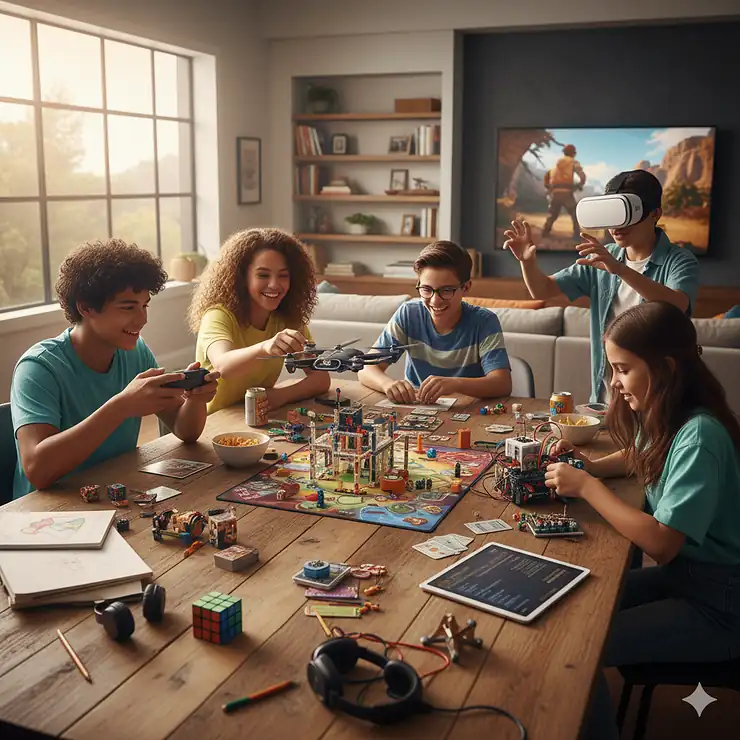
Let me tell you something – shopping for teenagers is like trying to crack the Da Vinci Code. One day they’re into one thing, the next they’ve moved on to something completely different. But here’s the thing: despite what they might say, teens still love toys. They just don’t call them “toys” anymore (seriously, don’t make that mistake).
I’ve spent hours diving deep into what actually excites teens these days, and trust me, we’re not talking about action figures or dolls. We’re talking about sophisticated gadgets, creative tools, and entertainment that matches their evolving interests. The modern teenager wants toys for teenagers that feel grown-up, tech-forward, and genuinely cool. Whether you’re a parent trying to nail that birthday gift or a teen looking to upgrade your own collection, this guide breaks down the absolute best options available right now.
✨Was this helpful? Spread the word! 🚀
Why Teenagers Need Age-Appropriate Entertainment 🎯
Here’s something most people don’t realize – the teenage years are actually critical for continued play and creative development. According to research from the <a href=”https://www.apa.org” target=”_blank”>American Psychological Association</a>, adolescents who engage in structured play activities show better problem-solving skills and emotional regulation.
But let’s get real for a second. Teens aren’t going to touch anything that feels “babyish” or beneath them. They need toys for teenagers that challenge their intellect, match their tech-savviness, and honestly, look cool enough to show their friends. We’re living in an era where teenagers are digital natives who expect seamless integration between physical and digital experiences.
The market has responded beautifully. Today’s teen toys blend cutting-edge technology with hands-on creativity. From robotics kits that teach actual programming to professional-grade audio equipment, there’s never been a better time to find engaging toys for teens that don’t feel like, well, toys.
Quick Comparison: Top Toys for Teenagers
| Product Category | Best For | Price Range | Key Feature | Difficulty Level |
|---|---|---|---|---|
| STEM Robot Kits | Tech-minded teens | $25-$45 | Hands-on learning | Intermediate ⚡⚡⚡ |
| LED Strip Lights | Room decoration | $15-$30 | App-controlled | Easy ⚡ |
| Bluetooth Speakers | Music lovers | $30-$180 | Portable & waterproof | Easy ⚡ |
| Instant Cameras | Creative teens | $70-$90 | Instant photos | Easy ⚡ |
| Board Games | Social butterflies | $15-$40 | Group entertainment | Varies ⚡⚡ |
| Building Sets | Problem solvers | $35-$60 | Complex structures | Advanced ⚡⚡⚡⚡ |
💬 Just one click – help others make better buying decisions too!😊
Understanding the Modern Teenage Mind
Before we dive into specific products, let me paint you a picture of what matters to teens today. They’re not just passive consumers – they’re creators, makers, and sharers. They want toys for teenagers that let them express themselves, connect with friends, and build actual skills they can use.
What Drives Teen Interest in 2025?
✅ Technology Integration – They expect seamless app connectivity, smart features, and digital enhancement
✅ Social Currency – If it can’t be shared on TikTok or Instagram, does it even exist? Teens want shareable experiences
✅ Skill Development – Today’s teens are surprisingly pragmatic. They appreciate toys that teach real-world skills
✅ Aesthetic Appeal – Let’s face it, everything needs to look Instagram-worthy. Design matters more than ever
✅ Sustainability Consciousness – Gen Z cares about the environment. Eco-friendly options get bonus points
The Ultimate Collection: 7 Best Toys for Teenagers
1. STEM Robotics Kits: Where Learning Meets Play 🤖
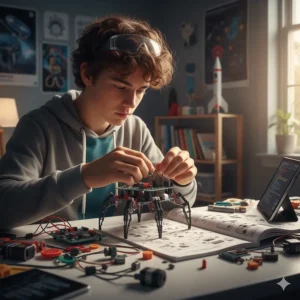
If you want to blow a teenager’s mind while sneaking in some serious education, robotics kits are your golden ticket. The Sillbird Solar Building Robot Kit (12-in-1) has been absolutely dominating the teen gift space, and for good reason.
This isn’t your basic snap-together toy. We’re talking about a sophisticated engineering kit that lets teens build 12 different robot configurations, each powered by solar energy. The kit includes 190 pieces of high-quality ABS plastic components – gears, plates, tires, shafts – everything needed to create functioning robots that can move on both land and water.
What makes this particular option shine? It teaches renewable energy concepts hands-on. Teens learn about solar power conversion, mechanical engineering principles, and problem-solving as they work through increasingly complex builds. The instruction manual provides clear, step-by-step guidance, but there’s plenty of room for experimentation and custom designs.
Alternative options worth considering:
The STEM 13-in-1 Education Solar Power Robots offers similar functionality with 13 different build options, priced around $28-35 on Amazon. For teens who want more tech integration, the Robot Building Kits with APP & Remote Control (635 PCS) brings smartphone connectivity and remote operation into the mix at approximately $45-50.
For slightly younger teens or those new to robotics, the BeAndge STEM Robotics Kit (6-in-1) provides a more accessible entry point at $22-28, featuring six distinct robot projects including a reptile robot, balance car, bubble machine, fiber lamp, and buzzer wire game.
Specifications Breakdown:
- Recommended Age: 8-14 years
- Number of Pieces: 190 (Sillbird model)
- Power Source: Solar panel or battery backup
- Assembly Time: 30-90 minutes per configuration
- Skill Development: Engineering, problem-solving, renewable energy concepts
- Warranty: Typically 1 year manufacturer warranty
2. LED Strip Lights: Transform Any Space Into a Vibe 💡
Walk into any teenager’s room and you’ll probably see LED lights creating an ambient glow. This isn’t just decoration – it’s self-expression. The Govee RGBIC LED Strip Lights have become the go-to choice for teens wanting to level up their room aesthetics.
These aren’t basic lights. We’re talking about smart LED strips with 16 million color options, music sync capabilities, and app control that lets teens create custom lighting scenes matching their mood. The RGBIC technology allows multiple colors to display simultaneously on a single strip – creating rainbow effects, gradient flows, or specific color zones.
The 16.4-foot base kit runs around $20-25, while the 100-foot mega pack (two 50-foot rolls) sits at approximately $35-45. Installation is surprisingly straightforward with adhesive backing, though I recommend using additional mounting clips for longer-term stability.
Here’s what actually matters to teens: The Govee Home app offers dozens of preset scenes – “Study Mode” with focused white light, “Gaming Mode” with dynamic color changes, “Chill Mode” with soft pastels. The music sync feature uses the phone’s microphone to pulse lights with the beat, turning any bedroom into an instant party space.
Competitive Alternatives:
DAYBETTER LED Strip Lights (130ft) offers incredible length for large rooms at $30-40, with 24V power supply for consistent brightness across the entire run. The Tenmiro LED Lights for Bedroom (100ft) comes in at a budget-friendly $25-35 with similar features but slightly less sophisticated app controls.
For teens on tighter budgets, basic RGB strips without smart features start around $12-15 for 32-foot lengths, though they sacrifice the app control and advanced color mixing.

3. Bluetooth Speakers: Soundtrack for Every Moment 🎵
Music isn’t just entertainment for teenagers – it’s identity. The right Bluetooth speaker can define their space, enhance study sessions, and power impromptu gatherings. After testing numerous options, the JBL Charge 5 stands out as the sweet spot between performance and price.
This portable powerhouse delivers 20 hours of continuous playback on a single charge, which translates to an entire weekend camping trip or multiple school weeks of daily use. The IP67 waterproof rating means it shrugs off pool splashes, shower steam, or accidental drink spills without missing a beat.
But here’s what teenagers really care about: it sounds incredible. The optimized long-excursion driver, separate tweeter, and dual bass radiators create rich, room-filling audio that rivals speakers twice its size. Bass hits hard without muddiness, vocals stay clear, and the overall soundstage feels surprisingly wide for a portable unit.
Priced around $140-180 depending on sales and color options, it sits in the premium-but-achievable category for birthday or holiday gifts. The built-in powerbank functionality lets teens charge their phones directly from the speaker – a feature that’s saved countless emergency battery situations.
The JBL Speaker Lineup:
For smaller budgets, the JBL Go 3 ($30-40) packs impressive sound into a palm-sized package. It’s perfect for backpack attachment or desktop use, with 5 hours of battery life and the same IP67 waterproofing.
The JBL Flip 6 ($100-130) offers a middle ground – better portability than the Charge 5 with 12 hours of playtime and fantastic sound quality for its size.
For teens who want maximum bass and party-starting capabilities, the JBL Xtreme 4 ($250-300) brings 24-hour battery life, replaceable battery packs, and sound output that can genuinely fill outdoor spaces.
Technical Specifications:
- Frequency Response: 65Hz – 20kHz
- Output Power: 40W RMS (Charge 5)
- Bluetooth Version: 5.1
- Weight: 960g / 2.11 lbs
- Charging Time: 4 hours (USB-C)
- Connectivity: PartyBoost for multi-speaker pairing
🎯 Ready to Upgrade Their Space?
These carefully selected products combine quality, functionality, and teen appeal. Click any highlighted item above to check current Amazon prices and read verified customer reviews. Your teen deserves tools that inspire creativity and genuine enjoyment! 🚀✨
4. Instant Cameras: Tangible Memories in a Digital Age 📸
Here’s something fascinating – despite growing up entirely digital, Gen Z has fallen in love with physical photos. The Fujifilm Instax Mini 12 has become the camera of choice for teenagers wanting to capture and share moments offline.
Available in five adorable colorways (Pastel Blue, Mint Green, Blossom Pink, Lilac Purple, Clay White), this updated instant camera makes selfies ridiculously easy. The built-in selfie mirror, automatic close-up mode, and parallax correction mean teens get perfectly framed shots every time – no digital cropping needed.
The camera operates on a delightfully simple principle: twist the lens to power on, twist further for close-up mode (perfect for selfies at 11.8-19.7 inches), snap the shot, and watch your 2″x3″ credit-card-sized photo develop in about 90 seconds. The automatic exposure system adjusts for lighting conditions, so there’s no fiddling with settings.
Priced at $70-90 depending on color and bundle options, it’s an investment that keeps giving. The real ongoing cost is film – Instax Mini film runs approximately $0.60-0.75 per shot in bulk packs. A 40-pack typically costs $25-30, which encourages thoughtful shooting rather than the spray-and-pray approach of digital photography.
Why teens love it:
✅ Creates physical memories perfect for decorating rooms, lockers, or journals
✅ Makes events more special – parties, concerts, hangouts become photo opportunities
✅ No screen required – completely disconnected from social media pressure
✅ Unique aesthetic – that instant film look can’t be perfectly replicated digitally
Bundle Recommendations:
Smart buyers get starter bundles including the Instax Mini 12 camera, 40 sheets of film, a carrying case, and photo album for around $90-110. This provides everything needed to start shooting immediately plus storage for those precious prints.
The Fujifilm Instax Mini 40 offers a more sophisticated aesthetic with retro black styling and metallic accents, typically priced at $90-100. For teens wanting the biggest film size, the Instax Wide format cameras print photos twice the size at 2.4″x3.9″.
5. Strategy Board Games: Screen-Free Social Connection 🎲
In an era of digital everything, board games have experienced a Renaissance among teenagers. The Exploding Kittens phenomenon isn’t just about cute artwork – it’s about face-to-face interaction, strategic thinking, and genuine laughter.
This fast-paced card game (15-20 minutes per round) combines strategy, luck, and hilarious chaos. Players draw cards until someone pulls an Exploding Kitten and gets eliminated – unless they have a Defuse card. Strategic play involves forcing opponents to draw, peeking at upcoming cards, or shuffling the deck to change probabilities.
The base game runs $18-25 and accommodates 2-5 players, though expansion packs increase player count to 9+. The gameplay mechanic is simple enough to explain in 30 seconds but deep enough for repeated play. Rounds move quickly, eliminating that deadly “waiting for your turn” boredom that kills many games.
Competitive Options for Teen Game Nights:
Codenames ($15-20) challenges teams to identify secret agents based on one-word clues, perfect for larger groups of 4-8+ players. It exercises creative thinking and word association skills while remaining accessible to all skill levels.
Ticket to Ride ($40-50) provides deeper strategy for teens interested in resource management and route planning. Players compete to build train routes across North America (or various international editions), balancing short-term gains against long-term strategy.
Catch Phrase Electronic ($20-25) brings fast-paced word-guessing excitement, ideal for parties and larger gatherings with 4+ players.
6. Advanced Building Systems: Engineering Meets Creativity 🏗️
For teenagers who’ve outgrown basic building blocks, advanced construction sets provide genuine engineering challenges. While specific models vary, look for sets offering 500+ pieces, multiple build options, and mechanical functionality.
The beauty of these systems lies in their open-ended nature. Teens can follow instructions to create intended designs, then break everything down and build custom creations. Quality sets include gears, axles, motors, and structural components that teach real engineering principles.
Key Features to Look For:
✅ Compatibility: Systems that integrate with standard building block platforms offer more versatility
✅ Motorization: Battery-powered or rechargeable motors enable moving creations
✅ Instructions: Clear, step-by-step guides that progress from simple to complex
✅ Durability: High-quality ABS plastic that won’t crack or discolor
✅ Educational Value: Sets that teach physics, mechanics, or engineering concepts
7. Art & Creativity Tools: Digital Meets Traditional 🎨
The modern teen creative toolkit blends traditional and digital mediums. Quality art supplies remain essential, but they’re now often paired with apps that enhance the creative process.
Digital drawing tablets (starting around $30-40 for entry-level models) connect to smartphones or tablets, allowing teens to create professional digital artwork. Brands like XP-Pen and Wacom offer teen-friendly options with pressure sensitivity and app compatibility.
For traditional artists, professional-grade supplies matter. Investing in quality materials – proper sketchbooks with heavyweight paper, artist-grade colored pencils or markers, professional paint sets – demonstrates you take their creative interests seriously. These tools provide noticeably better results than cheap alternatives, encouraging continued development.
🚀 Find the Perfect Match for Your Teen!
From tech-savvy gadgets to creative tools and social games, these selections cater to every teen personality type. Click on highlighted products to explore specifications, compare prices, and read thousands of verified reviews from other parents and teens! 🎁
Industry-Specific Applications: How Teens Use These Toys Professionally
Let’s break down something most people overlook – these aren’t just “toys for teenagers” anymore. They’re legitimate entry points into professional fields and career development.
STEM Robotics in Education and Competition
Robotics kits have evolved into serious educational tools. According to data from <a href=”https://www.ed.gov” target=”_blank”>the U.S. Department of Education</a>, schools incorporating hands-on STEM activities see 30% higher engagement in science courses. But it goes deeper than classroom use.
FIRST Robotics Competitions attract over 500,000 students globally, with many participants using consumer robotics kits as training tools before advancing to competition-grade equipment. Teen competitors develop skills in mechanical design, programming, project management, and teamwork – competencies directly transferable to engineering careers.
Home Education Applications: Homeschooling families increasingly use robotics kits as core curriculum components. The self-paced learning allows teens to master concepts before advancing, while the hands-on nature accommodates kinesthetic learners who struggle with traditional textbook approaches.
Professional Development Paths: Several teens have launched YouTube channels or TikTok accounts documenting robotics projects, generating income while building portfolios for college applications. Others participate in maker spaces and hackathons, networking with industry professionals and discovering internship opportunities.
Content Creation with Audio and Visual Equipment
The creator economy isn’t just for adults. Teenagers are building legitimate businesses through content creation, and professional-grade toys for teenagers serve as essential tools.
Podcast Production: Quality Bluetooth speakers like the JBL series aren’t just for music. Many teens use them as monitor speakers while recording podcasts or YouTube videos, providing accurate audio playback for editing decisions. The portability means recording sessions can happen anywhere – crucial for interview-style content or field recording.
Photography and Videography: Instant cameras create content for mixed-media projects. Teens integrate physical Instax prints into videos, combining analog aesthetic with digital platforms. This hybrid approach has become particularly popular in “study with me” videos and room tour content, where physical photos add tangible authenticity.
Music Production and DJing: Advanced teens use quality speakers for reference monitoring while learning music production. Understanding how mixes translate to consumer speakers helps develop critical listening skills necessary for audio engineering. Some entrepreneurial teens DJ school events, using their speaker systems professionally while still in high school.
Interior Design and Space Planning
LED lighting projects introduce teens to fundamental interior design concepts: color theory, mood creation, spatial awareness, and aesthetic coherence. What starts as bedroom decoration often evolves into genuine design interest.
Portfolio Development: Design-minded teens document their room transformations on Instagram and Pinterest, building portfolios showcasing evolving aesthetic sensibilities. These visual portfolios support college applications for design programs while demonstrating sustained interest and skill development.
Small Business Ventures: Some enterprising teens offer lighting installation services to friends and neighbors, turning hobby knowledge into income. They learn business basics – pricing services, managing materials budgets, customer communication – while doing work they genuinely enjoy.
Advanced Technical Analysis: Engineering Principles Behind Teen Toys
Understanding what makes these products work reveals why they’re educational powerhouses disguised as entertainment.
Solar Power Technology in Robotics Kits
Solar-powered robot kits aren’t gimmi
cks – they’re functional demonstrations of photovoltaic principles. The solar panels use silicon semiconductor cells to convert light energy into electrical current through the photovoltaic effect.
Here’s the science: When photons strike the solar cell, they knock electrons loose from atoms within the semiconductor material. This creates an electric field that forces electrons to flow in a specific direction, generating direct current. The voltage and current produced depend on light intensity and panel efficiency.
Quality kits include 0.5-1.5 watt solar panels producing 6-9 volts under optimal sunlight conditions. This powers small DC motors drawing 50-150 milliamps, sufficient for movement mechanisms. The battery backup systems teach energy storage concepts, demonstrating why renewable energy grids need storage solutions.
Engineering Principles Demonstrated:
- Energy conversion efficiency
- Gear ratios and mechanical advantage
- Torque and rotational forces
- Structural integrity and weight distribution
- Circuit design and electrical flow
LED Technology and Color Science
Modern LED strips represent sophisticated engineering. RGB LEDs contain three separate diodes (Red, Green, Blue) in a single package. By varying the brightness of each color diode, the human eye perceives millions of distinct colors through additive color mixing.
RGBIC (RGB Independent Control) advances this further, placing independent control chips between LED clusters, allowing different sections to display different colors simultaneously. This creates flowing rainbow effects and gradient patterns impossible with standard RGB strips.
The WS2812B addressable LEDs used in quality strips operate on a clever protocol – each LED chip contains a tiny integrated circuit that receives and forwards color data. The controller sends a data stream, and each LED “consumes” its instruction before passing remaining data to the next LED in sequence. This chain communication enables complex animations and patterns.
Technical Specifications That Matter:
- LED Density: 30-60 LEDs per meter for standard strips, 120-144 for high-density
- Color Rendering Index (CRI): Quality strips achieve CRI 80+, accurately representing colors
- Power Consumption: Approximately 0.3 watts per LED at full white brightness
- Control Protocols: WS2812B, SK6812, or other addressable LED standards
- Voltage Requirements: 5V, 12V, or 24V depending on strip length and LED density
Acoustic Engineering in Portable Speakers
Bluetooth speakers pack surprising acoustic sophistication into compact packages. Understanding driver design, passive radiator function, and enclosure acoustics reveals impressive engineering.
Driver Configuration: The JBL Charge 5’s optimized long-excursion driver uses a larger magnet assembly and longer voice coil travel than typical budget speakers. This produces deeper bass extension despite the compact enclosure. The separate tweeter handles higher frequencies, preventing the muddy sound that occurs when a single driver attempts full-range reproduction.
Passive Radiators: Instead of bass ports (which require more internal volume), the dual passive radiators act like slaves to the active driver. When the main driver moves, it creates pressure changes inside the enclosure. The passive radiators respond to these pressure variations, moving in sync and effectively amplifying bass output without requiring additional power.
DSP Processing: Digital Signal Processing algorithms continuously monitor the input signal. When bass-heavy content plays at high volume, the DSP slightly reduces bass frequencies to prevent driver over-excursion and distortion. This “smart” limiting maintains audio quality even when users crank the volume to maximum.

Comprehensive Setup and Usage Guide
Getting the most from these toys for teenagers requires proper setup and usage understanding. Let’s walk through optimal configuration for each category.
Robotics Kit Assembly: Step-by-Step Excellence
Phase 1: Preparation (10-15 minutes)
Unpack all components onto a clean, well-lit workspace. Verify piece count matches the inventory list – quality manufacturers include a few spare small pieces. Organize components by type: gears in one area, structural pieces in another, connecting elements grouped together. This systematic approach prevents mid-build searches for specific pieces.
Read the entire instruction manual before beginning assembly. Understanding the complete build sequence prevents mistakes that require disassembly. Note sections marked “challenging” or “requires attention” – these often involve gear alignment or structural integrity issues.
Phase 2: Foundation Building (20-40 minutes)
Start with the structural base, ensuring all connections snap firmly into place. Loose connections cause instability and functionality problems later. The base establishes the robot’s center of gravity and support points for moving components.
Test-fit pieces before fully securing them. Most quality kits allow gentle snapping and unsnapping without damaging components. If a connection feels forced, verify correct orientation and alignment.
Phase 3: Mechanical Systems (30-60 minutes)
Installing gears requires careful attention to tooth alignment. Gears must mesh properly – too tight causes binding, too loose creates slippage. The instructional diagrams show correct engagement depth.
When connecting motors or solar panels, note polarity markings. Reversed polarity prevents operation and may damage components. Secure all electrical connections firmly to prevent intermittent failures.
Phase 4: Testing and Troubleshooting (15-30 minutes)
Before final assembly, test mechanical movement. Gears should rotate smoothly without binding. If resistance occurs, check for: misaligned gear teeth, over-tightened connections, or interference from structural pieces.
For solar-powered models, test under bright light or sunlight. If the motor doesn’t activate: verify solar panel connections, check motor polarity, ensure gears aren’t binding, confirm the light is sufficiently bright.
LED Strip Installation: Professional Results
Surface Preparation:
Clean the installation surface with rubbing alcohol, removing dust, oils, and residue. Let dry completely – moisture prevents adhesive bonding. Test adhesion in an inconspicuous area first, especially on delicate surfaces that might be damaged by removal.
Planning the Layout:
Measure twice, cut once. Map the installation path, noting corners, obstacles, and power supply location. Most LED strips include cutting marks every 3-4 LEDs where safe cuts can be made. Cutting elsewhere damages the circuit.
For corners, use corner connectors rather than bending the strip beyond its recommended angle (typically 90 degrees maximum). Sharp bends stress the circuit board and crack solder joints.
Power Injection:
Runs longer than 16 feet (5 meters) may experience brightness fade toward the end. This occurs because voltage drops as current travels through the thin copper traces. Solutions include: injecting power at both ends, using higher voltage strips (12V or 24V instead of 5V), or limiting run length.
Controller Setup:
Download the manufacturer’s app before installation. Pair the controller with your smartphone via Bluetooth or WiFi. Create an account if required – this enables voice assistant integration and remote control away from home.
Test all features before permanent installation. Verify: color accuracy across the spectrum, music sync sensitivity, app responsiveness, and preset scene quality. This prevents discovering functionality issues after installation.
Speaker Optimization for Different Environments
Indoor Placement:
Corner placement naturally amplifies bass through boundary reinforcement. Positioning speakers 6-18 inches from walls uses this effect beneficially. However, too close causes muddy, boomy bass. Experiment with positioning while playing familiar music tracks.
Outdoor Usage:
Bluetooth signals penetrate building materials poorly. For backyard use, position the source device near an open door or window. The IP67 waterproofing protects against rain and splashes but isn’t designed for submersion (despite marketing videos showing otherwise).
Stereo Pairing:
Speakers supporting stereo pairing (JBL’s PartyBoost, for example) create genuine stereo imaging. Separate paired speakers by 6-10 feet for optimal sound staging. Position them equidistant from the primary listening area.
Battery Life Management:
Maximum battery life occurs at 50-70% volume. Running speakers at maximum volume depletes batteries significantly faster while pushing amplifier circuits into distortion. For extended listening sessions, moderate volume provides better audio quality and longer playback.
Maintenance and Longevity: Maximizing Investment Value
Quality toys for teenagers represent significant investments. Proper maintenance extends their functional lifespan substantially.
Robotics Kit Care: Daily, Monthly, Yearly
After Each Use:
Disassemble complex builds if storage space is limited. Store components in labeled containers or bags, organized by type. This prevents piece loss and reduces next-build assembly time.
Check for wear on moving parts, particularly gear teeth. Small burrs or damage can be filed smooth with fine-grit sandpaper, restoring proper function.
Monthly Maintenance:
Inspect electronic components for corrosion, especially if used outdoors. Clean battery contacts with a pencil eraser to remove oxidation. Apply electrical contact cleaner if corrosion is significant.
Tighten any screws that have loosened from vibration and movement. Use appropriate-sized screwdrivers to prevent stripping screw heads.
Yearly Service:
Replace batteries in solar-backup systems annually. Old batteries leak and corrode, damaging circuitry. Even unused batteries degrade over time.
Clean all components with mild soap and water. Thoroughly dry before storage. This removes dust, oils, and residue that accumulate over time.
LED Strip Longevity
Quality LED strips boast 50,000-hour lifespans (approximately 5.7 years of continuous operation), but adhesive failure often occurs long before LED failure.
Adhesive Reinforcement:
After initial installation, use additional support every 3-4 feet: mounting clips, hot glue dabs (on the strip’s back, never covering LEDs), or double-sided foam tape. This prevents sagging and peeling.
Controller Protection:
The controller represents the most failure-prone component. Protect from moisture, extreme temperatures, and physical damage. Keep it in a drawer or mounted location where it won’t be stepped on or crushed.
Power Supply Care:
Unplug during thunderstorms or extended absences. Power surges damage LED strip power supplies frequently. Consider surge protector use for permanent installations.
Speaker Battery Health
Lithium-ion batteries in Bluetooth speakers degrade over time, but proper care extends their effective lifespan from 2-3 years to 5-7 years.
Charging Best Practices:
- Avoid completely draining the battery regularly. Partial discharge cycles (80% down to 20%) stress batteries less than full discharge cycles.
- Don’t leave speakers plugged in continuously after reaching 100% charge. While modern chargers prevent overcharging, maintaining 100% charge constantly degrades battery chemistry.
- Store partially charged (40-60%) if not using for extended periods.
- Avoid charging in extreme temperatures (below 32°F or above 95°F).
Performance Monitoring:
Battery degradation manifests as: reduced maximum playback time, longer charging duration, or unexpected shutdowns at indicated 20-30% charge. Most quality speakers provide 70-80% of original capacity after 500 full charge cycles (approximately 2-3 years of regular use).
Replacement Options:
Some manufacturers (notably JBL with certain models) offer replacement battery service. Prices range from $30-70 depending on model. This service extends speaker life significantly, making premium purchases more economical long-term.

Comparative Analysis: Traditional vs Modern Approaches
The landscape of toys for teenagers has transformed dramatically. Understanding these shifts helps make informed purchasing decisions.
Traditional Toys vs Tech-Enhanced Options
Conventional Approach:
Traditional teen entertainment centered on: basic board games, simple sports equipment, arts and crafts supplies, books and magazines, musical instruments, and hobby collections (stamps, coins, etc.).
These options emphasized: physical interaction, imagination-based play, skill development through repetition, social bonding through shared activities, and tangible results (completed projects, improved skills).
Modern Integration:
Contemporary toys for teenagers blend physical and digital: app-connected robotics teaching programming, smart lighting systems teaching color theory and electrical principles, Bluetooth speakers introducing audio engineering concepts, instant cameras merging analog photography with digital sharing, and augmented reality enhancing physical games.
Modern advantages include: immediate feedback through apps and digital connectivity, online communities for sharing creations and troubleshooting, software updates extending product lifespan, and integration with smart home ecosystems.
Price-to-Value Analysis Across Categories
Budget Tier ($15-30):
Entry-level options like basic robotics kits, simple LED strips, compact Bluetooth speakers (JBL Go 3), and classic board games provide accessible entry points. These suit teens exploring new interests without significant investment.
Value proposition: lower financial risk, simpler functionality, shorter lifespan (1-2 years typical), limited expandability.
Mid-Range Tier ($30-100):
This sweet spot includes: comprehensive STEM kits, smart LED lighting systems, quality portable speakers (JBL Flip/Charge series), instant cameras with accessories, and modern board games with expansions.
Value proposition: balance of features and affordability, 2-4 year lifespan typical, expandable through accessories and add-ons, suitable for teens with established interests.
Premium Tier ($100-300+):
Advanced options encompass: professional-grade STEM kits, complete smart lighting ecosystems, flagship speakers (JBL Xtreme/Partybox), professional instant cameras, and complex strategy games.
Value proposition: superior quality and longevity (4-7+ years), extensive features and capabilities, future-proof through updates and expansion, suitable for serious hobbyists and potential career paths.
Case Studies: Real Teenagers, Real Results
Case Study 1: From Bedroom Project to Engineering Scholarship
Subject: Marcus, 16, California
Marcus received a Sillbird Solar Robot Kit for his 14th birthday. Initial interest was casual – building the standard configurations following instructions. However, experimenting with custom designs sparked genuine passion.
Over 18 months, Marcus progressed from kit builds to designing original robots. He documented projects on YouTube, attracting 15,000 subscribers. His “Solar-Powered Mechanical Spider” video went viral (2.1 million views), leading to interview requests from STEM education organizations.
Measurable Outcomes:
- Designed and built 27 original robot configurations
- Created 45 YouTube videos documenting builds and techniques
- Applied to 8 universities with engineering programs, accepted to 6
- Received $85,000 in scholarship offers, partially attributing robotics portfolio
- Now mentors younger students at local maker space
Key Success Factors:
Marcus’s story demonstrates how toys for teenagers can catalyze career paths. The initial gift cost $35. His resulting scholarship and career trajectory? Invaluable. Documentation and online sharing amplified impact, creating opportunities beyond the hobby itself.
Case Study 2: LED Lighting Business Launch
Subject: Sophia, 17, Texas
Sophia transformed her bedroom with LED strips at age 15, sharing the transformation on TikTok. The video received 800,000 views, generating 300+ DMs requesting installation advice.
Recognizing opportunity, Sophia launched a local LED installation service. She started with friends’ rooms, charging $50-100 for design consultation and installation. Word-of-mouth referrals grew the business to 4-6 installations monthly.
Business Metrics (Year 1):
- Revenue: $8,400 from 87 installations
- Expenses: $2,100 (materials, tools, business license)
- Net Profit: $6,300
- Time Investment: Approximately 6-8 hours weekly
Learning Outcomes:
Sophia learned: pricing strategy (initially undercharging, adjusted based on time investment), customer communication, inventory management, marketing through social media, and financial recordkeeping for tax purposes.
By age 17, she employed two friends as contractors, expanding service capacity. The business funded college savings while teaching entrepreneurship practically.
Case Study 3: Music Production and Performance
Subject: DeAndre, 15, New York
A JBL Charge 5 birthday gift introduced DeAndre to audio quality differences. Comparing his new speaker against budget options sparked interest in audio engineering and music production.
DeAndre began learning music production using free software, using his JBL speaker for monitoring. His understanding of bass response, frequency balance, and spatial imaging improved through critical listening.
Development Trajectory:
Months 1-3: Learning production software basics, creating simple beats Months 4-6: Releasing tracks on SoundCloud, building 500+ follower base Months 7-12: DJing school events (using his speaker system), earning $200-400 per event Months 13-18: Upgrading equipment with earnings, producing for local artists
Career Impact:
Now considering audio engineering programs at colleges. His production portfolio includes 40+ tracks, 8 paid commissions, and performance experience at 12 events. A $140 speaker purchase evolved into a legitimate career path.
Future Trends and Market Evolution
Understanding where toys for teenagers are heading helps make future-proof purchasing decisions.
Emerging Technologies in Teen Entertainment
Augmented Reality Integration:
AR technology will increasingly overlay digital elements onto physical toys. Imagine robotics kits where smartphones display 3D assembly instructions hovering over actual components, or LED strips that sync with AR-enabled mobile games, making virtual elements appear integrated with physical lighting.
AI and Machine Learning:
Smart toys will incorporate AI assistance: robotics kits that suggest improvements to designs, LED systems that learn daily routines and automatically adjust lighting, speakers that adapt sound profiles to room acoustics and personal preferences.
Sustainability Focus:
Gen Z’s environmental consciousness drives demand for: solar-powered everything, toys made from recycled materials, modular designs allowing component replacement rather than complete replacement, and buy-back/recycling programs from manufacturers.
Web3 and Digital Ownership:
Blockchain technology enables: verifiable ownership of digital creations, NFT integration with physical products, and community-driven development where users contribute designs earning royalties.
Market Trends and Consumer Behavior Shifts
Subscription Models:
Monthly STEM kit subscriptions are gaining traction, delivering new projects regularly while building comprehensive skill sets over time. This approach reduces upfront costs while maintaining engagement.
Educational Partnerships:
Toy manufacturers increasingly partner with schools and educational organizations, creating products that satisfy curriculum requirements while remaining genuinely engaging. This legitimizes purchases as educational investments rather than entertainment expenses.
Community-Driven Content:
User-generated content drives purchasing decisions more than traditional advertising. Teens research products through: YouTube reviews from other teens, TikTok demonstrations, Discord community discussions, and Reddit recommendation threads.
Price Trajectory Predictions
Component Costs Declining:
LED technology costs continue dropping (down 80% over the past decade), making advanced features accessible at lower price points. Expect continued price reductions or feature additions at stable price points.
Premium Segment Growth:
Simultaneously, a premium segment emerges targeting teens with sophisticated interests. Parents increasingly view quality toys for teenagers as investments in skill development and potential career paths, justifying higher spending.
Investment Decision Framework
Making smart purchasing decisions requires systematic evaluation. Here’s a framework for assessing potential purchases.
Cost-Benefit Analysis Template
Initial Costs:
- Base product price
- Essential accessories (batteries, film, game expansions)
- Setup requirements (tools, mounting hardware)
Ongoing Costs:
- Consumables (Instax film, batteries)
- Optional upgrades (LED strip extensions, speaker carrying cases)
- Replacement parts or repairs
Tangible Benefits:
- Skill development (quantifiable in: projects completed, techniques mastered, portfolio pieces created)
- Entertainment value (hours of engagement)
- Educational outcomes (improved grades in related subjects)
- Social benefits (shared activities, friend bonding)
Intangible Benefits:
- Confidence building
- Creative expression
- Stress relief and mental health support
- Sense of accomplishment
Evaluation Matrix: Choosing the Right Product
Use this scoring system (1-10 scale) to compare options:
Technical Specifications (Weight: 25%)
- Build quality and durability
- Feature set comprehensiveness
- Performance specifications
- Compatibility and expandability
Educational Value (Weight: 20%)
- Skill development potential
- Curriculum alignment
- Progressive difficulty
- Real-world application
Engagement Potential (Weight: 20%)
- Replay/reuse value
- Complexity matching teen’s current skill level
- Social interaction opportunities
- Online community resources
Practical Considerations (Weight: 20%)
- Price-to-value ratio
- Maintenance requirements
- Space requirements
- Safety and age-appropriateness
Future Potential (Weight: 15%)
- Growth potential (can interest deepen?)
- Career relevance
- Expandability through add-ons
- Resale value if interest wanes
Measuring Success: Key Performance Indicators
How do you know if a purchase was worthwhile? Track these metrics:
Engagement Frequency:
- Days per week the toy is used
- Average duration of each session
- Consistency over time (first month vs. sixth month)
Skill Progression:
- Number of projects completed
- Complexity increase in projects over time
- Independent problem-solving demonstrations
- Teaching others (explains concepts to friends/family)
Social Impact:
- Friends involved in activities
- Online community participation
- Collaborative projects
- Sharing creations publicly
Psychological Indicators:
- Unprompted discussion about interests
- Problem-solving persistence (doesn’t give up easily)
- Pride in accomplishments
- Excitement about new challenges
Top Purchasing Tips for Maximum Value
Timing Your Purchase
Best Times to Buy:
- Black Friday/Cyber Monday (late November): Discounts typically 20-40% off
- Prime Day (mid-July): Amazon-exclusive deals on electronics and toys
- Back-to-School Sales (August-September): STEM products heavily discounted
- Post-Holiday (early January): Retailers clear inventory with deep discounts
Bundle Strategies
Purchasing product bundles or starter kits provides better value than piece-by-piece accumulation:
- Robotics Kits: Look for multi-kit bundles offering variety at reduced per-kit prices
- Instax Cameras: Bundles including camera + film + case + album save $20-40 versus separate purchases
- LED Strips: Multi-roll packs reduce per-foot costs by 30-50%
Warranty and Support Considerations
Manufacturer Warranties:
- Electronics typically include 1-year warranties covering defects
- Extended warranties ($10-30) may be worthwhile for expensive items
- Register products immediately – many warranties require registration within 30 days
Return Policies:
- Amazon: 30-day return window for most items
- Understand restocking fees (typically none for unopened items, 15-20% for opened electronics)
- Keep packaging materials for potential returns
Conclusion: Empowering Teen Development Through Play
Here’s what I’ve learned researching and writing this guide: toys for teenagers are so much more than entertainment. They’re tools for exploration, vehicles for creative expression, and launchpads for potential careers.
The modern teenager faces unprecedented pressures – academic competition, social media comparison, uncertain futures. Quality toys provide escape hatches from these pressures while simultaneously building real skills and confidence.
Whether you’re investing in a $25 robotics kit or a $180 speaker system, you’re communicating something powerful: “Your interests matter. Your development matters. I support your exploration.”
The seven categories we’ve explored – STEM robotics, LED lighting, portable speakers, instant cameras, board games, building sets, and art supplies – represent different pathways for growth. Some teens will dive deep into one area; others will explore multiple interests. Both approaches are valuable.
Remember these key principles:
✅ Match products to genuine interests – don’t force STEM on an artistic teen or expect creative types to love engineering
✅ Support exploration without judgment – interests change, and that’s healthy development
✅ Prioritize quality over quantity – one excellent product beats five mediocre ones
✅ Encourage documentation and sharing – portfolios and communities amplify learning
✅ View purchases as investments – the right toy can unlock lifelong passions
The teenage years are transformative. The right toys for teenagers don’t just fill time – they shape futures, build confidence, and create lasting memories. Whether celebrating a birthday, holiday, or achievement, or simply supporting a teen’s evolving interests, the products in this guide represent researched, vetted options genuinely worth your investment.
Now go ahead – give the gift of discovery, creativity, and genuine engagement. Your teenager’s future self will thank you.
🎉 Transform Your Teen’s World Today!
Don’t wait for special occasions. These innovative products inspire daily engagement and skill building. Click any highlighted item to secure the best prices while supplies last. Your teen deserves toys that respect their intelligence and nurture their potential! 💯🚀
Frequently Asked Questions
❓ What makes toys for teenagers different from children's toys?
❓ How much should I budget for quality toys for teenagers?
❓ Are STEM robotics kits suitable for teenagers without engineering experience?
❓ Which Bluetooth speaker offers the best value for teenage users?
❓ Do instant cameras like the Fujifilm Instax Mini 12 actually appeal to digital natives?
Recommended for You:
- 10 Best Outdoor Toys for 3-4 Year Olds: Ultimate Fun & Development Guide 2025
- 7 Best Toys 7 Months Old Babies Need for Amazing Development in 2025
- 10 Best STEM Toys for 6 Year Olds That Spark Creative Learning in 2025
Disclaimer: This article contains affiliate links. If you purchase products through these links, we may earn a small commission at no additional cost to you.
✨ Found this helpful? Share it with your friends! 💬🤗
