
In This Article
✨Was this helpful? Spread the word! 🚀
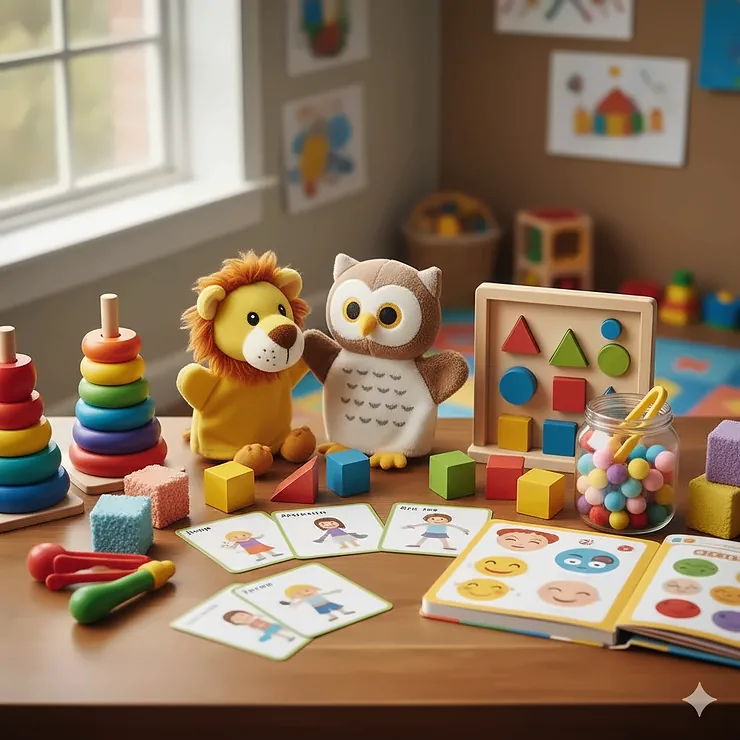
Finding effective speech therapy toys can feel overwhelming when you’re scrolling through endless product pages, reading contradictory reviews, and wondering which tools will actually help your child communicate better. I’ve been there, and I understand the frustration.
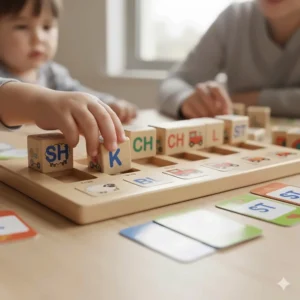
Here’s the truth: speech therapy toys aren’t just playthings. They’re powerful developmental tools that bridge the gap between clinical therapy sessions and everyday learning. Whether your child is working with a speech language pathologist or you’re supporting their development at home, the right toys for speech therapy can transform progress from slow and frustrating to engaging and effective.
These specialized learning tools serve multiple purposes. They encourage verbal expression, build vocabulary, strengthen articulation skills, and make the often-challenging work of speech development feel like play. According to the American Speech-Language-Hearing Association, early intervention with appropriate materials significantly improves communication outcomes for children with speech delays or disorders.
In this comprehensive guide, you’ll discover seven carefully researched speech therapy toys available on Amazon right now. Each product has been evaluated based on real customer feedback, therapeutic value, price point, and versatility. From talking flashcards that teach sight words to interactive games that encourage turn-taking and conversation, these tools represent the best options for parents, educators, and therapists in 2025.
Quick Comparison Table: Top Speech Therapy Toys at a Glance
| Product | Age Range | Key Features | Price Range | Best For |
|---|---|---|---|---|
| Talking Flash Cards | 1-6 years | 224+ words, rechargeable, no-screen | $15-$30 | Vocabulary building, autism support |
| Pop the Pig Game | 3+ years | Turn-taking, counting, suspense | $15-$20 | Following directions, articulation practice |
| Mr. Potato Head | 3+ years | Body parts, pretend play, 30+ pieces | $20-$30 | Requesting skills, descriptive language |
| Melissa & Doug Poke-a-Dot Books | 1-5 years | Interactive, tactile, various themes | $10-$15 | Early communication, cause-and-effect |
| Learning Resources Conversation Cubes | 5+ years | Pragmatic skills, question prompts | $14 | Social language, conversational skills |
| Bubble Solutions | 1+ years | Requesting, turn-taking, outdoor play | $5-$15 | Early verbal attempts, breath control |
| Melissa & Doug Wooden Puzzles | 2-6 years | Problem-solving, fine motor, themes | $10-$20 | Following directions, spatial concepts |
💬 Just one click – help others make better buying decisions too!😊
🛒 Ready to Start? Check These Deals!
✨ These speech therapy toys are available now with competitive pricing on Amazon. Click any product name to check current prices and customer reviews. Every purchase supports your child’s communication journey!
Top 7 Speech Therapy Toys: Expert Analysis
1. Talking Flash Cards with Card Reader
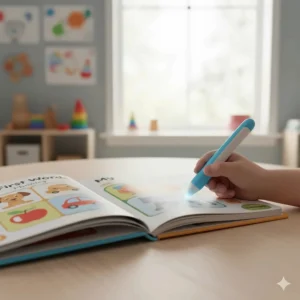
Kuovei/QuTZ Talking Flash Cards (240 Sight Words) represent one of the most popular speech therapy tools on Amazon right now, and honestly, the hype is justified. These electronic learning cards come with a handheld reader that pronounces words clearly in an American accent when children insert the cards.
Key Specifications:
- 120 double-sided cards (240 total words)
- 12 subject categories including animals, vehicles, food, colors, shapes
- Rechargeable battery (4-5 hour playtime)
- No-screen design to reduce eye strain
- Real animal and vehicle sound effects
Price Range: $15-$25
Customer Feedback: Parents and therapists consistently praise these cards for keeping children engaged without screens. One speech therapist noted, “My students with autism respond incredibly well to the clear pronunciation and realistic sounds.” However, some reviewers mention the cards are thin and may bend with rough handling.
Pros:
✅ Screen-free learning reduces digital exposure
✅ Clear, natural pronunciation aids speech modeling
✅ Portable and easy to use independently
Cons:
❌ Cards can bend or tear with heavy use
❌ Limited to pre-programmed vocabulary
These talking cards excel at building sight word recognition and are particularly beneficial for children with autism, speech delays, or those learning English as a second language. The multi-sensory approach—combining visual cards with audio feedback—reinforces learning through multiple pathways.
2. Goliath Games Pop the Pig
Pop the Pig game has been a speech-language pathologist favorite for years, and it’s easy to see why. This simple game involves rolling a die, feeding plastic hamburgers to a pig, then pumping his head until his belly eventually pops open.
Key Specifications:
- Includes 1 pig, 1 die, 12 hamburgers
- No batteries required (mechanical action)
- 2-6 players
- Game duration: 10-15 minutes
Price Range: $15-$20
Customer Feedback: Speech therapists love this game’s versatility. As one SLP shared, “I use Pop the Pig at least once a month with students from age 3 to 5th grade.” The suspense of waiting for the pig to pop keeps kids engaged and motivated. Some customers report durability issues with the pig’s head mechanism breaking after extended use.
Pros:
✅ Encourages turn-taking and social skills
✅ Natural opportunities for requesting language
✅ Easy to play, quick turns keep attention
Cons:
❌ Durability concerns with heavy use
❌ Small pieces require supervision
This game naturally elicits language for colors, numbers, body parts (where do you push?), verbs (push, eat, pop), and question formation. It’s particularly effective for working on following multi-step directions and articulation practice with target sounds.
3. Mr. Potato Head Silly Suitcase
Mr. Potato Head Silly Suitcase remains a timeless classic in speech therapy rooms nationwide. This iconic toy allows children to mix and match body parts and accessories to create countless silly combinations.
Key Specifications:
- Includes 1 potato body and 30+ accessories
- Storage suitcase for organization
- Compatible with other Potato Head toys
- Durable plastic construction
Price Range: $20-$30
Customer Feedback: Therapists universally recommend this toy for its versatility. One reviewer noted, “Mr. Potato Head is my all-time favorite toy for preschoolers—the language opportunities are endless.” Parents appreciate the storage case that keeps pieces organized. The main complaint is that younger children may struggle with inserting some pieces.
Pros:
✅ Teaches body parts vocabulary naturally
✅ Encourages requesting and descriptive language
✅ Storage case included for easy cleanup
Cons:
❌ Small pieces pose choking hazard for young children
❌ Some pieces difficult for fine motor challenges
Mr. Potato Head excels at targeting multiple language goals simultaneously: body part identification, color concepts, following directions, turn-taking, pronoun usage (my/your, he/she), prepositions (on, in, under), and pretend play scenarios. It’s a must-have for any speech therapy toy collection.
4. Melissa & Doug Poke-a-Dot Books
Melissa & Doug Poke-a-Dot interactive books feature built-in buttons that “pop” when pressed, providing tactile feedback that children find irresistible. Available in numerous themes including alphabet, numbers, animals, and nursery rhymes.
Key Specifications:
- Sturdy board book construction
- 10+ buttons per book
- Various themes available
- Dimensions: approximately 8.5 x 11 inches
Price Range: $10-$15
Customer Feedback: Early intervention specialists consistently recommend these books. According to educators and therapists, the tactile element significantly increases engagement compared to traditional books. Parents love that they’re durable enough to withstand repeated use. Some note the buttons can become less responsive over time.
Pros:
✅ Combines reading with sensory input
✅ Encourages pointing and joint attention
✅ Durable construction withstands toddlers
Cons:
❌ Buttons may wear out with extensive use
❌ Limited text for advanced readers
These books are ideal for teaching early communication skills like pointing, requesting, turn-taking, and introducing new vocabulary. The cause-and-effect nature helps children understand their actions produce results, a crucial pre-linguistic skill.
5. Learning Resources Conversation Cubes
Learning Resources Conversation Cubes provide a simple but effective way to practice social language and conversational skills through dice with question prompts and conversation starters.
Key Specifications:
- Set of 6 foam cubes
- Various prompts for different communication goals
- Soft foam construction (safe for throwing)
- Includes activity guide
Price Range: $14
Customer Feedback: SLPs praise these cubes for their versatility. One therapist shared, “The conversation cubes are my favorite for targeting so many goals!” They’re particularly helpful for older elementary students working on pragmatic language. Some users wish there were more variety in the prompts.
Pros:
✅ Versatile for multiple language targets
✅ Appropriate for individual or group therapy
✅ Durable foam construction
Cons:
❌ Limited variety may require supplementing
❌ Better suited for verbal children
These cubes excel at building conversational skills, pragmatic language, perspective-taking, and generalization of articulation or fluency skills at the conversation level. They’re an excellent tool for working on wh-questions, making comments, and sustaining conversations.
6. Bubble Solutions (Various Brands)
Simple bubble solutions might seem basic, but they’re incredibly powerful speech therapy tools. Available in traditional bottles, no-spill versions, and bubble machines, bubbles create natural opportunities for communication.
Key Specifications:
- Available in various sizes (4 oz to 32 oz)
- No-spill options for mess-free play
- Non-toxic formulas
- Outdoor and indoor use
Price Range: $5-$15
Customer Feedback: According to research from child development experts, bubbles consistently rank among the top motivators for encouraging first words. Therapists love them because they work for children at all language levels. The main drawback is traditional bottles can spill, making no-spill versions worth the extra cost.
Pros:
✅ Extremely affordable and accessible
✅ Motivating for all ages and abilities
✅ Natural context for requesting
Cons:
❌ Traditional bottles can spill
❌ Outdoor activity (weather-dependent)
Bubbles are perfect for teaching requesting words (bubble, more, please), action words (pop, blow, catch), early sound development, breath control for speech, and turn-taking. They’re especially valuable for children just beginning to use words.
7. Melissa & Doug Wooden Puzzles
Melissa & Doug Wooden Puzzles come in countless themes and difficulty levels, from simple peg puzzles for toddlers to more complex jigsaw puzzles for older children.
Key Specifications:
- Durable wooden construction
- Various piece counts (8-48 pieces typically)
- Themes include animals, vehicles, occupations, alphabet
- Storage trays included with many sets
Price Range: $10-$20
Customer Feedback: Therapists appreciate the quality construction that withstands clinic use. Parents note these puzzles last for years and can be passed down to siblings. The main consideration is ensuring age-appropriate difficulty to maintain engagement without frustration.
Pros:
✅ High-quality wooden construction
✅ Wide variety of themes available
✅ Supports multiple developmental goals
Cons:
❌ More expensive than cardboard puzzles
❌ Limited replayability once mastered
Puzzles support language development through vocabulary building (naming puzzle pieces), following directions (find the blue piece, put it next to the cow), spatial concepts (next to, between, corner), problem-solving language, and requesting help. They’re excellent for working on persistence and attention span too.
Benefits of Speech Therapy Toys vs Traditional Materials
| Feature | Speech Therapy Toys | Traditional Flashcards/Worksheets |
|---|---|---|
| Engagement | High motivation through play | Often perceived as “work” |
| Generalization | Natural communication contexts | Artificial, structured settings |
| Multiple Goals | Address several skills simultaneously | Typically target one skill |
| Reusability | Used for years across children | Single-use or limited reuse |
| Cost Effectiveness | Initial investment, long-term value | Ongoing printing/replacement costs |
| Child Enjoyment | Fun, reduces therapy resistance | Can feel like homework |
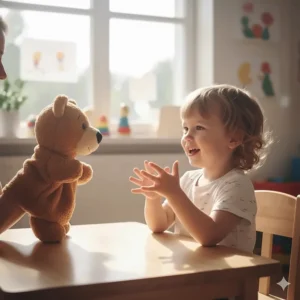
This comparison clearly shows why toys for speech therapy have become essential tools. According to educational research, play-based learning significantly improves retention and generalization of skills compared to drill-based approaches.
🎯 Transform Speech Therapy Today!
✨ Don’t wait to see progress! These carefully selected toys for speech therapy are available now on Amazon. Each product has been used successfully by thousands of families and therapists. Click to explore current deals and start building your child’s communication confidence! 🌟
How to Choose the Right Speech Therapy Toys for Your Child
Selecting appropriate toys for speech therapy requires considering several factors beyond just reading positive reviews. Let me walk you through a practical decision-making framework.
Consider Your Child’s Current Communication Level
First, honestly assess where your child is right now. Children using single words need different tools than those combining words into sentences. For pre-verbal children or those just starting to communicate, cause-and-effect toys like bubbles, pop-up toys, and simple puzzles work best. For children combining words, games like Pop the Pig and Mr. Potato Head offer richer language opportunities.
Identify Specific Goals You’re Targeting
What skills do you most want to develop? If articulation practice is the priority, choose toys that naturally elicit target sounds repeatedly. For language expansion, select open-ended toys like Mr. Potato Head that generate descriptive language. Social language goals benefit from games with turn-taking like Pop the Pig.
Match the Toy to Your Child’s Interests
Even the “best” speech therapy toy won’t help if your child refuses to engage. Consider what naturally motivates your child. Animal lovers might prefer puzzles or flashcards with animal themes. Children fascinated by cause-and-effect will stay engaged with bubbles or talking flashcards.
Consider Durability and Longevity
Quality matters, especially if multiple children will use the toy or it will see frequent use. Wooden toys from brands like Melissa & Doug typically outlast plastic alternatives. Check customer reviews specifically mentioning durability. Budget-friendly options work great for individual home use, but therapy clinics need heavy-duty construction.
Evaluate Age Appropriateness
Don’t just look at the manufacturer’s age range—consider your child’s developmental level. A five-year-old with significant delays might do better with toys marketed for younger children. Conversely, a bright three-year-old might quickly master toys designed for their age group.
Maximizing Results: How to Use Speech Therapy Toys Effectively
Buying the right toys for speech therapy is just the first step. How you use them determines whether they become powerful learning tools or just another forgotten toy in the closet.
The Power of Sabotage Techniques
Speech therapists often use “sabotage” to create communication opportunities. With bubbles, for example, blow some but then “forget” to keep going—wait expectantly for your child to request more. With Mr. Potato Head, keep the pieces in your lap just out of reach so children must communicate to get them. With puzzles, “accidentally” try putting pieces in wrong spots and wait for your child to correct you.
Follow the Child’s Lead
Force-feeding language rarely works. Instead, watch what your child gravitates toward and build communication around those interests. If they want to put the hat on Mr. Potato Head first (instead of eyes), go with it! Your job is to narrate their play, expand their utterances, and model target sounds—not direct every moment.
Create Consistent Routines
Children learn best through repetition and predictability. Establish consistent play routines with each toy. For example, always start Pop the Pig by counting the hamburgers together. Always end puzzle time by naming each piece as you put it away. These routines become familiar scripts that support language development.
Balance Challenge and Success
Aim for activities where your child succeeds about 70-80% of the time. Too easy and there’s no growth; too hard and they’ll give up. Adjust difficulty by changing how much you expect them to say. Today might be single words; next month you’re expecting two-word phrases.
Speech Therapy Toys for Different Age Groups
Different developmental stages require different approaches and tools. Let me break down what works best for each age range.
Birth to 18 Months: Foundation Building
At this stage, focus on pre-linguistic skills: joint attention, eye contact, gestures, and responding to name. Cause-and-effect toys like bubbles and poke-a-dot books work beautifully. Pop-up toys and musical instruments encourage reaching and vocalizing. Simple board books with large pictures build visual attention.
18 Months to 3 Years: First Words and Early Combinations
This crucial period focuses on building first words and combining words into short phrases. Talking flashcards introduce vocabulary systematically. Mr. Potato Head and simple puzzles create natural contexts for requesting. Pop the Pig introduces turn-taking while eliciting basic language. Bubbles remain highly motivating for encouraging verbal attempts.
Ages 3-5: Language Expansion
Preschoolers work on expanding sentence length, using more complex grammar, and building vocabulary. Games like Pop the Pig teach following multi-step directions. Mr. Potato Head supports descriptive language and pretend play scenarios. Conversation cubes introduce social language concepts. Theme-based puzzles and books expand knowledge of different topics.
Ages 5+: Advanced Language and Social Skills
Older children focus on conversational skills, narrative abilities, and complex language use. Conversation cubes target pragmatic language directly. More complex board games teach advanced turn-taking and strategy language. Story-telling with puppets or action figures builds narrative skills. Continue using toys like Mr. Potato Head in creative ways—make up stories, describe characters, act out scenarios.
Common Mistakes to Avoid with Speech Therapy Toys
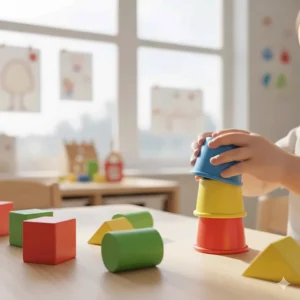
Even with the best toys for speech therapy, certain missteps can limit their effectiveness. Here are pitfalls to watch for.
Mistake #1: Expecting Immediate Results
Language development takes time, and progress often happens in spurts rather than steady upward lines. A toy might seem ineffective for weeks, then suddenly your child makes a breakthrough. Give new toys at least 2-3 weeks of regular use before deciding they’re not working.
Mistake #2: Doing All the Talking
It’s tempting to narrate everything and ask constant questions, but children need processing time and space to communicate. After modeling language, wait. Count to 10 in your head if needed. That awkward silence often prompts communication attempts.
Mistake #3: Correcting Too Much
Constantly correcting pronunciation or grammar makes communication feel like a test rather than fun interaction. Instead, use “recasting”—simply model the correct form naturally. If your child says “Pig eat,” you respond “Yes! The pig is eating the burger!”
Mistake #4: Using Toys Only in Formal “Therapy Time”
The best progress happens when communication becomes part of daily life. Keep speech therapy toys accessible for spontaneous play, not locked away until designated practice time. The most powerful learning happens when children choose to engage.
Price Range and Value Analysis
Understanding the cost-to-benefit ratio helps you invest wisely in toys for speech therapy.
| Price Range | What to Expect | Best Options | Value Rating |
|---|---|---|---|
| Under $15 | Basic toys, may have shorter lifespan | Bubbles, basic puzzles, some flashcards | ⭐⭐⭐⭐ |
| $15-$30 | Quality construction, multiple uses | Pop the Pig, Mr. Potato Head, Melissa & Doug products | ⭐⭐⭐⭐⭐ |
| $30-$50 | Premium materials, extensive features | Larger puzzle sets, premium flashcard systems | ⭐⭐⭐⭐ |
| $50+ | Specialized equipment, professional quality | Technology-based tools, comprehensive sets | ⭐⭐⭐ |
For most families, the $15-$30 range offers the best balance of quality, versatility, and affordability. These products withstand regular use and address multiple goals, making them excellent investments.
Budget-Friendly Alternatives
If money is tight, remember that everyday household items can support speech development too. Plastic containers become shape sorters. Kitchen utensils inspire pretend play. Cardboard boxes transform into anything imagination suggests. The key isn’t expensive toys—it’s consistent, engaging interaction.
Supporting Tools and Accessories
Maximize the effectiveness of your speech therapy toys by pairing them with complementary materials and strategies.
Visual Supports Enhance Understanding
Create simple visual schedules showing the play routine. Use picture symbols to represent actions (blow bubbles, my turn, your turn). These visual aids help children with language processing difficulties follow along more easily.
Documentation Tracks Progress
Keep a simple log noting which toys your child engages with, new words you hear, and behaviors you observe. This record helps you notice patterns and celebrate progress that might otherwise go unnoticed during day-to-day activities.
Rotating Toy Selection Maintains Interest
Don’t present all your speech therapy toys at once. Rotate them every few weeks to maintain novelty and interest. What seemed boring last month might become fascinating when reintroduced after a break.
Integrating Toys into Professional Speech Therapy
If your child receives professional speech therapy, these toys for speech therapy can extend that work into your home environment.
Communicating with Your SLP
Share which toys you’ve purchased and ask your speech-language pathologist for specific strategies to use with them. Many SLPs can provide target word lists, sentence scripts, or goal-specific activities tailored to your child’s plan.
Homework That Doesn’t Feel Like Work
When therapists send home practice activities, incorporate your speech therapy toys to make them more engaging. Articulation practice becomes fun when combined with Pop the Pig. Vocabulary homework feels less like a chore when using interactive flashcards.
Generalization Opportunities
The goal of speech therapy isn’t perfect performance in the clinic—it’s functional communication in real life. Home use of therapy toys helps children transfer skills from structured therapy to natural environments where they actually need them.
Specialized Considerations for Different Needs
Every child is unique, and certain diagnoses or circumstances call for adapted approaches with speech therapy toys.
Autism Spectrum Disorder
Children with autism often respond particularly well to structured, predictable toys with clear cause-and-effect relationships. Talking flashcards provide consistent auditory input without social pressure. Visual schedules help prepare for transitions between activities. Sensory considerations matter—some children need fidgets available during table activities, while others require movement breaks.
Apraxia of Speech
Childhood apraxia of speech requires massive amounts of practice with target movements. Choose toys that naturally elicit numerous repetitions. Bubbles work beautifully because children willingly request “bubble” or “more” repeatedly. Mr. Potato Head generates many trials of target sounds as children name body parts and accessories.
Hearing Impairment
For children with hearing loss, visual support becomes crucial. Choose toys with strong visual components like puzzles and Mr. Potato Head. Talking flashcards may need supplementation with visual cues or signs. Ensure appropriate amplification use during play.
Bilingual Families
Use speech therapy toys to build vocabulary in both languages. Many families worry about confusion, but research shows bilingualism doesn’t cause speech delays—it simply takes time to build both systems. Talking flashcards available in multiple languages support dual-language development.
Where to Buy Speech Therapy Toys
While numerous retailers carry educational toys, Amazon offers distinct advantages for purchasing toys for speech therapy.
Why Amazon Works Well
Amazon provides extensive customer reviews from verified purchasers, including many from speech therapists themselves. Prime shipping means quick delivery when you need specific tools for upcoming sessions. The return policy protects you if a toy doesn’t meet expectations. Frequent deals and promotions make quality tools more affordable.
Other Retailers Worth Considering
Target and Walmart often carry popular items like Mr. Potato Head and Melissa & Doug products, sometimes at competitive prices. Specialty education suppliers like Lakeshore Learning offer professional-grade materials. Teacher supply stores stock items specifically designed for educational use. Local toy stores may have knowledgeable staff who can provide personalized recommendations.
Second-Hand Options
Thrift stores, garage sales, and Facebook Marketplace frequently have gently-used speech therapy toys at significant discounts. Quality wooden toys from Melissa & Doug often clean up beautifully. Board games and puzzles work fine second-hand if all pieces are present. Just avoid used items with small parts that go in mouths for hygiene reasons.
Frequently Asked Questions
❓ How many speech therapy toys for toddlers should I start with?
❓ Can toys for speech therapy replace professional intervention?
❓ What age should I start using therapy toys for speech development?
❓ How long should speech therapy toy sessions last at home?
❓ Are electronic speech therapy toys better than traditional options?
Conclusion: Taking the Next Step in Your Child’s Communication Journey
Choosing the right speech therapy toys represents an investment in your child’s future communication confidence. Throughout this guide, you’ve discovered seven proven options, each backed by real customer reviews and professional recommendations. From talking flashcards that build vocabulary systematically to games like Pop the Pig that make language practice feel like play, these tools transform the often-challenging work of speech development into engaging activities children actually enjoy.
Remember that no single toy works miracles overnight. Progress comes through consistent, enjoyable interaction around carefully chosen materials. The toys featured here have helped thousands of families and therapists support children’s communication development. They represent different price points, target various skill levels, and address multiple goals—giving you options that fit your unique situation.
Whether you’re a parent supporting your child between therapy sessions, a teacher seeking classroom materials, or a speech-language pathologist building your clinical toolkit, these toys for speech therapy provide practical solutions. They encourage the kind of natural, motivating communication practice that leads to real progress.
Start with one or two options that match your child’s current level and interests. Implement the strategies shared throughout this article. Document progress to celebrate those incremental improvements that might otherwise go unnoticed. Connect with your speech-language pathologist to ensure home practice aligns with professional recommendations.
Your child’s communication abilities will continue developing with the right support and tools. These speech therapy toys provide that foundation for success.
🎉 Start Building Communication Skills Today!
✨ These expert-recommended speech therapy toys are ready to transform your approach to language development. Don’t wait—check current Amazon prices and customer reviews now. Every conversation starts somewhere! 🌈
Recommended for You
- Good Toys for Tummy Time: 7 Best Picks Parents Love
- 7 Best Educational Toys for Preschoolers in 2025
- Best Montessori Toys 2025: 7 Picks to Boost Development
Disclaimer: This article contains affiliate links. If you purchase products through these links, we may earn a small commission at no additional cost to you.
✨ Found this helpful? Share it with your friends! 💬🤗
