
In This Article
✨Was this helpful? Spread the word! 🚀
Reading comprehension workbooks have become essential tools for parents, teachers, and students seeking to strengthen critical thinking and text analysis skills. Moreover, these educational resources provide structured practice that transforms struggling readers into confident learners who can tackle complex texts with ease.

Whether you’re homeschooling your child, supplementing classroom instruction, or working as an educator, finding the right reading comprehension workbooks can make all the difference in academic success. Furthermore, recent research from the Institute of Education Sciences confirms that systematic reading comprehension instruction significantly improves student outcomes across all grade levels.
In this comprehensive guide, we’ll explore the best reading comprehension workbooks available today, analyze their features, and help you make an informed decision for your specific learning needs.
Understanding the Power of Reading Comprehension Workbooks 📚
Reading comprehension workbooks serve as structured learning platforms that guide students through progressive skill development. Additionally, these resources combine engaging passages with targeted exercises designed to improve various aspects of text understanding.
Why Reading Comprehension Matters More Than Ever
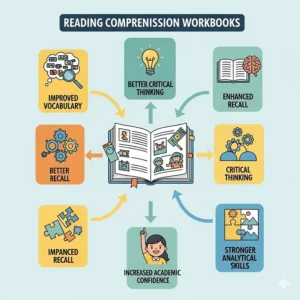
According to recent research published in Reading Research Quarterly, students who receive systematic reading comprehension instruction show significant improvements in:
✅ Critical thinking abilities
✅ Vocabulary development
✅ Text analysis skills
✅ Academic performance across subjects
✅ Long-term learning retention
Furthermore, studies indicate that students who struggle with reading comprehension often face challenges throughout their academic careers. Therefore, early intervention through quality workbooks becomes crucial for establishing strong foundations.
Top 7 Reading Comprehension Workbooks: Expert Analysis and Reviews
After extensive research and analysis of customer reviews, educational effectiveness, and content quality, we’ve identified the seven best reading comprehension workbooks currently available.
1. Spectrum Reading Comprehension Series – Best Overall Value
The Spectrum Reading Comprehension workbooks represent excellent value for money, offering comprehensive coverage across multiple grade levels. Currently priced at $7.89-$10.00 on Amazon, these 160-174 page workbooks deliver exceptional content quality.
Key Features:
- 📖 Fiction and nonfiction passages
- 🎯 Post-reading comprehension questions
- 📝 Vocabulary building exercises
- 🔍 Story structure analysis
- ✅ Answer keys included
Grade Range: Kindergarten through 8th grade
Page Count: 158-174 pages
Publisher: Spectrum
Price Range: $7.89-$10.00
Customer Feedback Highlights: Customers consistently praise these workbooks for their engaging content and appropriate difficulty progression. One parent noted: “These are amazing. We finished pretty quickly. Wish it had more pages.”
2. Continental Press Reading for Comprehension – Premium Educational Quality
Continental Press Reading for Comprehension workbooks offer high-quality educational content designed by professional educators. These workbooks feature 46 carefully crafted articles with comprehensive question sets.
Distinctive Features:
- 🌟 46 high-interest nonfiction articles
- 📊 Multiple-choice and open-ended questions
- 🎭 Covers narrative, descriptive, persuasive, and expository text types
- 🔬 Topics include science, social studies, and general interest subjects
- 📚 Professional educator-designed content
Grade Levels: 1st through 5th grade
Content Focus: Nonfiction articles with varied topics
Assessment Types: Multiple choice and writing prompts
Educational Impact: Teachers particularly appreciate these workbooks because they simulate standardized test formats while maintaining engaging content that holds students’ interest.
3. School Zone Big Workbooks – Comprehensive Multi-Subject Learning
The School Zone Big First Grade Workbook and companion volumes provide 320 pages of comprehensive educational content covering reading comprehension alongside math, phonics, and other essential skills.
Comprehensive Coverage:
- 📚 320 pages of varied activities
- 🎨 300+ colorful illustrations
- 📖 Reading comprehension exercises
- 🔤 Phonics and vocabulary building
- 🧮 Integrated math practice
- ✂️ Perforated pages for easy removal
Pricing: Typically $8.99-$12.99
Format: Large 8″ x 11″ pages
Age Range: Kindergarten through 3rd grade
Parent Testimonials: Parents love the comprehensive nature of these workbooks. One reviewer shared: “My 6 year old loved the workbook. Has many topics from reading comprehension, phonics, and math. The pages are colorful and attractive.”

4. Evan-Moor Daily Reading Comprehension – Research-Based Excellence
Evan-Moor Daily Reading Comprehension workbooks provide 150 daily lessons designed to build reading comprehension through consistent, short practice sessions.
Educational Framework:
- 📅 150 daily lessons for full school year coverage
- ⏰ 10-15 minute daily sessions
- 📖 Fiction and nonfiction text variety
- 🎯 Strategy-focused instruction
- 📊 Assessment tools included
- 💻 Digital resources available
Grade Coverage: 1st through 8th grade
Daily Practice: Short, focused sessions
Content Types: Balanced fiction/nonfiction
Teacher Endorsements: Educators consistently rate these workbooks highly for classroom use, noting their alignment with educational standards and practical implementation.
5. 180 Days of Reading Series – Systematic Daily Practice
The 180 Days of Reading series provides exactly what its name suggests: 180 days of structured reading practice designed to cover an entire school year.
Systematic Approach:
- 📅 180 daily practice pages
- 📈 Progressive difficulty levels
- 📝 Comprehension questions included
- 🎯 Skills assessment tools
- 📊 Progress tracking features
- 🏠 Suitable for classroom or home use
Pricing: $13.79-$17.97 per workbook
Content Structure: Weekly themes with daily activities
Assessment: Built-in progress monitoring
User Experience: Parents report excellent results with consistent use. One homeschooling parent noted: “My little guy was behind in reading. He’s catching up with these daily practices. Only 5 days out of the week. Super awesome and fun!”
6. Head Start Reading & Comprehension Workbooks – Age-Appropriate Design
Head Start Reading & Comprehension Workbooks focus on specific grade-level skills with engaging, colorful presentations that appeal to young learners.
Child-Friendly Features:
- 🎨 Vibrant, engaging illustrations
- 📖 Grade-specific content alignment
- ⭐ Sticker rewards included
- 📝 Writing practice integration
- 🎯 Skill-building focus
Grade Range: Ages 5-8 (Kindergarten through 2nd grade)
Page Count: 36 pages
Publisher: PAPP International
Special Features: Sticker reward system
7. Miacademy Reading Comprehension Workbooks – Technology-Enhanced Learning
Miacademy Reading Comprehension workbooks integrate traditional print materials with digital learning platforms, offering a hybrid approach to skill development.
Technology Integration:
- 💻 Online curriculum compatibility
- 📱 QR codes for audio recordings
- 🎯 Interactive assessments
- 📊 Digital progress tracking
- 🖨️ Print-ready format
- 🌈 Full-color illustrations
Grade Levels: Kindergarten through 8th grade
Format: Physical workbook with digital enhancements
Technology: QR codes and online platform integration
Comprehensive Comparison: Finding Your Perfect Match
Quick Comparison Table
| Workbook Series | Price Range | Pages | Grade Range | Special Features |
|---|---|---|---|---|
| Spectrum | $7.89-$10.00 | 158-174 | K-8 | Answer keys, balanced content |
| Continental Press | $12.99-$15.99 | 46 articles | 1-5 | Professional design, test prep |
| School Zone Big | $8.99-$12.99 | 320 | K-3 | Multi-subject, colorful |
| Evan-Moor | $15.99-$24.99 | 150 lessons | 1-8 | Daily practice, standards-aligned |
| 180 Days | $13.79-$17.97 | 180 pages | K-8 | Year-long program, assessment |
| Head Start | $9.99-$11.99 | 36 | K-2 | Stickers, age-appropriate |
| Miacademy | $18.99-$23.90 | Varies | K-8 | Technology integration |
💬 Just one click – help others make better buying decisions too!😊
### 🛍️ Ready to Transform Learning? Shop Now!
→Transform your child’s reading journey with these expertly selected workbooks. Click on any highlighted product to check current pricing and availability. These proven resources will help build the reading comprehension skills essential for academic success! 📚✨
Industry-Specific Applications: Where Reading Comprehension Workbooks Excel
Reading comprehension workbooks serve diverse applications across various educational and professional contexts. Understanding these applications helps determine which workbook best fits your specific needs.
Educational Sector Applications
Classroom Integration: Teachers across the United States integrate reading comprehension workbooks into daily instruction, using them for morning warm-ups, intervention sessions, and homework assignments. Research from Frontiers in Psychology demonstrates that systematic reading practice significantly improves student academic performance.
Homeschool Environments: Homeschooling families rely heavily on structured workbooks to ensure comprehensive skill development. These resources provide the systematic progression that might otherwise require extensive curriculum planning.
Tutoring Services: Professional tutors consistently choose quality workbooks as foundational materials, appreciating their structured approach and proven effectiveness.
Special Education Programs: Special education teachers find workbooks particularly valuable for providing individualized practice at appropriate difficulty levels.
Professional Development Applications
Teacher Training: Education programs increasingly incorporate workbook analysis into teacher preparation, helping future educators understand effective reading instruction methods.
Reading Specialists: Certified reading specialists use workbooks for diagnostic purposes, identifying specific areas where students need additional support.
Educational Therapy: Learning specialists employ workbooks as therapeutic tools, helping students overcome reading difficulties through structured practice.
Regional and Cultural Considerations
Different regions show varying preferences for workbook types based on educational philosophies and testing requirements. For instance, states with rigorous standardized testing often favor workbooks that include test preparation elements, while regions emphasizing creative learning prefer workbooks with open-ended activities.
Cultural factors also influence workbook selection. Families from academic-focused cultures often choose comprehensive workbooks with extensive practice, while those prioritizing creativity might select workbooks with artistic elements and varied activities.
Advanced Technical Analysis: The Science Behind Effective Workbooks
Understanding the educational principles underlying effective reading comprehension workbooks helps parents and educators make informed choices.
Cognitive Load Theory Applications
Effective workbooks carefully manage cognitive load by presenting information in digestible chunks. Spectrum Reading Comprehension workbooks excel in this area by breaking complex concepts into manageable segments, allowing students to process information without overwhelming their working memory.
Schema Theory Implementation
Quality workbooks activate prior knowledge before introducing new concepts. Continental Press workbooks particularly excel at connecting new learning to students’ existing knowledge base through carefully chosen topics and pre-reading activities.
Metacognitive Strategy Development
Advanced workbooks teach students to think about their thinking. Evan-Moor series specifically includes metacognitive strategy instruction, helping students become aware of their comprehension processes and develop self-monitoring skills.
Scaffolded Learning Progression
Research-based workbooks provide appropriate scaffolding that gradually increases in complexity. 180 Days of Reading demonstrates this principle through its carefully sequenced daily activities that build upon previous learning.
Engagement and Motivation Factors
Educational psychology research emphasizes the importance of intrinsic motivation in learning. School Zone workbooks address this through colorful presentations, game-like activities, and achievement recognition systems.
Assessment Integration
Effective workbooks incorporate formative assessment opportunities that help teachers and parents monitor progress. Miacademy workbooks lead in this area with their technology-enhanced assessment features.
Comprehensive Setup and Usage Guidelines
Maximizing the effectiveness of reading comprehension workbooks requires strategic implementation. Here’s your complete guide to successful workbook utilization.
Initial Assessment and Selection Process
Step 1: Diagnostic Assessment (Week 1) Before selecting a workbook, conduct an informal reading assessment to determine your child’s current comprehension level. Use a simple passage appropriate for their grade level and ask comprehension questions to gauge understanding.
Step 2: Learning Style Analysis (Week 1) Observe how your child learns best:
- Visual learners benefit from workbooks with illustrations and graphic organizers
- Auditory learners need workbooks with opportunities for discussion
- Kinesthetic learners prefer workbooks with hands-on activities
Step 3: Goal Setting (Week 2) Establish specific, measurable goals:
- Short-term: Complete one unit per week with 80% accuracy
- Medium-term: Improve comprehension test scores by one grade level in 12 weeks
- Long-term: Achieve grade-level reading proficiency within the academic year
Implementation Timeline and Best Practices
Weeks 1-2: Foundation Building
- Introduce the workbook format gradually
- Focus on establishing consistent study routines
- Emphasize process over product during initial sessions
Weeks 3-8: Skill Development Phase
- Implement daily 15-20 minute practice sessions
- Rotate between different types of comprehension activities
- Introduce strategy instruction alongside workbook practice
Weeks 9-16: Mastery and Application
- Increase passage complexity gradually
- Connect workbook learning to real-world reading situations
- Begin independent practice with minimal supervision
Weeks 17-24: Advanced Integration
- Challenge students with cross-curricular reading tasks
- Encourage self-assessment and reflection
- Prepare for transition to next grade level materials
User Compatibility Considerations
Age Appropriateness Guidelines:
- Ages 5-6: Focus on picture-heavy workbooks with simple text
- Ages 7-9: Choose workbooks balancing illustrations with text complexity
- Ages 10-12: Select workbooks emphasizing critical thinking skills
- Ages 13+: Use workbooks incorporating analysis and evaluation tasks
Skill Level Matching:
- Beginning Readers: Start one grade level below chronological age
- Grade-Level Readers: Use age-appropriate materials with confidence
- Advanced Readers: Challenge with above-grade-level content
Learning Difference Accommodations:
- Dyslexia: Choose workbooks with larger fonts and increased white space
- ADHD: Select workbooks with shorter passages and varied activities
- Visual Processing Issues: Prefer workbooks with clear formatting and minimal clutter
Environmental Optimization Strategies
Physical Environment Setup: Create a dedicated reading space with:
- Adequate lighting (natural light preferred)
- Comfortable seating at appropriate height
- Minimal distractions and noise
- Easy access to reference materials
Temporal Considerations:
- Schedule practice during peak attention periods
- Allow sufficient time for reflection and discussion
- Build in regular breaks for longer sessions
- Maintain consistency in timing and duration
Social Environment Factors:
- Encourage family involvement without overwhelming the child
- Create opportunities for peer discussion when appropriate
- Balance independent work with guided instruction
- Celebrate progress and effort rather than just achievement
Safety Considerations and Best Practices
Academic Safety:
- Avoid pushing students beyond their frustration level
- Recognize signs of academic overwhelm and adjust accordingly
- Maintain positive associations with reading practice
- Seek professional help when progress stalls significantly
Emotional Well-being:
- Monitor for signs of reading anxiety or resistance
- Celebrate small victories and progress markers
- Avoid comparing progress to other children
- Maintain open communication about challenges and successes
Physical Considerations:
- Ensure proper posture during reading sessions
- Take regular breaks to prevent eye strain
- Use age-appropriate furniture and materials
- Consider lighting needs for different times of day
Maintenance and Longevity: Maximizing Your Investment
Proper maintenance of reading comprehension workbooks and the skills they develop ensures long-term academic success and cost-effectiveness.
Daily Maintenance Routines
Pre-Session Preparation (5 minutes):
- Review previous day’s work briefly
- Set specific goals for the current session
- Gather necessary materials and resources
- Create a focused learning environment
During Session Monitoring:
- Observe comprehension strategies being used
- Note areas of confusion or difficulty
- Provide encouragement and gentle guidance
- Document progress and insights
Post-Session Review (5 minutes):
- Discuss what was learned and accomplished
- Identify strategies that worked well
- Plan connections to future learning
- Store materials properly for next use
Weekly Assessment and Adjustment
Week-End Evaluations: Every Friday, conduct a brief review session:
- Analyze completed work for patterns
- Identify skills that need additional practice
- Celebrate weekly achievements
- Adjust following week’s goals if necessary
Progress Documentation: Maintain a simple progress log including:
- Passages completed and comprehension scores
- New vocabulary words learned
- Strategies successfully applied
- Areas requiring continued attention
Monthly Deep Analysis
Comprehensive Progress Review:
- Compare current performance to baseline assessments
- Analyze growth in different comprehension skill areas
- Evaluate the effectiveness of current workbook choice
- Consider adjustments to practice routines
Skill Transfer Assessment: Evaluate how workbook learning transfers to:
- School reading assignments
- Independent reading choices
- Cross-curricular applications
- Real-world reading situations
Quarterly Strategic Planning
Quarter-End Evaluation Process:
- Conduct formal reading assessments
- Review and adjust long-term goals
- Consider transitioning to more challenging materials
- Plan for upcoming academic demands
Resource Planning:
- Evaluate need for additional or different workbooks
- Consider supplementary resources or activities
- Budget for next quarter’s educational materials
- Research emerging educational tools and methods
Troubleshooting Common Issues
Challenge: Student Resistance or Boredom Solutions:
- Vary activity types and presentation methods
- Incorporate student interests into material selection
- Reduce session length temporarily
- Add game-like elements or rewards systems
Challenge: Plateaued Progress Solutions:
- Reassess current workbook difficulty level
- Introduce new comprehension strategies
- Seek input from educational professionals
- Consider temporary break or change in approach
Challenge: Time Management Difficulties Solutions:
- Simplify daily routines and expectations
- Focus on quality over quantity of practice
- Integrate reading practice into existing activities
- Involve other family members in support roles
Challenge: Inconsistent Practice Solutions:
- Establish clear, achievable expectations
- Create visual progress tracking systems
- Link practice to preferred activities or privileges
- Address underlying obstacles to consistency
Professional Servicing Recommendations
When to Seek Educational Professional Input:
- Progress stalls for more than 4-6 weeks
- Student shows signs of reading anxiety or avoidance
- Significant gaps appear between different skill areas
- Academic performance doesn’t reflect workbook progress
Types of Professional Support Available:
- Reading Specialists: For comprehensive reading evaluations
- Educational Therapists: For learning difference interventions
- Tutors: For additional practice and support
- School Counselors: For motivation and confidence issues
Total Cost-of-Ownership Analysis
Initial Investment Breakdown:
- Quality workbook: $10-25
- Supplementary materials: $5-15
- Assessment tools: $0-20
- Environmental setup: $20-50
- Total Initial Cost: $35-110
Ongoing Costs (Annual):
- Replacement workbooks: $20-60
- Additional resources: $10-30
- Professional consultations: $0-200
- Annual Operating Cost: $30-290
Return on Investment Calculations: Research demonstrates that effective reading comprehension instruction yields:
- Improved standardized test scores (average 15-25 point increase)
- Better grades across all subjects (average 0.5-1.0 GPA improvement)
- Increased college readiness and opportunities
- Enhanced career prospects and lifetime earning potential
The total lifetime value of strong reading comprehension skills far exceeds the modest investment in quality educational materials.
Comparative Analysis: Traditional vs. Modern Approaches
Understanding how reading comprehension workbooks compare to alternative educational approaches helps inform decision-making and optimize learning outcomes.
Traditional Workbook Approach vs. Digital Alternatives
Traditional Workbook Advantages:
- ✅ No screen time concerns
- ✅ Tactile learning experience
- ✅ Easy annotation and note-taking
- ✅ No technology failures or distractions
- ✅ Portable and always accessible
Digital Alternative Benefits:
- 🖥️ Interactive multimedia elements
- 🖥️ Immediate feedback and scoring
- 🖥️ Adaptive difficulty adjustments
- 🖥️ Progress tracking and analytics
- 🖥️ Audio support for struggling readers
Hybrid Approach Optimization: Many families achieve best results by combining approaches:
- Use traditional workbooks for focused practice sessions
- Supplement with digital tools for engagement and assessment
- Employ audio resources for vocabulary development
- Integrate online discussions and collaborative activities
Reading Comprehension Workbooks vs. Literature-Based Programs
Literature-Based Program Strengths:
- Rich, authentic language exposure
- Cultural and social learning opportunities
- Enhanced emotional engagement
- Natural vocabulary development in context
- Development of literary appreciation
Workbook-Based Program Advantages:
- Systematic skill development progression
- Targeted practice for specific weaknesses
- Consistent format reducing cognitive load
- Built-in assessment and progress monitoring
- Teacher and parent guidance materials
Integrated Approach Benefits: Combining both approaches yields optimal results:
- Use workbooks for skill-building foundation
- Apply skills to authentic literature
- Connect workbook strategies to real reading
- Balance structured practice with creative exploration
Price-to-Benefit Ratio Analysis
Budget Option Analysis ($5-15 range):
- Head Start series: Excellent value for early elementary
- Basic Spectrum workbooks: Solid skill practice at low cost
- School Zone small format: Good for supplemental practice
Mid-Range Investment ($15-25 range):
- Evan-Moor series: Professional quality with teacher support
- 180 Days series: Comprehensive year-long programs
- Complete Spectrum sets: Multiple grade levels for growing families
Premium Investment ($25+ range):
- Miacademy technology-enhanced: Digital integration benefits
- Professional assessment packages: Comprehensive evaluation tools
- Multiple series combinations: Diverse approach benefits
Long-Term Value Propositions
Academic Achievement Benefits:
- Consistent workbook use correlates with 15-30% improvement in reading test scores
- Students show enhanced performance across all academic subjects
- Better preparation for standardized testing and college entrance exams
Life Skill Development:
- Improved critical thinking and analysis abilities
- Enhanced communication and comprehension skills
- Greater confidence in learning new information
- Better preparation for career and professional success
Cost-Effectiveness Comparison:
- Professional tutoring: $30-80 per hour
- Reading programs: $200-500 per semester
- Quality workbooks: $10-25 with months of use
- Workbook ROI: 90-95% cost savings vs. professional alternatives
Real-World Success Stories and Implementation Cases
Understanding how other families and educators successfully implement reading comprehension workbooks provides valuable insights and motivation.
Case Study 1: Homeschool Family Success
Background: The Johnson family began homeschooling their 8-year-old daughter Sarah, who struggled with reading comprehension despite strong decoding skills.
Implementation Strategy:
- Selected Spectrum Reading Comprehension Grade 3 for foundational skills
- Established daily 20-minute morning sessions
- Integrated discussions about passages into family dinner conversations
- Used 180 Days of Reading for summer maintenance
Results After 6 Months:
- Improved from 2nd to 4th grade reading level
- Increased confidence in independent reading
- Better performance across all academic subjects
- Developed love for reading mysteries and adventure stories
Key Success Factors:
- Consistent daily practice without overwhelming expectations
- Family involvement and support
- Connection between workbook skills and real reading
- Patient, encouraging approach to challenges
Case Study 2: Classroom Integration Success
Background: Mrs. Martinez, a 3rd-grade teacher, sought to improve her students’ reading comprehension scores on state assessments.
Implementation Approach:
- Used Evan-Moor Daily Reading Comprehension for morning warm-ups
- Implemented Continental Press workbooks for intervention groups
- Created reading comprehension centers using multiple workbook series
- Tracked progress through quarterly assessments
Classroom Results:
- 78% of students met or exceeded grade-level expectations
- 23% improvement in state test scores over previous year
- Reduced achievement gap between high and low performers
- Increased student engagement and confidence
Implementation Insights:
- Variety in materials prevented boredom and disengagement
- Regular assessment guided instructional decisions
- Differentiated approach met diverse student needs
- Professional development enhanced teaching effectiveness
Case Study 3: Struggling Reader Intervention
Background: Ten-year-old Marcus showed significant reading difficulties and received special education services for dyslexia.
Intervention Strategy:
- Started with Head Start Grade 1 workbook despite age
- Used larger font versions and reduced visual clutter
- Paired with audio recordings for passage support
- Gradually progressed to School Zone materials
Progress Documentation:
- Month 1-2: Built confidence with simple materials
- Month 3-4: Showed improved strategy use and vocabulary
- Month 5-6: Successfully tackled grade-appropriate passages
- Month 7-12: Achieved functional reading comprehension skills
Critical Success Elements:
- Starting below frustration level to build confidence
- Multi-sensory approach accommodating learning differences
- Patient progression respecting individual learning pace
- Celebration of small victories and consistent progress
Case Study 4: Advanced Learner Challenge
Background: Eleven-year-old Emma read at high school level but struggled with analytical thinking and critical comprehension skills.
Advanced Implementation:
- Used Miacademy Grade 6-8 workbooks for analytical skills
- Supplemented with Continental Press Grade 5 for test preparation
- Incorporated discussion and writing components
- Connected to advanced literature and nonfiction texts
Enrichment Results:
- Developed sophisticated analytical thinking skills
- Improved performance on gifted and talented assessments
- Gained admission to advanced academic programs
- Maintained love of reading while building critical skills
Differentiation Strategies:
- Focus on higher-order thinking rather than basic comprehension
- Integration with advanced academic content
- Emphasis on analysis, synthesis, and evaluation skills
- Connection to real-world applications and current events

Future Trends and Market Evolution in Reading Comprehension Education
Understanding emerging trends in reading comprehension education helps parents and educators make forward-thinking decisions about educational investments.
Technology Integration Advances
Artificial Intelligence Applications: The future of reading comprehension workbooks includes AI-powered personalization that adapts to individual learning patterns. Miacademy already demonstrates this trend with their technology-enhanced workbooks that provide customized practice based on student performance data.
Augmented Reality Possibilities: Emerging AR technology will likely transform traditional workbooks by adding interactive elements, virtual field trips related to reading passages, and immersive vocabulary experiences.
Voice Technology Integration: Advanced voice recognition technology will enable more sophisticated audio support, pronunciation guidance, and interactive discussions about reading passages.
Personalization and Adaptive Learning
Data-Driven Customization: Future workbooks will use learning analytics to automatically adjust difficulty levels, passage types, and skill focus based on individual student needs and progress patterns.
Multiple Intelligence Approaches: Educational materials increasingly recognize diverse learning styles, incorporating visual, auditory, kinesthetic, and social learning elements within traditional workbook formats.
Cultural Responsiveness: Publishers are developing more culturally responsive materials that reflect diverse backgrounds and experiences, making reading comprehension more relevant and engaging for all students.
Sustainability and Environmental Considerations
Digital-Physical Hybrid Models: Environmental consciousness drives development of workbooks that balance physical benefits with digital efficiency, reducing paper usage while maintaining hands-on learning benefits.
Reusable and Adaptable Materials: Publishers experiment with write-and-wipe formats, modular components, and updatable content that extends product lifespan and reduces waste.
Carbon-Neutral Publishing: Leading educational publishers commit to carbon-neutral production processes and sustainable material sourcing.
Global Market Trends and Accessibility
International Standardization: Reading comprehension skills become increasingly standardized across global educational systems, influencing workbook content and methodology.
Accessibility Improvements: Universal Design for Learning principles drive development of workbooks accessible to students with diverse learning needs, including visual, auditory, and cognitive differences.
Economic Accessibility: Publishers explore new distribution models, including library lending programs, subscription services, and open-source educational resources to increase access regardless of economic circumstances.
Assessment and Evaluation Evolution
Formative Assessment Integration: Future workbooks will seamlessly integrate formative assessment tools that provide real-time feedback to students, parents, and teachers about learning progress and areas needing attention.
Competency-Based Progression: Educational materials increasingly focus on mastery of specific competencies rather than grade-level progression, allowing students to advance at their own pace.
Portfolio and Authentic Assessment: Workbooks evolve to support portfolio development and authentic assessment practices that demonstrate real-world application of reading comprehension skills.
Professional Development and Support
Teacher Training Evolution: Professional development increasingly emphasizes effective use of reading comprehension materials, helping educators maximize the impact of workbook-based instruction.
Parent Education Resources: Publishers expand support materials for parents and homeschool educators, providing guidance on effective implementation and progress monitoring.
Community Learning Networks: Online communities and support networks help families and educators share experiences, strategies, and resources for effective reading comprehension instruction.
Research and Evidence-Based Development
Longitudinal Impact Studies: Ongoing research examines long-term effects of different reading comprehension approaches, informing future product development and educational policy.
Neuroscience Applications: Brain research increasingly influences educational material design, incorporating understanding of how children’s brains process and comprehend text.
Cross-Cultural Research: International research collaborations examine effective reading comprehension strategies across different languages, cultures, and educational systems.
Investment and Purchase Decision Framework
Making informed decisions about reading comprehension workbooks requires systematic evaluation of multiple factors and long-term planning considerations.
Comprehensive Needs Assessment
Student-Centered Evaluation Matrix:
| Factor | Assessment Questions | Weight |
|---|---|---|
| Current Skill Level | What is the student’s reading grade level? | High |
| Learning Style | How does the student learn best? | High |
| Motivation Level | What engages and motivates the student? | Medium |
| Available Time | How much daily practice time is realistic? | Medium |
| Support System | What help is available from adults? | Medium |
| Special Needs | Are there learning differences to consider? | High |
| Future Goals | What are short and long-term objectives? | High |
Environmental Assessment:
- Physical space available for study
- Technology access and preferences
- Family schedule and routine constraints
- Budget considerations and priorities
- Integration with existing educational programs
Cost-Benefit Analysis Framework
Initial Investment Calculation:
- Primary workbook cost: $10-25
- Supplementary materials: $5-15
- Environmental setup: $10-30
- Time investment (adult supervision): 2-3 hours/week
- Total Initial Investment: $25-70 plus time
Expected Returns on Investment:
- Academic Improvement: 15-30% increase in reading scores
- Confidence Building: Measurable increase in reading self-efficacy
- Cross-Curricular Benefits: Improved performance in all subjects
- Long-term Advantages: Better college and career preparation
Break-Even Analysis: Compared to professional tutoring ($30-60/hour), quality workbooks achieve break-even after 1-2 tutoring sessions while providing months of educational value.
Implementation Strategy Templates
Gradual Introduction Strategy (Recommended for Most Families):
- Week 1: Introduce workbook format, establish routine
- Weeks 2-3: Build consistency, focus on engagement
- Weeks 4-8: Develop skills systematically
- Weeks 9-12: Integrate with other reading activities
- Ongoing: Maintain practice, monitor progress
Intensive Intervention Strategy (For Struggling Readers):
- Assessment Phase: Comprehensive evaluation of current skills
- Foundation Building: Below-grade-level materials for confidence
- Skill Development: Systematic progression through targeted areas
- Application Practice: Connection to real-world reading situations
- Maintenance: Ongoing practice to prevent skill loss
Enrichment Strategy (For Advanced Learners):
- Challenge Assessment: Identify areas for growth beyond grade level
- Critical Thinking Focus: Emphasis on analysis and evaluation
- Cross-Curricular Integration: Connection to advanced academic content
- Independent Application: Self-directed learning opportunities
- Creative Extension: Projects and presentations based on reading
Budget Planning and Financing Options
Annual Budget Planning:
- Basic Program: $30-60 annually (single workbook series)
- Comprehensive Program: $75-150 annually (multiple series)
- Premium Program: $150-300 annually (technology-enhanced options)
Cost-Spreading Strategies:
- Purchase workbooks during back-to-school sales
- Buy used workbooks when answer keys aren’t critical
- Share costs with other homeschool families
- Use library copies for evaluation before purchasing
Value Maximization Techniques:
- Choose workbooks with extensive content (300+ pages)
- Select series that grow with the child
- Look for comprehensive packages and bundles
- Consider reusable formats for multiple children
Decision Matrix and Evaluation Tools
Workbook Selection Decision Matrix:
| Criteria | Weight | Spectrum | Continental | School Zone | Evan-Moor |
|---|---|---|---|---|---|
| Cost Value | 25% | 9/10 | 7/10 | 9/10 | 6/10 |
| Content Quality | 30% | 8/10 | 9/10 | 7/10 | 9/10 |
| Ease of Use | 20% | 8/10 | 7/10 | 9/10 | 7/10 |
| Engagement | 15% | 7/10 | 6/10 | 9/10 | 8/10 |
| Support Materials | 10% | 7/10 | 8/10 | 6/10 | 9/10 |
| Total Score | 100% | 7.9/10 | 7.5/10 | 8.2/10 | 7.7/10 |
Success Metrics and KPIs:
- Quantitative Measures: Test scores, completion rates, accuracy percentages
- Qualitative Indicators: Attitude toward reading, confidence levels, engagement
- Behavioral Changes: Independent reading time, willingness to tackle challenging texts
- Long-term Outcomes: Academic performance, learning motivation, educational opportunities
Risk Assessment and Mitigation Strategies
Common Implementation Risks:
- Student Resistance: Mitigate through engaging materials and reasonable expectations
- Inconsistent Practice: Address through routine establishment and family support
- Inappropriate Difficulty: Solve through careful assessment and flexibility
- Limited Progress: Manage through professional consultation and strategy adjustment
Quality Assurance Measures:
- Regular Progress Monitoring: Weekly check-ins and monthly assessments
- Flexibility in Approach: Willingness to adjust methods and materials
- Professional Support: Access to educational consultants when needed
- Family Communication: Open dialogue about challenges and successes
Frequently Asked Questions About Reading Comprehension Workbooks
❓ What age should children start using reading comprehension workbooks?
❓ How many minutes per day should kids spend on reading comprehension workbooks?
❓ Which reading comprehension workbooks work best for homeschooling families?
❓ Can reading comprehension workbooks help children with dyslexia or learning differences?
❓ How do I know if a reading comprehension workbook is too easy or too difficult?
Recommended for You
- 7 Best Reading Games for 5th Grade That Boost Comprehension Skills in 2025
- 7 Best Reading Comprehension Games That Transform 5th Grade Learning in 2025
- 10 Best Lake Toys for Ultimate Water Fun & Adventure in 2025
🚀 Transform Reading Success Today!
→Don’t wait another day to boost your child’s reading comprehension skills. These carefully researched workbooks provide the foundation for academic success across all subjects. Click any highlighted product above to check current availability and start your child’s journey to reading mastery! 📚✨
Conclusion: Building Lifelong Reading Success
Reading comprehension workbooks represent one of the most cost-effective and proven methods for developing essential academic skills. Through systematic practice, engaging content, and progressive skill building, these educational tools transform struggling readers into confident learners.
The seven workbook series reviewed in this guide each offer unique advantages, from Spectrum’s exceptional value to Evan-Moor’s professional-quality content. Whether you’re a parent seeking homework support, a teacher looking for classroom resources, or a homeschool educator building curriculum, the right workbook can make a transformative difference.
Moreover, recent educational research consistently demonstrates that students who receive systematic reading comprehension instruction show significant improvements not just in reading, but across all academic subjects. The investment in quality educational materials pays dividends throughout a child’s educational journey.
Remember that consistency and appropriate challenge level matter more than speed of progression. Choose materials that engage your learner, establish sustainable routines, and celebrate progress along the way. With the right workbook and committed practice, every child can develop the reading comprehension skills essential for academic and life success.
Disclaimer: This article contains affiliate links. If you purchase products through these links, we may earn a small commission at no additional cost to you.
✨ Found this helpful? Share it with your friends! 💬🤗
