
In This Article
Remember when you first handed your child a crayon and watched their eyes light up? That magical moment when color met imagination? I’ve seen it happen countless times, and here’s what most parents don’t realize—the quality of those first art supplies shapes everything that comes next.
Here’s the thing about professional colored pencils for kids: they’re not just fancy crayons with a higher price tag. When your eight-year-old struggles with cheap pencils that break every three seconds or produce colors that look like faded laundry, their frustration isn’t about perfectionism—it’s about the gap between what they envision and what appears on paper. Research from the National Endowment for the Arts demonstrates that arts engagement during early childhood correlates with stronger social-emotional attributes and improved cognitive outcomes, making the choice of art supplies more critical than many realize.
Professional colored pencils for kids bridge that gap. They deliver rich pigments without requiring adult-level pressure or technique. The cores don’t snap when your kindergartener gets enthusiastic. The colors actually blend when they’re experimenting with purple skies and green clouds. These aren’t luxuries—they’re the difference between “I can’t do this” and “look what I made!”
In this comprehensive guide, I’ll walk you through everything you need to know about choosing professional colored pencils for kids in 2026. Whether you’re shopping for a budding artist, stocking a classroom, or just trying to keep the creative spark alive at home, you’ll find real product recommendations, honest comparisons, and practical advice that actually works.
Quick Comparison Table: Top Professional Colored Pencils for Kids
| Product | Best For | Color Count | Price Range | Key Feature |
|---|---|---|---|---|
| Prismacolor Premier 24-Count | Blending & vibrant colors | 24-150 | $11-$100 | Soft, buttery core |
| Faber-Castell Triangular EcoPencils | Grip & control | 12-24 | $7-$15 | Ergonomic triangle shape |
| Crayola Colored Pencils 50-Count | Budget-friendly starter | 12-100 | $3-$26 | Durable & safe |
| Shuttle Art 80 Colored Pencils | Value & variety | 80 | $18-$25 | Break-resistant core |
| Arteza Kids Scented Colored Pencils | Engagement & fun | 24 | $12-$18 | Scented with fruit aromas |
| Castle Art Supplies 72-Count | Intermediate artists | 72 | $28-$35 | Organized storage case |
| Faber-Castell Polychromos | Advanced young artists | 12-120 | $20-$165 | Professional oil-based |
💬 Just one click – help others make better buying decisions too! 😊
✨ Don’t Miss These Exclusive Deals!
🔍 Take your child’s artistic journey to the next level with these carefully selected products. Click on any highlighted item to check current pricing and availability. These professional colored pencils for kids will help you nurture authentic creativity your family will treasure!
Top 7 Professional Colored Pencils for Kids: Expert Analysis
1. Prismacolor Premier Colored Pencils – Best for Blending & Vibrant Colors
When it comes to artist-grade colored pencils that kids can actually use, Prismacolor Premier sits at the top for good reason. These aren’t your grandmother’s Crayolas—they feature soft, wax-based cores that lay down color like butter on warm toast.
Key Specifications:
- Available in 12, 24, 48, 72, or 150 color sets
- Soft wax-based core for smooth application
- Pre-sharpened and ready to use
- Thick 3.3mm core
The magic of Prismacolor Premier lies in how forgiving they are. These pencils blend beautifully and produce vibrant, intense colors that really show up on black paper, making them perfect for kids experimenting with different techniques. My own students have created gallery-worthy pieces with the 24-count set—no joke.
Price Range: $11-$100 depending on set size (24-count typically $15-$20)
Customer Feedback: Parents consistently praise how these pencils inspire confidence. One review mentioned their shy daughter finally felt “like a real artist” after switching from student-grade pencils. The only common complaint? They can break if dropped, but that’s the tradeoff for that creamy texture.
✅ Pros:
- Exceptional color vibrancy and blending capability
- Soft core requires minimal pressure
- Wide color range even in smaller sets
❌ Cons:
- Cores can be fragile and break with rough handling
- Higher price point than basic options
2. Faber-Castell Triangular Colored EcoPencils – Best for Grip & Control
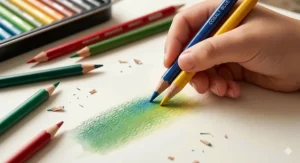
Here’s what nobody tells you about teaching kids to draw: grip matters more than talent. Enter Faber-Castell Triangular EcoPencils—the pencil that actually makes ergonomic sense.
Key Specifications:
- Triangular barrel for comfortable grip
- 12 or 24 color sets available
- Made from reforested wood (eco-friendly)
- Break-resistant leads
The triangular-shaped pencils are easy to hold and give better control, with vibrant and specially formulated colors that provide a smooth finish without flaking. I’ve watched kindergarteners hold these correctly on the first try—that triangle shape is genius for developing proper pencil grip while creating art.
Price Range: $7-$15 for sets
Customer Feedback: Teachers love these for classroom use. The sustainability angle is a bonus, but parents buy them because kids ages 5-8 can actually control them without hand fatigue.
✅ Pros:
- Ergonomic design prevents cramping
- Eco-friendly construction
- Excellent for fine motor skill development
❌ Cons:
- Limited color selection compared to larger sets
- Firmer core requires slightly more pressure
3. Crayola Colored Pencils 50-Count – Best Budget-Friendly Starter Set
Let’s be real: not every parent can drop $50 on colored pencils, especially when there’s a decent chance they’ll end up scattered under the couch. That’s where Crayola Colored Pencils shine—literally and figuratively.
Key Specifications:
- 12, 24, 36, 50, or 100 count options
- Pre-sharpened for immediate use
- Non-toxic and ASTM D-4236 certified
- Hard 3.3mm cores for durability
Crayola pencils are the Honda Civic of art supplies—reliable, affordable, and they’ll get the job done. While they have harder cores that appear lighter on the page than other brands, the colors resist smudging well, which is actually useful for young children. Perfect for kids ages 5-10 who are still figuring out whether art is their thing.
Price Range: $3-$26 (50-count around $12-13)
Customer Feedback: Parents appreciate the value—you get 50 colors for the price of a couple of coffees. The durability means fewer tears when little hands get aggressive with shading.
✅ Pros:
- Exceptional value for money
- Widely available in stores
- Durable cores withstand heavy pressure
❌ Cons:
- Less vibrant than premium brands
- Limited blending capabilities
- Harder cores need more pressure
4. Shuttle Art 80 Colored Pencils Set – Best Value & Variety
When your kid announces they need “ALL the colors” for their masterpiece, Shuttle Art has your back without breaking your bank.
Key Specifications:
- 80 unique vibrant colors
- Includes coloring book, sketch pad, and sharpeners
- 3.0mm break-resistant thick core
- Numbered with DIY color chart
This is where professional colored pencils for kids meet practical parenting. The set contains 80 unique vibrant colors with soft leads that write smoothly and lay down vibrant colors, easy to blend, layer and shade. That color chart alone is worth the price—no more guessing which pencil is “burnt sienna” versus “raw umber.”
Price Range: $18-$25
Customer Feedback: Art teachers rave about the organization. The metal tin keeps everything tidy, and the included extras (sketch pad, coloring book) mean kids can start creating immediately. One parent called it “the gateway drug to serious art.”
✅ Pros:
- Impressive color variety at mid-range price
- Complete set with accessories included
- Organized storage tin
❌ Cons:
- Overwhelming color choice for beginners
- Quality varies slightly across the range
5. Arteza Kids Scented Colored Pencils – Best for Engagement & Fun
Sometimes art needs a sensory boost, and Arteza figured out that kids who can smell their mango-scented orange pencil are kids who stay engaged longer.
Key Specifications:
- 24 scented pencils (fruit aromas)
- Triangle ergonomic design
- Break-resistant thick cores
- Non-toxic and certified safe
These aren’t gimmicky—they’re strategically brilliant. The 24 scented colored pencils feature fun aromas like mango, banana, peach, strawberry, and chocolate to make drawing more engaging, with highly pigmented cores that blend, layer, and shade smoothly. Perfect for kids ages 4-8 who need that extra motivation to sit still with art supplies.
Price Range: $12-$18
Customer Feedback: Parents of reluctant artists swear by these. The scents aren’t overwhelming but provide enough novelty to make art time feel like an event rather than a chore.
✅ Pros:
- Unique sensory experience increases engagement
- Ergonomic triangle shape for young hands
- Safe, non-toxic materials
❌ Cons:
- Scents may fade over time
- Limited to 24 colors
- Not suitable for serious artistic work
6. Castle Art Supplies 72 Colored Pencils – Best for Intermediate Young Artists
When your kid graduates from “purple dinosaurs” to “realistic animal portraits,” Castle Art Supplies offers that professional step-up without the professional price tag.
Key Specifications:
- 72 pre-sharpened colored pencils
- Soft wax-based cores
- Organized zipper case
- Color-coded for easy selection
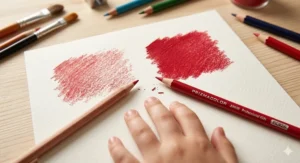
Castle Art Supplies bridges the gap between student and professional grade. The 72-color range gives intermediate artists (ages 10-14) enough variety to explore shading, blending, and color theory without the overwhelm of 150-pencil sets.
Price Range: $28-$35
Customer Feedback: Homeschooling parents love these for art curriculum. The zipper case survives being tossed in backpacks, and the color quality impresses without intimidating beginners.
✅ Pros:
- Professional-quality at accessible price
- Portable, durable storage
- Excellent color range for learning
❌ Cons:
- Some inconsistency in core softness
- Case can be bulky for younger kids
7. Faber-Castell Polychromos – Best for Advanced Young Artists
For the kid who’s already talking about art school, Faber-Castell Polychromos represents the real deal—professional oil-based pencils that happen to be kid-friendly.
Key Specifications:
- Available in 12, 24, 36, 60, or 120 color sets
- Oil-based cores (not wax)
- Superior lightfastness ratings
- Holds sharp point for detailed work
Faber-Castell Polychromos are oil-based with firm, break-resistant leads that stay sharp and are perfect for fine details, making them very popular with professional portrait artists. These are investment pieces for serious young artists ages 12+ who’ve outgrown everything else.
Price Range: $20-$165 (24-count around $35-40)
Customer Feedback: Parents report these last years with proper care. One reviewer mentioned their daughter still uses the same set from age 13 to college. The longevity justifies the higher cost for committed young artists.
✅ Pros:
- Professional artist-grade quality
- Exceptional lightfastness (artwork won’t fade)
- Precise control for detailed work
❌ Cons:
- Premium price point
- Require more advanced technique for blending
- Can be intimidating for beginners
Understanding Different Core Types in Professional Colored Pencils for Kids
Not all pencil cores are created equal, and understanding the difference helps you match the right tool to your child’s skill level and artistic goals. Colored pencils have evolved significantly over the past century, with modern formulations offering distinct advantages for young artists.
Wax-Based Cores
Think creamy, soft, and forgiving. Wax-based professional colored pencils for kids like Prismacolor Premier and Crayola use wax as their binding agent. They blend like a dream, layer easily, and don’t require much pressure—perfect for younger artists who haven’t developed strong hand muscles yet.
The tradeoff? They’re softer, which means more frequent sharpening and occasional breakage. But for kids ages 5-10 learning to blend and create smooth color transitions, that soft texture is educational gold.
Oil-Based Cores
Faber-Castell Polychromos and similar oil-based pencils feel firmer and more controlled. They hold a sharp point longer, making them ideal for detailed work and fine lines. Being a firmer, oil-based pencil, they are very easy to keep sharp and perfect for fine details.
These work best for kids 10+ who’ve mastered basic techniques and want more precision. The learning curve is steeper, but the results—especially for realistic drawing—are worth it.
Hybrid and Specialty Cores
Some brands blend wax and oil, trying to capture the best of both worlds. Castle Art Supplies and mid-range options often take this approach. For most kids, these represent a sweet spot—easy enough to use but capable of more advanced techniques.
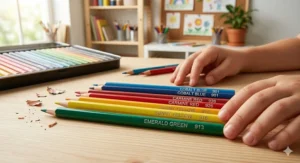
Art Supplies Quality: Why It Matters for Developing Artistic Skills
Here’s what research tells us: At-home arts engagement of toddlers, preschoolers, and kindergarteners was positively correlated with a variety of social-emotional attributes and cognitive outcomes. But here’s the part that surprised me—the quality of those art supplies directly impacts that engagement.
Think about it from a kid’s perspective. You have an image in your mind—a vibrant sunset, a realistic portrait of your dog, a fantasy landscape. Cheap pencils that break, produce muddy colors, or require adult-level strength to create visible marks? Those create a disconnect between vision and execution that’s deeply discouraging.
Professional colored pencils for kids remove technical barriers. When the tools work properly, kids can focus on creativity rather than fighting with equipment. Research published in Frontiers in Psychology demonstrates that specific forms of arts education foster children’s socioemotional development, including identity formation, self-regulation, and interpersonal skills.
The Confidence Connection
I’ve watched this transformation dozens of times: a frustrated eight-year-old who “can’t draw” switches from dollar-store pencils to quality colored pencils. Same kid, same talent level—but suddenly their leaves look green, their skies blend from blue to purple, and their confidence soars.
Quality art supplies don’t create talent, but they remove the obstacles that make kids quit before discovering whether they have any.
Age-Appropriate Selection Guide for Children’s Art Techniques
Matching professional colored pencils for kids to developmental stages isn’t just smart shopping—it’s setting up success.
Ages 3-5: Foundation Building
At this age, focus on:
- Triangle-shaped pencils like Faber-Castell Triangular EcoPencils
- Thick cores that resist breaking (3.5mm+)
- Limited color sets (12-24 colors maximum)
- Non-toxic certification as primary concern
Young children at this stage are developing fine motor control. Triangular colored pencils are designed for kids’ hands to improve grip, support fine motor development, and help children draw comfortably and with better control. According to Rocky Mountain College of Art + Design, the rapid formation of neural connections during early childhood offers the best opportunity to improve cognitive flexibility and visual literacy through art education. The goal isn’t masterpieces—it’s building hand strength and pencil control.
Ages 6-9: Exploration Phase
This is the sweet spot for:
- Wax-based sets with 24-50 colors (Prismacolor Premier 24, Crayola 50)
- Soft cores that encourage blending experiments
- Sharpeners included (they’ll need them)
- Organized storage to teach responsibility
Kids this age are experimenting with techniques. They want colors that blend, they’re trying to create realistic shading, and they’re developing personal artistic preferences. Give them tools that reward curiosity without requiring mastery.
Ages 10-13: Skill Development
Serious young artists need:
- Larger color ranges (60-80+ colors)
- Both wax and oil-based options for different effects
- Professional-adjacent quality (Shuttle Art 80, Castle Art Supplies 72)
- Color charts and organization systems
From kindergarten through fifth grade, children’s participation in out-of-school arts activities was associated with positive social-emotional attributes and successful developmental outcomes. At this age, art supplies should grow with ambitions—they’re learning techniques, studying tutorials, and comparing their work to others.
Ages 14+: Advanced Techniques
Teens committed to art need professional tools:
- Artist-grade pencils (Faber-Castell Polychromos)
- Lightfast ratings if preserving artwork matters
- Open stock availability to replace favorite colors
- Specialized sets (metallics, watercolor, etc.)
At this stage, we’re talking about building portfolios, entering competitions, or simply pursuing art as a serious hobby. The investment in quality pays off in results.
How to Choose Professional Colored Pencils for Kids: 7 Essential Steps
Step 1: Assess Your Child’s Skill Level Honestly
Forget what Pinterest says about child prodigies. Where is YOUR kid actually at? Can they hold a pencil correctly? Have they expressed frustration with current supplies? Are they copying YouTube tutorials or just enjoying free expression?
Match the tool to the current skill, not where you hope they’ll be. An overwhelmed beginner with 120 Polychromos pencils is like giving car keys to someone who hasn’t learned to drive.
Step 2: Consider Your Budget and Longevity
Professional colored pencils for kids range from $7 to $165. Here’s the math that actually matters: cost per use, not cost per set.
A $35 set that lasts three years and gets used weekly costs less than a $15 set that breaks after two months and sits abandoned. Factor in your child’s track record with art supplies and commitment level.
Step 3: Evaluate Core Firmness vs. Age
Younger kids (under 8) benefit from softer, wax-based cores that don’t require much pressure. Older kids (10+) can handle firmer cores and may prefer them for detail work.
Test it yourself if possible: press each pencil type on paper. If YOU struggle to get good color without significant effort, your child will too.
Step 4: Check Color Range Needs
More isn’t always better. A overwhelmed six-year-old with 80 colors will default to the same five favorites anyway. A focused twelve-year-old studying color theory needs variety.
Sweet spots: 12-24 colors for beginners, 48-72 for intermediate, 100+ for advanced or specialized work.
Step 5: Inspect Storage and Organization
Kids lose things—it’s practically in the job description. Sets that come in tins, zippered cases, or organized trays survive childhood better than loose pencils in boxes.
Shuttle Art and Castle Art Supplies excel here with durable storage that actually closes properly (revolutionary concept, I know).
Step 6: Research Brand Reputation and Safety
All our recommended brands meet ASTM D-4236 safety standards, but verify this for any purchase. Read recent reviews—formulations change, and a brand that was great in 2020 might have quality-control issues in 2026.
Look for patterns in reviews, not individual complaints. Every product gets some negative feedback; watch for recurring themes.
Step 7: Start Small, Expand Gradually
Unless you KNOW your child is committed, start with a mid-range set (24-48 colors). See how they use it. Do they explore all the colors? Do they wish for more? Do they take care of the pencils?
Build from there. Many brands sell individual pencils or smaller sets that can expand an existing collection without redundant purchases.
Acrylic Paint Set for Tweens: Complementary Art Supplies
While we’re focused on professional colored pencils for kids, let’s talk about expanding the art toolkit. Acrylic paint sets for tweens represent the next frontier for young artists ready to explore different mediums.
The beauty of pairing colored pencils with acrylics? They complement each other perfectly. Pencils teach control, precision, and color theory. Paints teach boldness, experimentation, and working on larger scales.
For tweens (ages 10-13), look for acrylic paint set for tweens that include:
- 12-24 basic colors in tubes (easier to control than bottles)
- Student-grade quality (artist-grade isn’t necessary yet)
- Brushes in various sizes
- Canvas boards or paper designed for acrylics
Brands like Arteza, Castle Art Supplies, and Apple Barrel make excellent starter sets. The key is giving tweens tools that feel professional without the intimidation factor of truly professional supplies.
Artist Drawing Set: Building a Complete Art Station
Professional colored pencils for kids work best as part of a larger artist drawing set ecosystem. Here’s what completes the picture:
Essential Components
Drawing Surfaces: Skip the printer paper. Invest in mixed media or drawing paper (80-100 lb weight) that can handle pressure, erasing, and blending.
Sharpeners: Quality hand-crank or electric sharpeners specifically designed for colored pencils. The cheap plastic ones that come in sets? They’re basically pencil destroyers.
Erasers: Kneaded erasers for gentle lifting of colored pencil, white vinyl erasers for general use. Yes, colored pencil can be erased—somewhat.
Blending Tools: Blending stumps, tortillons, or even colorless blender pencils help create smooth transitions, especially with wax-based pencils.
Storage: Dedicated art supply organizers keep everything accessible. When the barrier to creating is low (“just grab the box and go”), kids create more often.
The Studio Mindset
Creating a dedicated art space—even if it’s just a corner of a bedroom—signals that art matters. Art education allows young children to express themselves while developing emotional resilience and fine motor skills. That dedicated space reinforces art as a valued activity, not just a rainy-day backup plan.
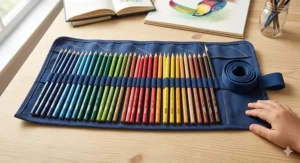
Calligraphy Set for Beginners: Introduction to Precision Art
For kids who love their professional colored pencils for kids but crave new challenges, calligraphy set for beginners offers a natural next step in precision work.
Calligraphy teaches patience, control, and the importance of consistent pressure—skills that directly transfer back to colored pencil work. The methodical nature appeals to kids who enjoy the meditative aspects of detailed coloring.
Look for beginner sets with:
- Felt-tip calligraphy pens (easier than traditional nibs)
- Practice sheets with guidelines
- Instruction booklets or online tutorials
- Modern fonts alongside traditional styles
Brands like Tombow and Pentel make excellent beginner-friendly options. The practice of controlling line weight in calligraphy makes kids better at controlling pencil pressure when shading and creating depth in their colored pencil artwork.
Digital Drawing Tablet Kids: Bridging Traditional and Digital Art
Here’s something interesting: professional colored pencils for kids and digital drawing tablet kids aren’t competitors—they’re collaborators in modern art education.
Many young artists scan their colored pencil work and enhance it digitally, or sketch digitally then print and color with physical pencils. The combination teaches versatility and opens doors to careers that didn’t exist a decade ago.
Age-Appropriate Digital Options
Ages 8-10: Simple LCD drawing tablets ($15-$25) that erase at the push of a button. These are great for sketch practice without paper waste.
Ages 11-13: Entry-level graphics tablets like Wacom Intuos ($80-$100) that connect to computers. These require learning curve but teach digital art fundamentals.
Ages 14+: Display tablets or iPad with Apple Pencil ($300+) for serious digital work. This level makes sense when traditional skills are solid and career interest is evident.
Creative activities stimulate important areas of the brain, fostering creativity and encouraging innovative thinking—whether that creativity happens on paper or screen matters less than consistent engagement.
Comparison: Professional vs. Student-Grade Colored Pencils
| Feature | Professional Grade | Student Grade |
|---|---|---|
| Pigment Concentration | High (60-80%) | Moderate (30-50%) |
| Lightfastness | Rated and tested | Often not rated |
| Blendability | Excellent | Fair to good |
| Core Strength | Varies by brand | Generally harder |
| Price per Pencil | $0.50-$3.00 | $0.10-$0.30 |
| Color Range | 100-120+ colors | 12-48 colors |
| Replacement Availability | Open stock | Full sets only |
When Professional Makes Sense
Invest in professional colored pencils for kids when:
- Child shows sustained interest (6+ months of regular use)
- Current supplies limit their artistic expression
- They’re taking classes or entering competitions
- Preserving artwork long-term matters
- Budget allows for gradual collection building
When Student-Grade Works Fine
Stick with student-grade when:
- Child is under 7 and still exploring interests
- Art is occasional rather than regular activity
- Budget is tight (quality matters but so does reality)
- Loss or damage is likely (young kids, classroom settings)
The truth? Many kids do beautiful work with student-grade supplies, and many adults waste expensive pencils because they don’t know how to use them properly. Match the investment to both interest level and skill development.
Price Range & Value Analysis: Getting the Most for Your Money
Let’s break down the real cost of professional colored pencils for kids:
Budget Tier ($3-$15)
Best Options: Crayola 12-24 count, basic Faber-Castell
Cost per pencil: $0.10-$0.30
Best for: Ages 3-7, classroom settings, testing interest
Longevity: 6-12 months with regular use
These aren’t “cheap” in the negative sense—they’re accessible entry points. Perfect for parents unsure if art will stick or teachers buying for multiple students.
Mid-Range Tier ($16-$40)
Best Options: Prismacolor Premier 24, Shuttle Art 80, Arteza Sets
Cost per pencil: $0.25-$0.60
Best for: Ages 7-13, committed hobbyists, homeschool curricula
Longevity: 1-3 years with care
This is the sweet spot for most families. You get professional-adjacent quality without the professional price tag. These sets teach proper techniques without the pressure of “I just spent $100 on pencils you’re wasting.”
Premium Tier ($41-$100+)
Best Options: Faber-Castell Polychromos 60-120, Prismacolor Premier 150
Cost per pencil: $0.80-$2.00
Best for: Ages 12+, serious artists, portfolio work
Longevity: 3-5+ years, sometimes decades
For the right kid at the right time, these are investments rather than purchases. They grow with skill level, maintain resale value, and can literally last through high school and into college.
The Replacement Factor
Here’s what budget calculators miss: Faber-Castell Polychromos and Prismacolor Premier sell individual pencils. When your kid’s favorite blue wears down to a nub, you replace one pencil for $1-2, not the whole $40 set.
Cheaper sets often require full replacement when key colors run out. Factor this into your math—sometimes premium is actually more economical long-term.
Safety and Non-Toxic Considerations for Kids
Every parent’s first question should be: “Is this safe for my kid to use?” Here’s what you actually need to know about professional colored pencils for kids and safety.
The ASTM D-4236 Standard
All pencils sold in the US for children’s use must meet ASTM D-4236 certification. This verifies:
- Non-toxic materials in normal use
- Proper labeling of any potential hazards
- Compliance with CPSC (Consumer Product Safety Commission) regulations
Our recommended brands—Prismacolor, Faber-Castell, Crayola, Shuttle Art, Arteza, Castle Art—all carry this certification.
Age-Specific Concerns
Ages 3-5: Choking hazard warnings apply. Some pencils or removable parts aren’t suitable for kids who still put things in mouths. Supervision is key.
Ages 6-12: Main concern shifts to allergies. While rare, some kids react to specific pigments or wood treatments. Start with small sets to test sensitivity.
Ages 13+: Minimal safety concerns beyond standard sharp object awareness.
What “Non-Toxic” Actually Means
Non-toxic doesn’t mean edible (please don’t let your toddler eat pencils, even certified ones). It means that under normal use—holding, drawing, occasional hand-to-mouth contact—the materials won’t cause harm.
Arteza kids colored pencils are tested and certified non-toxic to ensure a worry-free creative experience in schools, art classes, and home craft time. This certification process is rigorous and reassessed regularly.
Dust and Particulate Concerns
Sharpening colored pencils creates fine dust. For kids with respiratory sensitivities:
- Use sharpeners with waste containers
- Sharpen in well-ventilated areas
- Clean work surfaces regularly
- Consider pre-sharpened sets for young kids
When to Worry (and When Not To)
Don’t worry about: Colored hands (washes off), normal wear and tear, occasional pencil breakage.
Do check into: Persistent skin reactions, respiratory issues during use, broken pencils creating sharp splinters (replace immediately).
Storage and Organization Tips for Longevity
Professional colored pencils for kids can last years—if they survive the first month. Here’s how to keep that investment from becoming a pile of broken stubs under the couch.
Container Solutions
For Sets Under 24: Original tins usually work fine. If they don’t close properly or start falling apart, transfer to a zippered pencil case with elastic loops.
For Sets 24-72: Look for artist cases with individual slots or elastic straps. Castle Art Supplies and Shuttle Art include these, but aftermarket cases from brands like BTSKY work great too.
For Sets 72+: Multi-layer storage boxes or drawer organizers become essential. Professional artists use tackle boxes or dedicated art storage—these work perfectly for serious young artists.
The Vertical vs. Horizontal Debate
Store pencils vertically (points up) in cups or containers when possible. This prevents points from breaking against container walls and makes color selection easier at a glance.
For travel, horizontal in a case is necessary—just ensure individual slots or padding prevents rolling and clashing.
Maintenance Routines
Teach kids these habits early:
- Cap it or case it: Points in, case closed, every single time
- Sharpen smart: Little bits often, not huge chunks rarely
- Temperature matters: Don’t leave in hot cars where wax cores can soften and cores can separate from wood casings
- Monthly inventory: Count pencils, identify replacements needed, reorganize
The Lost Pencil Reality
Kids lose things. Build this into your system:
- Buy replaceable brands (open stock availability)
- Use color-coded dots or labels for expensive sets
- Implement a “check before leaving” routine
- Accept that some loss is inevitable—it’s not worth the power struggle
I’ve seen parents spend more energy tracking every single pencil than the pencils cost. That energy drains the joy from art. Find your reasonable middle ground.
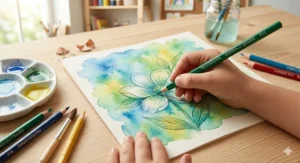
Common Mistakes When Buying Professional Colored Pencils for Kids
After years of watching parents navigate this market, here are the pitfalls that trip up even savvy shoppers.
Mistake #1: Buying Based on Count, Not Quality
The trap: “120 pencils for $20? That’s a steal compared to 24 for $15!”
The reality: Those 120 pencils often have duplicate colors, poor pigmentation, or cores that snap if you look at them wrong. Your kid will use maybe 20 colors, get frustrated, and abandon the set.
The fix: Focus on reviews and core quality over quantity. Twenty excellent pencils beat 100 mediocre ones every time.
Mistake #2: Gifting Pro Tools to Beginners
The trap: “I’ll get them the BEST so they can grow into them!”
The reality: A six-year-old with $165 Faber-Castell Polychromos is like giving a learner driver a Ferrari. Overwhelming, intimidating, and more likely to sit unused than inspire growth.
The fix: Match tools to current skill plus one level up. They’ll upgrade when ready.
Mistake #3: Ignoring Grip and Ergonomics
The trap: “Pencils are pencils—focus on color quality!”
The reality: A kid with cramping hands from poorly designed pencils won’t use them, regardless of how beautiful the colors are.
The fix: For kids under 10, triangle-shaped barrels aren’t optional—they’re essential. Test grip comfort before committing to large sets.
Mistake #4: Skipping Test Sets
The trap: “The 150-count set is the best value per pencil!”
The reality: Your kid might hate wax-based cores and prefer oil-based, or vice versa. You won’t know until they’ve tried both.
The fix: Buy smaller sets of different types first. Let them experiment. Then invest in larger sets of what they actually enjoy using.
Mistake #5: Forgetting Accessories
The trap: “The pencils are perfect—that’s all we need!”
The reality: Without proper sharpeners, quality paper, and storage, those perfect pencils will frustrate rather than inspire.
The fix: Budget 20-30% of your pencil cost for accessories. It’s not optional spending—it’s enabling the actual use of your investment.
Developing Artistic Skills Through Proper Tool Selection
Here’s the secret nobody tells you: professional colored pencils for kids don’t create artistic skill, but they remove barriers that prevent skill development.
The Technical Confidence Loop
When a child’s tools work properly, they can focus on learning technique rather than fighting equipment. Art education allows young children to express themselves while developing emotional resilience and fine motor skills, and it plays an increasingly important role in early childhood curricula.
That loop looks like this:
- Attempt a technique (blending, shading, layering)
- Tools respond predictably
- See improvement in results
- Feel motivated to try more advanced techniques
- Repeat
Break that loop with frustrating supplies, and kids conclude they’re “bad at art” when really their tools were bad at being tools.
Skill Progression Milestones
Ages 4-6: Motor Control Focus: Grip development, staying in lines, color recognition Tools needed: Ergonomic shapes, bright colors, forgiving materials
Ages 7-9: Technique Exploration Focus: Blending, pressure control, color mixing Tools needed: Soft cores, variety of colors, blendable mediums
Ages 10-12: Style Development Focus: Realistic shading, personal aesthetic, medium mastery Tools needed: Professional-grade quality, color range, specialized tools
Ages 13+: Refinement and Specialization Focus: Portfolio pieces, technique perfection, artistic voice Tools needed: Artist-grade materials, lightfast pigments, professional equipment
The Comparison Trap
Social media shows twelve-year-olds creating museum-quality art with $200 pencil sets. Don’t let this distort your expectations or pressure your kid.
Most professional artists will tell you: they spent years working with basic supplies before premium tools made sense. The fundamentals matter more than the brand name on the pencil.
❓ FAQ: Your Top Questions About Professional Colored Pencils for Kids Answered
❓ What age should kids start using professional colored pencils for kids?
❓ How many colors do kids actually need in a colored pencil set?
❓ Are expensive professional colored pencils for kids worth the investment?
❓ Can professional colored pencils for kids be sharpened in regular pencil sharpeners?
❓ How do you teach kids proper care for professional colored pencils for kids?
Conclusion: Making the Right Choice for Your Young Artist
After comparing features, analyzing prices, and reviewing customer experiences, here’s what it comes down to: the best professional colored pencils for kids are the ones that match your child’s current skill level, inspire regular use, and fit your family’s budget without guilt or regret.
For most families, I recommend starting with Prismacolor Premier 24-count ($15-20) for kids ages 7-12 who’ve shown sustained interest in art. They deliver professional-quality results that build confidence without the overwhelming color count that intimidates beginners. The soft, blendable cores forgive inexperience while teaching proper technique.
If your child is younger (5-7) or still developing pencil grip, Faber-Castell Triangular EcoPencils ($7-15) offer the perfect combination of ergonomic design and quality color. The triangle shape literally teaches proper grip while delivering results that motivate continued exploration.
For serious young artists (ages 12+) ready for the next level, Faber-Castell Polychromos represent an investment in their artistic future. Yes, they’re expensive, but they’re also the same tools professional artists use—and with proper care, they’ll last through high school and beyond.
Budget-conscious families can’t go wrong with Shuttle Art 80 ($18-25). You get impressive variety, complete accessories, and quality that punches well above its price point. It’s the set I recommend to homeschool families who need value without sacrificing quality.
Remember: Arts engagement during childhood correlates with stronger social-emotional attributes, improved cognitive outcomes, and helps children regulate emotions—critical skills for well-adjusted development. The colored pencils you choose today aren’t just art supplies—they’re tools for building confidence, expressing emotions, and developing skills that extend far beyond the art room.
Whether you start with a $7 set or invest in premium pencils, what matters most is creating space for regular creative practice. The most expensive pencils in the world won’t matter if they sit in a drawer unused. But give your child accessible, quality tools and dedicated time to use them, and you’re fostering skills and confidence that last a lifetime.
Now stop overthinking and pick a set. Your kid’s next masterpiece is waiting to happen.
Recommended for You
- 7 Best Chemistry Set for 12 Year Old in 2026
- 7 Best Coding Games for 10 Year Olds – 2026
- 7 Best Robotics Kit for 10 Year Old | Top STEM Picks 2026
Disclaimer: This article contains affiliate links. If you purchase products through these links, we may earn a small commission at no additional cost to you.
✨ Found this helpful? Share it with your friends! 💬🤗
