
In This Article
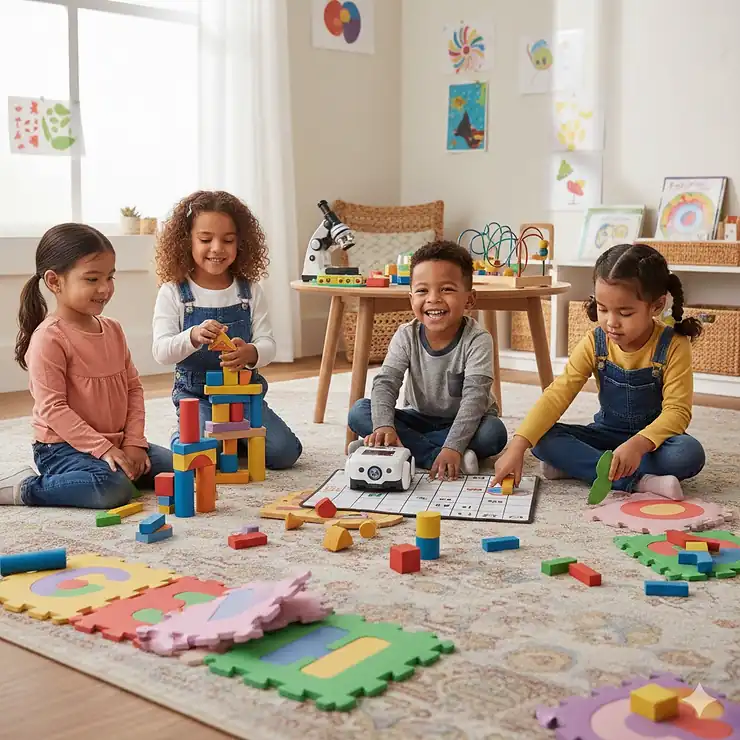
Five years old is a magical age of discovery. Your child’s brain is developing at lightning speed, absorbing information like a sponge and building crucial cognitive skills that will shape their entire academic journey. According to the CDC’s developmental milestones, 5-year-olds typically count to 10, pay attention for 5-7 minutes during activities, and write some letters in their name. This makes it the perfect time to introduce engaging learning toys for 5 year olds that transform playtime into powerful learning opportunities.
I’ve spent countless hours researching and testing educational toys, and here’s what I’ve learned: the right toys for a 5 year old boy or girl don’t just entertain—they build problem-solving skills, enhance spatial reasoning, and introduce foundational STEM concepts in ways that feel like pure fun. Research from the National Center for Biotechnology Information shows that children at this age develop pre-literacy and numeracy skills rapidly, making it an ideal window for educational enrichment.
In this comprehensive guide, you’ll discover the 7 best learning toys for 5 year olds currently available on Amazon, complete with honest reviews, pricing details, and expert insights to help you choose the perfect educational companion for your kindergartener.
Quick Comparison Table
| Product | Age Range | Price Range | Key Feature | Rating |
|---|---|---|---|---|
| Osmo Coding Starter Kit | 5-10+ years | $49-$99 | Hands-on iPad coding | ⭐⭐⭐⭐⭐ |
| Learning Resources Botley 2.0 | 5+ years | $75-$85 | Screen-free robot coding | ⭐⭐⭐⭐⭐ |
| LEGO Classic Large Brick Box | 4-99 years | $45-$60 | 790 creative pieces | ⭐⭐⭐⭐⭐ |
| VTech Touch & Learn Desk | 2-6 years | $60-$80 | 3-in-1 interactive learning | ⭐⭐⭐⭐½ |
| ThinkFun Gravity Maze | 8+ years | $30-$35 | Marble logic game | ⭐⭐⭐⭐⭐ |
| 10-in-1 STEM Building Set | 4-8 years | $25-$35 | Engineering vehicles | ⭐⭐⭐⭐ |
| Skillmatics Educational Games | 3-6 years | $15-$25 | Reusable activity mats | ⭐⭐⭐⭐½ |
💬 Just one click – help others make better buying decisions too! 😊
Top 7 Learning Toys for 5 Year Olds: Expert Analysis
1. Osmo Coding Starter Kit for iPad
The Osmo Coding Starter Kit brilliantly merges physical play with digital learning, creating an educational experience that feels more like an adventure than a lesson. This innovative system uses magnetic coding blocks that interact with your iPad to teach fundamental programming concepts.
Key Specifications:
- 31 magnetic coding blocks with stackable storage
- 3 progressive coding games (Coding Awbie, Coding Jam, Coding Duo)
- Compatible with iPad and Fire tablets
- Includes Osmo base and reflector
Price Range: $49.99 – $99.99
What sets this apart is the tactile nature—kids aren’t just tapping a screen, they’re physically arranging coding commands and watching their sequences come to life. The three included games progress beautifully from beginner (Coding Awbie) to intermediate (Coding Jam) to advanced (Coding Duo), meaning this stem toys for 5 year olds investment grows with your child.
Parents consistently praise how the system introduces loops, sequencing, and problem-solving without feeling like work. One verified reviewer noted, “My 5-year-old has really enjoyed playing the games… she really stops and thinks about what she has to string together.”
✅ Pros:
- Teaches real coding concepts through play
- Three difficulty levels for extended use
- No WiFi needed for gameplay
❌ Cons:
- Requires tablet purchase (sold separately)
- Higher price point than basic toys
2. Learning Resources Botley 2.0 The Coding Robot
Botley 2.0 represents the next generation of screen-free coding education. This adorable robot won the 2019 Toy of the Year award and deserves every accolade—it’s engineering education disguised as an interactive playmate.
Key Specifications:
- 78-piece activity set with remote programmer
- 150-step programming capability
- 16 fun interactions (train, police car, ghost modes)
- Built-in light sensor for dark play
- Detachable robot arms and 40 coding cards
Price Range: $75-$85
What makes Botley exceptional is its completely screen-free approach. Your child uses the remote programmer to input commands, watching Botley navigate obstacle courses, avoid objects, and follow black-line paths. The coding concepts are identical to what professional programmers use—just presented in a wonderfully accessible format for young minds.
The 2.0 version adds color-coding capabilities, 45-degree turns, and interactive sound effects that transform Botley into various characters. Customer reviews highlight how even kindergarteners master basic sequences within minutes, then spend months exploring advanced features like looping commands and conditional logic.
✅ Pros:
- 100% screen-free coding experience
- Ready to use out of the box
- Advanced features for extended learning
❌ Cons:
- Requires 5 AAA batteries (not included)
- Multiple robots in one room can interfere
3. LEGO Classic Large Creative Brick Box (10698)
The LEGO Classic Large Creative Brick Box proves that sometimes the most powerful learning tools are the simplest. With 790 pieces in 33 vibrant colors, this set is less about following instructions and more about unleashing pure imagination.
Key Specifications:
- 790 LEGO bricks in 33 different colors
- 8 types of windows and doors
- 2 green baseplates (6×6 and 4×2 inches)
- 6 tires and wheel rims
- Sturdy storage box included
Price Range: $45-$60
What makes this particular LEGO set ideal for 5-year-olds is its thoughtful inclusion of special pieces—windows, doors, eyes, and wheels—that inspire storytelling and creative construction. While younger children might need initial guidance, the included building ideas provide perfect jumping-off points for independent creation.
Research shows that open-ended building toys like LEGO develop spatial reasoning, fine motor skills, and mathematical thinking. Your child isn’t just stacking blocks; they’re experimenting with symmetry, balance, patterns, and structural engineering concepts. Plus, LEGO sets are famously compatible—these bricks will work with any future LEGO purchases, making this a foundation investment.
Verified customers consistently mention this set’s ability to engage children for hours. One parent noted it’s “perfect for promoting critical thinking and problem-solving skills” while another emphasized the “endless building options” that keep creativity fresh.
✅ Pros:
- Promotes open-ended creative thinking
- Compatible with all LEGO sets
- Develops fine motor and spatial skills
❌ Cons:
- Small parts (choking hazard under 3)
- May need adult help initially
4. VTech Touch and Learn Activity Desk Deluxe
The VTech Touch and Learn Activity Desk is an educational powerhouse that transforms from desk to easel to chalkboard—it’s like having three learning stations in one compact footprint.
Key Specifications:
- 3-in-1 design: desk, easel, and chalkboard
- 100+ vocabulary words and 20+ activities
- Interactive LED screen for letter/number writing
- 5 double-sided activity pages
- Expandable with 8 add-on packs
Price Range: $60-$80
What impressed me most is the interactive desktop that responds to touch, creating immediate feedback loops that reinforce learning. The LED display demonstrates proper letter and number formation stroke-by-stroke—like having a patient teacher built into the toy. Activity pages cover everything from farm animals to ocean creatures, music to math, with voice responses that ask questions and celebrate correct answers.
The expandable nature is brilliant; you can add curriculum-specific packs focusing on reading, phonics, math, or even nursery rhymes as your child’s interests evolve. The transformation to easel and chalkboard encourages artistic expression beyond the programmed activities.
Parents appreciate the included storage compartments that keep art supplies organized, while the accompanying stool makes this feel like a real piece of furniture rather than just another toy.
✅ Pros:
- Multi-functional 3-in-1 design
- Interactive learning with instant feedback
- Grows with child via expansion packs
❌ Cons:
- Requires 3 AA batteries
- Expansion packs sold separately
5. ThinkFun Gravity Maze Marble Run
The ThinkFun Gravity Maze is a brilliant intersection of engineering, physics, and logic—all powered by the simple force of gravity. Though officially rated for ages 8+, advanced 5-year-olds tackle this with parent guidance, and it becomes a toy they’ll use for years.
Key Specifications:
- 60 progressive challenge cards (beginner to expert)
- 9 translucent tower pieces in varying heights
- 3 marbles and 1 target piece
- Game grid base for stable construction
Price Range: $30-$35
Each challenge card shows a starting position and ending target, with hints about which towers to use. The puzzle? Figure out how to arrange the towers so the marble rolls from start to finish. It’s incredibly intuitive once you start, but the complexity escalates beautifully across the 60 challenges.
What makes this exceptional for cognitive development is how it requires mental rotation, spatial visualization, and sequential planning—skills that directly translate to math and science success. Kids must imagine the marble’s path before building, then test and refine their hypotheses.
The transparent towers let children watch the marble’s journey, creating immediate visual feedback about whether their solution works. This trial-and-error process builds resilience and problem-solving persistence. Multiple reviewers mention this becoming a family favorite, with parents getting equally absorbed in the expert-level challenges.
✅ Pros:
- Teaches physics and engineering principles
- 60 challenges provide extended value
- High-quality, durable construction
❌ Cons:
- Advanced for some 5-year-olds without help
- Contains small marbles (supervision needed)
6. 10-in-1 STEM Toys Building Block Set
The 10-in-1 STEM Building Set offers incredible value—112 pieces that transform into 10 different engineering vehicles, from bulldozers to windmills. For toys for a 5 year old boy especially, this scratches that construction itch while teaching mechanical concepts.
Key Specifications:
- 112 colorful building pieces
- Step-by-step instruction manual
- 10 buildable models (one at a time)
- Sturdy storage box included
- Non-toxic, safe materials
Price Range: $25-$35
Each model teaches different mechanical principles—the crane demonstrates leverage and pulleys, the forklift shows lifting mechanisms, and the windmill introduces rotational motion. The instruction manual provides clear visual guides, helping 5-year-olds follow sequences and develop spatial reasoning as they match pieces to diagrams.
What’s particularly clever is how the set encourages repeated use. Kids build a model, play with it, then dismantle to create something new. This cycle reinforces the engineering design process: plan, build, test, rebuild. The variety means children rarely get bored—just when interest in the bulldozer wanes, they’re excited to tackle the gantry crane.
Customer feedback consistently highlights the quality of the pieces and clarity of instructions. Several parents note this becoming a favorite rainy-day activity that keeps kids engaged for 30+ minutes at a time.
✅ Pros:
- Excellent value with 10 different builds
- Develops engineering and problem-solving
- Includes storage for easy cleanup
❌ Cons:
- Can only build one model at a time
- Some younger kids need adult assistance
7. Skillmatics Educational Activity Mats
Skillmatics reusable activity mats represent smart, sustainable learning. These dry-erase mats cover everything from counting to writing to reading, all in formats children can practice repeatedly without waste.
Key Specifications:
- 6 double-sided activity mats
- 2 dry-erase markers with erasable cloth
- Multiple learning themes per set
- Created by education specialists
- Portable for travel
Price Range: $15-$25
The brilliance of Skillmatics lies in its reusability—kids can attempt activities, erase, and try again without the pressure of permanent mistakes. This encourages experimentation and builds confidence. The mats use engaging illustrations and age-appropriate challenges that feel like games rather than worksheets.
Different sets target different skills: “I Can Write” focuses on letter formation, “Search and Find” builds vocabulary and observation, while “Preschool Champion” covers alphabet, numbers, colors, and shapes comprehensively. The varied formats keep learning fresh—matching games, tracing exercises, counting challenges, and problem-solving puzzles all within one compact package.
Parents love these for road trips and restaurant waiting—they’re mess-free, quiet, and genuinely educational. Multiple reviewers mention these becoming go-to activities during screen-free time, with kids requesting specific mats by name.
✅ Pros:
- Reusable and eco-friendly
- Portable for travel
- Covers multiple learning domains
❌ Cons:
- Markers can dry out if not capped
- May be too easy for advanced 5-year-olds
Benefits of STEM Toys for 5 Year Olds vs Traditional Toys
| Feature | STEM Learning Toys | Traditional Toys |
|---|---|---|
| Cognitive Development | Active problem-solving, critical thinking | Passive entertainment |
| Skill Building | Coding, engineering, math concepts | Basic motor skills |
| Engagement Time | 30-60+ minutes focused play | Often shorter attention spans |
| Educational Value | Kindergarten readiness & beyond | Limited academic connection |
| Long-term Use | Growing difficulty levels | Often outgrown quickly |
| Screen Time | Screen-free or educational screen use | Variable, often passive |
How to Choose the Best Learning Toys for Your 5 Year Old
Consider Their Developmental Stage
Every 5-year-old develops at their own pace. Some are ready for advanced coding concepts, while others need more foundational building experiences. Watch how your child approaches problems—do they enjoy sequential tasks, creative building, or physical manipulation? This observation guides you toward toys that match their natural learning style.
Look for Progressive Learning
The best educational toys don’t have a single “win” condition—they offer increasing complexity. Toys like Botley 2.0 and Osmo start simple but hide advanced features that children discover over months. This progressive approach prevents the toy from gathering dust after initial mastery.
Prioritize Hands-On Engagement
Research consistently shows young children learn best through tactile, physical interaction. While screen-based learning has its place, toys that involve building, manipulating, and creating engage multiple senses and strengthen neural connections more effectively.
Check for Safety Certifications
All our recommended products meet strict safety standards, but always verify age recommendations. Small parts warnings exist for good reason—even 5-year-olds might have younger siblings who could access their toys.
Read Real Customer Reviews
Beyond marketing claims, actual parent and child feedback reveals how toys perform in real homes. Look for reviews mentioning engagement duration, replay value, and whether the toy matched the child’s developmental level.
Age-Appropriate STEM Learning Concepts
Understanding what 5-year-olds can realistically master helps set appropriate expectations:
🧮 Math & Logic Skills
- Counting & Number Recognition: Most 5-year-olds count to 10 accurately and recognize written numbers 1-5
- Patterns: Can identify and create simple repeating patterns
- Spatial Relationships: Understanding concepts like bigger/smaller, inside/outside
- Basic Addition: Beginning to grasp adding small quantities
🔤 Literacy Foundations
- Letter Recognition: Identifying most alphabet letters
- Sound-Letter Correspondence: Beginning to connect letters with their sounds
- Writing: Forming some letters, especially those in their name
- Storytelling: Creating narratives with beginning, middle, and end
🔧 Engineering Thinking
- Cause and Effect: Understanding that actions produce predictable results
- Simple Machines: Grasping levers, wheels, and basic mechanical concepts
- Building & Construction: Following simple instructions to create structures
- Problem-Solving: Attempting multiple strategies when first approach doesn’t work

Price Range & Value Analysis
| Budget Category | Price Range | Best Options | Value Proposition |
|---|---|---|---|
| Budget-Friendly | $15-$30 | Skillmatics, STEM Building Set | High replay value, multiple activities |
| Mid-Range | $30-$60 | ThinkFun Gravity Maze, LEGO Classic | Quality construction, years of use |
| Premium | $60-$100 | Osmo, VTech Desk, Botley 2.0 | Advanced features, comprehensive learning |
The sweet spot for most families falls in the $30-$60 range, where quality meets affordability. However, premium options like Osmo and Botley justify their cost through expandability and the depth of educational content they deliver.
✨ Don’t Miss These Exclusive Deals!
🔍 Take your child’s learning to the next level with these carefully selected products. Click on any highlighted item to check current pricing and availability. These educational tools will help you create authentic learning experiences your family will love!
The Science Behind Play-Based Learning
Play isn’t just fun—it’s the primary way young children’s brains develop crucial neural pathways. When a 5-year-old programs Botley to navigate a maze, they’re not just playing; they’re building executive function skills that will serve them throughout life.
According to developmental psychologists, play-based learning activates multiple brain regions simultaneously. Physical manipulation of toys like LEGO strengthens fine motor pathways. Problem-solving with Gravity Maze engages prefrontal cortex development. Social play with collaborative toys builds emotional intelligence.
The key is active engagement. Passive screen time provides minimal cognitive benefit, but interactive educational technology—like Osmo’s physical-digital hybrid—can be powerful when used appropriately. The American Academy of Pediatrics recommends limiting screen time but acknowledges that high-quality educational content, especially when co-viewed with parents, can support learning.
What makes STEM toys particularly valuable is their open-ended nature. Unlike many traditional toys with predetermined play patterns, quality educational toys invite experimentation, creative problem-solving, and discovery. This type of play builds what educators call “divergent thinking”—the ability to generate multiple solutions to problems, a cornerstone of innovation.
Tips for Maximizing Educational Toy Benefits
1. Play Together Initially
Introduce new toys through co-play. Your involvement models problem-solving strategies, celebrates successes, and helps children push past frustration. Once they grasp the basics, step back and let independent play flourish.
2. Create a Dedicated Learning Space
Designate an area for educational play—even just a corner with a small table. This spatial association helps children mentally prepare for focused activities rather than passive play.
3. Rotate Toys Regularly
Don’t leave all toys accessible simultaneously. Rotating toys every few weeks maintains novelty and prevents overwhelm. This also helps you assess which toys truly engage your child versus those collecting dust.
4. Ask Open-Ended Questions
Rather than quizzing (“What color is this?”), try exploratory questions: “I wonder what would happen if we tried this piece here?” This approach encourages hypothesis-testing and experimentation.
5. Celebrate Process Over Product
Praise effort and problem-solving rather than just completed projects. “You kept trying different approaches until you found one that worked” builds resilience better than “Good job finishing!”
Frequently Asked Questions (FAQs)
❓ What makes a toy educational for 5 year olds?
❓ Are STEM toys better than traditional toys for 5 year olds?
❓ How much screen time is appropriate with learning toys like Osmo?
❓ Can learning toys really prepare my child for kindergarten?
❓ What if my 5 year old gets frustrated with challenging STEM toys?
Conclusion: Investing in Your Child’s Cognitive Future
Choosing learning toys for 5 year olds isn’t just about keeping your child entertained—it’s about investing in the neural pathways that will support their academic success, creative thinking, and problem-solving abilities for years to come. The kindergarten year represents a critical window when children’s brains are primed for absorbing foundational concepts in math, literacy, logic, and engineering.
The seven products featured in this guide represent the gold standard in educational toys: Osmo Coding Starter Kit for comprehensive programming introduction, Botley 2.0 for screen-free coding mastery, LEGO Classic for unlimited creative building, VTech Touch and Learn Desk for multi-domain learning, ThinkFun Gravity Maze for advanced logic development, the 10-in-1 STEM Building Set for engineering exploration, and Skillmatics for portable skill practice.
Remember, the best educational toy is one your child actually plays with repeatedly. Watch their interests, note what captures sustained attention, and choose accordingly. Whether you’re seeking stem toys for 5 year olds, general toys for 5 year old children, or specifically toys for a 5 year old boy, this curated selection offers exceptional options across price ranges and learning styles.
Your investment in quality educational toys pays dividends not just in school performance but in cultivating the curiosity, persistence, and creative problem-solving that will serve your child throughout life. The play happening in your living room today is building the neural architecture for tomorrow’s innovations.
Recommended for You
- 7 Best Toys for 4 Year Olds That Spark Joy (2026 Guide)
- 7 Best Toys for 3 Year Olds That Spark Development in 2026
- 7 Best Toys for 2 Year Old Boys 2026
Disclaimer: This article contains affiliate links. If you purchase products through these links, we may earn a small commission at no additional cost to you.
✨ Found this helpful? Share it with your friends! 💬🤗
