
In This Article
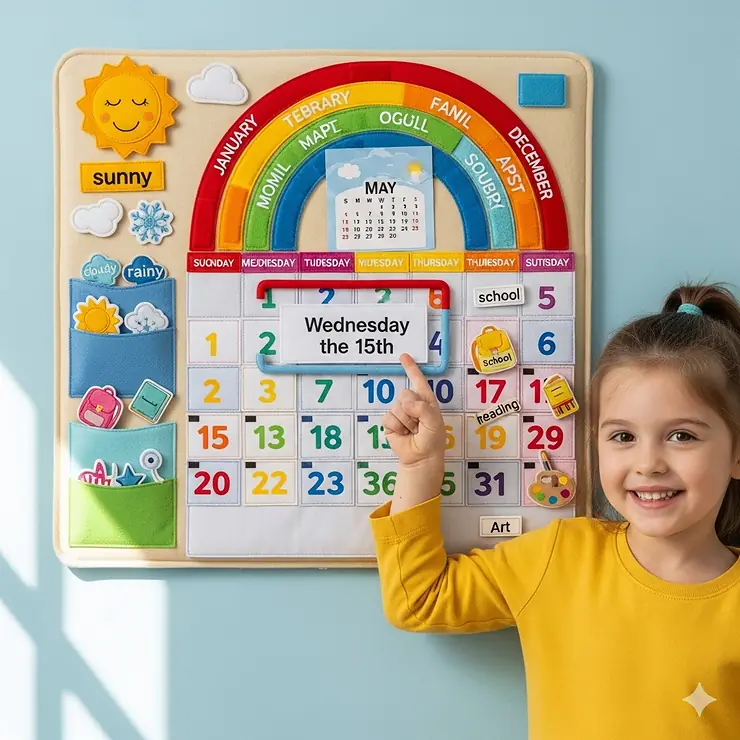
As a parent or educator, you’ve probably noticed how kids naturally gravitate toward hands-on learning experiences. There’s something magical about watching a child’s face light up when they get to move, touch, and interact with their learning materials. When it comes to teaching time concepts, nothing beats an interactive calendar for kids that makes learning both engaging and memorable.
✨Was this helpful? Spread the word! 🚀
Why Interactive Calendars Transform Kids’ Learning Experience 📅
Interactive calendars aren’t just colorful wall decorations – they’re powerful educational tools that transform abstract time concepts into tangible, understandable experiences. Unlike traditional paper calendars, an interactive calendar for kids provides multiple sensory touchpoints that help young minds grasp complex concepts like sequence, patterns, and time progression.
The Science Behind Interactive Learning 🧠
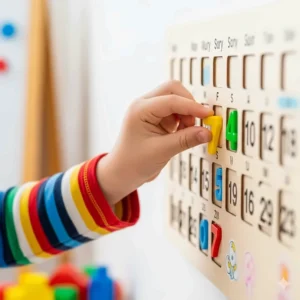
Research consistently shows that children learn best through multi-sensory experiences. Moreover, when kids can physically manipulate learning materials, they form stronger neural pathways that enhance retention and understanding. A learning calendar provides exactly this type of engagement, allowing children to see, touch, and arrange elements like days of the week magnets while building crucial cognitive skills.
Furthermore, interactive calendars support the development of executive functioning skills – those crucial mental processes that include working memory, cognitive flexibility, and self-control. Additionally, daily calendar routines help establish structure and predictability, which are particularly beneficial for children with ADHD or autism spectrum disorders.
Top 7 Interactive Calendar for Kids: Complete Buying Guide 🌟
After extensive research and testing, I’ve identified seven outstanding interactive calendars that stand out for their educational value, durability, and child-friendly design. Each offers unique features that cater to different learning styles and age groups.
1. Simply Magic Kids Calendar 2025 – Best Overall Learning Calendar ⭐
The Simply Magic Kids Calendar 2025 consistently ranks as the top choice among parents and educators. This comprehensive learning calendar includes 58 magnetic pieces designed specifically for little hands. What sets this product apart is its thoughtful design that incorporates weather, emotions, and daily activities alongside traditional calendar elements.
Key Features:
- ✅ 58 thick, durable magnetic pieces
- ✅ Weather tracking with emotion indicators
- ✅ All About Today board format
- ✅ Suitable for ages 3-8
- ✅ Price range: $25-35
Why Parents Love It: The magnetic pieces are substantial enough for toddlers to manipulate easily, yet the content is sophisticated enough to grow with children through elementary school. Teachers particularly appreciate how it incorporates social-emotional learning through the mood tracking feature.
2. Melissa & Doug My First Daily Magnetic Calendar – Premium Wooden Option 🌳
Melissa & Doug’s reputation for quality craftsmanship shines through in their My First Daily Magnetic Calendar. This wooden interactive calendar for kids features fabric-hinged dry-erase boards and includes 83 magnets covering everything from years and months to special events and emotions.
Specifications:
- ✅ 83 wooden magnets included
- ✅ Fabric-hinged design for durability
- ✅ Temperature indicator slider
- ✅ Suitable for ages 3-6
- ✅ Price range: $30-45
Professional Assessment: This calendar for learning stands out for its longevity – many families report using the same unit for multiple children over several years. The wooden construction feels substantial and premium, while the magnetic storage board keeps pieces organized.
3. Learning Resources Magnetic Learning Calendar – Budget-Friendly Choice 💰
The Learning Resources Magnetic Learning Calendar proves that effective educational tools don’t have to break the budget. This 12″ x 16-1/2″ calendar includes 51 magnetic pieces and focuses on core calendar concepts without overwhelming young learners.
Product Details:
- ✅ 51 colorful magnetic pieces
- ✅ Write-and-wipe surface
- ✅ Wall hanging grommets included
- ✅ Ages 4 and up
- ✅ Price range: $15-25
User Feedback: Parents appreciate the straightforward design that doesn’t include too many distracting elements. However, some note that the magnetic strength could be improved, as pieces occasionally fall off when the calendar is moved.

4. ZazzyKid Magnetic Calendar & Weather Chart – Best Design Options 🎨
Available in both pink and blue themes, the ZazzyKid Magnetic Calendar & Weather Chart offers beautiful aesthetics without sacrificing educational value. This interactive calendar for kids measures 12.6″ x 16.5″ and includes a comprehensive set of magnetic pieces for daily learning.
Notable Features:
- ✅ Available in pink and blue designs
- ✅ High-quality rigid cardboard construction
- ✅ 40+ magnetic pieces included
- ✅ Gift box packaging
- ✅ Price range: $20-30
Design Innovation: The cardboard construction with soft metal backing makes this calendar lighter than wooden alternatives while maintaining magnetic strength. The gender-neutral color options and attractive designs make it suitable for any learning environment.
5. Skylight Calendar – Digital Interactive Solution 📱
For tech-savvy families, the Skylight Calendar represents the future of family organization. This 15-inch touchscreen digital calendar syncs with popular calendar apps and includes interactive features that traditional calendars simply can’t match.
Advanced Features:
- ✅ 15.4″ HD touchscreen display
- ✅ Wi-Fi connectivity and app integration
- ✅ Compatible with Google, iCloud, Outlook
- ✅ Interactive chore chart functionality
- ✅ Price range: $250-300
Technology Integration: While significantly more expensive than traditional options, this learning calendar offers features like automatic event syncing, family member color coding, and real-time updates that can transform how families manage schedules and routines.
6. Learning Resources Calendar & Weather Pocket Chart – Classroom Standard 🏫
The Learning Resources Calendar & Weather Pocket Chart has been a classroom staple for decades. This large-format vinyl chart includes 136 double-sided cards and provides enough space for whole-class participation.
Classroom Specifications:
- ✅ 30.75″W x 44.25″H dimensions
- ✅ 136 double-sided full-color cards
- ✅ Sturdy vinyl construction
- ✅ Hanging grommets included
- ✅ Price range: $40-60
Educational Impact: This calendar for learning excels in group settings where multiple children need to see and participate. The large format and comprehensive card set make it ideal for circle time and daily classroom routines.
7. EAMAY Classroom Monthly Calendar Pocket Chart – Versatile Option 📚
The EAMAY Classroom Monthly Calendar Pocket Chart bridges the gap between home and classroom use. With 71 cards and reinforced construction, it offers durability and functionality for intensive daily use.
Functional Benefits:
- ✅ 71 bright, colorful cards included
- ✅ 24″H x 25″W perfect sizing
- ✅ Reinforced grommets for durability
- ✅ Suitable for home and classroom use
- ✅ Price range: $25-35
Versatility Factor: This interactive calendar for kids works equally well mounted on a wall or used on a table for hands-on manipulation. The moderate size makes it accessible for individual children while still visible to small groups.
Comprehensive Comparison: Features That Matter Most 📊
| Product | Type | Age Range | Price | Magnetic Pieces | Durability Rating |
|---|---|---|---|---|---|
| Simply Magic 2025 | Magnetic Board | 3-8 | $25-35 | 58 | ⭐⭐⭐⭐⭐ |
| Melissa & Doug Daily | Wooden Magnetic | 3-6 | $30-45 | 83 | ⭐⭐⭐⭐⭐ |
| Learning Resources | Magnetic Board | 4+ | $15-25 | 51 | ⭐⭐⭐ |
| ZazzyKid | Cardboard Magnetic | 3-7 | $20-30 | 40+ | ⭐⭐⭐⭐ |
| Skylight | Digital Touchscreen | 5+ | $250-300 | N/A | ⭐⭐⭐⭐⭐ |
| LR Pocket Chart | Vinyl Chart | 4+ | $40-60 | 136 cards | ⭐⭐⭐⭐ |
| EAMAY Pocket Chart | Nylon Chart | 3+ | $25-35 | 71 cards | ⭐⭐⭐⭐ |
💬 Just one click – help others make better buying decisions too!😊
🛍️ Ready to Transform Learning Time?
These interactive calendars have helped thousands of families turn daily routines into engaging learning experiences. Click on any highlighted product above to check current pricing and read more customer reviews! ⭐
Industry-Specific Applications: Where Interactive Calendars Excel 🏢
Interactive calendars find applications far beyond the typical home or classroom setting. Understanding these diverse use cases helps illustrate the versatility and value of investing in quality calendar for learning tools.
Healthcare and Therapeutic Settings 🏥
Occupational therapists frequently incorporate interactive calendars into treatment plans for children with developmental delays, autism spectrum disorders, and ADHD. The structured routine of daily calendar time provides predictability and helps children develop sequencing skills crucial for daily living activities.
Physical therapists use large pocket charts to encourage movement and gross motor development. When children need to walk across the room to retrieve calendar pieces or reach up to place items on a high chart, they’re simultaneously working on balance, coordination, and spatial awareness.
Speech-language pathologists leverage days of the week magnets and weather cards to build vocabulary, practice articulation, and develop conversation skills. The visual supports help children with communication disorders express themselves more effectively while building essential language foundations.
Special Education Environments 🌈
Special education classrooms rely heavily on visual schedules and predictable routines. A learning calendar serves as an anchor activity that helps students with varying abilities participate in group learning. Teachers often modify calendar activities to meet individual education plan (IEP) goals, whether focusing on number recognition, color identification, or social interaction skills.
Moreover, the repetitive nature of calendar activities provides comfort for students with autism, while the flexibility to adapt activities ensures that all learners can participate meaningfully. Furthermore, the visual and tactile elements support different learning modalities, making calendar time accessible to students with diverse needs.
Homeschool Communities and Co-ops 📖
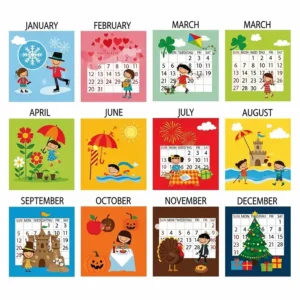
Homeschooling families often use interactive calendars as cornerstone activities that bring together multiple subjects. Additionally, a comprehensive calendar for learning can incorporate mathematics (counting, patterns, addition), language arts (reading days and months, writing activities), science (weather observation, seasonal changes), and social studies (holidays, cultural celebrations).
In homeschool co-ops where children of different ages learn together, pocket charts provide a unifying activity that allows each child to participate at their developmental level. Subsequently, older children can lead calendar time for younger peers, developing leadership skills and reinforcing their own learning through teaching.
Childcare Centers and Preschools 🧸
Professional childcare settings require durable, engaging materials that can withstand intensive daily use. Interactive calendars become focal points for circle time activities that help young children develop essential school readiness skills including listening, following directions, and participating in group discussions.
Furthermore, the routine nature of calendar activities helps ease separation anxiety by providing predictable structure to each day. Children know what to expect and often volunteer to be “calendar helpers,” building confidence and social skills.
Corporate Childcare Facilities 🏢
Many corporations now provide on-site childcare facilities for employees. These settings often emphasize educational programming that prepares children for academic success while supporting working parents. Interactive calendars demonstrate the facility’s commitment to quality early childhood education and provide concrete evidence of learning activities to parent stakeholders.
Advanced Technical Analysis: Understanding Calendar Technology 🔬
The evolution of interactive calendars reflects broader trends in educational technology and child development research. Understanding the technical aspects helps educators and parents make informed decisions about which tools best serve their specific needs.
Magnetic Technology and Child Safety 🧲
Modern interactive calendar for kids utilize rare earth magnets that provide strong holding power while maintaining safety standards. These neodymium magnets are typically encased in colorful plastic or wood housings that meet Consumer Product Safety Commission (CPSC) requirements for toys.
The magnetic strength must balance several factors: strong enough to stay in place during normal use, yet not so powerful that young children struggle to remove pieces. Additionally, manufacturers must ensure magnets cannot be easily removed from their housings, as loose magnets pose serious ingestion hazards.
Research indicates that magnetic strength between 50-100 gauss provides optimal functionality for educational materials. This strength allows easy manipulation by children aged 3-8 while providing reliable adhesion to metal surfaces.
Material Science in Educational Products 🧪
The substrate materials used in interactive calendars significantly impact durability, safety, and user experience. High-quality products utilize materials that resist warping, fading, and wear from repeated handling.
Laminated cardboard products incorporate multiple layers bonded with non-toxic adhesives. The lamination process creates moisture resistance while the cardboard core provides structural integrity. However, edge sealing becomes crucial to prevent delamination with heavy use.
Wooden products typically use sustainably sourced hardwoods or engineered wood products. The wood must be properly sealed to prevent moisture absorption and treated with non-toxic finishes that can withstand cleaning protocols required in educational settings.
Vinyl and fabric pocket charts utilize synthetic materials chosen for durability and cleanability. The pocket construction requires precise stitching or welding techniques to prevent tearing under stress. Additionally, the transparency of pocket materials affects visibility while maintaining strength.
Cognitive Load Theory in Calendar Design 🧠
Effective interactive calendars apply cognitive load theory to optimize learning outcomes. This educational psychology framework suggests that learning improves when instructional design minimizes extraneous cognitive load while optimizing intrinsic and germane cognitive load.
In practical terms, this means avoiding cluttered designs that overwhelm young learners with too many visual elements simultaneously. Instead, effective calendars organize information hierarchically, use consistent color coding, and provide clear visual boundaries between different types of information.
Research by educational psychologist John Sweller indicates that children can effectively process approximately 7±2 pieces of information simultaneously. Quality calendar for learning products respect these limitations by grouping related elements and using progressive disclosure techniques.
Accessibility and Universal Design 🌍
Modern interactive calendars increasingly incorporate universal design principles that make learning accessible to children with diverse abilities. This includes consideration of visual impairments, motor skill differences, and cognitive processing variations.
High contrast color schemes ensure visibility for children with visual processing differences. Tactile elements like raised edges or textured surfaces provide additional sensory input for children with visual impairments. Furthermore, the physical size and weight of manipulative pieces must accommodate children with fine motor skill challenges.
Voice integration technology in digital calendars provides audio feedback that supports children with reading difficulties while reinforcing learning for auditory processors. Text-to-speech capabilities can read calendar elements aloud, while voice recognition allows verbal input for children with writing challenges.
Comprehensive Setup and Usage Guide: Maximizing Learning Potential 📋
Implementing an interactive calendar for kids successfully requires more than simply hanging it on the wall. Thoughtful setup, intentional instruction, and consistent routines maximize the educational value while building children’s independence and confidence.
Strategic Placement and Environmental Considerations 🏠
The location of your learning calendar significantly impacts its effectiveness and usage frequency. Position the calendar at child height – typically 30-36 inches from the floor for preschoolers, or 36-42 inches for elementary-aged children. This ensures independent access while maintaining visibility for adult supervision.
Consider lighting conditions carefully. Natural light can cause glare on laminated surfaces, while insufficient lighting makes reading difficult. LED strip lighting mounted above the calendar provides consistent, glare-free illumination that enhances visibility without creating shadows.
Traffic flow matters tremendously. Place the calendar in a location where children naturally gather but away from high-traffic pathways that might create bottlenecks. Classroom teachers often position calendars near the circle time area, while homeschool families might choose a central hallway or kitchen area.
Storage solutions for calendar pieces require careful planning. Magnetic pieces need secure storage that prevents loss while maintaining easy access. Many families use magnetic storage containers attached to the side of refrigerators or metal filing cabinets. Alternatively, pocket charts benefit from clear plastic storage boxes with dividers for different card categories.
Developmental Progression and Skill Building 📈
Effective calendar instruction follows developmental progressions that build complexity gradually. For toddlers (ages 2-3), focus on basic concepts like “today,” “yesterday,” and “tomorrow” using simple visual cues. The emphasis should be on language development and routine establishment rather than accurate calendar maintenance.
Preschoolers (ages 3-5) can begin learning days of the week through songs, rhymes, and physical movement. Days of the week magnets become powerful tools for pattern recognition and sequence learning. Start with just the current day, gradually adding yesterday and tomorrow as children demonstrate understanding.
Kindergarten children (ages 5-6) can handle more complex calendar responsibilities including date identification, month recognition, and simple pattern work. They can independently move calendar pieces and begin understanding the cyclical nature of weeks and months.
Elementary students (ages 6-8) can engage with advanced calendar concepts including counting by fives and tens, simple addition and subtraction with dates, and beginning multiplication through skip counting activities.
Routine Development and Consistency 🔄
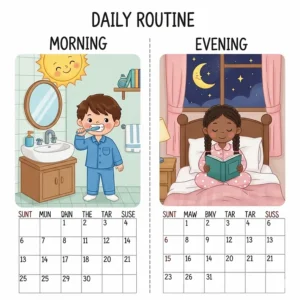
Successful calendar programs establish consistent daily routines that become anticipated parts of children’s days. The specific timing matters less than consistency – whether calendar time happens first thing in the morning, after lunch, or before dismissal, maintaining the same schedule helps children internalize the routine.
A typical calendar routine might include weather observation, date identification, day of the week recognition, and special event discussion. This sequence can be expanded to include counting exercises, pattern work, and problem-solving activities as children develop.
Additionally, involving children as calendar helpers builds ownership and engagement. Rotate responsibilities weekly or daily, allowing each child opportunities to lead different parts of the routine. This develops leadership skills while ensuring all children remain actively engaged.
Furthermore, connecting calendar activities to real-world events increases relevance and retention. Discuss upcoming field trips, family vacations, or seasonal changes in context of calendar work. This helps children understand that calendars serve practical purposes beyond academic exercises.
Integration with Academic Curriculum 📚
Interactive calendars support learning across multiple academic domains when thoughtfully integrated with broader curriculum goals. Mathematics connections include number recognition, counting sequences, pattern identification, and basic arithmetic operations.
Language arts integration encompasses vocabulary development, reading comprehension, and writing activities. Children can practice reading weather words, writing the date, and using temporal language accurately. Additionally, calendar time provides natural opportunities for oral language development through discussions and predictions.
Science connections emerge through weather observation, seasonal pattern recognition, and beginning concepts of time measurement. Children learn to observe, record, and analyze weather patterns while developing scientific thinking skills.
Social studies integration includes cultural awareness through holiday celebrations, community events, and family traditions. Furthermore, calendar work helps children understand how societies organize time and the importance of shared temporal references.

Maintenance and Longevity: Protecting Your Investment 🛠️
Quality interactive calendars represent significant investments in children’s education, making proper maintenance essential for maximizing lifespan and preserving functionality. Different types of calendars require specific care approaches to maintain their appearance and educational effectiveness.
Daily Maintenance Protocols 🧽
Magnetic calendars require daily attention to keep pieces clean and functional. Wipe magnetic surfaces with slightly damp microfiber cloths to remove fingerprints and dust without damaging underlying materials. Avoid harsh chemicals that might compromise magnetic strength or damage printed surfaces.
Check magnetic pieces regularly for damage or wear. Small chips or cracks can harbor bacteria and create safety hazards if pieces break further. Replace damaged pieces promptly to maintain set completeness and safety standards.
Pocket charts benefit from weekly cleaning with mild soap solutions applied with soft brushes or cloths. Pay particular attention to pocket corners where dust and debris accumulate. Allow charts to air dry completely before replacing cards to prevent mold or mildew growth.
Storage Strategies for Extended Lifespan 📦
Seasonal storage requires careful planning to prevent damage during non-use periods. Clean all pieces thoroughly before storage, ensuring complete dryness to prevent mold growth. Store magnetic pieces in clearly labeled containers with adequate spacing to prevent scratching.
Climate-controlled storage environments protect materials from temperature and humidity fluctuations that can cause warping, cracking, or delamination. Avoid storage areas prone to temperature extremes like attics, basements, or garages unless climate-controlled.
Organization during storage saves time during setup and helps identify missing pieces before they’re needed. Photograph complete sets before storage to provide reference images for inventory checks. Create written inventories listing all pieces and their conditions.
Replacement Parts and Upgrade Strategies 🔄
Most manufacturers offer replacement parts for popular calendar systems, though availability varies significantly between brands. Contact manufacturers directly for replacement piece availability and pricing – often, replacement costs are reasonable compared to purchasing complete new sets.
Plan upgrade timelines based on children’s developmental progression rather than calendar condition alone. A calendar that works perfectly for preschoolers might be too simplistic for elementary students, necessitating upgrades even when the original remains functional.
Consider modular systems that allow component upgrades without complete replacement. Some manufacturers design systems with compatible pieces across multiple product lines, allowing gradual expansion as children’s needs evolve.
Professional Maintenance for High-Use Environments 🏫
Educational institutions using calendars intensively may benefit from professional maintenance services. Some educational supply companies offer refurbishment services that can extend product lifespans significantly beyond typical replacement cycles.
Document maintenance needs and schedules to budget appropriately for replacements and repairs. Track which pieces fail most frequently to inform future purchasing decisions and identify design improvements in newer models.
Comparative Analysis: Finding Your Perfect Match 🔍
Choosing the right interactive calendar for kids requires careful consideration of multiple factors including family lifestyle, children’s developmental needs, available space, and budget constraints. This comprehensive analysis helps identify which features matter most for your specific situation.
Traditional vs. Digital Calendar Systems ⚖️
Traditional magnetic and pocket chart calendars offer tangible, screen-free learning experiences that many parents prefer. These systems develop fine motor skills through piece manipulation while providing immediate visual feedback. Additionally, they require no electricity or internet connectivity, making them universally accessible.
However, digital calendar systems like the Skylight Calendar provide features impossible with traditional formats. Automatic synchronization with family calendars eliminates manual updates, while interactive features can adapt to individual learning needs. Furthermore, digital systems can provide audio support for children with reading difficulties.
Cost considerations differ dramatically between categories. Traditional systems typically require one-time purchases ranging from $15-50, while digital systems involve initial costs of $200-400 plus potential subscription fees for advanced features.
Maintenance requirements also vary significantly. Traditional systems need manual updates and physical cleaning, while digital systems require software updates and technical troubleshooting but eliminate lost pieces and physical wear concerns.
Age-Appropriate Feature Considerations 👶
Toddler-focused calendars emphasize safety, durability, and simplicity. Large pieces prevent choking hazards while bold graphics support visual development. The Simply Magic Kids Calendar 2025 excels in this category with thick, easy-to-grasp pieces designed specifically for small hands.
Preschool calendars add complexity without overwhelming young learners. Features like weather tracking and emotion identification support social-emotional learning while maintaining engagement. The ZazzyKid Magnetic Calendar provides an excellent balance of features for this age group.
Elementary-aged children benefit from calendars that incorporate advanced concepts like skip counting, pattern recognition, and problem-solving activities. The Melissa & Doug Deluxe Magnetic Calendar offers sufficient complexity to challenge developing minds while remaining accessible.
Space and Installation Requirements 📏
Compact calendars work well in small spaces like apartments or shared bedrooms. Products measuring 12″x16″ or smaller can fit on refrigerators, bedroom walls, or portable easels. The Learning Resources Magnetic Learning Calendar exemplifies effective design in compact formats.
Large-format calendars require dedicated wall space but provide better visibility for group activities. Classroom-sized pocket charts measuring 30″x44″ or larger serve multiple children simultaneously but need substantial mounting surfaces.
Installation requirements vary considerably between products. Magnetic calendars need ferrous metal surfaces or require additional mounting hardware. Pocket charts typically hang from grommets but may need reinforcement for heavy-use applications.
Budget Optimization Strategies 💡
Entry-level calendars priced under $25 provide essential functionality without premium features. These options work well for families wanting to try interactive calendars without significant financial commitment. The Learning Resources Magnetic Learning Calendar represents excellent value in this category.
Mid-range options ($25-50) typically offer improved durability, more comprehensive piece sets, and better design aesthetics. These calendars often provide the best balance of features and longevity for most families.
Premium calendars ($50+) justify higher costs through superior materials, extensive piece sets, and exceptional durability. Educational institutions and families planning long-term use often find premium options more economical over time.
Case Studies and Success Stories: Real-World Impact 📈
Understanding how interactive calendars function in real learning environments provides valuable insights into their practical benefits and potential challenges. These detailed case studies illustrate successful implementation strategies across diverse settings.
Case Study 1: Transforming Morning Routines in a Busy Family 👨👩👧👦
The Johnson family struggled with chaotic morning routines that left everyone stressed and often running late. With three children ages 4, 6, and 8, coordinating schedules and activities felt overwhelming for working parents Sarah and Mark.
Implementation Strategy: The family installed a Melissa & Doug Daily Magnetic Calendar in their kitchen, visible from the breakfast table. Each child received responsibility for specific calendar elements – weather observation, date updates, and special event identification.
Measured Outcomes: After six weeks of consistent use, the family reported a 40% reduction in morning preparation time. Children began independently checking the calendar for daily activities, reducing parental reminders by approximately 60%. Most significantly, the family’s stress levels decreased noticeably as routines became more predictable.
Key Success Factors: Consistency proved crucial – the family committed to calendar time every morning regardless of schedule pressures. Additionally, connecting calendar activities to real consequences (like remembering soccer practice) helped children understand practical applications.
Lessons Learned: Initial resistance from the 8-year-old, who felt the calendar was “too babyish,” was overcome by assigning him leadership responsibilities for teaching younger siblings. This approach transformed potential resistance into engagement and pride.
Case Study 2: Supporting Autism Spectrum Disorder in Homeschool Setting 🌟
Eight-year-old Emma, diagnosed with autism spectrum disorder, struggled with transitions and unexpected schedule changes. Her mother, Lisa, homeschooled Emma but found traditional scheduling methods ineffective for reducing anxiety and improving cooperation.
Implementation Strategy: Lisa chose the Simply Magic Kids Calendar 2025 specifically for its emotion tracking features. She created visual schedules connecting calendar information to daily activities, using color coding to distinguish between preferred and non-preferred activities.
Measured Outcomes: Within three months, Emma’s meltdowns related to schedule changes decreased from daily occurrences to 2-3 times per week. Her ability to independently reference the calendar for upcoming activities improved dramatically, reducing dependence on constant verbal reminders.
Behavioral Improvements: Emma began requesting calendar time when feeling anxious about upcoming changes. The visual nature of the calendar provided concrete reference points that verbal explanations couldn’t match. Furthermore, Emma started using the emotion tracking feature to communicate feelings more effectively.
Long-term Impact: After one year of consistent use, Emma demonstrated improved flexibility with schedule changes and increased independence in daily routines. Her communication skills improved as she learned to reference temporal concepts accurately.
Case Study 3: Enhancing Classroom Management in Title I School 🏫
Roosevelt Elementary serves a high-poverty urban community where many students lack stable home routines. Third-grade teacher Maria Santos sought tools to provide structure and build time awareness in her culturally diverse classroom of 28 students.
Implementation Strategy: Maria implemented the Learning Resources Calendar & Weather Pocket Chart as a cornerstone of daily circle time. She incorporated multiple languages reflecting her students’ home languages and connected calendar activities to cultural celebrations.
Academic Improvements: Standardized test scores in mathematics improved by 15% over the school year, with particular gains in number sense and pattern recognition skills directly linked to daily calendar work. Reading comprehension scores also improved as vocabulary expanded through daily calendar discussions.
Social-Emotional Benefits: Classroom behavior incidents decreased by 30% as students internalized daily routines and developed shared expectations. The calendar time became a unifying experience that built classroom community across cultural and linguistic differences.
Community Impact: Parent engagement increased as students brought calendar concepts home and taught family members about weather patterns, counting sequences, and upcoming school events. This created connections between home and school learning.
Case Study 4: Supporting English Language Learners 🌍
The Martinez family immigrated to the United States when their daughter Sofia was five years old. Sofia’s parents spoke limited English and worried about supporting her academic development in an unfamiliar educational system.
Implementation Strategy: The family selected the ZazzyKid Magnetic Calendar and used it to practice English vocabulary while maintaining connections to their Spanish-speaking heritage. Calendar time included both English and Spanish terms for days, months, and weather conditions.
Language Development: Sofia’s English vocabulary expanded rapidly through daily calendar practice. Within six months, her teacher noted significant improvements in temporal language use and overall academic vocabulary. Parent-teacher conferences revealed that calendar time had become a bridge between home and school learning.
Cultural Integration: The calendar helped the family understand American educational expectations while maintaining cultural identity. They added traditional Mexican holidays alongside American celebrations, creating rich discussions about cultural diversity.
Academic Achievement: Sofia’s reading and mathematics scores improved steadily throughout the year, with teachers noting particular strength in sequencing and pattern recognition skills developed through calendar work.
Future Trends and Market Evolution: What’s Coming Next 🚀
The interactive calendar market continues evolving rapidly, driven by advances in educational technology, changing family structures, and growing understanding of child development. These trends suggest exciting possibilities for future products while highlighting ongoing challenges.
Technology Integration and Smart Features 📱
Artificial intelligence integration represents the most significant emerging trend in educational calendars. Future products may adapt automatically to individual children’s learning pace, providing personalized challenges and support. Voice recognition technology could allow children to interact with calendars naturally, asking questions and receiving customized responses.
Augmented reality features could overlay digital information onto physical calendar elements, creating hybrid experiences that combine tactile manipulation with digital enhancement. Children might point devices at calendar pieces to access additional information, games, or multimedia content.
Internet of Things (IoT) connectivity could link calendars with other smart home devices, automatically updating weather information, syncing with family schedules, and providing notifications about upcoming events. This seamless integration could make calendar maintenance effortless while preserving educational value.
Sustainability and Environmental Consciousness ♻️
Growing environmental awareness drives demand for sustainable educational products. Manufacturers increasingly use recycled materials, sustainably sourced wood, and non-toxic manufacturing processes. The Melissa & Doug brand has committed to planting 10 million trees by 2030, reflecting industry-wide environmental initiatives.
Modular design approaches allow component upgrades without complete replacement, reducing waste while accommodating children’s developmental progression. Subscription models might provide regular content updates without requiring new physical products.
Packaging innovations eliminate plastic waste while ensuring product protection during shipping. Some manufacturers now use compostable packaging materials and minimalist designs that reduce environmental impact.
Personalization and Customization Trends 🎨
Mass customization technology enables personalized products at reasonable prices. Families might order calendars featuring children’s names, photos, or specific interest themes. This personalization increases engagement while making products feel special and unique.
Cultural customization options address diverse family backgrounds and learning needs. Multilingual calendars serve English language learners while calendars reflecting different cultural traditions help all children understand diversity.
Accessibility customization ensures products work for children with varying abilities. Options might include high-contrast colors for visual impairments, larger manipulation pieces for motor skill differences, or audio features for children with reading challenges.
Educational Philosophy Evolution 📚
Play-based learning approaches increasingly influence calendar design, with manufacturers creating products that feel more like games than traditional educational tools. This shift reflects research showing that children learn most effectively through enjoyable, engaging experiences.
Social-emotional learning integration continues expanding as educators recognize the importance of emotional intelligence. Future calendars may include more sophisticated emotion tracking, conflict resolution tools, and mindfulness elements.
STEAM (Science, Technology, Engineering, Arts, Mathematics) integration creates calendars that serve multiple curriculum areas simultaneously. These products might include engineering challenges, artistic elements, and scientific observation tools alongside traditional calendar functions.
Market Expansion and Accessibility 🌐
Global market expansion brings interactive calendars to families worldwide, requiring adaptation for different cultural contexts, languages, and educational systems. This globalization drives innovation while creating opportunities for cultural exchange.
Price accessibility initiatives aim to make quality educational tools available to all families regardless of economic circumstances. Some manufacturers offer simplified versions at lower price points while maintaining core educational benefits.
Digital divide considerations become increasingly important as technology integration expands. Manufacturers must balance advanced features with accessibility for families lacking high-speed internet or modern devices.
Investment and Purchase Decision Framework: Making Smart Choices 💰
Selecting an interactive calendar for kids requires systematic evaluation of multiple factors to ensure your investment aligns with family needs, budget constraints, and educational goals. This framework guides decision-making while avoiding common purchasing mistakes.
Cost-Benefit Analysis Structure 📊
Initial purchase costs represent only one component of total ownership expenses. Factor in replacement piece costs, maintenance requirements, and potential upgrade needs when evaluating options. A $40 calendar that lasts five years often provides better value than a $20 option requiring replacement annually.
Educational benefits justify premium pricing when products demonstrably improve learning outcomes. Research-backed designs with proven effectiveness may warrant higher initial investments, particularly for children with special learning needs.
Time savings for busy families create significant value that’s often overlooked. Digital calendars that automatically sync family schedules might justify higher costs through reduced administrative burden and improved family organization.
Implementation Strategy Development 📋
Successful calendar implementation requires realistic timeline planning and family commitment. Establish clear routines before introducing the calendar, then gradually add complexity as children demonstrate mastery. Rushing implementation often leads to frustration and abandoned projects.
Training requirements vary significantly between products. Simple magnetic calendars need minimal instruction, while complex pocket charts or digital systems may require substantial setup time and ongoing support. Consider your available time for training and support when making selections.
Integration with existing routines works better than creating entirely new schedules. Identify natural connection points in your daily routine where calendar activities fit logically, then build around these anchor points.
Success Metrics and Evaluation Criteria ✅
Define specific, measurable goals before purchasing to enable objective evaluation of effectiveness. These might include improved morning routine efficiency, increased time awareness vocabulary, or reduced anxiety about schedule changes.
Academic skill development provides quantifiable benefits through improved number recognition, pattern identification, or reading comprehension. Track progress through informal assessments or standardized measures to evaluate calendar impact.
Behavioral improvements often represent the most significant benefits but require careful observation to measure accurately. Document changes in cooperation, independence, or emotional regulation that might connect to calendar use.
Budget Planning and Financing Options 💳
Budget allocation should consider interactive calendars as long-term educational investments rather than one-time purchases. Quality products often serve multiple children over several years, making cost-per-use calculations favorable for higher-priced options.
Seasonal pricing patterns affect many educational products, with significant discounts available during back-to-school periods or end-of-year clearances. Planning purchases around these cycles can provide substantial savings.
Group purchasing through schools, co-ops, or family networks sometimes enables volume discounts on quality products. Some manufacturers offer educational pricing for homeschool families or informal learning groups.
Gift considerations make calendars excellent choices for birthdays, holidays, or special occasions. Their educational value and longevity make them memorable gifts that continue providing benefits long after the initial excitement fades.
Risk Mitigation and Warranty Considerations 🛡️
Quality warranties protect investments in premium products while indicating manufacturer confidence in durability. Compare warranty terms carefully, paying attention to coverage duration, replacement policies, and excluded damages.
Return policies provide safety nets for products that don’t meet expectations or prove incompatible with family needs. Understand return requirements, time limits, and refund policies before purchasing, particularly for online orders.
Safety certifications ensure products meet appropriate standards for child use. Look for CPSC compliance in the United States or equivalent certifications in other markets. These certifications become particularly important for products with small parts or magnetic components.
User reviews and ratings provide real-world insights into product performance, durability, and customer satisfaction. Read multiple reviews from verified purchasers, paying attention to comments from families with similar situations or needs.
Comparison Tables: Essential Features at a Glance 📋
Educational Value Comparison
| Feature | Simply Magic 2025 | Melissa & Doug | Learning Resources | ZazzyKid | Skylight Digital |
|---|---|---|---|---|---|
| Days of Week | ✅ | ✅ | ✅ | ✅ | ✅ |
| Weather Tracking | ✅ | ✅ | ✅ | ✅ | ✅ |
| Emotion Recognition | ✅ | ✅ | ❌ | ✅ | ❌ |
| Number Practice | ✅ | ✅ | ✅ | ✅ | ✅ |
| Pattern Building | ✅ | ✅ | ✅ | ✅ | ✅ |
| Cultural Holidays | ✅ | ✅ | ❌ | ✅ | ✅ |
Durability and Safety Ratings
| Product | Material Quality | Safety Rating | Expected Lifespan | Magnetic Strength |
|---|---|---|---|---|
| Simply Magic 2025 | ⭐⭐⭐⭐ | CPSC Certified | 5+ years | Strong |
| Melissa & Doug | ⭐⭐⭐⭐⭐ | CPSC Certified | 7+ years | Very Strong |
| Learning Resources | ⭐⭐⭐ | CPSC Certified | 3+ years | Moderate |
| ZazzyKid | ⭐⭐⭐⭐ | CPSC Certified | 4+ years | Strong |
| Skylight Digital | ⭐⭐⭐⭐⭐ | FCC Certified | 5+ years | N/A |
🎯 Transform Learning Today!
Don’t let another day pass without giving your child the gift of interactive learning! These proven calendars have helped thousands of families create engaging educational experiences. Click any product name above to check current prices and read authentic customer reviews! 📚✨
Frequently Asked Questions ❓
❓ What age is best to start using an interactive calendar for kids?
❓ How do interactive calendar for kids help with learning development?
❓ Can calendar for learning help children with special needs?
❓ What's the difference between magnetic calendars and pocket charts?
❓ How do days of the week magnets improve learning compared to paper calendars?
Recommended for You:
- 7 Best Milestone Cards That Transform Baby Photos into Treasured Memories in 2025
- 7 Best Large Magnetic Chalkboard Options That Will Transform Your Space in 2025
- 7 Best Magnetic Chalkboard Options That Transform Any Space in 2025
Disclaimer: This article contains affiliate links. If you purchase products through these links, we may earn a small commission at no additional cost to you.
✨ Found this helpful? Share it with your friends! 💬🤗
