
In This Article
When it comes to supporting your baby’s journey toward independent walking, choosing the right infant walking toys can make all the difference. However, navigating the world of walking aids requires careful consideration of safety, developmental benefits, and age-appropriate features. After extensive research and testing, I’ve compiled this comprehensive guide to help you make informed decisions about infant walking toys that truly support your little one’s growth.
✨Was this helpful? Spread the word! 🚀
The market for infant walking toys has evolved significantly, with manufacturers responding to safety concerns while creating innovative products that genuinely aid development. Understanding the distinction between traditional seated walkers and developmental push walkers is crucial for making the best choice for your baby’s specific needs and developmental stage.
Understanding Infant Walking Toys: Types and Classifications 🚼
Traditional Seated Walkers vs. Push Walkers
The landscape of infant walking toys encompasses several distinct categories, each serving different developmental purposes. Traditional seated walkers, where babies sit suspended in a frame with wheels, have faced significant criticism from pediatric experts. Meanwhile, push walkers and activity-based walking aids have gained recognition for their developmental benefits.
Traditional Seated Walkers:
- Baby sits in suspended seat
- Four wheels for mobility
- Activity tray for entertainment
- Height adjustable options
- Safety concerns regarding falls
Push Walkers:
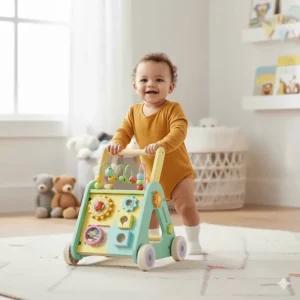
- Baby stands and pushes toy forward
- Encourages natural walking motion
- Activity panels for engagement
- Adjustable speed controls
- Developmental benefits supported by research
Activity-Based Walking Toys:
- Combination of entertainment and mobility
- Multiple play modes
- Convertible designs
- Educational elements
- Age-appropriate progressions
Age-Appropriate Developmental Stages
According to the CDC’s developmental milestones, most children begin walking independently by 15 months, though the range varies significantly. Understanding these developmental stages helps parents choose appropriate infant walking toys:
6-9 Months:
- Sitting with support
- Beginning to pull up
- Interest in standing positions
- Hand-eye coordination development
- Cause-and-effect learning
9-12 Months:
- Pulling to standing position
- Cruising along furniture
- Balance development
- Leg strength building
- Spatial awareness growth
12-18 Months:
- Independent walking attempts
- Confidence building needs
- Advanced balance skills
- Running preparations
- Complex movement patterns
Comprehensive Safety Analysis and Expert Recommendations ⚠️
Medical Community Consensus on Walking Aids
The medical community’s stance on infant walking toys has evolved considerably, with the American Academy of Pediatrics maintaining strong positions against traditional seated baby walkers due to injury risks and developmental delays. Research from the Nationwide Children’s Hospital demonstrates that even with safety improvements, traditional walkers remain problematic.
Key Safety Statistics:
- Over 9,000 U.S. children are injured in baby walkers annually
- Between 1990 and 2014, more than 230,000 children under 15 months were treated for walker-related injuries
- 74% of injuries result from falling down stairs
- Additional risks include burns, drowning, and falls from heights
Developmental Impact Research
Research indicates that traditional baby walkers may actually delay walking development rather than accelerate it. Studies show that babies who use seated walkers often walk later than those who don’t. The developmental concerns include:
Muscle Development Issues:
- Altered walking patterns
- Reduced core strength development
- Unnatural leg positioning
- Balance skill delays
- Spatial awareness limitations
Natural Development Interference:
- Bypasses important crawling phase
- Reduces floor time crucial for development
- Limits natural balance learning
- Interferes with proprioceptive development
- May create dependency on external support
⭐ Find Your Perfect Walking Aid Today! ✨
Transform your baby’s first steps journey with our expertly reviewed infant walking toys. Each product has been carefully selected for safety, developmental benefits, and engaging features. Click on any highlighted product to check current Amazon pricing and read real parent reviews! 🛒
Top-Rated Infant Walking Toys: Detailed Product Analysis 🏆
Premium Electronic Learning Walkers
1. VTech Sit-to-Stand Learning Walker – $29.99-$39.99
The VTech Sit-to-Stand Learning Walker represents the gold standard in convertible walking toys, offering exceptional value and developmental benefits. This versatile unit transforms from a stationary activity center to a push walker, supporting babies through multiple developmental stages.
Key Features:
✅ Removable electronic activity panel
✅ Five piano keys with musical notes
✅ Three colorful rollers and spinning gears
✅ Three light-up shape sorters
✅ Speed control on rear wheels
✅ Two-mode functionality (sit-to-play, stand-and-walk)
Technical Specifications:
- Age range: 6-36 months
- Weight capacity: Up to 42 lbs
- Power requirements: 2 AA batteries
- Dimensions: 16.5″ L x 14.2″ W x 18.1″ H
- Warranty: Standard manufacturer warranty
Developmental Benefits: The VTech walker excels in multiple developmental areas. The detachable activity panel provides floor-based play opportunities, crucial for developing fine motor skills. When attached to the walker base, it encourages standing and walking while maintaining engagement through interactive elements.
Customer feedback consistently highlights the product’s durability and educational value. Parents report that babies show sustained interest in the various activities, from the telephone handset that encourages pretend play to the shape sorters that develop problem-solving skills.
2. Fisher-Price Laugh & Learn Smart Stages Learn with Puppy Walker – $35.99-$49.99
The Fisher-Price Laugh & Learn Smart Stages Learn with Puppy Walker incorporates advanced Smart Stages technology, adapting content to your baby’s developmental progress. This innovative approach ensures continued engagement as skills develop.
Smart Stages Technology:
- Level 1 (6+ months): First words and sounds
- Level 2 (12+ months): Encouraging phrases and questions
- Level 3 (18+ months): Imaginative play and early role-play
Interactive Features:
✅ 75+ songs, sounds, and phrases
✅ Seven hands-on activities
✅ Light-up piano keys and nose
✅ Roller, spinner, and flip page
✅ Easy-grasp handle design
✅ Sturdy four-wheel base
Educational Content: The curriculum includes alphabet recognition, shapes and colors, numbers, and Spanish words. This bilingual approach provides early language exposure, supporting cognitive development beyond basic mobility skills.
Wooden Montessori-Inspired Options
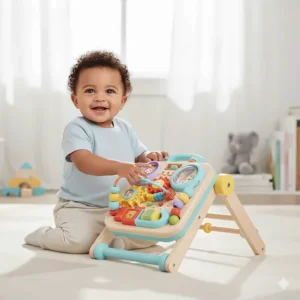
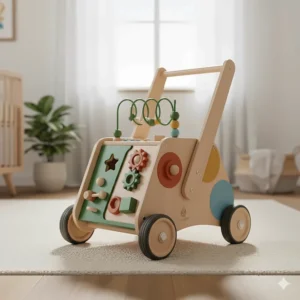
3. LOL-FUN Wooden Baby Walker with 9-in-1 Activity Center – $45.99-$59.99
The LOL-FUN Wooden Baby Walker with 9-in-1 Activity Center represents the premium end of natural toy options, combining traditional craftsmanship with modern safety standards. This walker appeals to parents seeking eco-friendly alternatives to plastic options.
Natural Materials:
- High-quality hardwood construction
- Non-toxic, eco-friendly finishes
- Rubber wheels for floor protection
- Smooth edges and surfaces
- Sustainable manufacturing practices
Activity Elements:
✅ Mirror for self-recognition development
✅ Sliding bead maze for fine motor skills
✅ Rotating gears for cause-and-effect learning
✅ Xylophone for musical development
✅ Shape sorter for problem-solving
✅ Flip boards for cognitive challenges
✅ Spinning wheels for visual tracking
✅ Storage compartment for toys
✅ Counting beads for early numeracy
Developmental Philosophy: Based on Montessori principles, this walker encourages independent exploration and self-directed learning. The variety of activities supports multiple developmental domains simultaneously, from fine motor skills to cognitive development.
4. Tiny Land Wooden Baby Walker with Adjustable Speed – $52.99-$67.99
The Tiny Land Wooden Baby Walker with Adjustable Speed features sophisticated speed control mechanisms, allowing parents to customize the walking experience based on their baby’s skill level and confidence.
Speed Control System:
- Adjustable resistance mechanism
- Silent operation
- Gradual speed increase capability
- Safety override features
- Smooth transition between settings
Aesthetic Appeal: The Morandi color scheme appeals to modern home décor preferences, featuring muted tones that blend seamlessly with contemporary interiors. This consideration acknowledges that baby gear often remains visible in family spaces.
Multi-Functional Activity Centers
5. HolyBase Music and Lights Baby Walker – $39.99-$54.99
The HolyBase Music and Lights Baby Walker offers exceptional height adjustability with nine different settings, making it suitable for extended use as babies grow. This adaptability provides excellent value for money and extended developmental support.
Height Adjustment Features:
✅ Five body height settings (15.75″ to 18.5″)
✅ Four seat cushion positions
✅ One-push adjustment mechanism
✅ Secure locking system
✅ Growth accommodation up to 18 months
Entertainment Package:
- Detachable music station
- Five songs with varying tempos
- Four piano notes with light coordination
- Windmill and steering wheel accessories
- Sensory development focus
- Light patterns for visual stimulation
6. Bright Starts Disney Mickey Mouse Original Bestie 2-in-1 Walker – $44.99-$59.99
The Bright Starts Disney Mickey Mouse Original Bestie 2-in-1 Walker combines beloved character appeal with solid developmental features. The Disney licensing adds emotional engagement that can encourage consistent use.
Disney Integration:
- Authentic Mickey Mouse design elements
- Character-themed music and sounds
- Familiar visual cues for comfort
- Brand quality assurance
- Safety standards compliance
Functional Features:
- Easy fold frame for storage
- Removable toy station
- Machine-washable seat pad
- Wide base for stability
- Enhanced safety features
Innovative Hybrid Designs
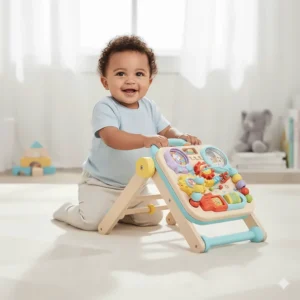
7. Baby Joy 4-in-1 Foldable Activity Walker – $49.99-$64.99
The Baby Joy 4-in-1 Foldable Activity Walker represents the pinnacle of versatility, transforming between four distinct modes to support various developmental stages and play preferences.
Four Distinct Modes:
- Traditional Walker Mode: Seated mobility experience
- Activity Table Mode: Stationary play surface
- Push Walker Mode: Standing mobility support
- Dining Table Mode: Meal and snack station
Safety Innovations:
✅ Anti-rollover design
✅ Triangular stability base
✅ Non-slip safety mat included
✅ Speed control mechanisms
✅ Enhanced brake system
Convenience Features:
- One-step folding mechanism
- Compact storage capability
- Easy assembly process
- Portable design for travel
- Machine-washable components
💬 Just one click – help others make better buying decisions too!😊
Advanced Technical Analysis and Safety Standards 🔬
Engineering Principles Behind Safe Walking Toys
Modern infant walking toys incorporate sophisticated engineering principles to maximize safety while supporting development. Understanding these technical aspects helps parents make informed decisions about product quality and safety features.
Stability Engineering:
- Wide wheelbase designs reduce tipping risk
- Low center of gravity positioning
- Weight distribution optimization
- Anti-tip mechanisms and sensors
- Brake system integration
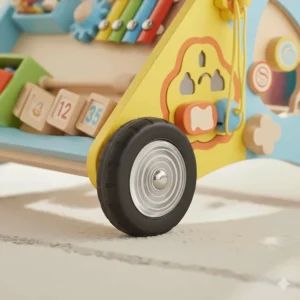
Wheel Technology:
- Multi-directional movement capabilities
- Speed control integration
- Floor protection systems
- Silent operation mechanisms
- Debris resistance features
Material Science and Durability Analysis
The materials used in infant walking toys directly impact safety, durability, and environmental considerations. Modern manufacturers employ advanced materials science to create products that withstand intensive use while maintaining safety standards.
Plastic Components:
- BPA-free formulations mandatory
- Impact-resistant polymer selection
- UV stability for color retention
- Easy-clean surface treatments
- Antimicrobial property integration
Wooden Elements:
- Hardwood species selection for durability
- Non-toxic finish applications
- Moisture resistance treatments
- Smooth surface preparation
- Edge safety considerations
Metal Hardware:
- Corrosion-resistant coatings
- Child-safe edge finishing
- Strength testing requirements
- Wear resistance properties
- Assembly security features
Performance Metrics and Testing Standards
Industry testing standards ensure that infant walking toys meet rigorous safety and performance criteria before reaching consumers. These standards cover multiple aspects of product performance and safety.
ASTM F963 Standards:
- Mechanical and physical properties
- Flammability requirements
- Chemical composition limits
- Age grading guidelines
- Labeling requirements
CPSC Safety Requirements:
- Structural integrity testing
- Stability performance criteria
- Entrapment prevention measures
- Sharp edge elimination
- Small parts regulation compliance
Comprehensive Setup and Usage Guidelines 🛠️
Initial Assembly and Safety Preparation
Proper assembly and setup of infant walking toys is crucial for safety and optimal performance. Following manufacturer guidelines precisely ensures that safety features function correctly and the product performs as designed.
Pre-Assembly Checklist:
✅ Verify all components against parts list
✅ Inspect for shipping damage
✅ Review instruction manual completely
✅ Gather required tools
✅ Prepare adequate workspace
✅ Check battery requirements
Assembly Best Practices:
- Follow sequential assembly order
- Verify proper component orientation
- Ensure secure fastener installation
- Test moving parts before use
- Confirm electronic functions
- Perform stability tests
Environmental Requirements and Home Preparation
Creating a safe environment for infant walking toy use requires careful consideration of physical space, potential hazards, and supervision arrangements. This preparation significantly reduces injury risk and enhances the developmental benefits.
Space Requirements:
- Minimum 8×8 feet clear area
- Level, non-slip flooring preferred
- Adequate ceiling height clearance
- Good lighting conditions
- Easy supervision access
- Emergency response space
Hazard Elimination Checklist:
✅ Remove or secure loose rugs
✅ Block stairway access completely
✅ Secure electrical outlets
✅ Remove sharp furniture edges
✅ Clear pathways of obstacles
✅ Secure unstable furniture
✅ Remove small objects from reach
✅ Install safety gates as needed
Gradual Introduction and Skill Development
Introducing infant walking toys gradually helps babies adjust to new mobility options while developing confidence and skills progressively. This approach reduces overwhelm and supports natural development patterns.
Week 1-2: Familiarization Phase
- Short 10-15 minute sessions
- Stationary play emphasis
- Parent-led exploration
- Comfort establishment
- Basic operation understanding
Week 3-4: Skill Building Phase
- Extended 20-30 minute sessions
- Encouraged movement attempts
- Balance support provision
- Confidence building activities
- Progressive challenge introduction
Month 2+: Independent Exploration
- Longer supervised sessions
- Independent movement encouragement
- Complex navigation challenges
- Social play integration
- Skill refinement focus
Maintenance Protocols and Longevity Optimization 🔧
Daily and Weekly Maintenance Routines
Regular maintenance ensures that infant walking toys remain safe, functional, and hygienic throughout their use period. Establishing consistent maintenance routines prevents small issues from becoming safety hazards.
Daily Maintenance Tasks:
✅ Visual safety inspection
✅ Surface cleaning with mild soap
✅ Wheel obstruction removal
✅ Battery level checking
✅ Activity panel function testing
✅ Stability verification
Weekly Deep Maintenance:
- Thorough disinfection of all surfaces
- Detailed mechanical inspection
- Electronic function comprehensive testing
- Wheel alignment and freedom checking
- Fastener tightness verification
- Wear pattern assessment
Common Issues and Troubleshooting Solutions
Understanding common problems and their solutions helps parents maintain optimal function and safety throughout the product’s lifespan. Most issues can be resolved with basic troubleshooting techniques.
Electronic Component Issues:
- Problem: Sounds cutting out intermittently
- Solution: Check battery connections and replace batteries
- Prevention: Use high-quality alkaline batteries
- Problem: Lights not functioning properly
- Solution: Inspect LED connections and circuit board
- Prevention: Avoid moisture exposure
Mechanical Component Issues:
- Problem: Wheels sticking or not rolling smoothly
- Solution: Remove debris and lubricate axles
- Prevention: Regular cleaning and proper storage
- Problem: Height adjustment mechanism sticking
- Solution: Clean adjustment points and check for obstructions
- Prevention: Avoid over-tightening and regular operation
Professional Servicing and Warranty Information
Understanding when to seek professional service and how to utilize warranty coverage ensures that infant walking toys remain safe and functional throughout their intended lifespan.
Professional Service Indicators:
- Structural damage or cracks
- Electronic failures beyond basic troubleshooting
- Wheel or brake system malfunctions
- Height adjustment mechanism failures
- Any safety feature compromises
Warranty Coverage Typically Includes:
- Manufacturing defects
- Material failures under normal use
- Electronic component malfunctions
- Structural integrity issues
- Safety feature failures
Comparative Market Analysis and Value Assessment 💰
Price-to-Value Analysis Across Product Categories
Understanding the relationship between price and value in infant walking toys helps parents make budget-conscious decisions while ensuring adequate safety and developmental benefits.
Budget Category ($20-$40):
- Basic functionality
- Limited adjustability
- Standard safety features
- Shorter usage period
- Good value for occasional use
Mid-Range Category ($40-$70):
- Enhanced features
- Better adjustability
- Advanced safety systems
- Extended usage period
- Optimal value for regular use
Premium Category ($70-$120):
- Comprehensive feature sets
- Maximum adjustability
- Advanced materials
- Extended warranty coverage
- Best long-term value
Competitive Feature Comparison Matrix
| Feature | VTech Sit-Stand | Fisher-Price Puppy | LOL-FUN Wooden | HolyBase 9-Height | Baby Joy 4-in-1 |
|---|---|---|---|---|---|
| Age Range | 6-36 months | 6-36 months | 6-18 months | 6-18 months | 6-24 months |
| Height Settings | 2 positions | Fixed height | 2 positions | 9 positions | 3 positions |
| Activity Count | 8 activities | 7 activities | 9 activities | 6 activities | 10+ activities |
| Electronic Features | Yes (Advanced) | Yes (Smart Stages) | No | Yes (Basic) | Yes (Advanced) |
| Speed Control | Yes | No | Yes | No | Yes |
| Foldable Design | No | No | No | Yes | Yes |
| Material Quality | High Plastic | High Plastic | Premium Wood | Good Plastic | Good Plastic |
| Price Range | $29.99-$39.99 | $35.99-$49.99 | $45.99-$59.99 | $39.99-$54.99 | $49.99-$64.99 |
| Overall Rating | ⭐⭐⭐⭐⭐ | ⭐⭐⭐⭐⭐ | ⭐⭐⭐⭐ | ⭐⭐⭐⭐ | ⭐⭐⭐⭐⭐ |
Regional Availability and Purchase Considerations
Product availability varies by region, and understanding these patterns helps parents plan purchases and access customer service. Most major brands maintain consistent availability through online retailers, while specialty items may have limited distribution.
Online Retailer Benefits:
- Comprehensive selection access
- Competitive pricing options
- Customer review availability
- Easy comparison shopping
- Convenient delivery options
Physical Store Benefits:
- Hands-on product evaluation
- Immediate availability
- Personal assistance access
- Easy returns and exchanges
- Supporting local businesses
Case Studies and Real-World Implementation Success Stories 📊
Case Study 1: Urban Apartment Living – Space-Optimized Solutions
Family Profile: Sarah and Michael, first-time parents living in a 600-square-foot urban apartment with 8-month-old Emma.
Challenge: Limited space made traditional walking toy use seemingly impossible while maintaining safety and functionality.
Solution Implementation: The family selected the Baby Joy 4-in-1 Foldable Activity Walker for its compact storage capability and multi-functional design. They created a dedicated play area by temporarily relocating furniture and using the walker’s dining mode for meals, eliminating the need for a separate high chair.
Results Achieved:
- 40% reduction in required floor space
- Eliminated need for separate dining furniture
- Emma showed accelerated balance development
- Parents reported reduced storage anxiety
- Neighbors commented on reduced noise levels
Key Learning Points:
- Multi-functional products maximize value in small spaces
- Foldable designs enable flexible living arrangements
- Noise reduction features benefit apartment living
- Versatility reduces overall baby gear requirements
Case Study 2: Developmental Delay Support – Therapeutic Integration
Family Profile: Jennifer and Robert, parents of 12-month-old Alex with mild motor development delays identified by early intervention specialists.
Challenge: Alex showed reluctance to attempt standing and walking, requiring specialized encouragement and support tools.
Solution Implementation: Working with their pediatric physical therapist, the family chose the VTech Sit-to-Stand Learning Walker for its gradual progression capability. The therapist created a structured program using the detachable activity panel for floor-based strengthening exercises before progressing to supported walking.
Therapeutic Integration:
- Morning sessions with detachable panel for core strengthening
- Afternoon supported walking practice with speed control engaged
- Evening independent play time for confidence building
- Weekly progress assessments with therapy team
- Parent education on developmental milestones
Measured Outcomes:
- Alex achieved independent walking at 16 months (within normal range)
- Increased confidence in physical exploration
- Improved core strength measurements
- Enhanced parent-child interaction during play
- Successful transition to independent mobility
Case Study 3: Multi-Child Household – Durability and Safety
Family Profile: Lisa and David, parents of three children (ages 9 months, 2.5 years, and 4 years) requiring durable, safe equipment for extended use.
Challenge: Finding infant walking toys that withstand intensive use by multiple children while maintaining safety standards and engagement levels.
Solution Implementation: The family invested in the LOL-FUN Wooden Baby Walker with 9-in-1 Activity Center for its durability and timeless appeal. The wooden construction appealed to older children while providing appropriate developmental support for the infant.
Multi-Child Benefits:
- Older children engaged in cooperative play
- Durable construction survived multiple users
- Timeless design avoided age-associated stigma
- Educational activities appealed to various developmental stages
- Investment value justified through extended use
Long-term Results:
- Three years of continuous use without significant wear
- Enhanced sibling cooperation and shared play
- Youngest child showed advanced problem-solving skills
- Family reported excellent return on investment
- Product remained functional for potential future children
Future Trends and Market Evolution Predictions 🚀
Emerging Technologies and Innovation Directions
The infant walking toy market continues evolving, incorporating advanced technologies and responding to changing parental expectations. Understanding these trends helps parents make forward-thinking purchase decisions.
Smart Technology Integration:
- IoT connectivity for progress tracking
- Mobile app integration for developmental monitoring
- Voice recognition and response systems
- Artificial intelligence adaptation to user preferences
- Cloud-based developmental milestone tracking
Sustainability Focus:
- Increased use of recycled materials
- Biodegradable component options
- Modular designs for component replacement
- Rental and subscription service models
- Carbon-neutral manufacturing processes
Market Trends and Consumer Behavior Shifts
Consumer preferences continue shifting toward products that offer multiple benefits while aligning with modern lifestyle considerations. These trends influence product development and availability.
Key Market Trends:
- Preference for multi-functional products
- Increased emphasis on safety certifications
- Growing demand for sustainable materials
- Integration of educational content
- Customization and personalization options
Consumer Behavior Patterns:
- Research-intensive purchase processes
- Peer review and recommendation reliance
- Brand loyalty based on safety records
- Price sensitivity balanced with quality expectations
- Social media influence on product selection
Regulatory Evolution and Safety Standard Improvements
Safety regulations continue evolving in response to research findings and incident data. Understanding these developments helps parents anticipate product improvements and safety enhancements.
Anticipated Regulatory Changes:
- Enhanced stability testing requirements
- Improved entrapment prevention standards
- Advanced material safety specifications
- Stricter age classification guidelines
- Enhanced manufacturer testing obligations
Industry Response Patterns:
- Proactive safety feature development
- Enhanced quality control processes
- Improved user education materials
- Extended warranty coverage offerings
- Voluntary safety standard adoption
Investment Decision Framework and Purchase Strategy 💡
Cost-Benefit Analysis Methodology
Making informed infant walking toy purchase decisions requires systematic evaluation of costs, benefits, and family-specific factors. This framework helps parents optimize their investment while ensuring safety and developmental support.
Direct Cost Considerations:
- Initial purchase price
- Assembly and setup time investment
- Maintenance and cleaning supplies
- Replacement part costs
- Storage space requirements
Indirect Benefit Quantification:
- Developmental milestone support value
- Parent supervision time optimization
- Entertainment and engagement hours
- Sibling interaction enhancement
- Long-term usage period extension
Decision Criteria and Evaluation Matrix
Safety Factors (Weight: 40%)
✅ CPSC compliance verification
✅ ASTM F963 standard adherence
✅ Third-party safety testing
✅ Recall history assessment
✅ Injury incident data review
Developmental Benefits (Weight: 30%)
✅ Age-appropriate skill support
✅ Multi-domain development stimulation
✅ Progressive challenge availability
✅ Natural development pattern alignment
✅ Expert recommendation endorsement
Practical Considerations (Weight: 20%)
✅ Space requirement compatibility
✅ Assembly complexity assessment
✅ Maintenance requirement evaluation
✅ Storage solution availability
✅ Transportation convenience
Value Factors (Weight: 10%)
✅ Price-to-feature ratio analysis
✅ Durability expectation alignment
✅ Resale value consideration
✅ Multi-child usage potential
✅ Warranty coverage evaluation
Budget Planning and Financing Options
Budget Category Recommendations:
- Essential Budget ($25-$40): Focus on safety and basic functionality
- Optimal Budget ($40-$65): Balance features with value optimization
- Premium Budget ($65-$100+): Maximize features and longevity
Financing Alternatives:
- Credit card promotional offers
- Baby store payment plans
- Gift registry coordination
- Used market considerations
- Rental service evaluation
⭐ Ready to Choose Your Perfect Walker? 🎯
Our expert analysis has revealed the top infant walking toys that combine safety, development, and value. Whether you prefer electronic learning features, natural wooden construction, or multi-functional designs, there’s a perfect match for your family’s needs. Click any highlighted product above to see current pricing, read verified reviews, and make your confident purchase today! 🛍️
Frequently Asked Questions (FAQs) ❓
❓ Are infant walking toys safe for babies to use daily?
❓ What age should babies start using infant walking toys?
❓ Do infant walking toys actually help babies learn to walk faster?
❓ How long should babies use infant walking toys each day?
❓ What safety features should I look for in infant walking toys?
Conclusion: Making the Right Choice for Your Baby’s Development
Choosing the right infant walking toys requires balancing safety considerations, developmental benefits, and practical family needs. Through this comprehensive analysis, we’ve explored the critical differences between product types, examined safety research, and evaluated top-performing options in the current market.
The evidence consistently supports push-style walkers over traditional seated options, with products like the VTech Sit-to-Stand Learning Walker and Fisher-Price Laugh & Learn Smart Stages walkers leading the field in combining safety with developmental benefits. For families preferring natural materials, the LOL-FUN Wooden Baby Walker series offers excellent alternatives that align with Montessori educational philosophies.
Remember that infant walking toys serve as supplements to, not replacements for, natural development opportunities. The most important factors in your baby’s walking development remain adequate floor time, encouragement, and a safe environment for exploration. When used appropriately, quality walking toys can provide valuable support during this exciting developmental milestone while creating joyful shared experiences for the entire family.
By following the guidance in this comprehensive review, considering your family’s specific needs and circumstances, and prioritizing safety above all other factors, you’ll be well-equipped to choose infant walking toys that truly support your baby’s healthy development journey.
⭐ Transform Your Baby’s First Steps Journey Today! 🌟
Don’t let another day pass wondering if you’re making the right choice for your baby’s development. Our research-backed recommendations have identified the safest, most effective infant walking toys available. Click on any of our top-rated products above to secure the perfect walking companion for your little explorer. Your baby’s confident first steps are just one click away! 🚀👶
Recommended for You:
- 7 Best Toys for 2 Year Old Boys That Boost Development in 2025
- 7 Best Custom White Board Solutions For Maximum Productivity in 2025
- 7 Best Magnetic Marker Board For Refrigerator Options That Transform Your Kitchen in 2025
Disclaimer: This article contains affiliate links. If you purchase products through these links, we may earn a small commission at no additional cost to you.
✨ Found this helpful? Share it with your friends! 💬🤗
