
In This Article
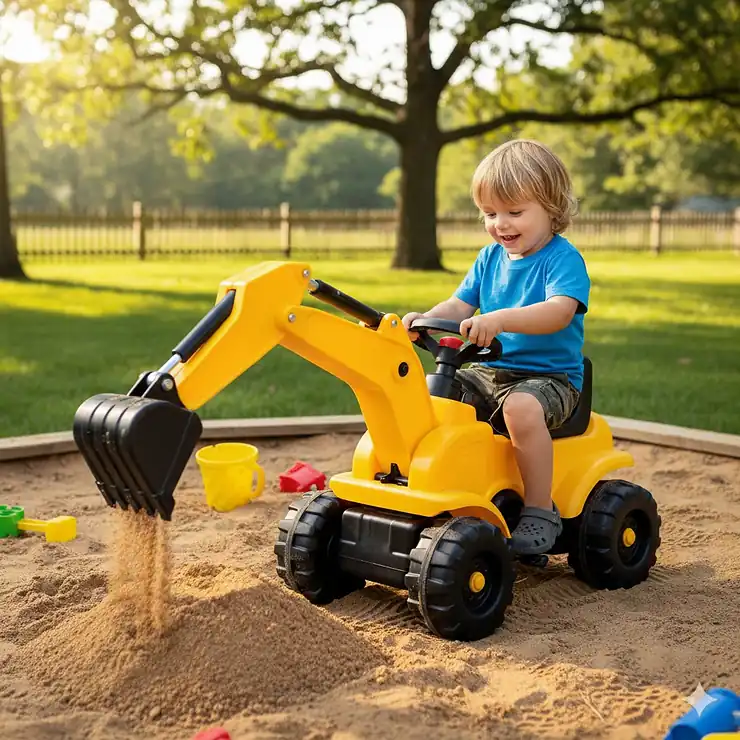
Picture this: your three-year-old commanding their very own construction site, complete with realistic digging action and engine sounds that make the neighbors smile. That’s the magic an excavator ride on toy brings to your backyard. These miniature powerhouses aren’t just toys—they’re gateways to imaginative play, physical development, and countless hours of outdoor adventure.
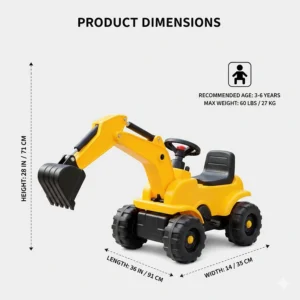
Real excavators are massive machines weighing up to 200,000 pounds, but the ride on excavator toy versions bring that same construction excitement down to kid-friendly size. Whether your little one dreams of operating heavy machinery or simply loves digging in the sandbox, there’s a ride on excavator toy perfectly suited for their age and skill level. From manual foot-powered models for toddlers to electric versions with working hydraulics for older kids, the market offers incredible variety. I’ve spent weeks researching, comparing specs, and analyzing customer feedback to bring you this comprehensive guide that cuts through the marketing fluff and delivers exactly what you need to know.
Quick Comparison Table
| Product | Type | Age Range | Price Range | Key Feature |
|---|---|---|---|---|
| HONEY JOY 12V Excavator | Electric | 3-8 years | $159-$189 | Adjustable front loader |
| Costzon 12V Excavator | Electric | 3-8 years | $159-$179 | Remote control included |
| Big Dig Sand Digger | Manual | 3+ years | $79-$99 | 360° rotation base |
| HOMCOM Qaba No Power | Manual | 18-48 months | $69-$89 | 2-in-1 walker design |
| HONEY JOY 6V Rotatable | Electric | 3+ years | $129-$149 | Rotatable seat & music |
| Little Tikes 2-in-1 | Manual | 2+ years | $39-$49 | Dual-purpose tool |
| Peg Perego Maxi Excavator | Pedal | 2+ years | $199-$250 | Heavy-duty chain drive |
💬 Just one click – help others make better buying decisions too! 😊
Top 7 Excavator Ride On Toy Models: Expert Analysis
1. HONEY JOY 12V Battery Powered Excavator
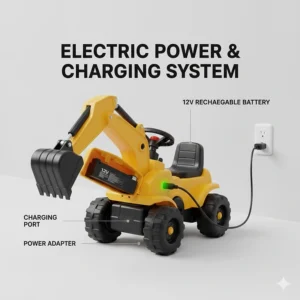
The HONEY JOY 12V stands out as a premium choice for families seeking realistic construction play. This beast features a powerful 12V 7AH battery system that delivers 40-60 minutes of continuous operation—enough for multiple backyard excavation projects before needing a recharge.
Key Specifications:
- Adjustable front loader with manual control
- Two-speed operation (1.6-2.2 mph)
- Weight capacity: 66 lbs
- Dimensions: 45″ x 23″ x 23.5″
What Parents Love: Customers consistently praise the sturdy PP and iron construction that withstands enthusiastic play. One reviewer mentioned their four-year-old has used it daily for six months without any mechanical issues. The external charging port makes recharging convenient, and the horn adds an authentic touch that kids absolutely adore.
✅ Pros:
- Long 40-60 minute battery life
- Realistic digging experience
- ASTM certified for safety
❌ Cons:
- 8-12 hour charging time
- Assembly required
Price: $159-$189
Best For: Kids who want an authentic excavation experience with extended playtime
2. Costzon 12V Ride On Excavator
The Costzon 12V model brings professional-grade features to backyard play. What sets this excavator toy ride on apart is its dual control system—kids can drive independently or parents can take over with the included 2.4G remote control for added safety supervision.
Key Specifications:
- 2 x 6V motors for smooth operation
- Treaded wheels for multiple terrain types
- Safety belt included
- Manual front loader operation
Real-World Performance: Parents report this model handles grass, dirt, and light gravel with ease. The two-speed setting allows younger children to master basic controls before graduating to faster speeds. Multiple reviewers mentioned the horn button is a favorite feature that gets constant use.
✅ Pros:
- Parent remote control included
- Versatile terrain capability
- Easy forward/backward operation
❌ Cons:
- Front loader is manual only
- Slightly heavier for storage
Price: $159-$179
Best For: Parents wanting oversight capabilities while kids learn to operate independently
3. Big Dig Toy Excavator Ride
Here’s where things get interesting for sandbox enthusiasts. The Big Dig represents a different philosophy entirely—no batteries, no charging, just pure mechanical action powered by your child’s imagination and muscle power. This manual sandbox digger features robust metal construction built to last through years of outdoor adventures.
Key Specifications:
- 360° rotating seat and boom
- 33-inch reach capability
- Weight limit: 110 lbs
- Metal frame with rubber wheels
The Sandbox Champion: This ride on excavator toy excels in sandboxes, snow, and loose dirt. The two-handed control system mimics real excavator operation, teaching cause-and-effect while building upper body strength. Grandparents love this model because it doesn’t require batteries—one less thing to maintain. Customer photos show kids ages 3 to 10 enjoying the Big Dig, making it a toy that grows with your child.
✅ Pros:
- No batteries needed
- Can support up to 110 lbs
- All-season versatility
❌ Cons:
- Requires manual effort to operate
- Some assembly needed
Price: $79-$99
Best For: Active kids who enjoy physical play and sandbox digging
4. HOMCOM Qaba No Power Ride On Excavator
Perfect for the youngest construction crew members, the HOMCOM Qaba serves double duty as both a ride on excavator toy and a walking assistant for toddlers just finding their feet. This clever 2-in-1 design makes it exceptional value for families with 18-48 month old children.
Key Specifications:
- Foot-to-floor operation
- 90° rotating dig body
- Under-seat storage compartment
- Anti-fall device for stability
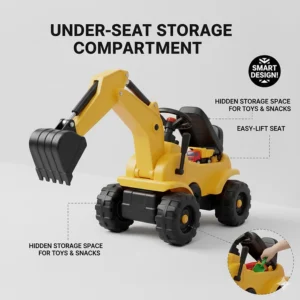
Toddler-Tested Approval: The high backrest prevents backward tumbles, while the anti-rollover base keeps little ones safe during enthusiastic play sessions. Several parents mentioned using the under-seat storage as an emergency potty during long outdoor play sessions—practical functionality you won’t find in product descriptions! The manual digging mechanism is simple enough for 18-month-olds to understand while remaining engaging for preschoolers.
✅ Pros:
- Great starter excavator for toddlers
- Walker functionality included
- Large storage capacity
❌ Cons:
- Limited to foot-powered movement
- Maximum weight: 66 lbs
Price: $69-$89
Best For: Toddlers 18-48 months learning to walk and play
5. HONEY JOY 6V Ride On Excavator with Rotatable Seat
The HONEY JOY 6V model bridges the gap between manual and full-power excavators. Its unique design features separate driving and digging modes—when kids lift the backrest, the vehicle automatically powers off for safe stationary digging. This thoughtful safety feature prevents accidents while teaching operational awareness.
Key Specifications:
- 6V battery system
- 360° rotating seat for digging
- USB port and music functions
- Under-seat storage
Entertainment Hub: Beyond digging capabilities, this excavator toy ride on includes Bluetooth connectivity, built-in music modes, and storytelling features. Parents appreciate the volume control buttons—a must-have for maintaining backyard peace. The battery display helps prevent unexpected power outages mid-play.
✅ Pros:
- Dual mode operation (driving/digging)
- Entertainment features included
- Rotating seat functionality
❌ Cons:
- Cannot drive while digging
- 6V battery provides less power than 12V models
Price: $129-$149
Best For: Tech-savvy kids who want multimedia features
6. Little Tikes Dirt Diggers 2-in-1 Excavator
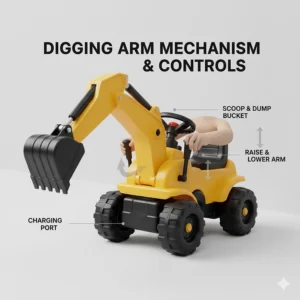
Sometimes simpler is better, and the Little Tikes Dirt Diggers proves this philosophy. This budget-friendly excavator ride on toy functions as both a ride-on vehicle and a functional shovel, making it incredibly versatile for various play scenarios from sandbox to beach.
Key Specifications:
- No batteries required
- Dual-purpose design
- Durable Little Tikes construction
- Indoor and outdoor use
Tried and True: Little Tikes built their reputation on indestructible toys, and this excavator maintains that standard. Multiple families report owning this toy for 3+ years with minimal wear. The simplicity means less to break—no electrical components, no complex mechanisms, just solid construction play. It’s lightweight enough for kids to move independently yet sturdy enough to handle enthusiastic digging.
✅ Pros:
- Extremely affordable
- No maintenance required
- Legendary Little Tikes durability
❌ Cons:
- More basic features
- Limited to manual operation
Price: $39-$49
Best For: Budget-conscious families wanting reliable quality
7. Peg Perego Maxi Excavator Pedal Powered
The Peg Perego Maxi Excavator represents the premium tier of pedal-powered construction toys. This Italian-engineered marvel features an anti-corrosion treated iron mechanism, adjustable seat, and a fully operational digging bucket controlled by dual levers—it’s the closest thing to operating real construction equipment at this price point.
Key Specifications:
- Chain-driven pedal system
- Two-lever bucket control
- Adjustable seat and pedals
- Anti-corrosion iron components
Engineering Excellence: Peg Perego’s attention to detail shines through in the sculpted tread wheels providing excellent ground grip and the high roll bar protecting little operators. Parents willing to invest in quality appreciate features like the drinks holder and adjustable components that accommodate growing children from ages 2 through 6. The pedal mechanism teaches coordination while building leg strength—educational benefits beyond simple play.
✅ Pros:
- Superior build quality
- Grows with your child
- Exceptional durability
❌ Cons:
- Higher price point
- Heavier weight
Price: $199-$250
Best For: Families prioritizing longevity and premium construction
✨ Don’t Miss These Exclusive Deals!
🔍 Take your backyard adventures to the next level with these carefully selected products. Click on any highlighted item to check current pricing and availability. These tools will help you create authentic construction experiences your family will love!
Understanding Different Types of Excavator Ride On Toy Options
The excavator ride on toy market has evolved dramatically, offering families choices beyond simple push toys. Understanding these categories helps you match the right product to your child’s developmental stage and your family’s preferences.
Electric Excavators: Power and Realism
Battery-powered models dominate the upper age ranges for good reason. The 6V systems suit younger children (3-5 years) with gentler power delivery and slower speeds around 1.5 mph. Meanwhile, 12V excavators accommodate older kids (4-8 years) with speeds reaching 2-3 mph and stronger torque for varied terrain. Remote control capabilities in many electric models provide parental oversight—particularly valuable during the learning phase.
Consider charging infrastructure before purchasing. Most models require 8-12 hours for full charges delivering 40-90 minutes of playtime. Families with multiple outdoor toys might need dedicated charging schedules to ensure batteries stay fresh.
Manual and Pedal Options: Old-School Fun
Don’t dismiss non-electric options too quickly. Manual excavators like the Big Dig develop gross motor skills and spatial awareness without screen time or battery dependency. The physical effort required encourages active play—exactly what pediatricians recommend for growing children.
Pedal-powered models add complexity, teaching coordination as kids learn to pedal while operating digging mechanisms. These multi-tasking skills transfer beautifully to bicycle riding and other coordinated activities. Plus, pedal excavators never run out of battery mid-adventure, a frustration parents know too well.
Hybrid and Specialty Designs
Some innovative designs blur category lines. The HOMCOM Qaba serves as both walker and excavator. Other models feature detachable components transforming from excavator to forklift to race car. These versatile toys extend value by adapting to changing interests and developmental stages.
Safety Features Every Excavator Toy Ride On Should Have
Safety transcends marketing buzzwords when dealing with ride-on toys. ASTM F963-17 certification indicates products meet rigorous toy safety standards including stability testing, small parts restrictions, and toxic material limitations. CPSIA compliance adds another layer of assurance regarding lead content and phthalate levels.
Structural Safety Elements
Look for wide, stable bases preventing tip-overs during enthusiastic operation. Anti-rollover devices (usually reinforced rear bars) catch the excavator if backward momentum exceeds safe limits. High backrests prevent children from sliding off backward—particularly important for younger riders still developing balance.
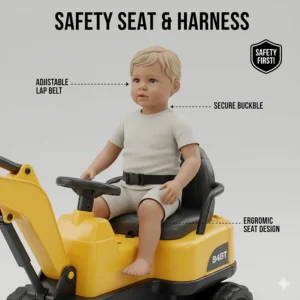
Safety belts deserve careful consideration. While not all models include them, belts provide crucial restraint for children under 3 who might stand up unexpectedly. Several parents mentioned adding aftermarket belts to models lacking them—a reasonable modification for extra peace of mind.
Electrical Safety Considerations
Electric models should feature external charging ports allowing charging without disassembling the toy. This design prevents moisture intrusion into electrical components and reduces wear on connection points. Slow-start functions eliminate sudden jerks that could startle young drivers, while automatic braking when kids release accelerator pedals prevents runaway situations.
Battery indicators prevent mid-play power failures by warning when charges run low. This seemingly minor feature significantly improves the play experience and teaches children basic resource management.
Age-Appropriate Selection Guide
Matching excavator complexity to child development stage maximizes enjoyment while ensuring safety. Here’s what works best at different ages:
18-36 Months: Foundation Building
Toddlers need simple, intuitive designs emphasizing sensory exploration over complex operation. Look for foot-to-floor models allowing natural movement patterns they’ve already mastered. Avoid battery power at this stage—the added complexity provides minimal benefit while introducing charging hassles and potential electrical hazards.
The HOMCOM Qaba exemplifies ideal toddler design with its walker functionality and simple digging mechanism. Children this age benefit most from cause-and-effect learning: push lever, bucket moves. Keep it simple.
3-5 Years: Skill Development
Preschoolers can handle basic battery-powered models with straightforward controls. Single-speed electric excavators work well, as do manual models requiring more physical engagement. This age group thrives on pretend play, so features like horns, sound effects, and working front loaders enhance imaginative scenarios.
Attention spans remain shorter, so 30-45 minute play sessions suffice. Battery life becomes less critical than build quality and feature variety maintaining interest.
6-8 Years: Mastery and Challenge
Older children demand more sophisticated operation. Multi-speed controls, larger digging capacities, and higher weight limits accommodate their size and abilities. Remote control capability transitions from parental necessity to optional backup as children demonstrate consistent safe operation.
This age group might outgrow simpler models quickly, making durability and weight capacity crucial considerations. The 110-lb limit on the Big Dig, for instance, extends usability well into elementary school years.
Material Quality and Durability Comparison
Construction materials directly impact longevity, safety, and value. Understanding material trade-offs helps set realistic expectations.
Plastic Construction: Lightweight Versatility
High-density polyethylene (HDPE) and polypropylene (PP) dominate plastic excavators. These materials resist UV degradation, won’t rust, and tolerate temperature extremes without becoming brittle. Quality plastic construction can absolutely last years—Little Tikes built their reputation on it.
However, plastic tolerates abuse less gracefully than metal. Expect cosmetic scratching and potential cracking if kids use excavators roughly or leave them exposed to extreme weather. Environmentally friendly PP plastics contain no harmful chemicals while maintaining durability—look for this specification in product descriptions.
Metal Frame Benefits
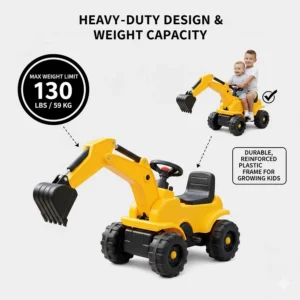
Steel and iron components add significant weight (often 15-30 lbs total) but provide superior structural integrity. The Big Dig’s metal construction allows its impressive 110-lb weight limit—impossible to achieve with plastic alone. Metal frameworks resist bending and flexing under load, maintaining alignment and functionality over years.
Corrosion resistance varies by manufacturer. Anti-corrosion treatments and powder coating protect against rust, but regular maintenance helps. Store metal excavators under cover during off-seasons and periodically check for rust spots requiring touch-up paint.
Hybrid Designs: Best of Both
Many premium excavators combine materials strategically—metal frames for strength, plastic bodies for weather resistance, rubber wheels for traction. This hybrid approach optimizes each component’s performance characteristics. The Peg Perego Maxi Excavator exemplifies this engineering, using metal for drivetrain components subject to stress while employing plastics elsewhere for weight savings.
Battery Life, Charging, and Maintenance
Electric excavators introduce ongoing maintenance requirements unfamiliar to families accustomed to traditional toys. Understanding these needs prevents frustration and extends product lifespan.
Understanding Battery Chemistry
Most ride-on excavators use sealed lead-acid (SLA) batteries—the same technology found in motorcycles and UPS systems. These batteries tolerate deep discharge cycles well and provide reliable power delivery, but they require specific charging protocols. Always use manufacturer-supplied chargers; generic replacements might deliver incorrect voltage damaging batteries permanently.
Initial charges deserve special attention. Many manufacturers recommend 18-20 hour first charges to condition new batteries properly. Subsequent charges typically run 8-12 hours. Overcharging damages SLA batteries, so disconnect chargers promptly after reaching full capacity.
Maximizing Battery Longevity
Temperature significantly impacts battery performance. Store excavators in climate-controlled spaces during extreme weather. Cold temperatures temporarily reduce capacity (you’ll notice shorter runtime in winter), while heat accelerates chemical degradation shortening overall battery life.
During off-season storage, charge batteries every 30-45 days even without use. SLA batteries self-discharge slowly, and allowing complete depletion causes sulfation—irreversible damage preventing proper recharging. This maintenance ritual seems tedious but dramatically extends battery service life from 1-2 years to 3-4 years.
Replacement Considerations
Eventually all batteries fail. Generic 6V and 12V SLA replacements cost $20-40 online, making replacement economical compared to purchasing entirely new toys. Match amp-hour (Ah) ratings precisely—installing higher capacity batteries might seem like an upgrade but can strain electrical systems designed for specific power levels.
Terrain Compatibility and Performance
Where will your child operate their excavator toy ride on? This question significantly impacts which models deliver satisfying performance versus disappointing struggles.
Indoor vs Outdoor Considerations
Surprisingly, many families use smaller excavators indoors on hard floors or low-pile carpeting. Manual and lightweight electric models work well here, providing year-round play opportunities regardless of weather. However, indoor use eliminates the primary appeal—digging! Reserve indoor operation for severe weather backup rather than primary use.
Outdoor performance varies dramatically by surface type. Concrete and asphalt suit all excavator types, providing smooth operation for wheeled models. Grass presents the first real challenge—6V motors struggle in tall or wet grass, while 12V systems handle it confidently. Short, well-maintained lawns pose minimal difficulty for any model.
Sand, Dirt, and Loose Material
Here’s where excavators truly shine. The resistance of digging into sand or loose dirt engages children completely, combining physical effort with visible results. However, material type affects performance. Fine playground sand responds beautifully to even small buckets, while compacted garden soil might resist manual digging mechanisms designed for lighter materials.
Tracked excavators (rare in the ride-on category) distribute weight better across soft surfaces, but most consumer models use wheels. Wide, treaded wheels minimize sinking in sand—check wheel specifications if beach or sandbox use will dominate. Some parents report adding weight (sandbags in storage compartments) to improve traction in loose material.
Weather and Seasonal Adaptability
The Big Dig and similar metal excavators market themselves as “all-season” toys, and customer reviews confirm children enjoy using them in snow. The digging action translates perfectly to snow clearing, and cold weather doesn’t affect manual operation. However, metal seats become uncomfortably cold—a cushion solves this minor issue.
Rain poses problems for electric models despite their weather-resistant construction. Avoid operating battery-powered excavators in wet conditions to prevent electrical shorts and rust in connections. Always dry thoroughly after unexpected encounters with rain or sprinklers.
Price Ranges and Value Analysis
Excavator ride on toy prices span from under $40 to over $250—a huge range reflecting genuine differences in construction, features, and longevity.
Budget Tier ($40-$90)
Entry-level excavators prioritize accessibility over features. The Little Tikes 2-in-1 and similar manual models occupy this space, offering solid construction and basic functionality without bells and whistles. These represent excellent starter toys for families uncertain whether excavator play will maintain their child’s interest.
Value proposition here depends on usage expectations. For occasional sandbox play supplementing other outdoor activities, budget excavators deliver perfectly adequate performance. However, families anticipating daily use should consider whether spending slightly more upfront saves replacing worn-out budget toys mid-season.
Mid-Range ($90-$180)
This sweet spot balances features, quality, and affordability. You’ll find basic 6V electric models, premium manual excavators, and well-equipped pedal versions. The HONEY JOY 6V and Costzon 12V represent this category’s range—both offer motorized operation with useful features at reasonable prices.
Mid-range excavators typically include safety certifications, decent battery life, and construction quality supporting 2-3 years of regular use. Most families find this tier offers the best value, providing substantial features without premium pricing.
Premium Category ($180-$250+)
Top-tier excavators like the Peg Perego Maxi Excavator justify higher prices through exceptional build quality, thoughtful engineering, and multi-year durability. These toys transition from purchases to investments—you’re buying something potentially serving multiple children over 5+ years.
Premium excavators often include features budget models can’t match: adjustable components accommodating growing children, superior materials resisting wear, and mechanical sophistication providing more realistic operation. Families prioritizing longevity and quality find premium excavators deliver superior value despite higher upfront costs.
Educational Benefits Beyond Play
Smart parents recognize quality toys as educational tools disguised as entertainment. Excavator ride on toy options deliver remarkable developmental benefits often overlooked in marketing materials.
Physical Development
Operating excavators engages multiple muscle groups simultaneously. Pedaling develops leg strength and cardiovascular fitness. Steering improves hand-eye coordination while building forearm and shoulder muscles. Manual digging mechanisms strengthen core stability as children twist and turn while operating controls.
Balance skills improve dramatically through excavator operation. Children must maintain stability while performing complex motions—skills transferring directly to bicycle riding, skating, and sports. Physical therapists actually recommend ride-on toys for children with mild coordination challenges, as they provide engaging practice in non-clinical settings.
Cognitive Growth
Cause-and-effect learning happens naturally during excavator play. Push lever, bucket moves. Press pedal, vehicle goes forward. These fundamental logical connections establish neural pathways supporting later academic learning. Spatial reasoning develops as children judge distances, plan movements, and predict outcomes.
Problem-solving opportunities abound. How to reach that far pile of sand? Which direction to approach from? Where to dump the collected dirt? Children continuously make decisions, evaluate results, and adjust strategies—exactly the executive function skills educators want to develop.
Social and Emotional Learning
Construction play often becomes collaborative as multiple children work together on imaginary projects. Negotiation skills develop: “You dig here while I dump there.” Sharing and turn-taking occur naturally when equipment is limited. Frustration tolerance improves as children encounter challenges and persist toward goals.
Role-playing construction scenarios builds empathy and perspective-taking. Children imagine themselves as heavy equipment operators, understanding how adults work and the effort behind building projects they see daily. This imaginative play supports emotional intelligence development in surprisingly profound ways.
Top Brands and Manufacturer Reputation
Brand reputation matters when investing in children’s ride-on toys. Established manufacturers bring decades of safety testing, engineering expertise, and customer service infrastructure backing their products.
HONEY JOY: Affordable Innovation
HONEY JOY has rapidly built a strong reputation for value-oriented ride-on toys featuring current trends at competitive prices. Their excavators consistently receive positive reviews for assembly simplicity, decent battery life, and customer service responsiveness. While not premium-tier quality, HONEY JOY products reliably deliver advertised features at prices making electric excavators accessible to average families.
Quality control occasionally surfaces in reviews—some customers report missing hardware or minor defects. However, the company’s responsive customer service typically resolves issues quickly, maintaining overall satisfaction despite occasional hiccups.
Costzon: Budget-Friendly Reliability
Costzon occupies the value-to-mid range space, offering respectable quality without premium pricing. Their 12V excavator competes directly with models costing significantly more while delivering comparable features and performance. Reviews frequently mention Costzon’s straightforward assembly and durable construction surviving regular outdoor use.
The brand’s customer service receives mixed feedback—some customers report excellent support while others struggle reaching representatives. Overall, Costzon represents solid value for families prioritizing features over brand prestige.
Little Tikes: Trusted Legacy
Little Tikes needs no introduction to parents. Their 50+ year history of producing indestructible outdoor toys establishes them as the standard against which others measure. The Little Tikes excavators might lack fancy features but deliver unmatched reliability and longevity.
Resale value particularly favors Little Tikes products. When your child outgrows their excavator, expect to recoup 40-60% of purchase price selling used—significantly better than most brands. This residual value effectively reduces true ownership cost substantially.
Peg Perego: Italian Engineering Excellence
Peg Perego brings European design sensibilities and engineering to the American market. Their excavators feature superior attention to detail, premium materials, and thoughtful design elements elevating them above mass-market alternatives. The higher prices reflect genuine quality differences, not just brand prestige.
Customer service particularly shines with Peg Perego. Replacement parts remain available years after purchase, allowing repairs extending product life indefinitely. Their warranty support consistently receives praise for quick resolution of legitimate issues.
Assembly, Setup, and First-Time Operation
Unboxing day determines whether excitement or frustration dominates your excavator experience. Proper assembly and setup prevent common issues plaguing rushed installations.
Pre-Assembly Preparation
Clear a spacious work area before opening packaging. Most excavators require 6-10 feet of floor space during assembly. Gather tools even if products claim “no tools required”—having screwdrivers, adjustable wrenches, and pliers available speeds the process dramatically. Smartphone flashlights help illuminate instruction diagrams and verify proper part orientation.
Read instructions completely before starting. This seemingly obvious advice prevents frequent mistakes like installing components backward or skipping crucial steps. Manufacturers bury important details in middle paragraphs that rushed assembly overlooks.
Battery Charging Protocol
Electric excavators typically ship with uncharged batteries requiring initial charging before first use. This first charge deserves patience—manufacturers recommend 18-20 hours to properly condition new batteries. Resist the temptation to interrupt charging early despite children’s pleas; proper conditioning significantly impacts long-term battery performance.
Verify charger connections before leaving unattended. Loose connections prevent charging while running up electric bills. Most chargers include indicator lights confirming proper operation—green typically means charging, while red indicates complete charge or errors.
Break-In Period
Electric motors benefit from gentle initial operation. Allow children to operate excavators at lower speeds for the first 2-3 uses, avoiding maximum loads and steep inclines. This break-in period helps components settle and identify any assembly issues before heavy use makes corrections difficult.
Manual and pedal excavators require mechanical break-in allowing joints and bearings to wear into optimal alignment. Initial operation might feel stiff or require extra effort—completely normal and improving with use. Avoid forcing stuck mechanisms; gentle persistence works better than brute strength potentially damaging components.
Maintenance Tips for Longevity
Proper maintenance extends excavator toy ride on lifespan from 1-2 seasons to 5+ years of reliable service. Most maintenance requires minimal time and effort but delivers disproportionate benefits.
Weekly Maintenance
Quick visual inspections catch developing problems before they become serious. Check wheels for debris wrapped around axles—hair, string, and grass accumulate surprisingly quickly, creating resistance reducing battery life and potentially damaging motors. Examine all connections for loosening from vibration; retighten as needed using appropriate tools rather than fingers.
Wipe down plastic and metal surfaces after use, especially following sand or dirt exposure. Simple soap and water remove abrasive particles before they scratch finishes or work into mechanical components. Pay particular attention to joints and hinges where grit accumulates causing premature wear.
Monthly Deep Cleaning
Remove batteries and wash excavators thoroughly using garden hoses or spray bottles. Avoid high-pressure washers potentially forcing water into sealed components. Focus cleaning on undersides where mud and debris accumulate out of sight. Dry completely before reassembling and storing—moisture trapped in compartments promotes rust and electrical corrosion.
Lubricate moving parts using appropriate products. Plastic gears benefit from dry lubricants (graphite or PTFE-based) preventing dust attraction, while metal chains and hinges prefer traditional oils or greases. Avoid over-lubricating; excess attracts dirt forming abrasive paste damaging the very components you’re trying to protect.
Seasonal Storage
Prepare excavators properly for extended storage during winter or rainy seasons. Clean thoroughly, removing all dirt and moisture. Charge batteries fully, then disconnect and store in climate-controlled spaces—garage shelves work perfectly. Cover excavators with tarps or store indoors preventing UV damage fading plastics and deteriorating rubber components.
Check stored excavators monthly, recharging batteries as needed. This prevents sulfation damage requiring expensive battery replacement. Spring cleaning before returning excavators to service ensures components remain functional after months of disuse.
Common Problems and Troubleshooting
Even quality excavators occasionally develop issues. Understanding common problems and solutions prevents minor annoyances from ending playtime prematurely.
Battery Won’t Charge
First verify charger functionality by checking indicator lights and testing outlet voltage. If charger works but battery refuses charging, connections might be corroded or loose. Clean battery terminals using wire brushes or sandpaper, then reconnect firmly. Persistent problems might indicate dead batteries requiring replacement—normal after 1-3 years depending on usage and maintenance.
Weak or Sluggish Performance
Multiple factors cause performance degradation. Low battery charge is most obvious—recharge fully and retry. Wheel axles binding from debris reduce efficiency; clean thoroughly and lubricate. Gear boxes sometimes accumulate dirt internally; disassembly and cleaning restore proper function. Finally, worn motors eventually lose power; replacement motors cost $15-30 and install relatively easily.
Steering Issues
Loose steering components create sloppy, imprecise control frustrating young operators. Tighten all steering linkage fasteners, checking for worn bushings or stripped gears requiring replacement. Some models use plastic steering gears deliberately designed to strip under excessive force, protecting more expensive components—replacements cost just a few dollars.
Hydraulic/Manual Digging Problems
Manual digging mechanisms rely on lever arms and pivot points that loosen over time. Retighten all fasteners and lubricate pivot points. Bent or damaged buckets often result from using excavators to lift items exceeding design loads (large rocks, full water buckets, etc.). Replacements typically aren’t available; carefully bend metal buckets back into shape or fashion repairs using appropriate materials.
Environmental and Storage Considerations
Where and how you store excavators dramatically impacts longevity and maintains appearance despite outdoor exposure.
Sun and UV Damage
Ultraviolet radiation degrades plastics relentlessly, causing fading, chalking, and eventual brittleness. Direct sunlight particularly damages dark-colored plastics absorbing more heat. Store excavators under covered areas when not in use—garage corners, shed spaces, or covered patios all work well. If covered storage isn’t available, tarps provide excellent UV protection at minimal cost.
Weather-resistant doesn’t mean weatherproof. While quality excavators tolerate occasional rain exposure without immediate damage, constant outdoor storage accelerates deterioration. Moisture infiltrates electrical systems causing corrosion, and temperature cycling stresses plastic components promoting cracking. Ten minutes returning excavators to storage after play sessions dramatically extends their service life.
Temperature Extremes
Heat and cold both stress ride-on toys. Summer temperatures inside dark sheds or garages easily reach 130-140°F, softening plastics and potentially damaging batteries. Winter cold makes plastics brittle and temporarily reduces battery capacity. Climate-controlled storage prevents these extremes; if unavailable, at least bring batteries indoors during extreme temperatures.
Space-Efficient Storage
Excavators consume considerable floor space—a common frustration for families with limited storage. Wall-mounted hooks holding excavators vertically saves floor space while improving organization. Some families build simple storage racks accommodating multiple ride-on toys vertically, maximizing garage efficiency. Alternatively, seasonal rotation works well: store off-season toys in basements or attics, keeping only current favorites in primary play areas.
Frequently Asked Questions
❓ How long do excavator ride on toy batteries typically last per charge?
❓ What age is best for introducing a ride on excavator toy to my child?
❓ Can excavator toy ride on models be used on grass and uneven terrain?
❓ Are replacement parts available if something breaks?
❓ How much assembly is required for ride on excavator toy purchases?
Conclusion: Finding Your Perfect Excavator Ride On Toy
After diving deep into specifications, comparing features, and analyzing real-world performance, one truth emerges: the “best” excavator ride on toy depends entirely on your specific situation. A $40 manual excavator might deliver more joy to an active three-year-old than a $200 electric model to a child preferring quieter activities.
Consider your child’s personality, physical development, and play preferences first. Does your little one show sustained interest in construction themes, or do interests shift weekly? Will they use their excavator daily or occasionally? Does your yard provide suitable space and terrain for operation? These practical considerations matter more than feature lists or brand names.
Budget thoughtfully rather than cheaply. That $250 Peg Perego excavator might seem extravagant until you realize it’ll serve three children over eight years—suddenly that’s $10 per child per year. Conversely, a $45 Little Tikes model providing two years of joy before donation delivers excellent value despite shorter lifespan. Calculate total cost of ownership including batteries, maintenance, and potential repairs when comparing options.
Remember that outdoor play’s value extends far beyond momentary entertainment. Physical activity, imaginative scenarios, and fresh air contribute to childhood development in ways screens never can. An excavator toy ride on that gets your child outside regularly delivers returns money can’t measure.
For most families, I recommend starting with mid-range options like the HONEY JOY 6V or Costzon 12V excavators. They balance features, durability, and affordability while letting you gauge your child’s interest before potentially upgrading to premium models later. If budget allows and you value longevity, the Peg Perego Maxi Excavator represents the pinnacle of ride-on construction toys—an investment paying dividends through years of reliable service.
Whatever you choose, watch your child’s face light up when they first dig, dump, and build their imaginary construction sites. That moment of pure joy makes every minute of research, assembly, and maintenance absolutely worthwhile. Now get out there and help your little builder create something amazing!
Recommended for You
- 7 Best Unicorn Ride On Toy Options for 2026
- 7 Best Ride On Toys for Toddlers 2025 – Expert Buying Guide
- Playing with a Light-Up Toy: 7 Best Picks 2025 (Expert Reviews)
Disclaimer: This article contains affiliate links. If you purchase products through these links, we may earn a small commission at no additional cost to you.
✨ Found this helpful? Share it with your friends! 💬🤗
