
In This Article
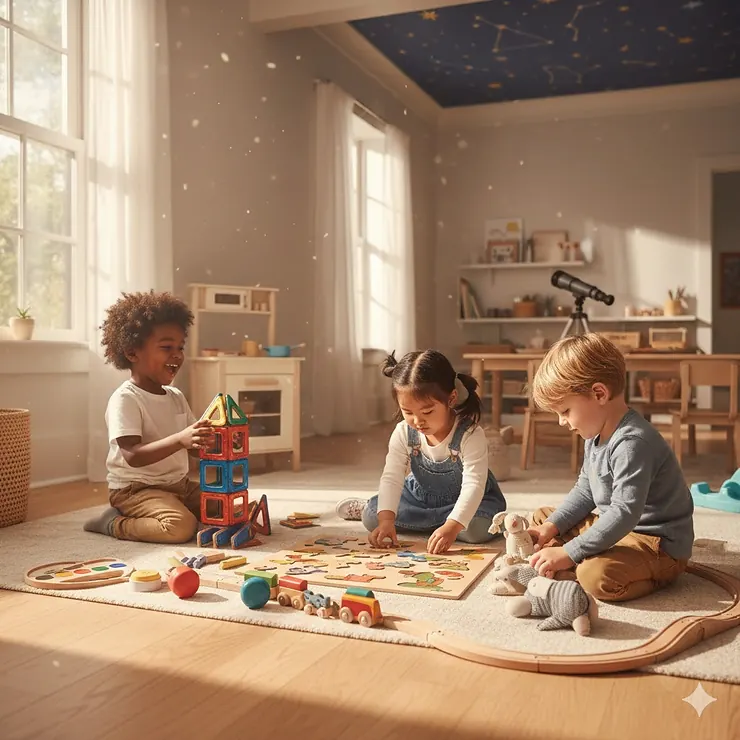
Watching your four-year-old’s face light up with a new toy never gets old, does it? But here’s the thing—not all toys are created equal, especially when you’re dealing with the wonderfully wild world of preschoolers. At four years old, kids are developing crucial skills like problem-solving, creativity, and social interaction. They’re past the toddler stage but not quite ready for complex challenges that’ll leave them frustrated.
I’ve spent countless hours researching and testing toys with real four-year-olds (including my niece who’s basically a professional toy critic at this point). The best toys for 4 year olds aren’t just entertaining—they’re developmental powerhouses disguised as fun. According to child development experts at the American Academy of Pediatrics, play-based learning at this age sets the foundation for academic success and emotional intelligence.
Whether you’re shopping for best toys for 4 year old girls who love building and creating, searching for teaching toys for 4 year olds that make learning feel like play, or hunting for outdoor toys for 4 year olds to burn off that endless energy, you’re in the right place. This guide covers everything from budget-friendly options under $20 to premium educational sets that’ll grow with your child.
The sweet spot? Toys that challenge without overwhelming, engage without screens dominating everything, and—let’s be honest—keep them occupied long enough for you to finish that cup of coffee while it’s still hot. Let’s dive into the toys that actually deliver on their promises.
Quick Comparison Table: Top 7 Toys at a Glance
| Product | Best For | Price Range | Age Suitability | Key Benefit |
|---|---|---|---|---|
| LEGO Classic Creative Suitcase | Creative builders | $25-$35 | 4-7 years | 1,000+ building combinations |
| Melissa & Doug 100-Piece Wooden Blocks | Foundational learning | $30-$40 | 3-6 years | Natural wood, no batteries needed |
| VTech KidiZoom Camera Duo | Young photographers | $45-$60 | 3-8 years | Photo/video capture with games |
| Play-Doh Super Color Pack | Sensory play | $12-$18 | 2+ years | 20 colors, unlimited creativity |
| Little Tikes Easy Score Basketball Set | Active play | $35-$50 | 2-6 years | Adjustable height, outdoor/indoor |
| ThinkFun Gravity Maze | Logic development | $30-$40 | 8+ (supervised for 4) | 60 challenges, STEM learning |
| LeapFrog LeapStart Learning System | Educational prep | $40-$55 | 2-7 years | Preschool through 1st grade content |
💬 Just one click – help others make better buying decisions too!😊
✨ Don’t Miss These Exclusive Deals!
Top 7 Best Toys for 4 Year Olds: Expert Analysis
1. LEGO Classic Creative Suitcase – Best Overall Building Experience
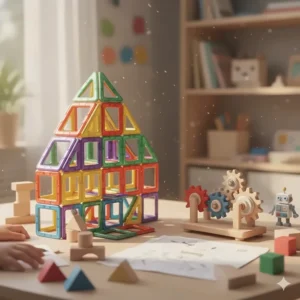
If there’s one toy that’s stood the test of time, it’s LEGO. The LEGO Classic Creative Suitcase takes everything great about building blocks and packages it in a portable case that makes cleanup less painful (trust me on this one). With 1,000+ pieces in various shapes and colors, this set offers virtually unlimited building possibilities.
What makes this one of the best toys for 4 year olds is its perfect balance of structure and freedom. The set includes wheels, windows, doors, and eyes, so kids can build everything from vehicles to creatures to buildings. The included instruction booklet provides 12 starter ideas, but the real magic happens when your child starts creating their own designs. I’ve seen four-year-olds spend hours building “rocket ships” that look more like colorful towers—and that’s exactly the point.
Key Specifications:
- 1,000+ LEGO pieces in 15+ colors
- Includes wheels, doors, windows, and specialty pieces
- Portable yellow storage case with handle
- Price range: $25-$35
Customer Feedback: Parents consistently praise the quality and durability, noting that pieces from sets purchased years ago still work perfectly with new ones. The portable case is a game-changer for travel and quick cleanup.
✅ Pros:
- Encourages creativity and spatial reasoning
- Endless building combinations
- Durable and compatible with all LEGO sets
❌ Cons:
- Small pieces require supervision
- Can be painful to step on (as any parent knows)
2. Melissa & Doug 100-Piece Wooden Blocks – Best Natural Play Option
There’s something beautifully simple about wooden blocks. The Melissa & Doug 100-Piece Wooden Building Blocks set represents old-school play at its finest—no batteries, no lights, no sounds, just pure imagination. Made from solid wood with smooth edges, these blocks are designed to last through multiple children and probably their children too.
This set includes 100 blocks in four colors and nine shapes, perfect for teaching toys for 4 year olds purposes. Kids naturally learn about shapes, colors, balance, and physics as they stack, sort, and build. The open-ended nature means there’s no “wrong” way to play, which builds confidence alongside towers. According to research from Harvard’s Center on the Developing Child, hands-on play with simple materials like blocks strengthens neural connections critical for later academic success.
Key Specifications:
- 100 solid wooden blocks
- 9 different shapes in 4 colors
- Non-toxic, water-based paints
- Includes sturdy wooden storage crate
- Price range: $30-$40
Customer Feedback: Reviewers love the quality craftsmanship and heft of these blocks. Many mention using them as teaching tools for counting, patterns, and basic engineering concepts.
✅ Pros:
- Screen-free, imagination-driven play
- Develops fine motor skills and spatial awareness
- Durable enough to become family heirlooms
❌ Cons:
- Heavier than plastic blocks (can hurt when thrown)
- Limited color variety compared to plastic sets
3. VTech KidiZoom Camera Duo – Best Tech Toy for Creative Kids
Want to give your four-year-old a camera without handing over your phone? The VTech KidiZoom Camera Duo is a legitimate kid-friendly camera that actually takes decent photos and videos. With front and rear cameras, your child can capture their world from their perspective—which is often way more interesting than you’d think.
This ranks among the best toys for 4 year old girls and boys who show interest in photography or technology. It includes built-in games, photo effects, frames, and stamps that let kids edit their masterpieces. The durability is impressive—it’s designed to survive drops, fumbles, and the general chaos that follows preschoolers everywhere. My niece used hers to document her “nature exploration” (our backyard) and created a surprisingly artistic gallery of close-up grass shots.
Key Specifications:
- 5.0 megapixel camera with 4x digital zoom
- Front and rear cameras for selfies
- Video recording capability
- 5 built-in games plus photo editing features
- Includes 256MB internal memory (expandable)
- Price range: $45-$60
Customer Feedback: Parents appreciate the parental controls and the fact that kids leave their phones alone. The battery life is solid, lasting several days of typical use.
✅ Pros:
- Encourages creativity and observation skills
- Durable, kid-proof design
- Screen time that’s actually productive
❌ Cons:
- Image quality isn’t professional-grade
- Requires SD card for more storage
4. Play-Doh Super Color Pack – Best Sensory Play Experience
Sometimes the classics truly are the best. The Play-Doh Super Color Pack includes 20 vibrant colors that provide endless squishing, molding, and creating opportunities. If you’ve never watched a four-year-old’s absolute concentration while making a “pizza” out of Play-Doh, you’re missing out on some serious entertainment.
As one of the most affordable best toys for 4 year olds, Play-Doh offers incredible bang for your buck. The sensory experience helps develop fine motor skills, hand strength, and creativity. According to child development research from Stanford’s Center for Early Childhood Research, tactile play like modeling with Play-Doh strengthens neural pathways that support writing skills later on. Plus, the smell of Play-Doh is basically nostalgia in a can.
Key Specifications:
- 20 two-ounce cans in rainbow colors
- Non-toxic, wheat-based compound
- Resealable containers prevent drying
- Mix colors for custom shades
- Price range: $12-$18
Customer Feedback: This is a party favor favorite and rainy-day savior. Parents note it’s messy but worth it for the hours of quiet play it provides. Pro tip: Use on a plastic mat for easier cleanup.
✅ Pros:
- Incredibly affordable
- Develops hand strength and creativity
- Easy cleanup if you prepare properly
❌ Cons:
- Can dry out if containers aren’t sealed properly
- Gets stuck in carpet (voice of experience here)
5. Little Tikes Easy Score Basketball Set – Best Outdoor Toy for Active Play
Getting kids outside and moving is increasingly important in our screen-dominated world. The Little Tikes Easy Score Basketball Set transforms your driveway or playroom into a mini basketball court, and it’s one of the best outdoor toys for 4 year olds who need to burn energy.
What I love about this set is the adjustable height—it grows from 2.5 to 4 feet, so it’ll work for your four-year-old now and their younger siblings later. The oversize rim makes scoring easier, building confidence and encouraging active play. According to the CDC’s physical activity guidelines, preschoolers need at least three hours of physical activity daily, and this toy makes that goal more achievable and fun.
Key Specifications:
- Adjustable height from 2.5 to 4 feet (6 levels)
- Oversized 10-inch rim
- Includes 3 mini basketballs
- Sturdy base can be weighted with sand or water
- Weather-resistant for outdoor use
- Price range: $35-$50
Customer Feedback: Parents love that it encourages active play without being complicated. The adjustable feature means it doesn’t become obsolete quickly. Many mention using it indoors during bad weather with soft balls.
✅ Pros:
- Promotes physical activity and coordination
- Adjustable for different ages and skill levels
- Suitable for indoor or outdoor use
❌ Cons:
- Base requires filling for stability
- Balls can get lost easily (buy extras)
6. ThinkFun Gravity Maze – Best Logic and Problem-Solving Toy
Okay, full disclosure—ThinkFun Gravity Maze is technically rated for ages 8+, but hear me out. With supervision and simplified challenges, this marble-run logic game works brilliantly for bright four-year-olds and provides years of growing challenges. It’s like a 3D puzzle meets a marble run, and it’s genuinely addictive for kids and adults alike.
This ranks as one of the most effective teaching toys for 4 year olds interested in STEM concepts. The game includes 60 challenges from beginner to expert, teaching critical thinking, planning, and spatial reasoning. You start with a card that shows tower placement, then figure out how to position the remaining pieces so the marble travels from start to finish. The “aha!” moment when they solve a puzzle is priceless.
Key Specifications:
- 60 challenges across 4 difficulty levels
- 10 colorful towers of varying heights
- Includes 3 marbles and challenge cards
- Combines building with logic puzzles
- Price range: $30-$40
Customer Feedback: Parents and educators praise its educational value and longevity. Many note that younger siblings start with the easier challenges while older kids tackle expert levels, making it a toy the whole family uses.
✅ Pros:
- Grows with your child’s abilities
- Teaches cause-and-effect and spatial reasoning
- Award-winning educational design
❌ Cons:
- Requires adult help initially for young kids
- Marbles are small—supervision needed
7. LeapFrog LeapStart Learning System – Best Educational Technology
If you want a screen-based learning tool that’s actually educational (not just babysitting), the LeapFrog LeapStart Learning System delivers. This interactive book system covers everything from ABCs to problem-solving, with activity books spanning preschool through first grade content.
The stylus-based system means kids physically interact with each page, answering questions and completing activities. The LeapFrog LeapStart recognizes what book you’re using and adjusts accordingly, with audio feedback that guides learning. As one of the best toys for 4 year olds focused on school readiness, it builds confidence in early literacy and math skills without feeling like homework.
Key Specifications:
- Stylus-activated learning system
- Compatible with 20+ activity books (sold separately)
- Covers reading, math, science, and problem-solving
- Audio feedback and instructions
- Rechargeable or battery-powered
- Price range: $40-$55 (starter set)
Customer Feedback: Parents love that it prepares kids for kindergarten without screen addiction. Many mention their kids ask to “play” with it daily. The only complaint is that additional books add up in cost.
✅ Pros:
- Makes learning genuinely engaging
- Tracks progress across multiple skill areas
- Reduces screen time while providing tech interaction
❌ Cons:
- Additional books required for extended use
- Not as open-ended as traditional toys
Understanding the Developmental Needs of Four-Year-Olds
Four is a magical age—they’re finally past the tantrum-heavy threes but not yet dealing with the attitude of five. Developmentally, four-year-olds are firing on all cylinders, and the right toys can supercharge that growth. Their brains are forming over a million neural connections every second, and play is the primary vehicle for this development.
At this age, kids are mastering fine motor skills like using scissors, drawing shapes, and building with smaller pieces. They’re developing social skills through cooperative play and learning to express emotions with words instead of meltdowns (usually). Their attention spans are stretching to 10-15 minutes for engaging activities, and they’re starting to understand rules and taking turns.
Cognitive Leaps at Age Four
The cognitive development happening at four is frankly astounding. Kids start understanding concepts like “more” and “less,” can count to ten or higher, and recognize letters and numbers. They’re asking endless “why” questions because they’re genuinely trying to understand how the world works. The best toys for 4 year olds tap into this curiosity without overwhelming them.
Imaginative play reaches peak levels—they’ll turn a cardboard box into a spaceship, castle, or secret hideout. This pretend play isn’t just cute; it’s crucial for developing executive function skills like planning, flexibility, and self-control. According to research published by the National Association for the Education of Young Children, children who engage in rich pretend play show better language development and emotional regulation.
Physical Development Milestones
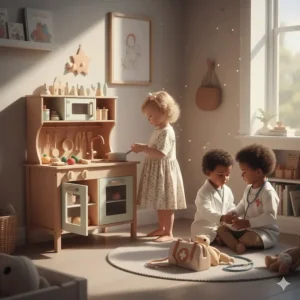
Gross motor skills are exploding at four. Kids can hop on one foot, throw and catch balls with increasing accuracy, and climb like miniature mountain goats. They’re refining balance and coordination, which is why outdoor toys for 4 year olds that encourage active play are so important. Physical activity isn’t just about fitness—it’s directly connected to cognitive function and emotional well-being.
Fine motor skills are also rapidly improving. Four-year-olds can manipulate small objects, build detailed structures, and are working toward being able to write letters. Toys that require precision—like building blocks, Play-Doh, or even working a camera—strengthen the hand muscles needed for writing later.
Detailed Comparison: Types of Play and Their Benefits
| Play Type | Examples from Our List | Skills Developed | Time Investment | Value Rating |
|---|---|---|---|---|
| Construction Play | LEGO, Wooden Blocks | Spatial reasoning, problem-solving, creativity | High (30+ minutes) | ⭐⭐⭐⭐⭐ |
| Sensory Play | Play-Doh | Fine motor skills, creativity, stress relief | Medium (15-30 min) | ⭐⭐⭐⭐⭐ |
| Physical Play | Basketball Set | Coordination, fitness, confidence | Medium (20-40 min) | ⭐⭐⭐⭐ |
| Logic Games | Gravity Maze | Critical thinking, planning, patience | Medium (15-25 min) | ⭐⭐⭐⭐⭐ |
| Educational Tech | LeapStart, KidiZoom | Literacy, numeracy, tech literacy | Medium (20-30 min) | ⭐⭐⭐⭐ |
How to Choose the Perfect Toy for Your Four-Year-Old
Consider Your Child’s Interests and Personality
Not all four-year-olds are created equal—shocking, I know. Some are natural builders who’ll spend hours with construction toys. Others are movers and shakers who need physical challenges. Many are budding artists or love pretend play. The best approach is matching toys to your child’s natural inclinations rather than fighting against them.
Watch what your child gravitates toward. Do they take apart everything in sight? Consider building sets or puzzles. Are they constantly moving and can’t sit still for more than three minutes? Outdoor toys and sports equipment will serve you better than table games. If they narrate elaborate stories while playing with dolls or action figures, look for toys that support imaginative scenarios.
Balance Screen Time with Hands-On Play
Here’s a controversial take: not all screen time is created equal. The VTech KidiZoom Camera and LeapFrog LeapStart both involve screens or digital elements, but they’re interactive and educational rather than passive consumption. The key is ensuring technology enhances rather than replaces hands-on exploration.
A good rule of thumb is the 80/20 split—80% of playtime should involve physical, hands-on toys that don’t require batteries or screens. The remaining 20% can include quality educational technology that teaches specific skills. The American Academy of Pediatrics recommends no more than one hour of quality programming daily for this age group, and interactive learning systems fit within those guidelines when used appropriately.
Prioritize Open-Ended Toys
The toys that get the most mileage in our house are the ones without a single “correct” way to play. LEGO, Play-Doh, and wooden blocks fall into this category—they’re what developmental experts call “open-ended” toys. There’s no right or wrong, no winning or losing, just pure creation and exploration.
Open-ended toys grow with your child because they can be used in increasingly complex ways as skills develop. A four-year-old might stack blocks into simple towers, while a six-year-old builds elaborate cityscapes with the same set. This longevity makes them excellent value purchases that don’t gather dust after a few months.
Safety Considerations for Four-Year-Olds
Most four-year-olds are past the “everything goes in the mouth” phase, but small parts still require supervision. Check age recommendations carefully—they’re there for good reasons beyond just choking hazards. Some toys require fine motor skills or cognitive abilities that younger kids simply don’t have yet, leading to frustration rather than fun.
Look for quality construction and non-toxic materials. This is especially important for items that’ll spend time in mouths despite your best efforts (Play-Doh, I’m looking at you). Certifications from organizations like ASTM International indicate toys have been tested for safety standards.
✨ Take Your Toy Shopping to the Next Level!
🔍 Ready to invest in toys that actually deliver developmental benefits? Click on any highlighted product above to check current pricing and availability. These carefully selected toys will transform playtime into valuable learning experiences your child will love!
Budget-Friendly Alternatives and Similar Options
For Building Enthusiasts on a Budget
If the LEGO Classic Creative Suitcase stretches your budget, consider Mega Bloks or off-brand building blocks. They’re compatible with LEGO and cost significantly less, though they may not have the same precision fit. For natural building materials, look for generic wooden block sets from craft stores—they work just as well for foundational play.
Affordable Sensory and Creative Play
Play-Doh is already budget-friendly, but you can make homemade playdough for even less. Countless recipes online use basic kitchen ingredients like flour, salt, and food coloring. It won’t last as long as commercial versions, but for frequent crafters, it’s economical. Kinetic sand is another excellent sensory alternative that offers a different tactile experience.
Budget Outdoor Options
Not ready to invest in a Little Tikes Basketball Set? A simple ball and a hoop you hang on a door work surprisingly well. Dollar stores often carry affordable outdoor toys like bubbles, sidewalk chalk, and jump ropes that encourage active play without breaking the bank. Don’t underestimate the power of a good ball—it’s the toy with infinite variations.
Mid-Range Learning Alternatives
The LeapFrog LeapStart is an investment, but if you’re looking for something more affordable, tablet apps on a parent-controlled device can provide similar educational content. Look for apps from trusted educational brands like PBS Kids, ABCmouse, or Khan Academy Kids. They’re not as hands-on but offer quality learning experiences at lower cost.
Gender-Neutral Choices and Best Toys for 4 Year Old Girls Specifically
Let’s address the elephant in the toy aisle—gender marketing is mostly nonsense. That said, some kids do gravitate toward certain themes or activities, and there’s nothing wrong with honoring those preferences. All the toys on our list work beautifully for any child regardless of gender, but if you’re shopping specifically for best toys for 4 year old girls, here’s what tends to be particularly popular.
Building sets like LEGO and Melissa & Doug Wooden Blocks are universally loved but sometimes overlooked for girls due to marketing. Don’t fall for that trap—building and engineering play is crucial for spatial reasoning development in all children. The VTech KidiZoom Camera tends to be a huge hit with girls who love documenting their world and playing with photo effects.
For girls interested in STEM, the ThinkFun Gravity Maze challenges stereotypes while building critical thinking skills. Pair these with themed sets featuring characters they love, whether that’s princesses, animals, or superheroes—the important part is the developmental value of the play, not the packaging color.
Why Gender-Neutral Matters
Research consistently shows that pushing kids toward gender-specific toys limits their skill development. Girls steered away from building toys show less developed spatial reasoning. Boys discouraged from creative play have less developed fine motor skills. The best approach? Offer variety and let your child’s interests guide their play, regardless of what the toy aisle suggests.
Teaching Toys for 4 Year Olds: Making Learning Fun
The phrase “teaching toys” can sound suspiciously like homework disguised as play, but the best ones make learning so engaging that kids don’t realize they’re building essential skills. Four-year-olds are natural learners—they’re wired to absorb information through play and exploration.
Academic Readiness Without Pressure
The LeapFrog LeapStart exemplifies educational toys done right. It introduces literacy, numeracy, and problem-solving concepts through games and activities that feel like play. The interactive format means kids get immediate feedback, which research shows is crucial for learning retention. But here’s the key—it’s completely self-paced, so there’s no pressure or failure.
Teaching toys for 4 year olds should focus on foundational skills rather than rote memorization. Letter recognition, number sense, pattern identification, and logical thinking are all appropriate learning goals at this age. What’s not appropriate? Drilling flashcards or expecting reading fluency—that’s kindergarten and beyond territory.
STEM Learning Through Play
ThinkFun Gravity Maze and building sets like LEGO are sneaky STEM teachers. Kids experiment with physics concepts like gravity, balance, and cause-and-effect without worksheets or pressure. They’re learning to think like engineers—planning, testing, adjusting, and problem-solving. These skills matter far more than memorizing facts.
The beauty of STEM toys is they normalize scientific thinking. Failure becomes feedback rather than something to fear. When a block tower falls or a marble run doesn’t work, kids naturally troubleshoot and try again. That resilience and experimental mindset will serve them throughout their education and life.
Outdoor Toys for 4 Year Olds: Getting Kids Moving
In an era where screens compete for every second of attention, outdoor toys for 4 year olds serve a crucial role in healthy development. Physical activity does more than just tire kids out before bedtime—it’s essential for brain development, emotional regulation, and building confidence.
The Physical Activity Crisis
Statistics from the CDC show that only about half of preschoolers get the recommended three hours of physical activity daily. That’s concerning because early childhood is when kids should be moving almost constantly. Outdoor toys make achieving that goal easier and more appealing than nagging kids to “go outside and play.”
The Little Tikes Easy Score Basketball Set represents just one option in a huge category. Other excellent outdoor toys include tricycles, scooters, climbing structures, and good old-fashioned balls of all types. Water toys like sprinklers and water tables are huge hits in summer. Simple equipment like hula hoops, jump ropes, and sidewalk chalk encourage active, creative outdoor play.
Benefits Beyond Fitness
Outdoor play offers benefits you can’t replicate indoors. Exposure to natural light regulates circadian rhythms, improving sleep quality. Unstructured outdoor time reduces stress and anxiety—yes, even in four-year-olds. Playing outside also means exposure to more varied textures, sights, and experiences that stimulate sensory development.
Nature play specifically—climbing trees, collecting rocks, playing in dirt—builds immunity, reduces ADHD symptoms, and fosters environmental awareness. While the Little Tikes Basketball Set isn’t exactly nature play, it gets kids outside where these other experiences can happen organically.
Price vs. Value: Understanding Long-Term Toy Investment
The Cost-Per-Play Calculation
Here’s a simple formula that’ll change how you evaluate toy purchases: divide the cost by the estimated number of times your child will play with it. A $50 toy used 100 times costs $0.50 per play session. A $10 toy used three times costs $3.33 per session. Suddenly that expensive item doesn’t seem so pricey.
The toys on our list all rank high in cost-per-play value. LEGO and wooden blocks can be used thousands of times across multiple children and years. Play-Doh is consumable but incredibly affordable. The tech toys like LeapStart and KidiZoom Camera cost more initially but provide hundreds of hours of engagement.
When to Splurge vs. Save
Splurge on toys that’ll last years and grow with your child—quality building sets, durable outdoor equipment, and versatile educational toys. Save on trendy items tied to specific characters or shows that your child might outgrow quickly. Also save on consumables like craft supplies and playdough where generic brands work fine.
Consider secondhand options for expensive items. Toys like wooden blocks and outdoor playsets hold up incredibly well and can be found at thrift stores or Facebook Marketplace for a fraction of retail cost. Building blocks don’t wear out—they’re basically immortal.
Storage and Organization Tips for Maximum Playtime
Even the best toys for 4 year olds become overwhelming clutter without proper storage systems. Here’s the thing nobody tells you: organization isn’t just about tidiness—it directly affects how much your child actually plays with their toys.
The Visibility Factor
Toys shoved in bins and closets might as well not exist. Four-year-olds are visual creatures—if they can’t see it, they won’t play with it. Open shelving with clear bins or labeled containers makes toys accessible and appealing. The LEGO Creative Suitcase comes with its own storage, which is brilliant. For loose toys like Play-Doh or wooden blocks, clear containers on low shelves let kids find and return items independently.
Rotation Strategy
Here’s a game-changing tip: rotate toys every few weeks. Keep about 70% of toys accessible and store 30% out of sight. When you rotate them back in, they feel new again. This prevents overwhelm, reduces clutter, and actually increases engagement with each toy. The Gravity Maze is perfect for rotation—bring it out for a few weeks, then swap for something else before it loses its appeal.
Creating Play Zones
Designate areas for different play types if space allows. A building zone with LEGO and blocks in one corner, an active play space for the basketball set, a creative station for Play-Doh. This organization helps kids focus on one activity at a time rather than bouncing between scattered toys.
FAQ: Common Questions About Toys for Four-Year-Olds
❓ What are the most important developmental skills toys should build at age 4?
❓ How many toys does a 4 year old actually need?
❓ Should teaching toys for 4 year olds focus on reading and math skills?
❓ Are outdoor toys for 4 year olds safe to use without constant supervision?
❓ How do I choose between tech toys and traditional toys for my 4 year old?
Conclusion: Investing in Play That Matters
Choosing the best toys for 4 year olds isn’t really about the toys themselves—it’s about the experiences, growth, and joy they facilitate. Every toy on this list represents an opportunity for your child to develop crucial skills while having the kind of fun they’ll remember years from now.
The most important factor? Matching toys to your individual child’s interests and developmental stage. A four-year-old obsessed with building might ignore even the best basketball set, and that’s perfectly fine. The goal is finding toys that invite repeated engagement, challenge without frustrating, and grow alongside your child.
Remember that play is how four-year-olds make sense of their world, process emotions, and develop the cognitive skills that’ll serve them throughout life. Whether you choose LEGO for creative construction, wooden blocks for foundational learning, or outdoor equipment for active play, you’re investing in more than entertainment—you’re investing in development.
Don’t overthink it. Watch what lights up your child’s eyes, listen to what they ask for repeatedly, and trust your instincts. The “perfect” toy is the one that gets played with, loved, and maybe even becomes part of their favorite childhood memories. Now get out there and find some toys that’ll actually stick around longer than that fleeting “new toy” excitement!
✨ Found This Helpful? Share It With Your Friends!
🎁 Got a friend struggling to find the perfect gift for a four-year-old? Share this guide! Help other parents discover toys that actually deliver on developmental benefits. These tried-and-tested recommendations will make birthday shopping so much easier!
Recommended for You
- 7 Best Toys for 3 Year Olds That Spark Development in 2026
- 7 Best Toys for 2 Year Old Boys 2026
- 7 Best Toys for 2 Year Old Girls in 2026 – Expert Picks
Disclaimer: This article contains affiliate links. If you purchase products through these links, we may earn a small commission at no additional cost to you.
✨ Found this helpful? Share it with your friends! 💬🤗
