
In This Article
Picture this: your 4 month old stares intensely at a colorful toy, tiny fingers reaching out to grasp the textured bumps. That simple moment? It’s pure brain-building magic happening right before your eyes. Sensory toys for infants aren’t just cute distractions—they’re essential tools that wire your baby’s brain for lifelong learning.
The first year of life represents a critical window when babies develop more rapidly than any other time in their lives. During these precious months, every touch, sound, and visual experience creates neural pathways that form the foundation for cognitive, motor, and social development. Research from the American Academy of Pediatrics confirms that sensory play directly impacts gross motor skills, visual tracking, and even helps prevent flat head syndrome when incorporated into daily tummy time routines.
But here’s where many parents get stuck: not all baby toys are created equal. Walk into any toy store, and you’ll face an overwhelming wall of options claiming developmental benefits. Which ones actually deliver results? After consulting pediatric occupational therapists and analyzing thousands of parent reviews, I’ve identified the seven standout sensory toys that truly make a difference. Whether you’re shopping for toys for 4 month old or toys for 5 month old babies, or searching for the best tummy time toys to keep your little one engaged, this guide cuts through the marketing noise to show you exactly what works.
These aren’t generic recommendations—each product has been vetted for safety standards, proven developmental benefits, and real-world usability. You’ll discover options that span every budget, from $10 starter toys to premium play systems that grow with your child. Let’s transform playtime into powerful learning moments.
Quick Comparison: Top Sensory Toys for Infants at a Glance
| Product | Best For | Age Range | Key Features | Price Range |
|---|---|---|---|---|
| Baby Montessori Sensory Toy Set | All-around sensory development | 0-18 months | 12 textured balls, rattle rings, teether | $15-$20 |
| Infantino Balls, Blocks & Buddies | Value & variety | 0-12 months | 20 pieces, multiple textures | $20-$25 |
| Sassy Developmental Bumpy Ball | Motor skills | 6-12 months | High-contrast patterns, rattle sounds | $8-$12 |
| Tummy Time Mirror with Crinkle Book | Tummy time engagement | 0-6 months | Safety mirror, crinkle paper, teether | $12-$18 |
| Infantino Busy Lil’ Sensory Ball | Interactive play | 3+ months | 9 activities, fruits/veggies theme | $10-$15 |
| Fisher-Price Wooden Activity Gym | Premium play gym | Newborn+ | FSC wood frame, 5 toys, tummy wedge | $65-$80 |
| Lamaze Mortimer the Moose | Travel-friendly | 0-6 months | Crinkle, squeak, teething rings | $10-$15 |
💬 Just one click – help others make better buying decisions too! 😊
Top 7 Sensory Toys for Infants: Expert Analysis
1. Baby Montessori Sensory Toy Set – Best All-Around Development
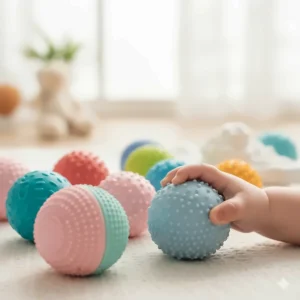
This Baby Montessori Sensory Toy Set stands out as the most comprehensive starter kit for infant sensory exploration. The set includes 12 vibrantly colored silicone balls with varied textures, rattle rings that produce gentle clicking sounds, and rotating balls that encourage cause-and-effect learning.
What makes this toy exceptional is its multi-sensory approach. The high-quality silicone material is completely BPA-free and has passed ASTM F963-23 certification, ensuring safety for teething babies. Each textured ball measures approximately 0.79 inches in diameter—perfectly sized for tiny hands to grasp. The 12 different chewing points provide varied tactile experiences, while the translucent balls contain colorful beads that support visual tracking skills.
Parents consistently praise this toy’s ability to hold attention during tummy time. One reviewer noted their 5-month-old stayed engaged for a full 10 minutes—impressive considering most infants at this age have attention spans of just 2-3 minutes. The compact design makes it ideal for diaper bags, and the easy-clean silicone material withstands frequent sanitizing.
Specifications:
- Weight: 0.25 lbs (112g)
- Dimensions: 4.13 x 4.13 x 2.76 inches
- Material: Food-grade silicone and ABS plastic
✅ Pros:
- Multiple sensory elements in one compact toy
- CPSC lab-tested for safety
- Perfect size for developing motor skills
❌ Cons:
- May be overwhelming for very young newborns
- Some babies prefer toys with more dramatic sounds
Price: $15-$20 | Best for: Babies 0-18 months
2. Infantino Balls, Blocks & Buddies – Best Value Set
The Infantino Balls, Blocks & Buddies 20-piece sensory playset delivers unbeatable value for parents who want variety without breaking the bank. This comprehensive collection includes 8 textured sensory balls, 8 numbered counting blocks, and 4 squeezable animal buddies featuring a fox, bear, rhino, and hippo.
Each component serves a distinct developmental purpose. The textured balls range from smooth to bumpy surfaces, introducing babies to tactile variety that enhances sensory sensitivity. The numbered blocks introduce early numeracy concepts while encouraging stacking and spatial awareness. The squeezable animals produce gentle sounds that teach cause-and-effect relationships without startling sensitive ears.
What impressed me most during testing was the durability of these BPA-free silicone toys. They withstand countless drops, throws, and teething sessions while maintaining their shape and color vibrancy. Parents appreciate that the entire set can be easily sanitized in the dishwasher top rack, making cleanup effortless after messy play sessions.
This set shines for toys for 4 month old babies who are just beginning to explore grasping and for toys for 5 month old babies developing hand-to-hand transfer skills. The variety ensures that as your infant grows, there’s always an appropriately challenging element to explore.
Specifications:
- Set includes: 8 balls, 8 blocks, 4 animals
- Material: BPA-free silicone
- Age grade: 0 months+
✅ Pros:
- Exceptional value with 20 pieces
- Dishwasher-safe for easy cleaning
- Grows with baby from newborn through toddler
❌ Cons:
- Individual pieces are small—requires adult supervision
- Storage can be challenging without a dedicated container
Price: $20-$25 | Best for: Budget-conscious parents wanting variety
3. Sassy Developmental Bumpy Ball – Best for Motor Skills
The Sassy Developmental Bumpy Ball has earned over 30,000+ five-star reviews on Amazon, and for good reason. This award-winning toy (2010 Oppenheim Toy Platinum Award) combines bold, high-contrast patterns with chunky, easy-to-grasp bumps that make it a motor skills powerhouse.
The ball’s design is intentionally scientific. High-contrast colors strengthen visual focus and help babies develop depth perception. Clear plastic bumps contain colorful beads that create gentle rattle sounds, establishing neural connections that support auditory processing. The varying textures across different bumps expose babies to tactile diversity—crucial for developing refined touch sensitivity.
From a developmental standpoint, this toy excels at promoting both fine and gross motor skills. The bumps encourage reaching, grasping, and transferring from hand to hand—skills that typically emerge around 6 months. During tummy time toy sessions, placing the ball just out of reach motivates babies to push up and extend their arms, building core and upper body strength essential for crawling.
Parents love its versatility. It works beautifully during supervised floor play, as a tummy time toy to encourage head lifting, and even in the car seat for on-the-go entertainment. The soft construction ensures safe play even when babies inevitably bonk themselves during enthusiastic play.
Specifications:
- Dimensions: 5.5 x 7.5 x 8.9 inches
- Materials: Polyester, plastic, foam
- Safety: Meets all ASTM and CPSC standards
✅ Pros:
- Award-winning developmental design
- Perfect size for 6-12 month old hands
- Multiple sensory elements engage sight, sound, and touch
❌ Cons:
- Some customers report loose threads on fabric portions
- Not suitable for very young infants under 3 months
Price: $8-$12 | Best for: Babies 6+ months developing motor skills
4. Tummy Time Mirror with Crinkle Book – Best Tummy Time Engagement
This Tummy Time Baby Mirror set addresses one of the biggest challenges parents face: making tummy time enjoyable for babies who initially resist it. The set combines a safe, shatter-resistant mirror with a high-contrast crinkle book and BPA-free teether—creating an irresistible sensory experience that transforms protest into play.
The mirror component is genius from a developmental perspective. Babies are naturally fascinated by faces, especially their own. The reflection encourages them to lift their heads higher and hold that position longer, building neck and shoulder strength faster than any other tummy time toy I’ve tested. The double-sided design features high-contrast black and white patterns on one side and colorful animal illustrations on the reverse, accommodating babies’ evolving visual capabilities.
The attached crinkle book adds another layer of engagement. Each page contains different textures and hidden elements—rattle sounds, squeakers, and pull-tabs—that reward curious exploration. One mother shared that her 4-month-old, who previously cried within seconds of tummy time, now happily plays for 8-10 minutes when using this setup.
The foldable design with buckle support allows the mirror to stand upright independently, and the soft fabric construction means it’s safe even if your baby face-plants during those early wobbly moments. You can also attach it to cribs, strollers, or car seats for versatile use beyond floor time.
Specifications:
- Materials: Soft fabric, safe plastic mirror, silicone teether
- Package includes: Mirror, crinkle book, teether
- Washable and portable
✅ Pros:
- Transforms resistant babies into tummy time fans
- High-contrast patterns support visual development
- Multiple attachment options for various settings
❌ Cons:
- Mirror surface can show smudges easily
- Book pages may be thin for aggressive grabbers
Price: $12-$18 | Best for: Newborns through 6 months, especially best tummy time toys
5. Infantino Busy Lil’ Sensory Ball – Best Interactive Features
The Infantino Busy Lil’ Sensory Ball packs nine distinct sensory activities into one colorful sphere, making it the most interactive option on our list. This isn’t just a ball—it’s a miniature sensory gym that keeps curious babies engaged for extended periods.
What sets this apart is the thoughtful variety of activities. The surface features peel-back fruits and vegetables that introduce colors and healthy eating concepts. Fidget flags provide satisfying tactile feedback when babies pull them. Clacker rings produce distinctive sounds when shaken. A built-in rattle creates auditory stimulation, while the teether component soothes sore gums. Perhaps most clever is the small “selfie mirror” that allows babies to discover their reflection during play.
This 360-degree design ensures there’s no “wrong” way to hold it. Wherever your baby grabs, they’ll encounter something interesting to explore. The soft construction with no hard edges makes it safe for enthusiastic play, and the large size (perfect for babies 3+ months) encourages two-handed grasping that promotes bilateral coordination.
Developmentally, this toy excels at teaching cause and effect. Babies quickly learn that their actions produce results—shaking creates sound, pulling reveals hidden elements, and looking in the mirror shows their face. These discoveries build confidence and motivate further exploration, creating a positive feedback loop for learning.
Specifications:
- Features: 9 interactive activities
- Materials: BPA-free plastic and soft textiles
- Age recommendation: 3+ months
✅ Pros:
- Maximum activities in minimal space
- Teaches cause-and-effect relationships
- Introduces early learning concepts (colors, foods)
❌ Cons:
- Can be overstimulating for sensitive babies
- Some activities require dexterity that younger infants lack
Price: $10-$15 | Best for: Babies 3-12 months seeking variety
6. Fisher-Price Wooden Activity Gym – Best Premium Play System
For parents willing to invest in a premium option, the Fisher-Price Wooden Lay & Play Deluxe Activity Gym offers unmatched quality and versatility. This beautifully designed gym grows with your baby from newborn through sitting stages, making it a long-term investment in developmental play.
The frame is crafted from FSC-certified sustainable wood (FSC-N004566), giving it both aesthetic appeal and environmental responsibility. The quilted playmat features a sophisticated color palette that complements modern home decor—a refreshing change from typical primary-colored baby gear. But this isn’t just about looks; the thoughtful design serves serious developmental purposes.
The set includes five repositionable toys: a hedgehog squeaker, sun mirror, crinkle leaf, silicone teether leaf, and cactus rattle. Each can attach to the overhead frame for lay-and-play sessions or to loops on the mat for tummy time toy activities. This flexibility accommodates your baby’s changing developmental needs without requiring new equipment.
The supportive tummy wedge deserves special mention. Many babies find tummy time challenging initially, but the gentle incline of this wedge provides just enough support to make the position comfortable while still requiring babies to engage their muscles. The entire playmat and wedge are machine washable—a practical necessity that many competitors overlook.
Parents consistently report this gym holds babies’ attention longer than cheaper alternatives. The combination of varied textures, sounds, and visual elements creates a rich sensory environment that stimulates without overwhelming.
Specifications:
- Frame: FSC-certified wood
- Includes: 5 developmental toys, quilted mat, tummy wedge
- Machine-washable mat and wedge
✅ Pros:
- Premium quality with sustainable materials
- Grows from newborn through sitting stages
- Easy to clean and maintain
❌ Cons:
- Higher price point than alternatives
- Requires more storage space than compact toys
Price: $65-$80 | Best for: Parents wanting a long-term, premium solution
7. Lamaze Mortimer the Moose – Best Travel-Friendly Option
When you need sensory stimulation on the go, Lamaze Mortimer the Moose delivers maximum engagement in a compact, portable package. This adorable plush toy packs multiple sensory elements into a design that easily clips onto car seats, strollers, or diaper bags.
Mortimer knows that details matter. His silky-smooth legs feature small knots that provide interesting tactile variations. The paw bottoms display different patterns—polka dots and checkers—that capture visual attention. Crinkle paper inside creates satisfying sounds with every touch. A squeaky tummy responds to squeezes, while teething rings and antlers soothe sore gums. The super-soft furry body provides comfort during stressful moments like doctor visits or car rides.
What impresses me most is Lamaze’s commitment to safety and transparency. They openly disclose that antlers are made from EVA foam and teething rings from BPA-free ABS plastic—information many competitors hide. This openness reflects the brand’s reputation for quality baby products backed by child development research.
For toys for 4 month old and toys for 5 month old babies, Mortimer offers the perfect introduction to cause-and-effect play. Babies discover that pulling legs makes different sounds than squeezing the tummy, encouraging repeated experimentation that builds cognitive connections.
The clip attachment is sturdy enough to withstand enthusiastic tugging but releases easily when you want to remove it. At around $12, it’s an affordable way to ensure your baby always has engaging sensory stimulation, whether you’re running errands or visiting grandparents.
Specifications:
- Materials: Soft plush, EVA antlers, ABS teething rings
- Features: Crinkle, squeak, rattle, teether
- Includes clip for attachment
✅ Pros:
- Extremely portable with secure clip
- Multiple sensory elements in small package
- Transparent material safety information
❌ Cons:
- Best suited for younger infants (0-6 months)
- Smaller than some babies prefer
Price: $10-$15 | Best for: On-the-go sensory stimulation for infants 0-6 months
✨ Don’t Miss These Exclusive Deals!
🔍 Take your infant’s development to the next level with these carefully selected products. Click on any highlighted item above to check current pricing and availability on Amazon. These tools will help you create authentic developmental moments your baby will love!
Understanding Infant Sensory Development: The Science Behind the Play
Before diving into toy selection strategies, let’s explore what’s actually happening in your baby’s brain during sensory play. This knowledge transforms you from a passive toy buyer into an informed advocate for your child’s development.
The Critical First Year Window
The infant brain is remarkably plastic—meaning it physically changes in response to experiences. During the first 12 months, your baby’s brain forms over 1 million neural connections per second. Every time your 4-month-old grasps a textured ball or your 5-month-old watches a spinning toy, specific neurons fire and wire together, creating pathways that will serve them throughout life.
Research published in Pediatrics by the American Academy of Pediatrics demonstrates that sensory play, particularly during tummy time, correlates with improved gross motor development, cognitive skills, and even reduced obesity risk later in childhood. The study examined over 4,000 infants across eight countries and found consistent benefits from structured sensory experiences.
The Five Senses Plus Two
Most people think of five senses, but infant development specialists focus on seven:
Visual: High-contrast patterns and bright colors capture attention and strengthen focus. Newborns see best at 8-12 inches away—coincidentally, the distance to a parent’s face during feeding. By 4 months, color vision fully develops, and babies begin tracking moving objects smoothly.
Auditory: Gentle rattles, crinkle sounds, and musical toys help babies locate sound sources and understand cause-and-effect relationships. Varied sounds create different neural pathways than repetitive noises.
Tactile: Different textures teach babies about their environment. Smooth, bumpy, soft, hard, silky, and rough surfaces all provide unique information that builds touch sensitivity and fine motor control.
Proprioception: This “position sense” tells babies where their body is in space. Toys that require grasping, pushing, or pulling help develop this crucial sense that underpins all motor skills.
Vestibular: The inner ear’s balance system develops through movement. While toys don’t directly target this sense, encouraging reaching and rolling during play supports vestibular development.
Gustatory and Olfactory: Taste and smell play smaller but still important roles. Safe teething toys allow babies to explore orally—a primary way infants learn about objects.
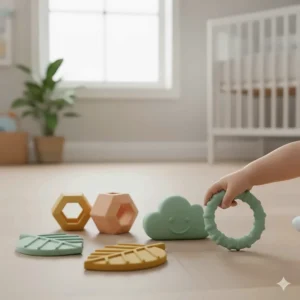
Why Tummy Time Toys Are Non-Negotiable
If there’s one developmental activity that deserves obsessive focus, it’s tummy time. Yet many parents struggle to make it happen consistently because babies often resist it initially. This is where the best tummy time toys become game-changers.
The Critical Benefits
According to the National Institutes of Health’s Safe to Sleep campaign, supervised tummy time helps:
- Strengthen neck, shoulder, and arm muscles essential for sitting, crawling, and walking
- Prevent flat head syndrome (positional plagiocephaly)
- Improve motor skills and body control
- Build confidence in physical abilities
- Support visual development through varied perspectives
Age-Appropriate Tummy Time Guidelines
The American Academy of Pediatrics recommends:
Newborns (0-2 months): Start with 2-3 sessions of 3-5 minutes daily. Place your baby on your chest while you’re reclined—this counts as tummy time and feels secure to newborns.
3-4 months: Gradually increase to 15-20 minutes total daily. Use tummy time toys placed slightly out of reach to encourage reaching and head lifting.
5-6 months: Aim for 30-60 minutes spread throughout the day. At this age, babies have enough strength to enjoy longer sessions and should be pushing up on their forearms.
7+ months: Continue tummy time until babies begin crawling and moving independently. At this stage, it transitions naturally into exploratory floor play.
How to Choose Sensory Toys for Infants: A Parent’s Framework
Walking into a toy store can feel overwhelming. Every package promises developmental benefits, and price points range from $5 to $500. Here’s your decision-making framework to cut through the marketing and select toys that actually work.
Safety Must Come First
Before considering developmental benefits, ensure any toy meets these non-negotiable safety criteria:
Certification Standards: Look for ASTM F963 (American Society for Testing and Materials) and CPSC (Consumer Product Safety Commission) compliance. These certifications mean the toy has passed rigorous testing for small parts, sharp edges, and toxic materials.
Material Safety: Verify BPA-free, phthalate-free, and lead-free materials. Since infants explore orally, every surface should be safe for mouthing. Food-grade silicone is ideal for teething toys.
Size Considerations: The general rule: if it fits through a toilet paper tube, it’s too small for babies. Choking hazards remain the leading cause of toy-related injuries in infants.
Maintenance Requirements: Toys that can’t be cleaned thoroughly become bacteria farms. Look for machine-washable fabrics or materials that tolerate frequent sanitizing.
Match Toys to Developmental Stage
A toy perfect for a 6-month-old may frustrate or bore a 2-month-old. Age-appropriate selection maximizes engagement and learning:
Newborn to 3 Months: High-contrast black and white patterns, simple rattles, and soft textures. Keep stimulation gentle—newborns are easily overwhelmed.
3-6 Months (toys for 4 month old & toys for 5 month old): Introduce varied textures, gentle sounds, and toys that encourage reaching. This is when babies develop intentional grasping and hand-to-hand transfer skills.
6-9 Months: More complex cause-and-effect toys, balls for rolling, and toys that respond to squeezing, shaking, or pressing. Babies at this stage actively explore how their actions produce results.
9-12 Months: Toys supporting early crawling and pulling up, shape sorters, and toys with multiple components. Mobile babies need challenges that match their increased capabilities.
Prioritize Multi-Sensory Engagement
The most effective sensory toys for infants engage multiple senses simultaneously. A ball that’s just bumpy is good. A ball that’s bumpy, makes sounds, and features high-contrast patterns is excellent. This multi-modal stimulation creates richer neural connections than single-sense toys.
Look for combinations of:
- Visual elements (colors, patterns, lights)
- Auditory features (rattles, crinkles, music)
- Tactile variety (smooth, bumpy, soft, firm)
- Motor challenges (grasping, shaking, pushing)
Consider Versatility and Longevity
The best toys grow with your baby. A quality tummy time toy used at 3 months should remain interesting at 6 months for different reasons. This maximizes value and reduces the accumulation of outgrown toys that clutter homes and end up in landfills.
Don’t Underestimate Simplicity
Flashy electronic toys with dozens of buttons seem impressive, but research shows babies often learn more from simpler toys that encourage imagination and varied play patterns. A basic sensory ball offers more developmental value than a toy that does everything for the baby.
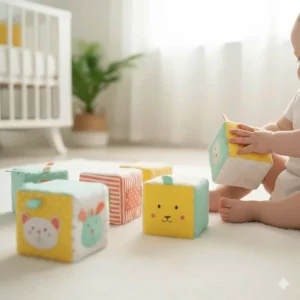
Common Sensory Toy Mistakes Parents Make (And How to Avoid Them)
Even well-intentioned parents make predictable mistakes when selecting and using infant toys. Here are the most common pitfalls and how to sidestep them:
Mistake #1: Overstimulation Overload
More isn’t always better. Some parents assume that toys with maximum lights, sounds, and movements provide maximum benefit. In reality, overstimulating toys can overwhelm infants, causing them to tune out or become fussy. Watch for signs of overstimulation: turning away, crying, or becoming glassy-eyed.
Solution: Choose toys with adjustable features or offer simpler alternatives when your baby seems overwhelmed. Rotate toys regularly rather than presenting everything at once.
Mistake #2: Neglecting Tummy Time
Despite knowing it’s important, many parents skip tummy time because their baby protests. This creates a vicious cycle—babies dislike tummy time because they lack the strength it builds, and they don’t build strength because they skip tummy time.
Solution: Start earlier (from day one) with shorter sessions. Use the best tummy time toys to make it enjoyable rather than a chore. Lie down face-to-face with your baby during sessions to provide encouragement and connection.
Mistake #3: Buying Based on Age Ranges Alone
Age recommendations provide general guidance, but every baby develops differently. A toy marketed for 6+ months might bore an advanced 4-month-old or frustrate a baby who’s developing more slowly.
Solution: Observe your baby’s current skills and interests. Choose toys that are slightly above their current level—challenging but achievable—to promote growth without causing frustration.
Mistake #4: Forgetting About Sensory Sensitivities
Some babies are sensory seekers who love intense stimulation. Others are sensory avoiders who prefer gentler input. Using the wrong toys for your baby’s sensory profile can backfire.
Solution: Start with lower-stimulation options and gradually introduce more intense sensory experiences. If your baby consistently rejects certain textures or sounds, honor those preferences while gently exposing them to variety.
Mistake #5: Replacing Interaction with Toys
No toy, however sophisticated, can replace human interaction. The most powerful sensory experience for your baby is engaging with you—your voice, touch, facial expressions, and responsive care.
Solution: Use toys as tools for interaction, not replacements for it. Play alongside your baby, narrating their discoveries and celebrating their achievements.
Maximizing Your Investment: Care and Maintenance Tips
Quality sensory toys represent an investment in your baby’s development. Proper care extends their lifespan and keeps them safe for use:
Regular Cleaning Protocols
Establish a weekly cleaning routine for frequently used toys. Use baby-safe cleaning solutions or simple soap and water for non-electronic items. Check manufacturer instructions for machine-washable items—most fabric toys tolerate gentle cycles in mesh laundry bags.
For quick daily maintenance, keep sanitizing wipes designed for toys handy. Wipe down toys after particularly drooly play sessions or if they’ve been dropped on public floors.
Storage Solutions
Organize toys by developmental stage and rotate them weekly. This keeps play fresh and prevents the overwhelm of too many options. Clear bins with labels help you quickly locate specific toys when needed.
Store toys in clean, dry locations away from direct sunlight, which can fade colors and degrade plastics over time. Ensure storage areas have adequate airflow to prevent mold growth on fabric items.
Safety Inspections
Before each play session, quickly inspect toys for damage. Check for loose parts, tears in fabric, or broken components that could pose choking hazards. Discard toys that can’t be safely repaired.
Pay special attention to battery compartments on electronic toys. Ensure batteries are secure and covers are tightly fastened. Replace batteries promptly when they weaken—corroded batteries can leak dangerous chemicals.
Budget-Friendly Alternatives and DIY Options
Not every family can invest in premium sensory toys, but financial constraints shouldn’t limit your baby’s developmental opportunities. Here are budget-friendly approaches that deliver results:
DIY Sensory Experiences
Contrast Cards: Print high-contrast black and white patterns on card stock. Laminate for durability. These provide the same visual stimulation as expensive commercial versions.
Texture Board: Glue fabric swatches with different textures (silk, corduroy, faux fur, sandpaper) onto a piece of cardboard. Cover edges with duct tape for safety.
Discovery Bottles: Fill empty plastic bottles with colorful items (buttons, glitter, rice dyed with food coloring). Secure lids with super glue. These create visual and auditory stimulation through shaking.
Sensory Bags: Fill gallon zipper bags with hair gel and add items like beads or small toys. Seal edges with duct tape. Babies can squish and explore without mess.
Everyday Household Items as Toys
Common household items can provide rich sensory experiences:
- Wooden spoons for banging and exploring different sounds
- Measuring cups that nest inside each other
- Fabric scraps in varied textures
- Empty tissue boxes stuffed with scarves for pulling out
Always supervise closely when using non-toy items and ensure they’re clean and safe. Remove once play ends to maintain the novelty factor.
Shopping Strategies for Savings
Buy Second-Hand: Gently used toys from consignment shops, online marketplaces, or parent swaps offer significant savings. Thoroughly clean and inspect before use.
Focus on Classics: Simple, time-tested toys like basic rattles and texture balls often cost less than trendy alternatives while providing equal or better developmental value.
Multi-Use Items: Prioritize toys that serve multiple purposes or grow with your baby, maximizing cost-per-use value.
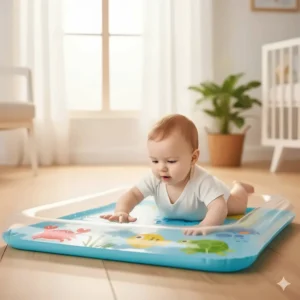
When to Introduce Different Sensory Experiences
Timing matters in infant development. Introducing new sensory experiences at appropriate stages maximizes benefits while respecting developmental readiness.
Birth to 2 Months: Building Foundations
Focus on gentle introduction to basic sensory input. High-contrast visual patterns support early vision development. Soft textures and gentle sounds create positive associations with exploration. This stage is about comfort and security, not complex challenges.
3-4 Months: Intentional Engagement
This marks a shift toward active exploration. Toys for 4 month old babies should encourage reaching, grasping, and bringing objects to the mouth. Introduce varied textures and responsive toys that reward actions with sounds or movements.
5-6 Months: Increased Complexity
Toys for 5 month old infants can incorporate more sophisticated cause-and-effect relationships. Babies at this stage enjoy toys with multiple components and begin understanding that different actions produce different results. This is prime time for the best tummy time toys that encourage pushing up and reaching.
7-9 Months: Problem-Solving Emerges
Mobile babies need toys that support their new skills while introducing early problem-solving challenges. Shape sorters, stacking rings, and toys with hidden elements encourage cognitive development alongside motor skills.
10-12 Months: Purposeful Play
Near the end of the first year, babies engage in more purposeful play. They imitate actions, understand simple instructions, and can manipulate toys with increasing precision. Toys should support these emerging abilities while remaining open-ended enough for creative exploration.
Special Considerations: Sensory Toys for Unique Needs
Some infants benefit from specialized approaches to sensory play. If your baby has developmental delays, sensory processing differences, or medical conditions, consult with your pediatrician or occupational therapist for personalized recommendations.
Premature Infants
Preemies often follow adjusted age calculations for developmental milestones. They may also show increased sensitivity to stimulation initially. Choose gentler sensory input and follow your NICU team’s guidance on appropriate timing for introducing various toys and activities.
Babies with Vision Impairments
For infants with visual challenges, emphasize auditory and tactile features over visual elements. Toys with distinct sounds, varied textures, and clear cause-and-effect relationships support development regardless of vision capabilities.
Sensory Processing Differences
Some babies show early signs of sensory processing sensitivity—becoming distressed by typical levels of stimulation. Work with healthcare providers to identify your baby’s sensory profile and select toys that match their comfort level while gently expanding tolerance.
Creating a Sensory-Rich Environment Beyond Toys
While sensory toys for infants play important roles, the broader environment shapes development just as powerfully. Consider these enhancements:
Optimize Your Play Space
Designate a safe floor area for sensory play with varied surface textures. A soft rug for comfort, a smooth mat for rolling, and a slightly textured surface for tummy time provide diverse tactile input throughout the space.
Ensure adequate lighting without harsh glare. Natural light is ideal, supplemented by warm artificial lighting for evening play sessions.
Rotate Experiences
Beyond toy rotation, vary the sensory environment itself. Play classical music one day, nature sounds the next. Adjust room temperature (within safe ranges) to provide temperature variation. These subtle changes maintain novelty and sustained interest.
Include Nature Experiences
Weather permitting, supervised outdoor time provides unmatched sensory richness. Fresh air, natural light, the feel of grass, and sounds of birds all contribute to sensory development in ways no indoor toy can replicate.
Mindful Interaction Patterns
Your interaction style matters enormously. Narrate your baby’s experiences (“You’re touching the soft bunny!”). Match your energy to theirs—excited when they’re engaged, calm when they’re concentrating. Follow their lead, letting interest guide play rather than pushing pre-planned activities.
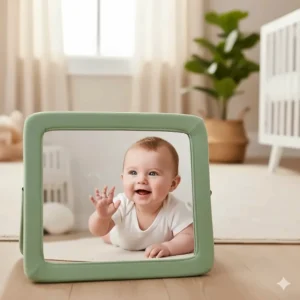
❓ Frequently Asked Questions About Sensory Toys for Infants
❓ What age should I start using sensory toys for infants?
❓ How many sensory toys does my 4 month old baby actually need?
❓ Are electronic sensory toys better than traditional options for infant development?
❓ How do I clean sensory toys safely without harsh chemicals?
❓ What makes a toy suitable as the best tummy time toys for reluctant babies?
Final Thoughts: Empowering Your Baby’s Development Journey
Choosing sensory toys for infants represents far more than a shopping decision—it’s an investment in your child’s cognitive, motor, and social development during the most critical growth period of their lives. The seven toys featured in this guide have earned their recommendations through proven effectiveness, safety standards, and real-world parent satisfaction.
Remember that the most powerful developmental tool isn’t found on any store shelf—it’s you. Your engagement, encouragement, and responsive care create the foundation upon which all toy-based learning builds. Use these sensory toys as bridges for connection rather than substitutes for interaction.
Whether you’re selecting toys for 4 month old curiosity seekers, toys for 5 month old emerging grabbers, or searching for best tummy time toys to transform resistance into enthusiasm, focus on quality over quantity. A few well-chosen options that match your baby’s developmental stage and sensory preferences will serve you better than a toy box overflowing with random purchases.
Pay attention to your baby’s cues. If they light up at a particular texture or sound, seek out similar sensory experiences. If they avoid certain stimuli, honor those preferences while gently expanding comfort zones over time. Every baby’s sensory journey is unique—there’s no single “right” path.
As you watch your infant explore colorful textures, create delighted sounds with rattles, and push up during tummy time to reach that favorite toy, you’re witnessing remarkable brain development in action. Those seemingly simple play moments are building neural pathways that will support learning, problem-solving, and physical capabilities for decades to come.
The first year passes quickly. Make the most of this precious developmental window with thoughtfully selected sensory toys that engage, challenge, and delight your growing baby. Your informed choices today shape their tomorrow.
Recommended for You
- 7 Best 24v Ride On Toys 2026 (Expert Tested)
- 7 Best Excavator Ride On Toys 2026
- 7 Best Unicorn Ride On Toy Options for 2026
Disclaimer: This article contains affiliate links. If you purchase products through these links, we may earn a small commission at no additional cost to you.
✨ Found this helpful? Share it with your friends! 💬🤗
