

In This Article
Remember when I handed my nephew his first science kit on his fifth birthday? His eyes lit up like fireworks, and he spent the next three hours mixing, exploring, and asking “Why?” at least a hundred times. That’s the magic of introducing science kits for 5 year olds at just the right moment.
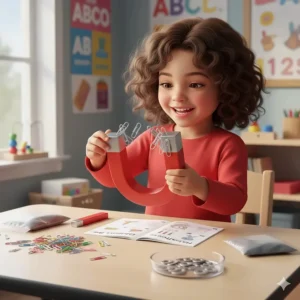
Here’s something that might surprise you: research from the National Association for the Education of Young Children reveals that early math knowledge is actually a better predictor of later academic achievement than early reading skills. We’re not just talking about counting here—it’s about problem-solving, critical thinking, and those “aha!” moments that shape how children learn to learn.
Five-year-olds are naturally wired for scientific exploration. They’re at that perfect sweet spot where their curiosity is boundless, their fine motor skills are developing beautifully, and they’re ready to follow simple instructions while still maintaining that wonderful sense of wonder. According to research published in Education Sciences, young children are congenitally curious, creative, and collaborative—exactly the traits needed for STEM learning preschool success.
In this guide, I’ll walk you through seven exceptional science kits for 5 year olds that actually deliver on their promises. We’ll explore everything from volcano science experiments that’ll make you want to clear the backyard to bug catching kit for kids options that transform your little one into a junior entomologist. Each product has been carefully selected based on real customer feedback, age-appropriateness, and that crucial “wow factor” that keeps kids coming back for more hands-on science activities.
Quick Comparison Table: Top Science Kits at a Glance
| Product | Best For | Experiments | Price Range | Rating |
|---|---|---|---|---|
| Doctor Jupiter My First Science Kit | Overall variety & value | 50+ | $25-$35 | 4.5/5 |
| National Geographic Ultimate Volcano Kit | Volcano enthusiasts | 3+ eruptions | $20-$30 | 4.6/5 |
| Educational Insights GeoSafari Jr. Microscope | First microscope | Talking features | $30-$40 | 4.7/5 |
| 4M Crystal Growing Kit | Patient learners | 7 crystals | $15-$25 | 4.4/5 |
| Nature Bound Bug Catcher Kit | Outdoor explorers | Observation | $20-$30 | 4.5/5 |
| Learning Resources Super Magnet Lab | Group activities | 100+ pieces | $35-$45 | 4.6/5 |
| UNGLINGA 150 Experiments Kit | Maximum experiments | 150+ | $30-$40 | 4.5/5 |
💬 Just one click – help others make better buying decisions too! 😊
Top 7 Science Kits for 5 Year Olds: Expert Analysis 🏆
1. Doctor Jupiter My First Science Kit – The All-Around Champion
If you’re looking for a comprehensive introduction to encouraging curiosity in children, this kit absolutely nails it. With over 50 unique experiments packed into one box, the Doctor Jupiter My First Science Kit has become a top seller on Amazon for good reason.
Key Specifications:
- 50+ hands-on experiments
- Suitable for ages 4-8
- Complete tool set included
- Step-by-step illustrated manual
What sets this kit apart is its diversity. Your five-year-old can make dinosaur squishies one day, create an underwater volcano the next, and whip up homemade perfumes the day after. The experiments use common household items, so you’re not constantly running to the store for obscure ingredients. One parent shared that her daughter completed all experiments over a summer, turning it into their daily afternoon activity.
Customer Feedback: Parents consistently praise the clear instructions and safety features. The kit meets ASTM F963-17 safety standards, which gives peace of mind when little hands are exploring chemistry.
✅ Pros:
- Incredible variety keeps kids engaged long-term
- Screen-free entertainment for 50+ days
- Well-illustrated instructions easy for parents to follow
❌ Cons:
- Some experiments require adult supervision
- Smaller containers might be challenging for very young kids
Price: Typically $25-$35 | Where to Find: Available on Amazon

2. National Geographic Ultimate Volcano Kit – Explosive Learning
There’s something primal about watching a volcano erupt, even a miniature one on your kitchen counter. The National Geographic Ultimate Volcano Kit delivers that thrill while teaching genuine volcano science experiment principles.
Key Specifications:
- Build, paint, and erupt your own volcano
- 3X more eruption powder than standard kits
- Includes real volcanic rock specimens (pumice and geode)
- Pop crystals add crackling sound effects
This isn’t just another volcano kit—it’s the ultimate version. The improved mold creates a more realistic volcano structure, and the paint colors actually look like volcanic rock when you’re done. What I love most is the learning guide that explains tectonic plates, earthquake formation, and different types of volcanic rocks. It’s a full geology lesson disguised as pure fun.
Customer Feedback: Over 50,000 buyers in the past month can’t all be wrong. Parents report that the eruptions are impressive enough to wow even older siblings, and the reusable mold means you can keep the experiments going with household ingredients.
✅ Pros:
- Three times more eruptions than competitors
- Real volcanic specimens included
- Comprehensive learning guide covers geology concepts
❌ Cons:
- Requires 24 hours for plaster to fully dry
- Can get messy (but that’s half the fun!)
Price: $20-$30 | Where to Find: Amazon, National Geographic store
3. Educational Insights GeoSafari Jr. Talking Microscope – Perfect First Microscope for Preschoolers
Introducing a microscope for preschoolers might seem ambitious, but this talking microscope is brilliantly designed for tiny scientists. Featuring the voice of Bindi Irwin, it makes scientific observation feel like an adventure.
Key Specifications:
- Features Bindi Irwin’s voice with 60+ facts
- 20 prepared slides included
- 5x magnification perfect for young eyes
- Two viewing modes (slideshow and quiz)
What makes this different from traditional microscopes is its preschool-friendly design. Instead of struggling with focus knobs, kids simply insert a slide and turn the dial. The microscope announces what they’re viewing and shares fascinating facts. It transforms observation from a potentially frustrating experience into an engaging, confidence-building activity.
Customer Feedback: Teachers love using this in kindergarten classrooms. One review mentioned their shy five-year-old became the class expert on insects after using this at home. The quiz mode reinforces learning without feeling like homework.
✅ Pros:
- No focus required—frustration-free for young learners
- Bindi Irwin makes it cool and relatable
- Durable construction withstands enthusiastic handling
❌ Cons:
- Limited to included slides (no creating your own)
- Batteries required (3 AA, not included)
Price: $30-$40 | Where to Find: Amazon, Educational Insights
4. 4M 7 Crystal Growing Science Experimental Kit – Patience Pays Off
If your five-year-old is ready to learn that good things come to those who wait, the 4M Crystal Growing Kit offers a mesmerizing introduction to crystal growing kit chemistry and geology.
Key Specifications:
- Grow 7 different colored crystals
- Individual display domes included
- Complete in 7-10 days per crystal
- STEM.org accredited
This kit teaches delayed gratification in the best possible way. Kids mix the compounds, set up their experiment, and then check daily as crystals slowly form. It’s like magic, except it’s actual science. The display domes mean each finished crystal becomes a beautiful keepsake. According to research from early childhood educators, this type of sustained observation develops important scientific thinking skills.
Customer Feedback: Parents appreciate that this spans multiple weeks, providing ongoing engagement rather than one-and-done entertainment. Several reviewers mentioned it helped teach their kids patience and careful observation.
✅ Pros:
- Beautiful results kids will proudly display
- Multi-week engagement extends value
- Teaches patience and observation skills
❌ Cons:
- Requires 10+ days for full crystal growth
- Must handle crystal powder carefully
- Recommended for ages 10+ (requires supervision for younger kids)
Price: $15-$25 | Where to Find: Amazon, educational toy stores
5. Nature Bound Bug Catcher Critter Barn Habitat Kit – Backyard Safari Adventures
Turn your backyard into a living laboratory with this comprehensive bug catching kit for kids. The Nature Bound Critter Barn makes entomology accessible and exciting for young naturalists.
Key Specifications:
- Light-up critter habitat with LED lights
- Magnifying observation window
- Complete catching tools included
- Activity booklet with catching tips
This is more than just a bug container—it’s a complete observation station. The LED lights are perfect for nighttime bug hunts, and the magnifying lens on the side window lets kids examine insects without disturbing them. The sci-fi inspired design appeals to kids who might otherwise be squeamish about bugs. It connects seamlessly with Nature Bound’s bug catcher vacuum (sold separately) for catch-and-release adventures.
Customer Feedback: Parents love that this gets kids outdoors and engaged with nature. One mom shared that her daughter’s fear of insects completely disappeared after using this kit for a few weeks. The activity booklet provides genuine educational content about insect habitats.
✅ Pros:
- Encourages outdoor exploration and physical activity
- LED lights enable evening bug hunts
- Promotes respect for living creatures through observation
❌ Cons:
- Requires 3 AA batteries for lights
- Very small insects may escape through air holes
- Best for temporary observation, not long-term housing
Price: $20-$30 | Where to Find: Amazon, Nature Bound
6. Learning Resources Super Magnet Lab Kit – Magnetic Magic for Groups
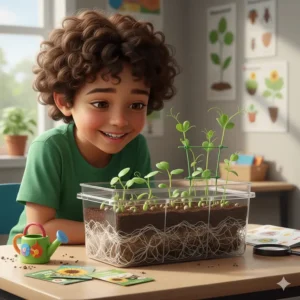
With 119 pieces, the Learning Resources Super Magnet Lab is perfect for families with multiple children or classroom settings. This magnet exploration set brings the invisible force of magnetism to life through hands-on exploration.
Key Specifications:
- 119 pieces including wands, chips, and various magnets
- Accommodates up to 25 students
- Teacher’s guide with structured activities
- Durable storage box included
What impressed me most about this kit is its scalability. Whether you have one child or a whole classroom, there’s enough material for everyone to participate. The 100 colorful magnetic chips, 7 magnetic wands, and variety of magnet shapes enable countless experiments. Kids can test which materials are magnetic, experiment with attraction and repulsion, and discover how invisible magnetic fields work.
Customer Feedback: Teachers consistently rate this as one of their must-have classroom supplies. The magnetic wands make cleanup incredibly easy (just wave them over spilled chips), and the sturdy storage box keeps everything organized between uses.
✅ Pros:
- Exceptional value with 119 pieces
- Perfect for group learning and collaboration
- Durable construction built for classroom use
❌ Cons:
- May be overwhelming for single child (lots of pieces)
- Storage box, while sturdy, takes up significant space
- Small pieces require supervision for very young children
Price: $35-$45 | Where to Find: Amazon, Learning Resources
7. UNGLINGA 150 Experiments Science Kit – Maximum Variety Champion
For families who want the absolute most bang for their buck, the UNGLINGA 150 Experiments Kit delivers an almost absurd amount of scientific exploration in one comprehensive package.
Key Specifications:
- 150+ unique experiments
- Lab coat and safety goggles included
- Chemistry, physics, and earth science covered
- Complete laboratory tool set
This is the kit for kids who devour experiments like candy. The sheer variety means they’ll encounter chemistry through volcano eruptions, physics through crystal growth, and biology through various observation experiments. The inclusion of a child-sized lab coat and safety goggles adds an important element—it makes kids feel like real scientists, which research shows significantly enhances engagement and learning retention.
Customer Feedback: One parent described this as “summer camp in a box.” The experiments range from simple (suitable for independent five-year-old work) to complex (perfect for family collaboration). The organized storage and clear categorization make it easy to select age-appropriate activities.
✅ Pros:
- Incredible value with 150+ experiments
- Lab coat and goggles boost the “real scientist” experience
- Experiments span multiple scientific disciplines
❌ Cons:
- Can feel overwhelming without good organization
- Some experiments require hard-to-find household items
- Storage container could be more robust
Price: $30-$40 | Where to Find: Amazon
✨ Don’t Miss These Exclusive Deals!
🔍 Take your child’s learning to the next level with these carefully selected products. Click on any highlighted item to check current pricing and availability. These tools will help you create authentic STEM learning preschool experiences your family will love!
Why Science Kits Transform Learning for Five-Year-Olds
The Developmental Sweet Spot
Five years old represents a magical intersection in child development. According to developmental psychologists, this age marks when children transition from purely sensory exploration to more structured, hypothesis-driven investigation. They’re developing the fine motor skills needed to manipulate small objects, the language abilities to express their observations, and the attention span to follow multi-step procedures.
Research published by the Department for Education in the UK found that children exposed to structured STEM activities during early childhood demonstrated enhanced problem-solving skills and improved critical thinking abilities. More impressively, these benefits extended well beyond science class—they showed up in improved social skills, better emotional regulation, and increased persistence when facing challenges.
Building Scientific Thinking, Not Just Knowledge
Here’s what most people miss about science kits for 5 year olds: they’re not primarily about memorizing facts. Instead, they’re teaching the fundamental habits of scientific thinking. When a five-year-old mixes baking soda and vinegar to create a volcano science experiment, they’re not just seeing a cool reaction—they’re forming hypotheses (“What happens if I add more?”), conducting experiments, making observations, and drawing conclusions.
Dr. Alison Gopnik, a renowned developmental psychologist, suggests that young children are natural scientists who constantly form hypotheses and test theories about the world around them. Quality science kits provide structured opportunities for this innate curiosity to flourish.
How to Choose the Perfect Science Kit for Your 5-Year-Old
1. Match the Kit to Your Child’s Interests
Does your child light up when finding bugs in the garden? A bug catching kit for kids will resonate more than a chemistry set. Obsessed with rocks and gems? A crystal growing kit becomes their gateway to geology. The best science kit is one that aligns with what already captures their imagination.
2. Consider Your Involvement Level
Be honest about how much time you can dedicate to hands-on science activities. Some kits require significant adult supervision and participation (which can be wonderful bonding time), while others are designed for more independent exploration. Read product descriptions carefully to understand the supervision requirements.
3. Evaluate the Learning Progression
Quality kits build on themselves. Look for sets that start with simpler concepts and gradually introduce more complexity. This scaffolding approach, based on Vygotsky’s zone of proximal development theory, ensures your child experiences success early while still being appropriately challenged as they progress.
4. Check the Reusability Factor
The best value often comes from kits that can be used multiple times or extended with household items. A volcano kit with a reusable mold beats a one-shot experiment every time. Similarly, a microscope for preschoolers that encourages kids to examine items from around the house offers more long-term engagement than one limited to included slides.
5. Safety and Age-Appropriateness
Five-year-olds are at an age where they’re capable of more than we sometimes think, but safety remains paramount. Look for kits that meet safety standards (ASTM in the US), have appropriate warning labels, and use non-toxic materials. Read reviews specifically mentioning how the product worked for five-year-olds, not just the general age range.
6. Value Beyond the Price Tag
Don’t just count the number of experiments—consider the depth of each experience. A kit with 20 meaningful, memorable experiments beats one with 100 quick, forgettable activities. Look for products that include quality materials, clear instructions, and educational content that extends beyond the experiments themselves.
7. Storage and Organization
This might seem mundane, but it matters enormously for busy families. Kits with organized storage help maintain enthusiasm because kids can easily find what they need for each experiment. Scattered, disorganized supplies lead to frustration and abandoned projects.
Benefits Comparison: Science Kits vs. Traditional Learning
| Aspect | Science Kits | Traditional Learning | Why It Matters |
|---|---|---|---|
| Engagement | Hands-on, multi-sensory | Passive observation | Active participation increases retention by 75% |
| Failure Recovery | Safe experimentation space | Fear of wrong answers | Builds resilience and growth mindset |
| Real-world Connection | Immediate cause-effect | Abstract concepts | Makes learning relevant and memorable |
| Skill Development | Fine motor, problem-solving | Primarily cognitive | Holistic development across domains |
| Parent Involvement | Collaborative exploration | Homework helper | Strengthens relationships through shared discovery |
Setting Up Your Home Science Station 🧪
Creating a dedicated space for hands-on science activities doesn’t require a laboratory—just a little strategic planning. Here’s how to transform a corner of your home into a five-year-old’s dream science zone:
The Essentials:
- Washable surface (old table with vinyl cover works perfectly)
- Good lighting
- Easy-to-access storage for current kit
- Towels and wipeable mats
- Safety goggles, even for simple experiments
- Kid-sized apron or lab coat
Organization Tips:
Store experiments by difficulty level, not just by kit. Create a “ready to go” bin with experiments your child can tackle independently, and an “adult helper” bin for more complex activities. This prevents frustration and encourages initiative.
Documentation Station:
Set up a simple science journal (a notebook with blank pages works great) where your child can draw their observations, describe what happened, and predict future results. According to research on early STEM education, this documentation reinforces learning and creates a tangible record of their scientific journey.
Safety First: Guidelines for Young Scientists
While encouraging curiosity in children is paramount, safety provides the foundation for stress-free exploration:
Golden Rules:
- Always supervise: Even with “independent” kits, maintain visual contact
- Read instructions together: Make this a learning opportunity, not just safety protocol
- Establish clear boundaries: Define which materials can be mixed and which are off-limits
- Create cleanup procedures: Part of the experiment is proper cleanup
- Start with handwashing: Before and after every experiment
- Designate experiment zones: Science stays in the science area
- Store materials properly: Out of reach when not in supervised use
Emergency Preparedness: Keep a first aid kit near your science station and ensure you know the procedures for common issues (splashes in eyes, accidental ingestion, etc.). Most quality kits include clear safety information—read it before you need it.
Extending the Learning: Beyond the Kit
Nature Connection Activities
After mastering a bug catching kit for kids, take nature walks armed with your newfound identification skills. Create a backyard inventory of local insects. Photograph specimens and research them together online or in field guides. This extends a $25 kit into months of ongoing discovery.
Library Integration
Visit your local library and check out books related to current experiments. If you’re growing crystals, explore geology books. Working with a volcano science experiment? Dive into books about plate tectonics and famous eruptions. Research from early childhood education experts shows this cross-contextual learning significantly enhances retention and understanding.
Science Journal Evolution
Transform simple observation notes into:
- Predictions and hypothesis testing
- Comparison charts (what happened with different variables)
- Labeled diagrams
- Question collections for future research
- Personal discoveries and “I wonder…” statements
Community Science
Connect with local:
- Science museums offering kids’ programs
- University outreach events
- Community education classes
- Nature centers with family activities
- Library science programs
These experiences validate and extend what they’re learning at home, showing that science isn’t just a kit—it’s a way of understanding their world.
Troubleshooting Common Challenges
“My child loses interest quickly”
Solution: Match experiments to their current energy level. Save longer, complex projects for fresh morning minds. Keep quick, impressive experiments (like vinegar and baking soda reactions) for restless afternoons. Rotate kits every few weeks to maintain novelty.
“Instructions are too complex”
Solution: Break multi-step experiments into smaller chunks. Complete one section per session rather than rushing through entire projects. Create visual step cards with photos to supplement written instructions.
“Experiments don’t work as promised”
Solution: Most “failures” stem from measurement errors or skipped steps. Treat this as a learning opportunity—what could we change? Scientific inquiry involves failure and iteration. Your response to failed experiments teaches more than successful ones.
“Too messy for our home”
Solution: Accept some mess as part of the learning process, but contain it. Use painter’s tarps, do experiments outside when possible, and choose kits rated for your mess tolerance. Some of the best learning happens in the cleanup discussions.
“Sibling conflicts over kits”
Solution: Consider duplicate small kits for peace, or establish turn-taking schedules. Older siblings can take leadership roles in helping younger ones, which reinforces their own learning while building collaboration skills.
Price vs. Value Analysis
| Price Range | What to Expect | Best For | Recommended Products |
|---|---|---|---|
| Under $20 | Single-focus kits, 10-25 experiments | Testing interests, gifts | Basic crystal kits, simple volcano sets |
| $20-$35 | Moderate variety, quality materials | Regular use, serious interest | Doctor Jupiter, 4M Crystal Kit |
| $35-$50 | Comprehensive sets, premium quality | Committed learners, classrooms | Learning Resources Magnet Lab |
| $50+ | Deluxe collections, advanced equipment | Serious hobbyists, multiple children | Comprehensive chemistry sets |
Remember: expensive doesn’t always mean better. A $25 kit that perfectly matches your child’s interests delivers more value than a $75 kit gathering dust on the shelf.
When to Upgrade: Signs Your Child is Ready for More
Watch for these indicators that it’s time to level up:
✓ Completes experiments independently without prompts
✓ Asks detailed questions beyond kit instructions
✓ Begins modifying experiments to test personal hypotheses
✓ Shows sustained interest over weeks, not just days
✓ Seeks out science content in books, videos, or museums
✓ Talks about favorite experiments with enthusiasm to others
These signs suggest deeper engagement that warrants investment in more advanced materials or specialized equipment like a higher-quality microscope for preschoolers or more sophisticated chemistry sets.
FAQ Section ❓
❓ What age is appropriate to start with science kits for 5 year olds?
❓ How do I choose between a bug catching kit for kids versus a volcano science experiment?
❓ Are science kits for 5 year olds safe if my child likes putting things in their mouth?
❓ Can science kits for 5 year olds help with STEM learning preschool preparation?
❓ How long should each hands-on science activities session last for a 5-year-old?
✨ Don’t Miss These Exclusive Deals!
🔍 Ready to spark your child’s scientific curiosity? Click on any highlighted product to check current pricing and availability. These carefully selected science kits for 5 year olds will help you create authentic learning experiences your family will treasure!
Conclusion: Investing in Tomorrow’s Scientists Today
Choosing the right science kits for 5 year olds isn’t just about entertainment—it’s about opening doors to lifelong learning. Whether you opt for the comprehensive Doctor Jupiter My First Science Kit, the explosive excitement of a National Geographic Ultimate Volcano Kit, or the patient wonder of a crystal growing kit, you’re providing more than experiments. You’re offering validation that their questions matter, their observations have value, and the world around them is endlessly fascinating.
The seven kits reviewed here represent the best of what’s currently available, each excelling in its particular niche. For maximum variety and value, the UNGLINGA 150 Experiments Kit can’t be beaten. If outdoor exploration calls to your child, the Nature Bound Bug Catcher Kit transforms every backyard into a laboratory. And for children ready to explore magnetism’s invisible forces, the Learning Resources Super Magnet Lab delivers hands-on wonder.
Remember that the best kit is the one that gets used. Consider your child’s unique interests, your family’s involvement capacity, and your space constraints. Start with one kit that truly excites your child rather than accumulating multiple sets that overwhelm. As research consistently shows, quality engagement beats quantity every time.
The investment you make today—whether $20 or $50—can spark a lifetime of scientific curiosity. That five-year-old mixing their first volcano eruption might become tomorrow’s chemist, engineer, geologist, or simply an engaged citizen who approaches the world with wonder and analytical thinking.
So clear some counter space, gather some towels, put on those safety goggles, and prepare for spectacular messes and even more spectacular discoveries. The future scientists in your life are waiting to explore.
Recommended for You
- 7 Best Educational Games for 4 Year Olds That Boost Learning 2026
- 7 Best Tricycle for 3 Year Old: Expert-Tested Choices 2026
- Best LEGO Sets for 4 Year Old Boys: 7 Top Picks in 2026
Disclaimer: This article contains affiliate links. If you purchase products through these links, we may earn a small commission at no additional cost to you.
✨ Found this helpful? Share it with your friends! 💬🤗
