
In This Article
✨Was this helpful? Spread the word! 🚀
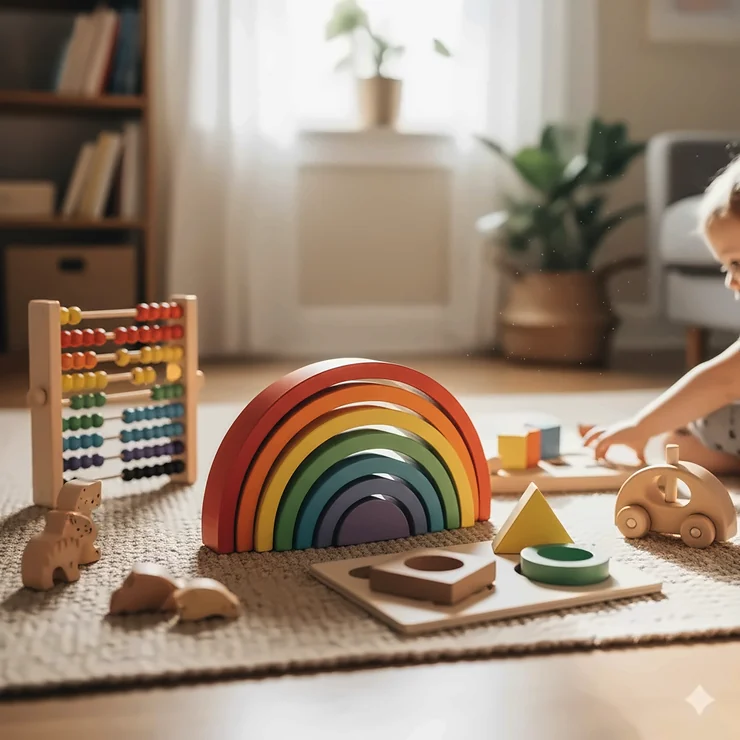
You know that feeling when your kid’s actually engaged with a toy for more than five minutes? That’s the magic of best montessori toys. I’ve watched countless parents in my years covering child development, and the transformation is real.
Here’s what makes montessori toys different: they’re not flashy. No batteries dying at 3 AM. No annoying jingles burned into your brain forever. Instead, these toys tap into something deeper—your child’s natural curiosity and desire to learn through hands-on exploration.
The Montessori philosophy, developed by Dr. Maria Montessori in the early 20th century, focuses on child-led learning through self-directed exploration and hands-on materials made from natural substances like wood. The approach has stood the test of time because it works.
Best montessori toys share key characteristics: they’re simple yet purposeful, made from natural materials, and designed to isolate one skill at a time. Whether you’re looking for montessori toys for babies, toddlers, or preschoolers, this guide reveals which ones actually deliver on their promises—and which ones just look pretty on the shelf.
Let’s dive into the top picks that’ll have your kid building real skills while having genuine fun.
Quick Comparison Table: Best Montessori Toys at a Glance
| Product | Best For | Age Range | Price Range | Key Feature | Rating |
|---|---|---|---|---|---|
| Fisher-Price Montessori Sorting Tree | Color sorting | 3+ years | $24-30 | AMS certified | ⭐⭐⭐⭐⭐ |
| Hape Pound & Tap Bench | Musical learning | 12 months+ | $35-45 | 2-in-1 design | ⭐⭐⭐⭐⭐ |
| Lovevery Play Kits | Complete development | 0-5 years | $80-120 | Age-specific | ⭐⭐⭐⭐⭐ |
| Grimm’s Rainbow Stacker | Creative play | 1+ years | $49-65 | Open-ended | ⭐⭐⭐⭐½ |
| Melissa & Doug Pounding Bench | Motor skills | 2-4 years | $18-25 | Non-removable pegs | ⭐⭐⭐⭐⭐ |
| Object Permanence Box | Cognitive development | 6-12 months | $15-35 | Classic Montessori | ⭐⭐⭐⭐½ |
| PlanToys Stacking Tree | Fine motor skills | 18 months+ | $20-30 | Eco-friendly | ⭐⭐⭐⭐ |
💬 Just one click – help others make better buying decisions too! 😊
Top 7 Best Montessori Toys 2025: Expert Analysis
1. Fisher-Price Wood Montessori Sorting Tree 🌳
The Fisher-Price Montessori Sorting Tree is an Amazon exclusive that earned the American Montessori Society Seal of Excellence in 2025, making it the first brand to receive this prestigious endorsement.
What Makes It Special:
This isn’t just another sorting toy. The inclusion of child-sized tweezers transforms a simple color-matching game into a fine motor skills masterclass. Kids ages 3+ use the tweezers to grasp and place 10 wooden apples into corresponding colored slots on the tree.
✅ Pros:
- AMS Montessori Seal of Excellence (brand’s first!)
- FSC-certified wood with non-toxic, water-based paints
- Includes expert play tips from Fisher-Price Play Lab
- Develops sorting, classifying, and hand-eye coordination
❌ Cons:
- Better suited for ages 3+, not younger toddlers
- Small parts require supervision
Price: $24.83 on Amazon
Customer Feedback: Parents praise the true Montessori design with tweezers that genuinely challenge fine motor skills and coordination. The quality wood construction and thoughtful design make it worth the investment.
Why You’ll Love It: This toy grows with your child—starts as basic color matching, evolves into pattern creation, and eventually becomes a tool for counting and early math concepts.
2. Hape Pound & Tap Bench with Slide Out Xylophone 🎵
Want to know the secret to keeping a toddler engaged? Give them something that makes music AND lets them bang on things. The Hape Pound & Tap Bench combines a pounding bench with a removable 8-key xylophone, creating a multifunctional musical experience that won the 2018 Cribsie Award for favorite first musical toy.
What Makes It Special:
The genius is in the design: pound the colored balls, and they tinkle over the xylophone keys. Or slide out the xylophone and let your little Mozart create their own melodies.
✅ Pros:
- Award-winning design (2018 Cribsie Award)
- Durable bamboo construction with water-based paint
- Volume designed to protect little ears
- Develops logic, coordination, and audio recognition
❌ Cons:
- No storage for the mallet (easy to misplace)
- Can be noisy for parents’ sanity
Price: $35-45 on Amazon
Customer Feedback: Parents report high quality construction with beautiful xylophone sound, noting it’s easy to assemble and engages children from 1 to 4+ years.
Why You’ll Love It: This is montessori-style meets musical education. It teaches cause-and-effect (pound = sound), color recognition, and introduces basic music concepts—all before your kid can even say “xylophone.”
3. Lovevery Play Kits 📦
If you’re overwhelmed by toy choices, Lovevery basically did your homework. These subscription-based play kits deliver stage-based learning with toys designed by child development experts, tailored to specific developmental windows from 0-5 years.
What Makes It Special:
Every 2-3 months, you receive a curated kit matched to your child’s exact developmental stage. No guessing, no wasted purchases on toys they’ve outgrown.
✅ Pros:
- Research-backed by Montessori principles and brain science
- FSC-certified sustainable materials
- Includes play guides with expert tips
- Takes the guesswork out of age-appropriate toys
❌ Cons:
- Subscription model (higher overall cost)
- Not all individual items sold separately
Price: $80-120 per kit (subscription)
Customer Feedback: Parents rave about the peace of mind from expert-researched toys, noting they wish they hadn’t bought any other toys and had just gotten these kits from the start.
Why You’ll Love It: Think of it as a personal child development consultant delivered to your door. The play guides teach YOU how to maximize each toy’s learning potential.
4. Grimm’s Rainbow Stacker 🌈
Grimm’s iconic wooden rainbow stacker is handcrafted in Europe from a single piece of lime wood, finished with water-based paint, and has become one of the most sought-after open-ended montessori-style toys.
What Makes It Special:
This isn’t technically pure Montessori (it’s Waldorf-inspired), but it’s beloved in montessori homes for good reason. The 6 colorful arches can become tunnels, bridges, doll beds, building blocks—whatever your child imagines.
✅ Pros:
- Heirloom-quality European craftsmanship
- Open-ended play encourages creativity
- Beautiful enough to display as décor
- Grows with child (1+ to elementary age)
❌ Cons:
- Higher price point ($49.60-65+)
- Wood can be fragile with rough play
- Not purpose-specific (if you want pure Montessori)
Price: $49.60+ for 6-piece on Amazon
Customer Feedback: Parents appreciate the beautiful construction and versatility, though some note the thinner wood cuts make it somewhat fragile.
Why You’ll Love It: This toy sparks imagination in ways battery-powered toys never could. Kids create elaborate scenes, adults use it in home décor—it’s a win-win.
5. Melissa & Doug Deluxe Pounding Bench 🔨
The Melissa & Doug Deluxe Pounding Bench features a clever design twist—8 non-removable, connected pegs that play peekaboo as they go up and down when pounded.
What Makes It Special:
The engineering is brilliant: pegs on the left connect to pegs on the right. Pound one down, another pops up. No lost pieces, endless entertainment.
✅ Pros:
- Non-removable pegs (no small parts to lose!)
- Solid wood construction built to last
- Helps develop fine motor skills and cause-effect understanding
- Affordable for quality
❌ Cons:
- Wood can chip with very rough use
- Can be noisy (that’s kind of the point, though)
Price: $18-25 on Amazon
Customer Feedback: Parents love the innovative connected-peg design that prevents lost pieces, noting it’s “just right” resistance—not too easy, not too hard.
Why You’ll Love It: This is the toy that channels your toddler’s need to hit things into productive skill-building. Plus, the peekaboo smiling faces add an emotional intelligence element.
6. Montessori Object Permanence Box 🎯
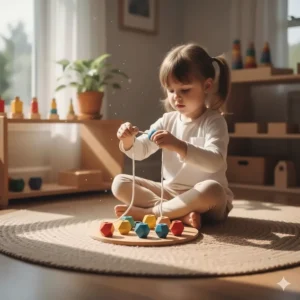
The object permanence box is a classic Montessori material introduced around 6-12 months that helps babies understand that objects continue to exist even when they can’t see them.
What Makes It Special:
This simple wooden box with a hole and tray teaches one of childhood’s most important cognitive concepts: just because you can’t see something doesn’t mean it’s gone.
✅ Pros:
- Teaches critical cognitive milestone
- Develops hand-eye coordination and focus
- Ball size exceeds safety standards (no choking hazard)
- Eco-friendly hardwood construction
❌ Cons:
- Limited to one specific skill
- Baby must be sitting independently to use
Price: $15-35 on Amazon (various brands)
Customer Feedback: Parents report babies are enamored with watching the ball disappear and reappear, with some noting their 5-month-olds and even cats love the toy.
Why You’ll Love It: It’s mesmerizing to watch your baby’s “aha!” moment when they grasp object permanence. This toy facilitates that developmental leap beautifully.
7. PlanToys Stacking Tree 🍃
PlanToys creates sustainable wooden toys from reclaimed rubber trees, finishing them with non-toxic dyes and formaldehyde-free glue while following strict eco-friendly practices.
What Makes It Special:
This stacking tree toy introduces concepts of size gradation and sequencing through 8 branch pieces that can be arranged from largest to smallest.
✅ Pros:
- Sustainable materials (reclaimed rubber trees)
- Teaches color gradation and size differentiation
- Supports early STEM learning
- Beautiful green shades
❌ Cons:
- Smaller size than some competitors
- Requires some dexterity
Price: $20-30 on Amazon
Customer Feedback: PlanToys is praised for sustainability practices focused on materials, manufacturing, and minds, using reclaimed materials transformed into eco-friendly wood.
Why You’ll Love It: Guilt-free play! You’re teaching your child about size and sequencing while supporting sustainable toy manufacturing.
🛒 Ready to Transform Playtime?
These carefully selected best montessori toys are more than just playthings—they’re investments in your child’s development. Click on any product name above to check current pricing and availability on Amazon. Your child’s next developmental milestone awaits! ✨
What Makes Best Montessori Toys Different from Regular Toys?
Let’s cut through the marketing fluff. Not every wooden toy is a montessori toy, despite what Instagram might tell you.
Core Principles That Matter
🎯 Purpose Over Entertainment
Best montessori toys aren’t designed to keep your kid busy while you answer emails. They’re learning tools that isolate specific skills. Authentic Montessori toys promote engagement and serve a learning purpose rather than just entertainment or distraction, which is why they aren’t battery-operated.
🌳 Natural Materials
Wood, metal, cotton—these materials provide sensory feedback plastic can’t match. They’re also more durable. That cheap plastic toy? Landfill in 6 months. Quality montessori wooden toys? Heirlooms.
🔄 Self-Correcting Design
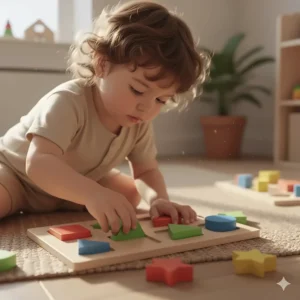
The best montessori toys let children discover and fix their own mistakes. A shape sorter where the triangle only fits in the triangle hole? That’s self-correcting. Your child learns through doing, not through you saying “no, wrong hole.”
🎨 Real-World Connection
Montessori toys mirror real-life activities. Practical life skills—pouring, sorting, stacking—build independence and confidence.
What Best Montessori Toys Avoid
❌ Electronic sounds and lights
❌ Multiple skills in one toy (confuses the learning objective)
❌ Branded characters (limits imaginative play)
❌ Plastic when natural materials work better
❌ Age-inappropriate complexity
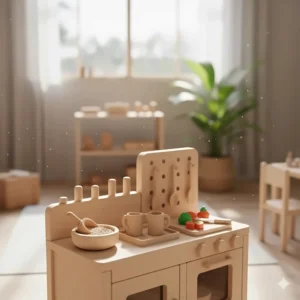
How to Choose Best Montessori Toys by Age
🍼 Birth to 6 Months: Sensory Foundation
At this stage, best montessori toys focus on sensory development and visual tracking. Look for:
- High-contrast cards (black and white)
- Simple wooden rattles
- Baby-safe mirrors
- Soft cloth books
👶 6-12 Months: Cause and Effect
Now they’re sitting, reaching, grasping. Perfect for:
- Object permanence boxes
- Simple stacking rings
- Ball drop toys
- Montessori mobiles
🧒 1-2 Years: Practical Life Skills
Toddlers want to DO things. Focus on:
- Shape sorters
- Simple puzzles
- Pounding benches
- Push and pull toys
🎨 2-3 Years: Refinement and Coordination
Fine motor skills explode. Choose:
- Color sorting toys
- More complex puzzles
- Building blocks
- Pretend play items (kitchen sets, cleaning tools)
🏫 3-5 Years: Pre-Academic Skills
Preparing for school means:
- Counting and number toys
- Letter recognition materials
- Advanced building sets
- Art supplies
Best Montessori Toys Materials: Wood vs Plastic vs Silicone
Wood: The Gold Standard 🌲
Pros:
- Durable (can last generations)
- Natural sensory experience
- Environmentally sustainable
- Aesthetically pleasing
Cons:
- Higher initial cost
- Can crack if exposed to water
- Requires proper care
Plastic: The Practical Choice
Pros:
- Affordable
- Easy to clean
- Lightweight for travel
Cons:
- Environmental impact
- Less sensory engagement
- Often breaks faster
Silicone: The Modern Option
Pros:
- Food-grade safety
- Great for teethers
- Dishwasher safe
- Soft and flexible
Cons:
- Limited to certain toy types
- Not “true” Montessori material
- Can attract lint and dust
The Verdict? For best montessori toys, wood wins for longevity and authenticity. But don’t stress if you have high-quality plastic toys—the principles matter more than the material.
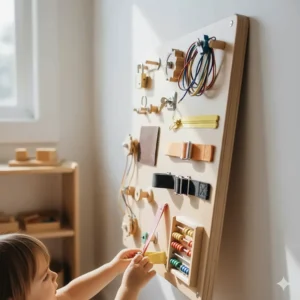
Top Benefits of Best Montessori Toys Backed by Research
Cognitive Development
Research shows that Montessori toys can keep kids engaged and having fun for hours at a time while developing problem-solving skills and nurturing brain development. Unlike passive screen time, these toys require active thinking. According to the American Academy of Pediatrics, hands-on play is crucial for healthy child development.
Fine Motor Skills
Every grasp, pinch, and placement builds the hand muscles needed for writing, buttoning shirts, and using utensils. Montessori toddler toys like sorting trees and pounding benches provide targeted practice.
Independence and Confidence
When children master a skill through self-directed play, they build intrinsic motivation. They learn “I can figure this out” instead of “I need Mom to do it.”
Concentration and Focus
In our distraction-filled world, the ability to concentrate is a superpower. Best montessori toys encourage deep focus through purposeful activity.
Sensory Development
Natural materials provide rich sensory input—the weight of wood, the texture of cotton, the temperature of metal. This sensory exploration literally builds neural connections.
Creativity and Problem-Solving
Open-ended toys like rainbow stackers have no “right” way to play. This freedom fosters creative thinking and novel problem-solving approaches.
Best Montessori Toys vs Traditional Toys: Comparison
| Aspect | Best Montessori Toys | Traditional Toys |
|---|---|---|
| Learning Approach | Child-led, self-directed | Adult-directed, entertainment-focused |
| Materials | Natural (wood, cotton, metal) | Plastic, synthetic |
| Skill Focus | One skill at a time | Multiple features, often overstimulating |
| Feedback | Self-correcting design | Requires adult correction |
| Battery Use | Never | Often required |
| Lifespan | Durable, multi-generational | Often breaks within months |
| Sensory Input | Rich, natural textures | Limited, artificial |
| Price | Higher upfront, better value long-term | Lower upfront, frequent replacement |
| Engagement Time | Extended, focused play | Brief, novelty-driven |
Where to Buy Best Montessori Toys: Shopping Guide
Amazon: Your One-Stop Shop 🛍️
Pros:
- Vast selection of best montessori toys
- Customer reviews provide real feedback
- Fast shipping with Prime
- Easy returns
Cons:
- Some third-party sellers have quality issues
- Overwhelming number of options
Pro Tip: Look for “Amazon exclusive” tags on authentic brands like Fisher-Price Montessori line.
Specialty Montessori Retailers
Stores like Lovevery, Monti Kids, and The Montessori Room offer curated selections. You’ll pay more, but quality is guaranteed.
Used Marketplaces
Facebook Marketplace and eBay can yield amazing finds. Quality wooden montessori toys hold up beautifully secondhand.
Local Toy Stores
Support small businesses and see toys in person before buying. Ask staff about return policies.
Best Montessori Toys Care and Maintenance Tips
Cleaning Wooden Toys Properly
❌ Don’t: Submerge in water or use harsh chemicals
✅ Do: Wipe with damp cloth and dry immediately
✅ Do: Use gentle, natural soap for sticky messes
✅ Do: Apply food-grade mineral oil occasionally to prevent cracking
Storage Solutions
Keep montessori toys on low, accessible shelves where children can reach them independently. Rotate toys every few weeks to maintain interest without overwhelming.
Repair vs Replace
Small cracks? Wood glue. Chipped paint? Non-toxic touch-up paint. Most wooden toys are repairable, making them truly sustainable.
Common Mistakes When Buying Best Montessori Toys
1. Buying Too Many at Once
The Problem: Overwhelmed children can’t focus on any single toy.
The Fix: Start with 3-5 toys and rotate as skills develop.
2. Ignoring Age Recommendations
The Problem: Toys too advanced cause frustration; too simple bore quickly.
The Fix: Match toys to current developmental stage, not chronological age.
3. Choosing Aesthetics Over Function
The Problem: That Instagram-worthy toy might not actually teach anything.
The Fix: Ask “What specific skill does this develop?”
4. Neglecting Open-Ended Options
The Problem: Single-purpose toys have limited lifespan.
The Fix: Balance specific-skill toys with open-ended options like blocks and stackers.
5. Forgetting About Safety
The Problem: Small parts and cheap materials pose hazards.
The Fix: Always check safety certifications and choking hazard warnings. The Consumer Product Safety Commission provides guidelines for age-appropriate toys.
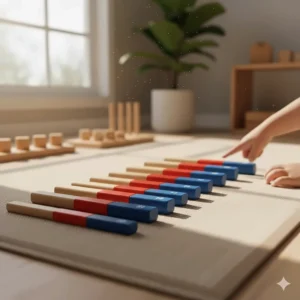
Best Montessori Toys for Different Learning Styles
Visual Learners
These kids thrive with:
- Color sorting toys
- Puzzles with clear pictures
- Rainbow stackers
- Pattern blocks
Kinesthetic Learners
Hands-on everything:
- Pounding benches
- Shape sorters
- Building blocks
- Sensory bins
Auditory Learners
Sound-focused toys:
- Musical instruments (xylophones, drums)
- Rattles and shakers
- Sound-matching games
Remember: Most kids use all learning styles. Best montessori toys support multiple modalities simultaneously.
Budget-Friendly Best Montessori Toys Options
Under $20
- Melissa & Doug Pounding Bench ($18-25)
- Object Permanence Box (various brands, $15-20)
- Simple wooden puzzles
- Stacking rings
- DIY sensory bins
$20-$50
- Hape Pound & Tap Bench ($35-45)
- Fisher-Price Montessori Sorting Tree ($24-30)
- PlanToys Stacking Tree ($20-30)
- Quality building blocks
$50+
- Grimm’s Rainbow Stacker ($49.60+)
- Lovevery Play Kits ($80-120)
- Complete play kitchen sets
- Larger building sets
DIY Montessori Toys
Create your own:
- Treasure baskets filled with natural objects
- Cardboard box activities
- Homemade sensory bottles
- Natural blocks from wood scraps
Expert Tips for Maximizing Best Montessori Toys Value
1. Follow the Child
Observe what captures your child’s attention. If they’re obsessed with opening and closing things, get a locks and keys toy. Match toys to interests.
2. Present Properly
Show how to use the toy once, then step back. Resist the urge to constantly intervene.
3. Create a Prepared Environment
Low shelves, organized spaces, and accessible toys encourage independent play. The environment teaches as much as the toys.
4. Rotate Regularly
Keep 5-8 toys available, storing the rest. Swap every 2-3 weeks. This maintains novelty without clutter.
5. Prioritize Quality Over Quantity
One excellent wooden toy beats ten mediocre plastic ones every time.
6. Join Toy Library or Swap Groups
Many communities have toy libraries or parent swap groups. Test toys before investing.
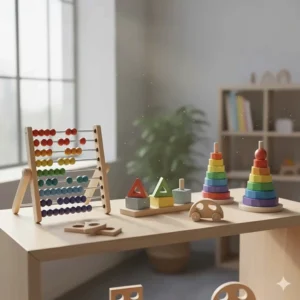
Frequently Asked Questions About Best Montessori Toys
❓ What age should I start with montessori toys?
❓ Do best montessori toys need to be expensive?
❓ Can I mix montessori toys with regular toys?
❓ How many best montessori toys should my child have?
❓ What if my child ignores montessori toys and wants electronics?
Conclusion: Your Best Montessori Toys Journey Starts Here
The best montessori toys aren’t magical—they’re intentional. They respect your child’s innate desire to learn, explore, and master new skills. Whether you invest in a complete Lovevery subscription or start with a simple $20 pounding bench, you’re choosing quality over quantity.
Remember, the toy isn’t doing the work—your child is. These tools simply provide the framework for natural development. Start with one or two toys from this guide, observe how your child engages, and expand from there.
The Fisher-Price Montessori Sorting Tree offers certified quality at an accessible price. The Hape Pound & Tap Bench combines music and motor skills brilliantly. Lovevery takes the guesswork out entirely with expert-curated kits. Each option serves different needs and budgets.
Your child’s development happens in moments—stacking one more block, sorting one more color, figuring out one more puzzle. Best montessori toys multiply those moments while building skills that last a lifetime.
Ready to transform playtime into learning time? Your carefully selected toy is waiting.
🎁 Start Your Montessori Journey Today!
Browse the highlighted products above to find the perfect best montessori toys for your child’s stage. Every link leads to verified quality toys that deliver real developmental benefits. Don’t wait—the right toy at the right time makes all the difference! 🌟
Recommended for You
- Best Crawling Toys: 7 Amazing Picks That Get Babies Moving
- 7 Best Silent Fidget Toys: Expert Review 2025
- 7 Best Childrens Fidget Toys for Focus & Fun in 2025
Disclaimer: This article contains affiliate links. If you purchase products through these links, we may earn a small commission at no additional cost to you.
✨ Found this helpful? Share it with your friends! 💬🤗
